
Executive Overview
In an era defined by accelerating habitat loss and a global biodiversity crisis, news regarding flora and fauna is predominantly grim. Scientists frequently add new entries to the growing ledger of extinction, tallying the permanent erasure of species lost to climate change, invasive predators, and human encroachment. Since the 1750s, an estimated 900 plant species have vanished from the wild worldwide, leaving behind only pressed herbarium sheets and dusty scientific descriptions.
Yet, every so often, nature offers a profound exception—a reminder of the resilience of life and the sheer expanse of Earth’s untamed spaces.
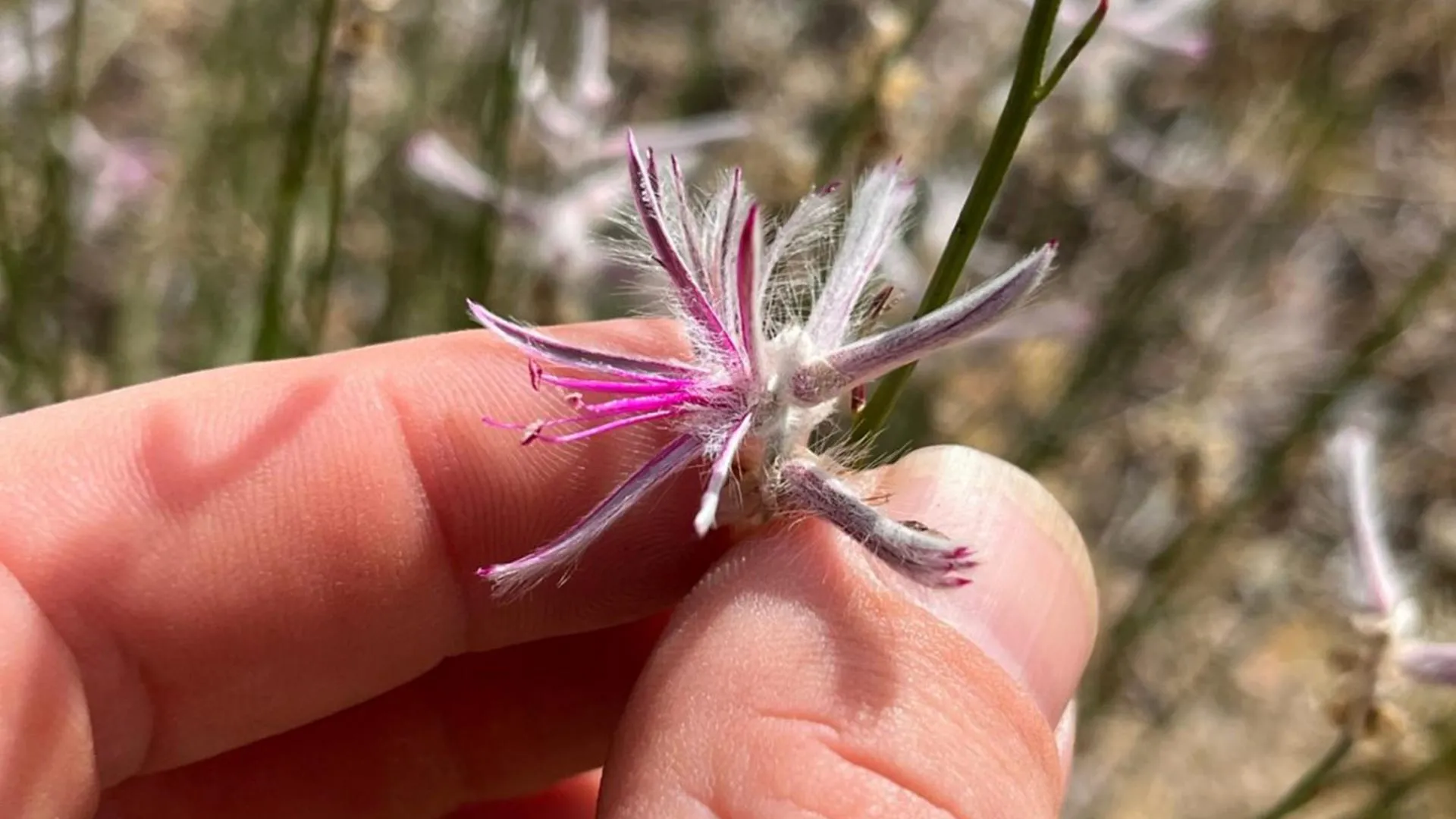
In a remote expanse of the Australian outback near the Gulf of Carpentaria, a delicate shrub known to science as Ptilotus senarius has been dramatically pulled back from the precipice of extinction. Believed to have vanished from the face of the Earth for nearly sixty years, the plant was rediscovered entirely by chance. A professional horticulturalist, working on a sprawling outback cattle station, paused to photograph an unusual cluster of purple-pink, firework-like blossoms. That momentary curiosity, captured on a smartphone and uploaded to the citizen science platform iNaturalist, ignited a chain reaction that traversed professional networks, bypassed academic silos, and ultimately rewrote the conservation status of a "lost" species.
This extraordinary rediscovery is far more than a localized botanical fluke. It serves as a watershed moment for modern conservation biology, illustrating how the convergence of digital technology, crowdsourced data, and everyday observers is fundamentally transforming how scientists monitor ecosystems. With vast tracts of the Australian continent remaining virtually unmapped by professional researchers—compounded by the fact that roughly one-third of the landmass sits within privately held pastoral leases—the scientific community is increasingly turning to citizen scientists, landowners, and outback workers as the new front line of biodiversity research.
As researchers celebrate the transition of Ptilotus senarius from "extinct" to "critically endangered," a broader narrative emerges. It is a story of serendipity, the untapped potential of private landholdings, and a paradigm shift in how humanity interacts with, documents, and ultimately preserves the natural world.
Detailed Chronology: From the Red Dust to the Digital Realm
The remarkable resurrection of Ptilotus senarius unfolded over decades, bridging the analog era of mid-20th-century field botany with the hyper-connected, cloud-based architecture of 21st-century conservation.
The First Chapter: 1967 and the Original Description
To understand the magnitude of the recent find, one must look back to 1967. During an era when botanical expeditions relied heavily on multi-week vehicular treks into Australia’s forbidding tropical north, a specimen of an unusual Ptilotus was collected in the rugged terrain near the Gulf of Carpentaria. For years, the specimen sat quietly within state herbarium archives, awaiting formal analysis.
Eventually, botanist Anthony Bean of the Queensland Herbarium examined the sample and realized it represented a species entirely new to science. He formally described and named Ptilotus senarius—a delicate shrub distinguished by its vibrant, feathered purple-pink inflorescences. However, following its initial collection, subsequent botanical surveys failed to locate living specimens. As decades passed without a single confirmed sighting, the scientific community reluctantly accepted that the species had succumbed to environmental pressures, categorizing it among the catalog of plants presumed extinct in the wild.
The Incubation: Decades of Silence
Between 1967 and the mid-2020s, the Australian outback continued to shift under the pressures of pastoralism, altered fire regimes, and changing climatic cycles. Ptilotus senarius slipped quietly into the realm of botanical ghost stories. Botanists mapping the region occasionally scanned the horizon for its distinctive blossoms, but the vastness of the terrain—coupled with the sheer impenetrability of its favored habitats—yielded nothing. The species joined the ranks of the roughly 900 plant species lost globally over the past three centuries, its survival appearing to be a closed chapter.
The Catalyst: An Outpost in Queensland
The narrative shifted abruptly when Aaron Bean, a professional horticulturalist unrelated to the Queensland Herbarium’s Anthony Bean, traveled to a sprawling outback property in Queensland to assist with bird-banding operations.
While navigating the harsh, sun-baked landscape, Aaron Bean’s trained horticultural eye caught sight of an unfamiliar shrub. Standing out against the muted tones of the surrounding scrub, the plant bore striking, feather-like purple-pink flowers that immediately piqued his interest. Recognizing that he was looking at something out of the ordinary, and acting purely on opportunistic curiosity, he pulled out his mobile device and snapped a series of photographs documenting the plant’s form, foliage, and blooms.
Outback Queensland is notoriously devoid of reliable cellular connectivity. For days, the digital files remained trapped in the storage of Aaron’s device. It was only upon returning to an area with intermittent phone service that he was able to upload the images to iNaturalist—a global, crowdsourced biodiversity platform designed to log observations of plants and animals through user-generated photographs.
The Digital Needle in a Haystack
Every day, users around the world upload hundreds of thousands of observations to iNaturalist. For most casual users, an upload is merely a way to identify a garden weed or a backyard bird. For the global scientific community, however, these platforms act as vast, real-time ecological radar arrays.
Months after the initial upload, among the millions of data points cataloged in the system, Aaron Bean’s outback photographs crossed the digital desk of Anthony Bean.
Browsing through regional flora observations, Anthony Bean stopped scrolling. Despite nearly six decades having elapsed since he had first named and described Ptilotus senarius, he instantly recognized the plant’s unique morphological traits in the digital photographs. The feather-like structure of the flowers, the leaf arrangement, and the growth habit were unmistakable. The plant that had haunted the fringes of his career—widely presumed to be extinct—was alive, growing quietly in a remote corner of Queensland.
Confirmation and Reclassification
Recognizing the monumental implications of the photographs, Anthony Bean contacted Aaron Bean to pinpoint the exact location of the sighting. To officially alter the conservation status of a species, however, digital photographs alone are rarely sufficient; science demands physical voucher specimens to confirm morphological identity and provide genetic material for future study.
Mobilizing quickly, the researchers coordinated with the property owner who managed the expansive outback lease. With permission and logistical support secured, a formal botanical collection was orchestrated. The physical specimen was harvested, shipped to the Queensland Herbarium, and subjected to rigorous taxonomic verification.
The verdict was unequivocal: Ptilotus senarius was alive.
The International Union for Conservation of Nature (IUCN) criteria were swiftly applied to downgrade the species from "Extinct" to "Critically Endangered." This administrative shift was far more than semantic; it immediately unlocked pathways for targeted conservation funding, legal protections, and strategic field surveys to determine the population size and health of the surviving shrubs.
Supporting Context & Metrics: The Scale of the Hidden World
The rediscovery of Ptilotus senarius is not an isolated anomaly; it is part of a rapidly expanding corpus of scientific breakthroughs driven by citizen science. To grasp the significance of this trend, one must examine the logistical realities of biological research in modern Australia.
The Tyranny of Distance and Private Land
Australia is a continent of continental proportions, characterized by staggering biodiversity and immense geographic scale. From the eucalyptus woodlands of the south to the monsoonal tropics of the north, ecosystems range from the easily accessible to the utterly remote.
Professional scientists—often bound by institutional budgets, grant timelines, and limited personnel—cannot physically patrol every square kilometer of the landscape. Furthermore, access to biodiversity hot spots is heavily constrained by land tenure systems. Approximately one-third of the entire Australian continent consists of privately owned or leased land, encompassing vast cattle stations, pastoral leases, and indigenous protected areas.
For decades, these private domains remained largely opaque to academic researchers. Unless a property owner explicitly invited a university expedition onto their land, vast ecological niches went unsurveyed by trained botanists and zoologists.
Citizen scientists and rural workers—outback station managers, horticulturalists, indigenous rangers, and recreational campers—effectively bridge this divide. Moving daily across private leases and remote tracts, these individuals serve as an omnipresent network of ecological observers. As Thomas Mesaglio of the UNSW School of Biological, Earth and Environmental Sciences notes, granting access to private land or simply having observant workers on the ground "opens up this whole new world" of biological discovery.
The Global Rise of iNaturalist
Platforms like iNaturalist have evolved from recreational hobbyist apps into powerhouse tools for professional academic research. By harnessing the collective observational power of millions of smartphone-toting citizens, these platforms generate datasets that rival—and often surpass—the monitoring capacities of traditional government and academic institutions.
The metrics surrounding the platform’s utility are staggering. In separate research, Thomas Mesaglio analyzed the integration of iNaturalist data into academic literature and discovered that observations from the platform have been formally cited in scientific papers spanning 128 countries and thousands of distinct species.
These digital repositories function on two distinct fronts:
- Rediscovering the "Lost": As demonstrated by Ptilotus senarius, crowdsourced observations routinely flag species that have slipped through the cracks of formal conservation monitoring, providing a second chance for organisms written off as extinct.
- Discovering the Novel: Beyond finding old ghosts, everyday citizens regularly photograph organisms entirely new to science—insects, fungi, and plants that lack formal classification, accelerating the pace of taxonomic discovery.
Official Statements and Expert Perspectives
The academic and scientific community has responded to the rediscovery with a mixture of professional awe and strategic calls to action. The event has catalyzed discussions regarding how governments and research institutions can better harness public enthusiasm for conservation.
The Serendipity of Discovery
Reflecting on the chain of events that brought Ptilotus senarius back to light, researchers emphasize the delicate alignment of variables required for such a discovery.
"It was very serendipitous," remarked Thomas Mesaglio of the UNSW School of Biological, Earth and Environmental Sciences, who documented the rediscovery for the Australian Journal of Botany.
"Aaron Bean is an avid iNaturalist user who opportunistically took some photos of a few plants that were interesting on the property. It’s one of these situations where everything had to fall into place and there was a bit of good fortune involved."
Bridging the Gap Between Landholders and Science
Beyond the stroke of luck, experts stress that the success of modern conservation relies heavily on actively engaging the people who live and work on the land. Private landowners are no longer viewed merely as custodians of real estate, but as vital partners in biodiversity research.
"Engaging landholders themselves with science and the natural world and getting them more passionate about diversity makes them far more likely to be interested and invested in protecting that diversity," Mesaglio explained.
This philosophy is already being operationalized in various jurisdictions. In New South Wales, for instance, the state government’s Biodiversity Conservation Trust runs the Land Libraries project. This initiative provides practical training, optical equipment, and resources to help rural landowners document the flora and fauna inhabiting their properties, subsequently uploading those verified records to shared scientific databases. Conservationists are now advocating for the nationwide expansion of such programs to systematically integrate private stewardship with professional ecological management.
Future Outlook: Mobilizing the Citizen Army
The resurrection of Ptilotus senarius serves as a powerful proof-of-concept for the future of conservation biology. As human pressures on natural habitats mount, the traditional model of relying solely on small cadres of field scientists is proving increasingly inadequate. The path forward requires a democratization of science—transforming everyday observers into active contributors to global biodiversity data.
Maximizing the Value of Observations
For citizens and landowners eager to contribute meaningfully to scientific databases, researchers emphasize that the quality of an observation is just as important as its presence. A single, hurried smartphone snapshot of a blooming flower is frequently insufficient for authoritative identification, particularly within diverse genera where closely related species share similar floral morphologies.
To maximize the utility of citizen science records for future research, scientists recommend adhering to several rigorous documentation protocols:
- Comprehensive Plant Profiling: Users should photograph multiple parts of a plant, including leaves, bark, stems, root structures, and overall growth habit, rather than focusing exclusively on the bloom.
- Contextual Metadata: Documenting environmental variables that elude photographic capture is invaluable. This includes noting soil composition, surrounding dominant vegetation, local hydrological conditions, and the presence of specific pollinators.
- Sensory Details: Unusual attributes—such as distinct fragrances, sap colors, or texture—provide critical clues for taxonomists attempting to differentiate cryptic species in the field.
A Call for Continued Vigilance
As millions of new observations continue to flood into platforms like iNaturalist each year, the scientific consensus is clear: the Ptilotus senarius rediscovery will not be the last of its kind. Hidden within the vast, unexplored expanses of the global wilderness—and tucked away in the everyday landscapes of private properties—are countless other species waiting for a watchful eye, a smartphone camera, and a fortunate convergence of curiosity and expertise.
For now, Ptilotus senarius stands as a botanical phoenix: a delicate outback shrub that survived decades of anonymity, reminding humanity that in the intricate web of life, extinction is not always absolute until we stop looking.