
Executive Overview
Water is the lifeblood of the American Southwest, a precious resource that dictates the economic vitality, ecological balance, and long-term sustainability of the region. As the arid landscape faces compounding pressures from prolonged drought, climate volatility, and rapid population growth, safeguarding water security has emerged as the defining challenge of our era.
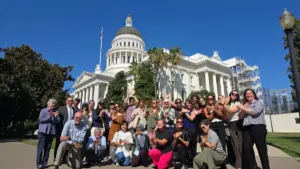
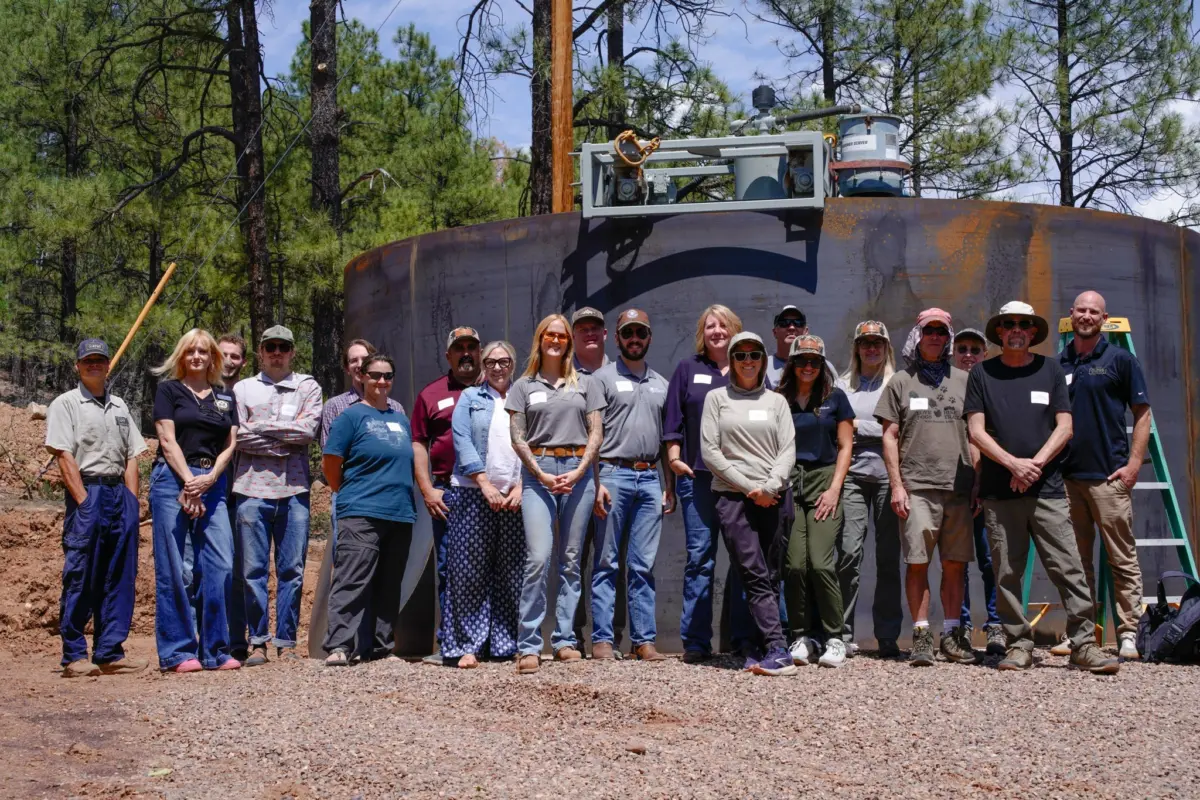
In late August, Audubon Southwest led a high-level educational expedition into the rugged White Mountains of eastern Arizona to examine this crisis up close. The tour cast a bright spotlight on a fundamental truth of modern water management: securing Arizona’s future requires a dual-pronged investment strategy that simultaneously bolsters both "hard" built infrastructure and "natural" ecosystem infrastructure.
While concrete reservoirs, subterranean pipelines, and mechanical booster pumps remain essential for delivering potable water to kitchen sinks and agricultural fields, they tell only half the story. Across the sprawling Colorado River Basin, ancient landscapes—forests, alpine meadows, meandering streams, and vibrant watersheds—serve as our original, indispensable water utility. These natural systems capture, filter, regulate, and store snowmelt and rainfall long before a single drop enters engineered conveyances.
By exploring critical rural utility upgrades and landscape-scale watershed restoration projects, the White Mountains tour demonstrated precisely how funding hits the ground. It revealed how strategic financial injections from state revolving funds, federal grants, and non-profit partnerships are rescuing vulnerable rural communities from impending utility collapses, while simultaneously revitalizing the headwaters that feed millions of downstream residents in the Phoenix metropolitan area.
Detailed Chronology of the White Mountains Expedition
To understand the tangible realities of water resource management, one must venture out of metropolitan boardrooms and into the field. The Audubon Southwest expedition traced a carefully curated route through eastern Arizona, moving from the localized, high-stakes crises of rural water utilities up to the vast, forested headwaters of the Salt River Basin.
Stop 1: The Heber Domestic Water Improvement District – A Narrow Escape from Catastrophe
The tour’s opening leg brought participants to the forested community of Heber, Arizona, offering a sobering masterclass in the vulnerabilities of rural water utility management. Small-scale domestic water providers carry immense regulatory and operational burdens, often with a fraction of the financial and technical resources available to their larger, metropolitan counterparts.
The Heber Domestic Water Improvement District had recently been awarded nearly $4 million from the Water Infrastructure Finance Authority’s (WIFA) Water Supply Development Revolving Fund. The objective of this critical funding was twofold: to interconnect two separate distribution systems and to install a new, modern water storage tank. The explicit goal was to build system redundancy—a vital engineering safeguard designed to ensure uninterrupted service during unexpected emergencies or routine maintenance.
The timing of the funding proved to be nothing short of miraculous. Just three days before the tour delegation arrived to inspect the site, Heber’s original, 50-year-old water storage tank suffered a catastrophic structural failure. The aging vessel collapsed entirely, violently discharging 300,000 gallons of water in less than two minutes.
Disaster was averted only through the quick thinking and decisive action of the district’s lone system operator, who rapidly deployed a temporary hose line to bridge the gap to a secondary tank, thereby preserving minimal service to residents. This near-miss vividly underscored the central thesis of the tour: redundancy is not a luxury or an administrative redundancy; it is the thin red line standing between a community and a complete loss of civic life. The WIFA-funded project stands as a textbook example of proactive infrastructure replacement saving a rural community before time runs out.
Stop 2: Pinedale Estates – Piecemeal Solutions Give Way to Comprehensive Overhauls
Continuing deeper into the region, the delegation stopped at Pinedale Estates to observe a community water system undergoing a dramatic, long-overdue transformation. For years, residents of Pinedale Estates had grappled with severe water quality issues driven by naturally occurring subterranean elements, compounded by rapidly deteriorating, antiquated storage tanks.
For too long, the community had relied on piecemeal, stopgap repairs—patching leaks and treating symptoms rather than curing the underlying systemic disease. Recognizing the unsustainability of this approach, local neighbors banded together, forging a crucial partnership with Mogollon Water Management to pursue comprehensive solutions.
By successfully securing a complex package of loans and grants from both WIFA and the Arizona Department of Environmental Quality (ADEQ), Pinedale Estates embarked on a comprehensive infrastructure overhaul. Soon, the community will feature brand-new groundwater wells pumping high-quality, potable drinking water, backed by robust system redundancy. Most notably, for the first time in the community’s history, the upgrades will incorporate dedicated fire hydrants, fundamentally altering local public safety standards and shielding residents from the ever-present threat of wildfire.
Stop 3: Thompson-Burro Meadow – Healing the Headwaters in the Shadow of Mount Baldy
Shifting focus from built utilities to natural systems, the final stop of the expedition climbed high into the headwaters of the Salt River, arriving at the serene and picturesque Thompson-Burro Meadow, situated in the shadow of Mount Baldy.
Here, the tour examined the intersection of forest health, hydrology, and wildlife conservation. Participants met with field experts from Trout Unlimited, who detailed an ambitious, large-scale ecological restoration initiative being executed in close collaboration with the U.S. Forest Service.
Thompson-Burro Meadow had been severely degraded following the catastrophic Wallow Fire of 2011, which stripped the landscape of vegetation, accelerated soil erosion, and disrupted natural hydrological cycles. To reverse this damage, restoration crews have installed more than 200 engineered woody "log jam" structures directly into the meadow’s stream channels.
This ingenious, nature-based engineering forces the stream to slow its relentless pace, raising local groundwater tables, reconnecting the river channel with its historic floodplain, and reestablishing vital riparian vegetation such as native willows. By functioning ecologically as a massive natural sponge, the restored meadow absorbs, filters, and regulates snowmelt and rainfall. This work directly reinforces the health of the Black River, which flows downstream to feed the Salt River, ultimately securing the municipal water supplies delivered to the Phoenix Valley via the Salt River Project (SRP).
Supporting Context & Metrics: The Dual Pillars of Water Security
To fully comprehend the significance of the White Mountains projects, one must analyze the broader economic, environmental, and structural metrics governing Arizona’s water security. Water infrastructure is broadly categorized into two interdependent sectors: hard infrastructure and natural infrastructure.
+--------------------------------------------------------------------------+
|                       ARIZONA WATER SECURITY MATRIX                      |
+------------------------------------+-------------------------------------+
|         HARD INFRASTRUCTURE        |         NATURAL INFRASTRUCTURE      |
+------------------------------------+-------------------------------------+
| • Pipes, Canals & Conduits         | • Healthy Forests & Watersheds      |
| • Subterranean Storage Tanks       | • Alpine Meadows & Sponge Systems   |
| • Booster Pumps & Pressure Systems | • Rivers, Streams & Floodplains     |
| • Municipal Treatment Plants       | • Native Riparian Flora (Willows)   |
+------------------------------------+-------------------------------------+
| PURPOSE: Reliable municipal and    | PURPOSE: Capturing, filtering, and  |
| agricultural water delivery.       | regulating flow before collection.  |
+------------------------------------+-------------------------------------+
The Anatomy of Hard Infrastructure
Hard infrastructure represents the visible and subterranean skeleton of modern civilization. In rural and urban settings alike, it comprises:
- Conveyance Networks: Thousands of miles of buried pipelines, canals, and aqueducts designed to transport water across vast geographic distances.
- Storage and Regulation: Elevated and subterranean storage tanks that maintain adequate volume during peak demand periods.
- Pressure Management: Booster pump stations that overcome elevation changes to ensure consistent household water pressure.
- Measurement and Accountability: Precision water meters that track consumption, detect leaks, and encourage conservation.
As demonstrated in Heber and Pinedale Estates, when these assets reach the end of their operational lifespans without adequate capital replacement reserves, communities face catastrophic utility failures, public health hazards, and severe economic shocks.
The Science of Natural Infrastructure
Conversely, natural infrastructure treats the landscape itself as a sophisticated utility asset. Throughout the Colorado River Basin, sprawling watersheds are the original water capture mechanisms.
- Watershed Hydrology: Healthy forests and alpine meadows intercept precipitation, reduce surface runoff velocity, and encourage percolation into underground aquifers.
- Natural Filtration: Soil microbes and root systems filter out sediments and heavy pollutants naturally before water reaches engineered reservoirs.
- Flow Regulation: Floodplain connectivity acts as a natural speed brake against flash flooding, slowly releasing stored water into river systems during dry summer months.
The destruction of these natural systems through high-severity wildfires, unmanaged logging, and climate-induced drought severely compromises the yield and quality of downstream water supplies. Scaling up meadow and forest restoration is therefore an urgent economic and hydrological imperative.
Polling Data and Public Sentiment
Public awareness regarding the fragility of the Colorado River Basin has reached an all-time high. Recent polling commissioned by the Walton Family Foundation and local conservation groups reveals that nearly all Arizona voters consider it critically important for federal and state officials to aggressively improve water security.
Furthermore, extensive polling indicates that approximately 75% of Arizona voters actively demand bold, proactive policy and financial action to stabilize the Colorado River. This overwhelming public mandate reflects a shared understanding that water security is non-negotiable, transcending partisan politics and geographic divides between urban centers and rural outposts.
Official Statements & Stakeholder Insights
The success of the White Mountains initiative relies entirely on multi-sector collaboration. Leaders from conservation organizations, utility management groups, and state financing authorities emphasize that securing Arizona’s water future requires unprecedented alignment.
-
Audubon Southwest Leadership on Dual Investment:
"Supporting Arizona’s water infrastructure is vital to protect our water supplies and way of life. To gain a fresh perspective… we must emphasize the need to invest in all of our water infrastructure—both built or ‘hard’ infrastructure as well as ‘natural’ infrastructure."
Expedition organizers underscored that pitting built infrastructure against natural restoration is a false dichotomy; both are essential gears in the same complex machine. -
Trout Unlimited on Forest and Headwater Restoration:
Project partners from Trout Unlimited noted during the Thompson-Burro Meadow inspection that restoring fire-scarred landscapes yields immediate, quantifiable dividends for downstream urban populations. By transforming degraded stream beds into sponge-like wetland systems, projects in the White Mountains directly protect the reliability of the Phoenix Valley’s municipal water supply while simultaneously rebuilding critical habitats for native trout and terrestrial wildlife. -
Local Utility Operators on the Reality of Emergency Response:
Reflecting on the miraculous timing of the Heber tank collapse, local system operators highlighted the perilous financial tightrope walked by rural water districts. Without dedicated state revolving funds—such as those administered by WIFA—small communities lack the capital reserves required to replace 50-year-old infrastructure proactively, leaving them perpetually vulnerable to catastrophic failure.
Future Outlook: A Multi-Source Funding Blueprint for Arizona
As Arizona looks toward the horizon, the path forward is clear, albeit daunting. The challenges posed by a warming climate, shrinking snowpacks, and over-allocated river systems demand an aggressive, well-financed, and diversified strategy.
1. Diversifying Capital Streams
Relying solely on local rate-payers to fund billions of dollars in water infrastructure upgrades is neither equitable nor mathematically feasible, particularly in economically constrained rural counties. The future of Arizona water financing relies on a braided funding model that seamlessly integrates:
- Local municipal bond measures and utility fee structures.
- State-level revolving funds (such as WIFA and ADEQ allocations).
- Federal investments via national infrastructure legislation.
- Innovative philanthropic grants and corporate water-offset investments.
2. Integrating Landscape Management into Utility Planning
Water resource managers can no longer afford to view forest health and municipal water delivery as separate disciplines. Watershed restoration must be formally integrated into comprehensive utility resource plans. Upstream investments in thinning over-dense forests, decommissioning unauthorized off-road trails, and restoring mountain meadows are, in economic reality, watershed-protection insurance policies for downstream ratepayers in Tucson, Phoenix, and Flagstaff.
3. Fostering Rural-Urban Equity
While metropolitan centers possess the legal teams, lobbying power, and tax bases to navigate complex funding landscapes, rural communities like Heber and Pinedale Estates often require targeted technical assistance and grant-writing support to access state and federal dollars. Expanding state-level capacity-building programs will ensure that every community—regardless of size—has the tools necessary to modernize its water grid.
Conclusion
The Audubon Southwest expedition into the White Mountains served as a powerful reminder that Arizona’s water crisis is not insurmountable. By witnessing the emergency replacement of a collapsed water tank in Heber, the grassroots revitalization of Pinedale Estates, and the ecological healing of Thompson-Burro Meadow, tour participants saw firsthand how strategic investments hit the ground.
Through a steadfast commitment to upgrading our hard infrastructure and aggressively restoring our natural watersheds, Arizona can forge a resilient, water-secure future that sustains both its vibrant human communities and its irreplaceable desert ecosystems for generations to come.