
Executive Overview
For generations, the holy trinity of agricultural inputs has remained largely unchallenged: nitrogen, phosphorus, and potassium (NPK). These three macro-nutrients form the bedrock of modern agronomy, driving the high-yield industrial farming systems that feed a global population nearing eight billion. However, as soil degradation accelerates, climate pressures mount, and input costs fluctuate wildly, the agricultural sector is undergoing a profound paradigm shift. Silicon—long relegated to the background as merely a "beneficial" element—is rapidly ascending to essential status.
Enter Mafix, a Seattle-based agtech startup and Stanford University spin-out that is uniquely positioned at the intersection of modern agronomy and climate tech. On August 20, Mafix announced the successful closure of a $5.4 million pre-seed funding round. Led by Azolla Ventures, with participation from the Astera Institute, Counteract VC, Impact Science Ventures, Plug and Play Ventures, and a prominent Dutch family office, this fresh capital injection serves as a launchpad for the company’s ambitious commercialization strategy.
Mafix’s core innovation lies in a proprietary mineral conversion process designed to accelerate the natural weathering of silicate rocks. By repurposing dormant cement kiln infrastructure, the startup can dramatically speed up geological timescales—transforming inert rocks into bioavailable silicon fertilizers within a single growing season. This dual-action input does more than just enhance plant structural integrity and bolster resilience against biotic and abiotic stressors; it actively draws down atmospheric carbon dioxide ($textCO_2$), locking it away securely as stable bicarbonate in the soil.
As regulatory bodies begin to formally recognize silicon’s critical physiological role in plant health—highlighted by a pivotal regulatory reclassification earlier this year by the Association of American Plant Food Control Officials (AAPFCO)—Mafix is poised to bridge the gap between ecological restoration and high-performance, cost-effective crop production. This in-depth report explores the technology behind Mafix, the market mechanics driving the silicon revolution, the financial backing powering the startup’s next growth phase, and the broader implications for global agriculture and atmospheric carbon dioxide removal (CDR).
Detailed Chronology: From Stanford Labs to Commercial Scale
The journey of Mafix from an academic concept within the hallowed halls of Stanford University to an investor-backed, market-facing commercial enterprise is a testament to the accelerated pace of modern clean-tech translation. While the startup officially stepped into the limelight with its August 20 funding announcement, its foundational trajectory was laid years prior through rigorous geochemical research and process engineering.
The R&D Genesis and Stanford Roots
The genesis of Mafix traces back to academic explorations into enhanced rock weathering (ERW). Scientists and climate engineers have long known that the natural weathering of silicate rocks acts as Earth’s primary long-term carbon sink. When silicate minerals come into contact with water and dissolved carbon dioxide, a chemical reaction takes place that sequesters $textCO_2$ into stable bicarbonate ions, eventually washing into the oceans where carbon is stored for millennia.
However, natural weathering is exceptionally slow—geologically speaking, it takes thousands to millions of years. Stanford researchers sought to solve a fundamental kinetic limitation: How could this natural geochemical cycle be accelerated to operate on a human, agricultural timescale without requiring energy-intensive, cost-prohibitive industrial grinding and heating?
By engineering a specialized mineral conversion process, the founding team discovered a way to unlock the locked-away potential of silicate rocks. Rather than inventing an entirely new manufacturing infrastructure from scratch, the team identified a brilliant arbitrage opportunity within heavy industry: global cement kilns.
The Industrial Partnership and Infrastructure Arbitrage
Cement manufacturing is famously energy-intensive and carbon-heavy, leaving a significant footprint on global emissions. However, structural overcapacity plagues the industry worldwide. According to Mafix CEO and co-founder Jade Marcus, nearly 30% of global cement kiln capacity sits idle at any given time.
Mafix recognized that these thermal processing units could be strategically utilized. By co-locating or partnering with underutilized cement facilities, Mafix bypasses the staggering capital expenditure (CapEx) hurdles that typically sink early-stage hard-tech and agtech startups. Instead of building billion-dollar processing plants, Mafix taps into existing, idle industrial assets. This clever operational strategy dramatically lowers production costs, ensuring that the resulting silicon fertilizer remains economically viable and accessible to everyday farmers working on tight profit margins.
The August 20, 2026 Funding Milestone
The culmination of years of bench-scale research and industrial pilot tests materialized on August 20, 2026, when Mafix officially announced the close of its $5.4 million pre-seed round.
The composition of the investor syndicate speaks volumes about the dual nature of Mafix’s value proposition. Azolla Ventures, known for backing radical climate solutions with gigaton-scale impact potential, stepped in as the lead investor. They were joined by deep-tech and science-focused funds including the Astera Institute, Counteract VC (specializing in carbon removal), Impact Science Ventures, Plug and Play Ventures, and a strategic Dutch family office with deep roots in international agriculture.
According to Marcus, the $5.4 million influx will be deployed immediately to scale up manufacturing capabilities. The immediate operational goal is to produce at least 1,000 tons of Mafix’s proprietary silicon fertilizer. This volume will allow the startup to transition smoothly from small-scale plot trials to large, commercial-grade field trials across diverse geographic regions and cropping systems.
Supporting Context & Metrics: The Silicon Revolution in Modern Agronomy
To understand why investors are pouring millions into a silicon startup, one must examine the evolving physiological demands placed on modern crops and the shifting regulatory landscape governing agricultural inputs.
The Regulatory Turning Point: Essential vs. Beneficial
For decades, plant nutrition science was dominated by the dogma of NPK, alongside secondary nutrients (calcium, magnesium, sulfur) and micronutrients (iron, zinc, manganese, boron, etc.). Silicon was historically categorized merely as a "beneficial" substance—nice to have, perhaps, but not strictly necessary for a plant to complete its life cycle.
That classification officially changed earlier this year. The Association of American Plant Food Control Officials (AAPFCO) formally reclassified silicon as an essential crop nutrient. This regulatory reclassification is a watershed moment for the agricultural inputs market. It validates decades of academic research demonstrating that silicon plays a non-negotiable role in mitigating biotic and abiotic plant stresses. Fertilizer manufacturers can now legally market silicon-based products with performance claims previously reserved for primary nutrients, opening floodgates for institutional adoption and retail shelf space.
The Geochemical Paradox: Abundant Yet Unavailable
It is one of nature’s great ironies that silicon—the second most abundant element in the Earth’s crust, trailing only oxygen—can be severely deficient in agricultural soils.
"While it’s the second most abundant element in the Earth’s crust, silicon is not plant available, meaning farmers can gradually deplete plant-available silicon from the soil over time," explains Jade Marcus.
In natural ecosystems, silicon cycles continuously through plant tissues, returning to the soil as the plant decomposes. However, modern industrial farming breaks this cycle. Harvested crops are removed from fields, stripping away accumulated silicon year after year. Over decades of intensive agriculture, soils become depleted of monosilicic acid ($textH_4textSiO_4$)—the only chemical form of silicon that plant roots can actually absorb.
Cellular Mechanics: How Plants Utilize Silicon
When a farmer applies bioavailable silicon, the plant’s biological machinery goes to work via specialized molecular pathways.
"When you’re able to apply plant-available silicon, there are very specific transporter genes," Marcus elaborates. "So, in rice, there’s Lsi1, Lsi2, and Lsi6, and these actually direct the plant-available silicon from the roots all the way to the shoots, where it polymerizes, precipitates out, and increases the structural integrity of the crop, so it’s better able to do photosynthesis. It stands straighter, so you don’t have to worry about lodging."
The benefits of this cellular reinforcement cascade throughout the plant’s lifecycle:
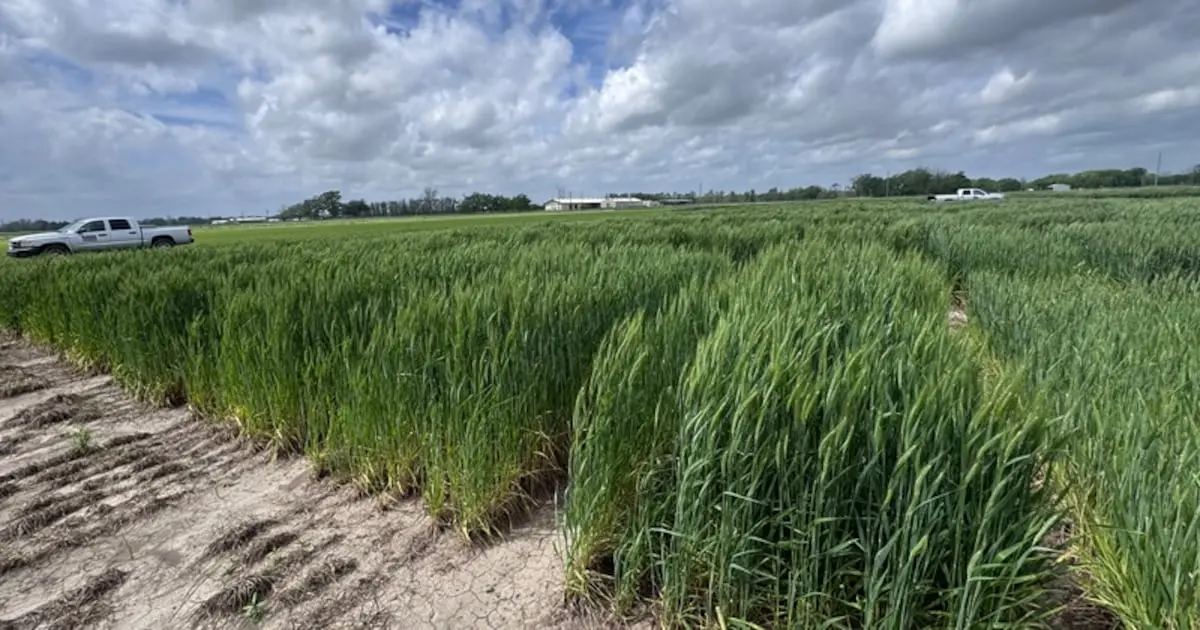
- Enhanced Structural Integrity: By depositing amorphous silica in cell walls, stems become rigid and upright. This eliminates "lodging"—the tendency of heavy, top-heavy crops like corn, wheat, and rice to tip over during severe weather events and high-velocity winds.
- Optimized Photosynthesis: Upright leaves capture sunlight more efficiently, reducing self-shading within dense crop canopies and maximizing photosynthetic output.
- Abiotic Stress Mitigation: Silicon acts as a physical and biochemical shield against environmental stressors, including drought, salinity, and heavy metal toxicity. Under drought conditions, silicon helps maintain cell turgor pressure and reduces transpirational water loss.
- Biotic Pest and Disease Resistance: Polymerized silicon creates a physical barrier that deters chewing insects and fungal pathogens (such as powdery mildew and blast). Furthermore, silicon triggers systemic acquired resistance (SAR) in plants, stimulating the production of defensive biochemicals when attacked by pests.
Official Statements and Strategic Vision
The leadership at Mafix views the intersection of agriculture and carbon removal not as a compromise, but as a synergistic commercial engine. In statements detailing the company’s strategic vision, CEO Jade Marcus emphasizes that agronomic performance must always come first to secure widespread farmer adoption.
"We are fertilizer first, but we also can remove carbon dioxide from the atmosphere, which is very different than a lot of the agronomic products that are put on fields today," Marcus states.
This philosophy underpins Mafix’s multi-pronged go-to-market strategy. Unlike single-feature carbon startups that rely entirely on volatile carbon offset credits to generate revenue, Mafix is fundamentally an agricultural inputs company that generates high-value agronomic returns for growers while co-delivering certified carbon removal.
Commercial Go-To-Market Strategies
To maximize market penetration and appeal to diverse farming operations, Mafix is actively exploring a flexible array of product formulations and deployment vectors:
- Standalone pH-Modulation Products: Formulations designed to optimize soil chemistry while supplying bioavailable silicon, particularly beneficial in acidic or highly weathered tropical soils.
- Dedicated Carbon Products: High-reactivity silicate formulations optimized specifically for maximum gigaton-scale enhanced rock weathering and durable $textCO_2$ drawdown.
- Blended Fertilizer Formulations: Co-granulations or physical blends of Mafix’s silicon material with traditional NPK fertilizers. This approach improves overall nutrient use efficiency (NUE)—helping crops uptake nitrogen and phosphorus more effectively while reducing chemical runoff into waterways.
By embedding carbon removal directly into an everyday input that farmers already budget for, Mafix bypasses the friction inherent in standalone carbon offset programs, creating a seamless, dual-revenue value proposition.
Future Outlook: Scaling to Meet Global Demands
As Mafix deploys its $5.4 million pre-seed capital to produce its first 1,000 tons of silicon fertilizer and execute comprehensive field trials, the company stands at a crucial juncture in its corporate evolution.
Overcoming Industry Skepticism
The agtech landscape is littered with well-intentioned startups that failed to cross the "valley of death" between greenhouse trials and commercial farm adoption. For Mafix, the path forward requires rigorous, peer-reviewed validation across diverse agro-climatic zones. Farmers are notoriously—and rightfully—pragmatic; they will not adopt a novel input unless it delivers a clear, quantifiable return on investment (ROI) through yield protection, input savings, or both.
By demonstrating that silicon applications not only prevent crop lodging and boost drought resistance but also improve overall fertilizer efficiency, Mafix can position its products as cost-neutral or net-positive investments, even before factoring in potential carbon-credit monetization.
The Macro Horizon: Gigaton-Scale Carbon Removal
Looking toward the late 2020s and beyond, the broader implications of Mafix’s technology extend far beyond individual farm gate economics. As global net-zero targets loom closer, corporations and governments are desperately searching for durable, scalable, and verifiable carbon dioxide removal (CDR) pathways that do not compete with arable land for food production.
Enhanced rock weathering represents one of the few CDR methods with gigaton-scale potential that can be seamlessly integrated into existing working lands. By leveraging idle global cement kiln capacity to pre-condition silicate rocks, Mafix has engineered a pathway to bypass the massive capital bottlenecks that have constrained other ERW initiatives.
If Mafix successfully proves its model during the upcoming field trials, the startup could spark a massive wave of industrial symbiosis—turning the heavy emitters of the past (cement manufacturing) into the foundational suppliers of climate-smart agriculture’s future. As silicon takes its rightful place alongside nitrogen, phosphorus, and potassium as an essential pillar of crop nutrition, Mafix is proving that feeding the world and cooling the planet do not have to be mutually exclusive endeavors.