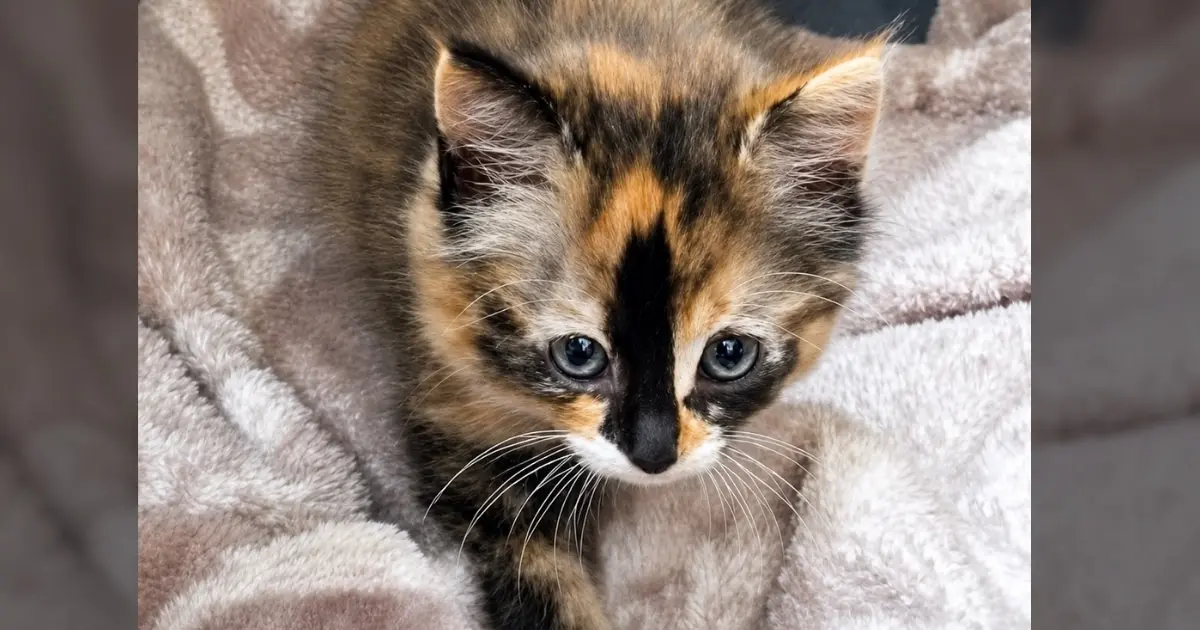
In the realm of animal rescue, every once in a while, a narrative emerges that transcends the ordinary boundaries of local animal welfare news, capturing the collective cultural imagination. Such is the extraordinary tale of Dolly, a remarkably resilient tortoiseshell kitten whose introduction to the world occurred under bittersweet and profoundly poetic circumstances. Rescued from the hazardous mechanical labyrinth of a Tesla engine in San José, California, this tiny feline survivor was brought into the care of the esteemed local nonprofit rescue organization, The Dancing Cat.
Dolly’s public debut on social media was nothing short of cinematic. As the kitten stretched luxuriously upon a plush, comforting blanket—rhythmically kneading her paws in the universal feline expression of contentment known as "making biscuits"—the legendary Dolly Parton anthem “Coat of Many Colors” played softly in the background. This touching tribute arrived precisely one day after the global community mourned the passing of the iconic country music superstar.
Beyond the poignant timing, little Dolly’s striking, mottled patchwork coat physically embodies the spirit of Parton’s immortalized lyrics. Yet, as her rescuers wisely noted, while her coat is undeniably breathtaking, it is the fierce, indomitable heartbeat beneath those patches that truly defines her. This report provides an exhaustive examination of Dolly’s harrowing rescue, the physiological realities of feline engine-hiding hazards, the deep behavioral science behind kneading, and the vital community mission of the rescue organization that saved her life.
Detailed Chronology
The Perilous Beginning: Trapped Within the Machine
Long before the warmth of a soft rescue blanket and the gentle strains of acoustic guitar music touched her life, Dolly’s existence hung precariously in the balance. Feline rescue workers and animal behaviorists frequently warn of the dangers posed by modern motor vehicles, particularly during cooler weather transitions. Seeking refuge from the elements, stray and free-roaming cats—especially vulnerable kittens—are naturally drawn to the residual warmth radiating from recently operated automobile engines.
For Dolly, a vehicle engine bay presented itself as a deceptive sanctuary. Enclosed spaces offer temporary shields against wind, rain, and dropping temperatures. However, what feels like a haven to an uninitiated kitten is, in reality, an industrial death trap. Modern automotive anatomy is defined by high-tension drive belts, rapidly spinning cooling fans, razor-sharp metallic components, and scalding engine blocks. Had the vehicle’s owner started the ignition moments earlier, or driven off without realizing the tiny passenger tucked away within the machinery, Dolly’s story would have reached a tragic and abrupt conclusion.
Fortunately, fortune favored the brave. Alert human intervention ensured that the kitten was discovered before the vehicle was put into motion. Extricated safely from the hazardous confines of the Tesla engine, Dolly was immediately transitioned out of immediate physical danger. However, the psychological and physical toll of her ordeal meant her journey was only just beginning. She required professional assessment, trauma-informed socialization, and a secure environment to transition from a wild survivor into a domestic companion ready for human affection.
Arrival at The Dancing Cat: A Sanctuary for At-Risk Felines
Following her extraction from the vehicle, Dolly was brought to the doors of The Dancing Cat, a prominent rescue organization and community cat lounge operating in San José, California. Known for its innovative approach to feline sheltering, the nonprofit functions as a lifeline for at-risk cats pulled primarily from municipal systems like the San José Animal Care Center. By utilizing a hybrid model of physical rescue spaces and specialized foster care networks, the organization provides targeted medical rehabilitation and behavioral enrichment for animals that might otherwise fall through the cracks of overcrowded shelter infrastructures.
Upon arrival, medical assessments confirmed that while Dolly was shaken by her ordeal, she possessed a constitution far tougher than her diminutive frame suggested. Recognizing her remarkable will to live, the staff at The Dancing Cat determined that her formal introduction to the public deserved to reflect both her physical appearance and her extraordinary spirit.
The Viral Debut: Art, Music, and Feline Resilience
When The Dancing Cat officially introduced Dolly to their digital community, they paired her story with a carefully orchestrated sensory experience. As the camera panned to the tiny tortoiseshell kitten, she was seen utterly relaxed, extending her limbs on a soft blanket. Her front paws moved back and forth in a measured, rhythmic cadence—a behavior universally recognized by cat lovers as "making biscuits."
Playing quietly in the background was Dolly Parton’s classic 1971 autobiographical single, “Coat of Many Colors.” The synergy between the song, the kitten’s name, and the striking visual pattern of her fur struck an immediate chord with followers. The public debut did not merely serve as an adoption announcement or a rescue highlight; it became a meditative reflection on survival, grief, legacy, and hope. The timing—occurring precisely twenty-four hours after the world said a collective goodbye to Parton—elevated the moment from a local shelter update to a viral sensation laden with emotional resonance.
Supporting Context & Metrics
The Science and Genetics of Tortoiseshell Cats
To fully appreciate the naming choice of little Dolly, one must understand the unique genetic phenomenon that produces tortoiseshell felines. Often colloquially referred to as "torties," these cats are celebrated for their distinctive, multicolored coats, which lack distinct stripes or defined patches. Instead, their fur features a dense, mottled blend of black, orange, and cream colors seamlessly woven together.
+-----------------------------------------------------------------+
# COMPARATIVE FELINE COAT GENETICS & PHENOTYPES                   #
+-----------------------------------------------------------------+
| COAT TYPE    | PRIMARY COLORS    | DISTINGUISHING CHARACTERISTICS|
+--------------+-------------------+-------------------------------+
| Calico       | Black, Orange,    | Features prominent, distinct  |
|              | White             | areas of solid white fur      |
+--------------+-------------------+-------------------------------+
| Tortoiseshell| Black, Orange,    | Mottled, blended blend of     |
| (Tortie)     | Cream (No White)  | colors with minimal/no white  |
+-----------------------------------------------------------------+
As detailed in the comparative breakdown above, tortoiseshell cats are distinct from calicos. While calicos exhibit large, clean patches of white alongside their orange and black pigmentation, tortoiseshell coats are characterized by a lack of white spotting, resulting in a mosaic-like appearance.
In Dolly’s specific case, her fur looks precisely like a literal "coat of many colors," directly mirroring the rags-to-riches imagery of Parton’s famous song, where a mother stitches together a coat for her child out of scraps of fabric, imbuing it with love and dignity. The rescue encapsulated this sentiment in their public release with a poignant blessing: "May her beauty never overshadow her resilient heart."
The video footage accompanying Dolly’s debut heavily featured her rhythmic paw movements, a behavior that instantly captivated viewers. In ethology and feline veterinary medicine, this behavior is known as "kneading," though laypersons affectionately call it "making biscuits."
Kneading is an instinctive behavior with deep developmental roots:
Neonatal Stimulation: Kittens begin kneading almost immediately after birth. While nursing from their mother, they rhythmically press their paws against the mammary glands to stimulate milk flow and facilitate nutrition.
Adult Regression and Comfort: Domesticated cats frequently retain this juvenile behavior well into adulthood. When an adult cat kneads a soft blanket, a pillow, or a human companion, it is a physiological indicator of supreme comfort, safety, and contentment. It signifies that the cat feels secure enough to regress into a state of absolute vulnerability.
Scent Marking: Feline paws contain specialized exocrine sweat glands. By pressing their paws rhythmically into surfaces, cats deposit subtle pheromones, effectively claiming their resting spots and marking their territory with familiar, comforting scents.
For Dolly, the act of making biscuits on her soft blanket held profound symbolic weight. Only days prior, those same tiny paws had been trapped within the hostile, cold machinery of an automobile engine. Now, engaging in the ancient, soothing ritual of biscuit production, she was reclaiming her peace.
Official Statements
The narrative surrounding Dolly has been amplified by the thoughtful and poetic commentary provided by her caretakers at The Dancing Cat. Their public communications have set a gold standard for compassionate animal welfare advocacy.
In their official social media release introducing the kitten, the organization stated:
“Rescued from the engine of a Tesla, this brave girl deserved a strong and powerful name. It is our great honor to introduce you to little Dolly and her coat of many colors. May her beauty never overshadow her resilient heart.”
Reflecting on the convergence of the rescue timeline and the passing of music legend Dolly Parton, rescue representatives noted that the universe often writes stories far more intricate than any human could invent:
“The rescue did not need a lengthy explanation to make the moment meaningful. A tiny survivor named Dolly, wrapped in her own beautiful coat of many colors while Parton’s familiar song played, said plenty on its own.”
Animal welfare advocates across the San Francisco Bay Area have praised the shelter for using the moment to educate the public on the hidden dangers of engine-bay nesting, transforming a personal rescue into a broader educational platform for motorists.
Future Outlook
As Dolly continues her rehabilitation within the foster network of The Dancing Cat, the future looks remarkably bright for the tiny tortoiseshell survivor. Having transitioned from a state of acute peril to one of pampered safety, she is currently receiving the comprehensive socialization, veterinary care, and nutritional support essential for a growing kitten.
The Path to Adoption
Organizations like The Dancing Cat operate under rigorous standards to ensure that rescued animals are placed into permanent, compatible homes. While Dolly’s viral introduction has generated an overwhelming wave of public interest, the shelter’s primary objective remains the long-term well-being of the kitten.
Prospective adopters must demonstrate an understanding of tortoiseshell temperament—which cat fanciers often affectionately describe as having "tortitude," a term denoting spirited, intelligent, and fiercely independent personalities—as well as a commitment to maintaining a safe, indoor environment. Given her history, her future adopters will undoubtedly be counseled on vehicle safety and the importance of checking engine compartments before starting cars in cooler months.
A Lasting Legacy
Dolly’s story serves as a powerful reminder of the fragility and resilience of life. In an era where news cycles are frequently dominated by heavy and distressing events, the tale of a tiny kitten rescued from a high-tech machine, blessed with the name of a cultural icon, and filmed serenely making biscuits on a soft blanket offers a much-needed narrative of healing and renewal.
Her first chapter was defined by the cold, terrifying confines of an automobile engine. Her second chapter, unfolding now, is defined by music, warmth, soft blankets, and unconditional human care. As Dolly grows from a fragile rescue kitten into a confident adult cat, she carries with her not only a coat of many colors, but a testament to the fact that with quick thinking, professional rescue intervention, and boundless compassion, even the most perilous beginnings can yield a truly beautiful story.