
Executive Overview
For roughly half of all Australian households, the morning routine involves a familiar, comforting ritual: scattering seeds, laying out breadcrumbs, or leaving scraps of meat on a backyard balcony for local wildlife. Backyard bird feeding is one of the nation’s most popular and enduring pastimes, offering millions of urban and suburban residents a daily, intimate connection with the natural world. People feed wild birds for various reasons—to provide a lifeline during ecological stress, to enjoy their melodic presence, or simply out of a deep-seated desire to care for local fauna.
Yet, this well-intentioned practice now stands accused by epidemiologists, wildlife ecologists, and biosecurity experts of harboring a hidden, devastating danger. As the highly pathogenic avian influenza (HPAI) H5N1 virus tightens its grip on the Australian continent, researchers warn that suburban feeding stations are transforming from quiet garden oases into high-risk epidemiological "superspreader" events.
The threat is no longer theoretical. The deadly H5N1 strain, which has already decimated wild bird and mammalian populations across the globe, is actively sweeping through Australian ecosystems. Recent mass mortality events—including the deaths of more than 1,000 crested terns and the grim milestone of the first H5N1-related death in an Australian mainland mammal (a long-nosed fur seal)—signal that the country’s wildlife is facing an unprecedented ecological crisis.
When humans provide supplementary food, they inadvertently create artificial congregations of multi-species flocks that would never naturally gather in such high densities. This unnatural crowding provides a fertile breeding ground for pathogen transmission. For vulnerable and endangered species, such as the orange-bellied parrot, an outbreak fueled by backyard feeding could push populations past the brink of extinction. Furthermore, the risk extends beyond avian species: mammalian scavengers like possums, foxes, and domestic pets risk exposure by consuming infected carcasses, while humans—particularly wildlife carers and veterinarians—face potential, albeit rare, zoonotic spillover.
This comprehensive investigative report examines the intersection of suburban culture and wildlife biosecurity, tracing the arrival of H5N1 in Australia, evaluating the epidemiological mechanics of backyard feeding stations, and outlining urgent, practical mitigation strategies that every citizen must adopt to prevent a local ecological catastrophe.
Detailed Chronology: The Escalation of H5N1 in Australia
To understand the urgency surrounding backyard bird feeding, one must trace the rapid and alarming trajectory of the H5N1 virus as it breached Australia’s geographical isolation and began moving through native ecosystems.
The Global Precedent
For years, the H5N1 strain of highly pathogenic avian influenza has been tracked across the Northern Hemisphere, rewriting textbooks on wildlife disease. Unlike previous strains of avian flu, the modern lineage of H5N1 has demonstrated an unprecedented capacity to cross species barriers. It has swept through commercial poultry operations, devastated wild seabird colonies from the Arctic to the Antarctic, and caused mass mortality events in mammalian species ranging from seals and sea lions to foxes, minks, and domestic cats. Epidemiologists recognized early on that H5N1 was no longer just an agricultural challenge; it had transformed into a global wildlife conservation crisis.
Breach of the Island Continent
For a considerable period, Australia’s geographical isolation offered a natural defensive buffer against the global spread of H5N1. Biosecurity experts hoped that the vast oceans separating Australia from Asia and the Americas might shield native fauna from the worst of the pandemic. However, migratory pathways utilized by shorebirds and seabirds eventually bridged the gap.
The initial detections of the virus in Australian territories sparked immediate concern among state and federal biosecurity agencies. Scientists mobilized surveillance networks, monitoring coastal wetlands, rookeries, and estuaries for signs of unusual mortality. It soon became clear that the virus had arrived, and local wildlife populations possessed little to no immunological defense against this novel, hyper-virulent pathogen.
The Tipping Point: Terns and Terrestrial Mammals
The crisis escalated sharply with a series of catastrophic mortality events that shattered any remaining complacency. Most notably, more than 1,000 crested terns were found dead in a sudden, devastating die-off, overwhelming local wildlife rescue organizations and sending shockwaves through the scientific community.
Shortly thereafter, Australia crossed a grim threshold: the first confirmed H5N1 death in a mainland mammal. The discovery of the virus in a deceased long-nosed fur seal proved that the infection was no longer confined to avian populations. It had successfully breached the mammalian barrier on the Australian mainland, signaling that domestic pets, urban scavengers, and terrestrial wildlife were now directly in the path of the pathogen. As the virus adapts and circulates among wildlife reservoirs, public health officials and conservationists are racing to identify and neutralize every potential vector that could accelerate community-level transmission.
Supporting Context & Metrics: The Science of Superspreader Sites
To grasp why backyard bird feeding poses such an acute danger during an H5N1 outbreak, one must examine the behavioral ecology of urban birds and the epidemiological dynamics of disease transmission.
The Illusion of Necessity vs. Biological Reality
Many Australians who maintain backyard bird feeders operate under the sincere belief that they are sustaining local wildlife through harsh environmental conditions, urban sprawl, and habitat loss. However, extensive ecological research reveals a different reality. Studies investigating avian diets demonstrate that most birds visiting suburban feeders obtain the vast majority of their daily nutritional requirements from natural sources—such as insects, nectar, seeds, and worms.
Consequently, the processed seeds, bread, and meat scraps provided by humans function primarily as supplemental snacks rather than essential meals. While these treats may delight human observers, they disrupt natural foraging behaviors and create artificial dependencies. More critically, they act as powerful behavioral magnets, drawing birds from wide geographical areas into concentrated, localized zones.
Transmission Hotspots and Artificial Congregations
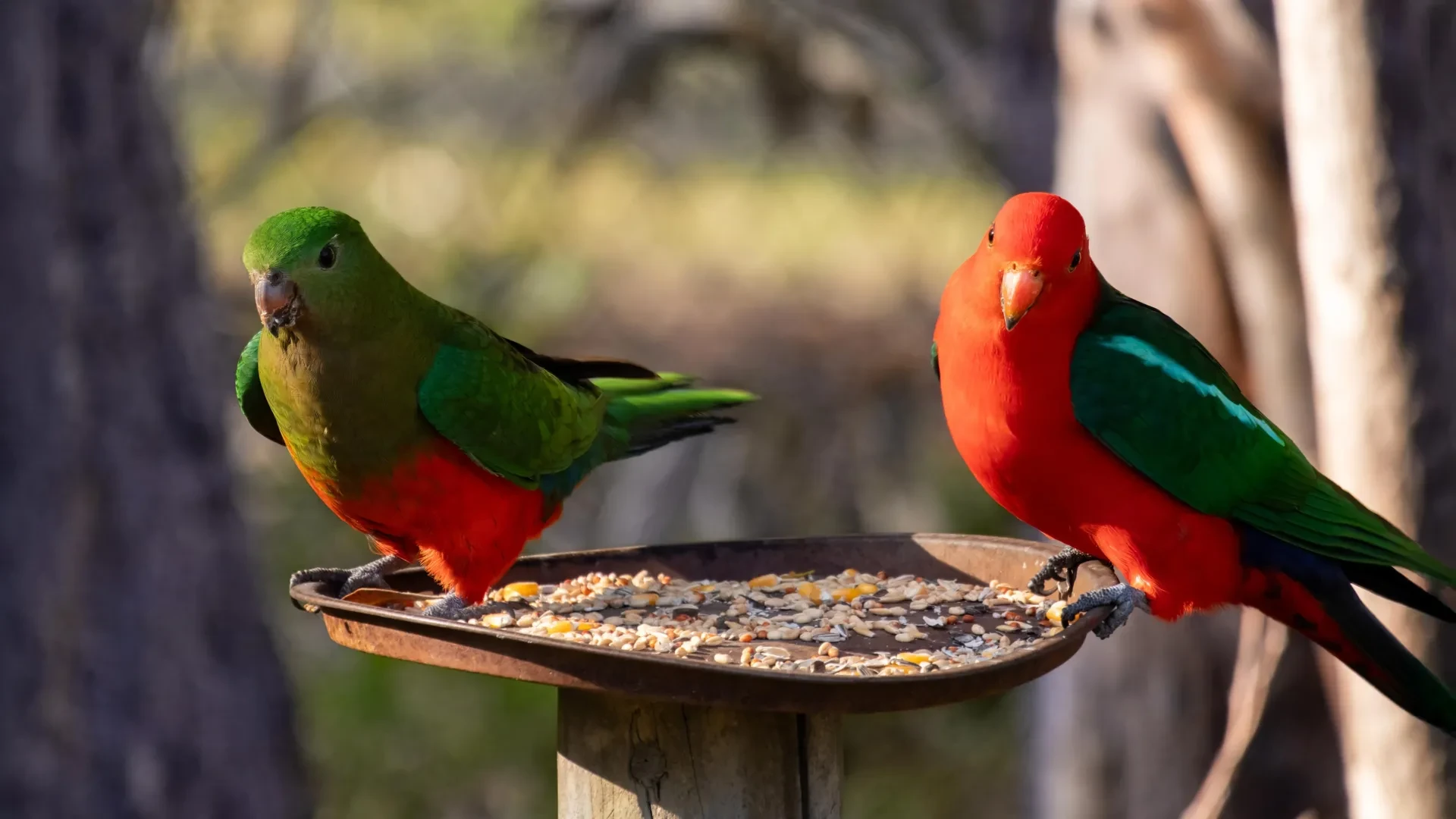
In a natural ecosystem, many of the bird species that visit backyard feeders rarely interact in high densities. Territorial behaviors, natural spacing, and diverse foraging habits typically keep populations dispersed. Backyard feeding alters this dynamic entirely.
When a feeder is stocked, it creates a high-density, multi-species mixing vessel. A single infected bird shedding the H5N1 virus through saliva, nasal secretions, or droppings can contaminate perches, feeding trays, and the food itself. As dozens or hundreds of sequential visitors land to feed, they ingest or come into direct contact with the pathogen. This dynamic mirrors the human "superspreader" events documented during the COVID-19 pandemic: closed-loop, high-density environments where transmission rates spike exponentially.
[Infected Bird Sheds Virus]
       │
       ▼
[Backyard Feeder / Feeding Tray] ◄── (High Density Multi-Species Congregation)
       │
       ├──► [Avian-to-Avian Transmission (e.g., Orange-Bellied Parrots)]
       │
       └──► [Scavenger Exposure (Possums, Foxes, Crows)]
                    │
                    ▼
       [Zoonotic Spillover Risk to Humans / Domestic Pets]
Cascading Risks to Threatened Species and Scavengers
The consequences of these backyard transmission hotspots extend far beyond common urban species like noisy miners or rainbow lorikeets. Australia is home to fragile, highly threatened avian populations that occasionally traverse suburban or peri-urban fringes. Species like the critically endangered orange-bellied parrot could face extinction-level pressures if an H5N1 outbreak rips through their remaining numbers.
Furthermore, the ecological fallout extends downward into terrestrial food webs. Scavenger animals—including brushtail possums, red foxes, wandering cats, and corvids (crows and ravens)—frequently patrol suburban yards in search of easy meals. If these scavengers consume dead or dying birds infected with H5N1, they themselves contract the virus, acting as secondary vectors that carry the pathogen deeper into urban and agricultural landscapes. While human infection remains rare and typically manifests with mild symptoms, wildlife carers, veterinary staff, and individuals in close physical contact with sick animals face elevated occupational risks.
Official Statements & Expert Guidance
As the H5N1 crisis unfolds across Australia, government agencies, biodiversity councils, and ecological research institutions have unified around clear, albeit difficult, public recommendations. The consensus is unequivocal: business-as-usual backyard bird feeding is no longer safe.
The Biodiversity Council and Ornithological Experts
Leading conservation bodies have issued urgent advisories detailing how supplementary feeding accelerates viral dissemination. Experts emphasize that while the public’s compassion for wildlife is commendable, continuing to feed birds during an active H5N1 epizootic is akin to playing ecological Russian roulette.
In response to public demand for guidance, biosecurity specialists have established a prioritized framework for risk reduction. The gold standard recommendation is unambiguous: stop feeding wild birds altogether. Because wild birds do not rely on backyard feeders for survival, withdrawing supplementary food does not starve them; rather, it encourages them to disperse into their natural foraging ranges, thereby implementing a form of social distancing that disrupts viral transmission chains.
Three Non-Negotiable Precautions for Persistent Feeders
Recognizing that some members of the public may be reluctant to completely abandon a cherished daily routine, experts have outlined three mandatory risk-mitigation protocols for those who choose to continue feeding:
- Drastically Reduce Food Volume: Filling large trays with abundant seed and meat scraps encourages massive flocks to congregate. By offering minimal amounts of food, property owners can discourage large gatherings, keeping bird density low and mimicking the natural social distancing required to suppress H5N1 transmission.
- Strictly Prohibit Hand-Feeding: The intimate interaction of a wild bird swooping down to take food directly from a human hand represents a severe biosecurity hazard. While direct human contraction of H5N1 is statistically rare, close physical contact eliminates the biological barrier between wild viral reservoirs and human respiratory or mucous membranes. This practice must cease immediately.
- Rigorous Sanitation Standards: If feeding surfaces, trays, and water baths are maintained, they must be disinfected regularly using domestic-grade bleach solutions. Experts stress a hardline rule: If you are not prepared to rigorously and regularly sanitize all feeding equipment, you should not be feeding wild birds at all.
Emergency Protocols and Reporting Channels
Federal and state agricultural departments have reinforced that public vigilance is vital for early detection and containment. Authorities urge citizens never to touch sick, dying, or dead wild birds or marine mammals under any circumstances.
When encountering wildlife mortality events, observers are instructed to follow strict safety protocols:
- Maintain a Safe Distance: Do not approach or handle carcasses.
- Secure Pets: Keep domestic dogs and cats far away from sick wildlife to prevent cross-species transmission.
- Document and Report: Record the precise location, take photographs from a safe distance, and immediately report the sighting to the Emergency Animal Disease Hotline on 1800 675 888 (Australia).
Future Outlook: Navigating the New Ecological Normal
The arrival and escalation of H5N1 in Australia marks a profound turning point in how society interacts with urban and peri-urban wildlife. The myth that suburban backyards exist as completely isolated sanctuaries from broader environmental pathogens has been irrevocably shattered. As global climate shifts, changing migratory patterns, and expanding urban footprints alter wildlife dynamics, Australia’s biosecurity landscape faces persistent, long-term pressures.
In the immediate future, managing the H5N1 crisis will require a delicate balance between public compassion and scientific pragmatism. Educational campaigns must convince millions of households that withholding food from backyard birds is not an act of cruelty, but an act of profound conservation stewardship. By modifying human behavior—curbing the impulse to feed, eliminating hand-feeding, and prioritizing strict environmental hygiene—citizens can dismantle the backyard superspreader networks that threaten to amplify the pandemic.
Ultimately, the H5N1 crisis serves as a stark reminder of the interconnectedness of human, animal, and environmental health (the "One Health" paradigm). How Australians respond in their backyards over the coming months will play a critical role in determining whether native species weather this unprecedented biological storm or succumb to a preventable domestic catastrophe.