
Executive Overview
To millions of pet owners worldwide, commercial pet food represents a wholesome, scientifically validated dietary solution designed to keep companion animals thriving. However, beneath the polished imagery of roasted meats, fresh vegetables, and clinical endorsements lies a complex regulatory framework characterized by enforcement gaps, semantic loopholes, and significant divergence from human food standards.
Contrary to widespread public belief, pet food in the United States is governed through a fragmented dual system split between federal authorities and individual state agencies. The U.S. Food and Drug Administration (FDA) maintains federal authority over safety and distribution standards, while State Departments of Agriculture enforce compliance at the localized operational level. Notably absent from regulatory enforcement power is the Association of American Feed Control Officials (AAFCO); despite defining ingredient definitions and nutritional profiles, AAFCO possesses zero regulatory, inspection, or enforcement authority.
Furthermore, historical safety nets have shifted over time. The United States Department of Agriculture (USDA)—which once operated a voluntary Certified Pet Food program mandating that all ingredients meet human-edible standards—no longer regulates commercial pet food production. This shift has allowed significant regulatory latitude. Today, federal policy permits ingredients derived from diseased animals or livestock that died of non-slaughter causes to enter the pet food supply chain under explicit agency discretion.
Concurrently, legal naming conventions allow products containing as little as 3% or 10% of a named ingredient to dominate product packaging, while visual representations of premium cuts of meat on bags remain largely unchecked by regulatory oversight. This comprehensive investigative report examines the structural realities governing pet food manufacturing, nutritional minimums, labeling legalities, and the ongoing struggle for consumer transparency led by industry advocacy groups.
Detailed Chronology: The Regulatory Landscape and the Evolution of Oversight
The governance of animal feed in the United States has undergone a dramatic transformation over the past several decades, evolving into a system where non-binding guidance frequently intersects with selective federal enforcement.
[ Historical USDA Standard ]
       │  (Voluntary human-edible certification program phased out)
       ▼
[ Modern Dual-Regulatory Model ]
       ├─► FDA (Federal authority; exercises "enforcement discretion")
       └─► State Departments of Agriculture (State-level inspection & enforcement)
       │
       ▼
[ Non-Regulatory Advisory Body ]
       └─► AAFCO (Establishes model nutrient profiles; zero legal authority)
The Transition Away from USDA Human-Edible Baselines
In earlier decades, pet food oversight featured direct involvement from the USDA through a specialized certification initiative. This program mandated that any pet food seeking certification had to utilize 100% human-edible ingredients handled within inspected facilities. As the commercial pet food market expanded exponentially, direct USDA oversight waned, leaving the market under the dual jurisdiction of the FDA’s Center for Veterinary Medicine (CVM) and state-level control officials.
The Rise of AAFCO Model Regulations
Without a single federal agency dictating granular nutritional formulas, state governments relied on AAFCO to establish standardized model definitions and nutrient profiles. Though state feed control officials sit on AAFCO committees, AAFCO itself remains a private, non-profit trade organization. It does not perform laboratory testing, conduct factory inspections, or issue product certifications. Manufacturers adopt AAFCO standards to gain state market access, but the organization exercises no legal mandate over non-compliant producers.
The Codification of "Enforcement Discretion" Regarding 4D Livestock
One of the most contentious turning points in pet food regulation involves the treatment of diseased animals or livestock that died by means other than slaughter (commonly referred to in industry parlance as "4D" animals: Dead, Dying, Diseased, or Disabled).

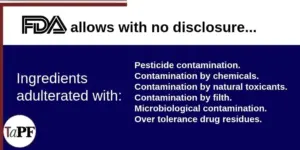
While federal statutes—specifically the Federal Food, Drug, and Cosmetic Act (FD&C Act)—explicitly prohibit the inclusion of adulterated or diseased animal tissues in food products, the FDA introduced policy guidelines granting itself authority to overlook these prohibitions within animal feed.
Despite repeated legal petitions brought forth by consumer organizations, including the Association for Truth in Pet Food (ATPF), the FDA has formally maintained its stance on exercising enforcement discretion. The agency’s official position dictates that animal food derived from non-slaughtered or diseased sources does not inherently present a human or animal health risk, thereby permitting these ingredients to remain unlabelled in retail pet foods.
Supporting Context & Metrics: Formulations, Percentage Rules, and Ingredient Dominance
Understanding the composition of pet food requires analyzing both macro-ingredient market data and the legal formulas that dictate package terminology.
Macro-Ingredient Utilization: The Dominance of Corn
While retail packaging overwhelmingly emphasizes whole meats, raw proteins, and exotics, supply chain metrics demonstrate a dramatically different reality. According to comprehensive data published by the Institute for Feed Education and Research (IFEEDER), agricultural grains form the foundational baseline of the mass-market pet food sector.
- Grain Scale: Nearly 1 million tons more corn is used in the manufacturing of pet foods than any other single ingredient.
- Economic Drivers: Corn serves as an abundant, economically efficient source of carbohydrates and calories, outstripping poultry, beef, soy, and wheat in total volume processed within North American manufacturing plants.
The Semantic Math of Product Names
The wording selected for a pet food product title is governed by strict, minimal-threshold percentages outlined in AAFCO model regulations. These descriptors determine the minimum quantity of a featured ingredient required inside the bag:
| Name Descriptor Category | Minimal Percentage Requirement | Processing Notes | Example Label Terminology |
|---|---|---|---|
| "With" Rule | 3% minimum of product weight | Exclusive of added water for processing | "Dog Food With Real Beef" |
| "Recipe / Formula / Dinner" | 10% minimum of product weight | Exclusive of added water for processing | "Chicken Dinner Cat Food" / "Salmon Formula" |
| Primary Named Protein | 95% minimum of total product | Exclusive of added water (70% including water) | "Beef for Dogs" |
Under these legal guidelines, a product labeled as "Beef Dinner for Dogs" or "Chicken Formula" is only legally required to contain 10% beef or chicken by weight (excluding added processing water). Similarly, a brand advertising a formula "With Real Salmon" meets regulatory compliance with as little as 3% salmon, leaving the remaining 97% of the formula to be comprised of lower-cost proteins, grains, or by-products.
TYPICAL FORMULA COMPOSITION ("Dinner" / "Formula" Labeling)
┌─────────────────────────────────────────────────────────────┐
│ █████████ 10% Named Ingredient (e.g., Real Beef)            │
│ ░░░░░░░░░░░░░░░░░░░░░░░░░░░░░░░░░░░░░░░░░░░░░░░░░░░░░░░░░░░ │
│ 90% Primary Grains, Fillers, By-Products, & Water           │
└─────────────────────────────────────────────────────────────┘
AAFCO Minimum Nutritional Profiles
To prevent acute deficiency illnesses, AAFCO maintains two core Nutrient Profiles: Adult Maintenance and All Life Stages. Products formulated for "Growth" (puppies and kittens) are required to meet the All Life Stages threshold.
Dog Food Minimum Protein Requirements
- Adult Maintenance: Requires a minimum crude protein content of 18.0%.
- All Life Stages / Puppy Growth: Requires a minimum crude protein content of 22.5%.
- Large Breed Puppy Nuance: Formulations intended for large-breed growth must restrict calcium levels slightly below standard growth profiles to prevent orthopedic developmental disorders.
Cat Food Minimum Protein Requirements
- Adult Maintenance: As obligate carnivores, cats require a higher baseline, set at a minimum crude protein content of 26.0%.
- All Life Stages / Kitten Growth: Requires a minimum crude protein content of 30.0%.
MINIMUM CRUDE PROTEIN REQUIREMENTS (AAFCO)

DOG FOOD:
Adult Maintenance  [██████████████████] 18.0%
All Life / Growth  [███████████████████████] 22.5%

CAT FOOD:
Adult Maintenance  [██████████████████████████] 26.0%
All Life / Growth  [██████████████████████████████] 30.0%
The Legal Benchmark for "Human Grade"
The term "Human Grade" is one of the few descriptors carrying a rigid operational definition under feed control standards. For a pet food product to legally claim "Human Grade" status:

"Every ingredient and the resulting product are stored, handled, processed, and transported in a manner that is consistent and compliant with regulations for current good manufacturing practices (cGMPs) for human edible foods as specified in 21 CFR Part 117."
If a single ingredient is transported in a non-refrigerated render truck, or if the finished product is packaged in a facility that does not fully comply with 21 CFR Part 117 human food sanitation codes, the entire product forfeits the legal right to use the "Human Grade" label.
Official Statements & Regulatory Disconnects
A central point of friction between consumer advocates and federal regulators rests on enforcement priorities, product validation, and packaging graphics.
The FDA Position on Non-Slaughtered Animal Tissues
Despite clear language within Section 402(a)(5) of the Federal Food, Drug, and Cosmetic Act deeming food from diseased animals adulterated, the FDA has publicly affirmed its stance on exercising enforcement leniency in feed manufacturing.
Official FDA Policy Statement:
"We do not believe that the use of diseased animals or animals that died otherwise than by slaughter to make animal food poses a safety concern and we intend to continue to exercise enforcement discretion."
Consumer groups, including the Association for Truth in Pet Food (ATPF) led by advocate Susan Thixton, have repeatedly challenged this position. ATPF has filed multiple administrative petitions urging the FDA to enforce federal bans on 4D meats in pet food, or at minimum, require mandatory front-of-package disclosures when such materials are utilized. To date, all petitions submitted by consumer groups requesting these mandates have been formally rejected by the FDA.
STATUTORY BAN (FD&C Act) ──► FDA "ENFORCEMENT DISCRETION" ──► ALLOWED IN PET FOOD
  (Prohibits 4D Meats)           (Waives Adulteration Rules)     (No Label Disclosures Required)
The Validation Gap in Feeding Trials
Pet food manufacturers frequently highlight that their diets have undergone "AAFCO Feeding Trials" to prove nutritional adequacy. However, a major structural void exists regarding the verification of these clinical tests:
- No Third-Party Auditing: While AAFCO outlines the protocol parameters for a standard feeding trial (such as duration, subject group size, and blood chemistry markers), AAFCO does not observe, certify, or audit the results.
- Absence of Regulatory Validation: Neither the FDA nor State Departments of Agriculture are legally required to validate feeding trial data provided by manufacturers. The claims operate on a self-reporting system without mandatory external verification.
Package Graphics and Unenforced Labeling Codes
Model pet food regulations state explicitly:

"A vignette, graphic, or pictorial representation on a pet food label shall not misrepresent the contents of the package."
Despite this requirement, market shelves remain populated with pet food packaging displaying imagery of human-grade prime rib cuts, fresh whole salmon fillets, and farm-fresh garden vegetables—even on products primarily composed of corn, meat by-products, and synthetic premixes.
Regulatory agencies (both FDA and state-level inspectors) rarely allocate enforcement resources toward rectifying misleading package imagery, leaving a persistent divide between what is depicted visually on the bag and what is delivered nutritionally inside it.
Future Outlook: Consumer Advocacy and Industry Transparency
As pet owners increasingly view companion animals as integral family members, the demand for accountability across the pet food supply chain has intensified. This cultural shift is forcing a re-evaluation of long-standing regulatory compromises.
The Push for Legislative and Administrative Reform
Independent advocacy organizations such as the Association for Truth in Pet Food (ATPF) continue to advocate at state and federal levels. Representing consumer interests during AAFCO meetings and FDA stakeholder forums, advocates focus on key reform targets:
- Mandatory Adulteration Transparency: Eliminating enforcement discretion for 4D ingredients or legally requiring transparent warning statements on packaging that contains rendered non-slaughter materials.
- Enforcement of Label Imagery Rules: Pressuring state feed control officials to reject product registrations when packaging graphics visibly misrepresent raw ingredient inputs.
- Expansion of Verified Human-Grade Processing: Supporting supply-chain infrastructure that allows smaller, independent manufacturers to achieve verifiable 21 CFR Part 117 compliance.
       PET FOOD INDUSTRY FUTURE TRAJECTORY

       Traditional Framework             Emerging Market Demands
┌───────────────────────────────┐   ┌───────────────────────────────┐
│ • Enforcement Discretion      │   │ • Full Ingredient Traceability│
│ • Corn/Grain Baseline Focus   │ ──► • Strict 21 CFR 117 Compliance│
│ • Self-Reported Feeding Trials│   │ • Truth-in-Labeling Enforcement│
│ • Unenforced Graphic Imagery  │   │ • Third-Party Data Validation │
└───────────────────────────────┘   └───────────────────────────────┘
Market Shifts Toward Supply-Chain Traceability
Driven by educated consumers, a segment of the pet food industry is moving away from traditional, highly processed formulations toward fully traceable, human-grade foods and raw, fresh-preserved products. Independent auditing resources, annual consumer-funded safety lists, and transparent ingredient sourcing reports are becoming central to brand trust.
Ultimately, bridging the gap between pet food regulation and consumer expectation will require systemic change. Until federal oversight aligns directly with statutory law, pet owners must navigate product choices by examining technical nutrient profiles, understanding legal label definitions, and looking beyond promotional packaging graphics.