
Executive Overview
By the time most people encounter a young puppy, an invisible yet monumental chapter of its life has already quietly unfolded. The first 90 days of a canine’s existence represent a crucial, highly sensitive developmental window—a period that dictates how a young animal will process sensory inputs, build emotional resilience, adapt to novelty, and navigate complex environments for the rest of its life. During this foundational phase, a puppy’s brain acts as a biological sponge, absorbing environmental data at an unprecedented rate.
While these formative weeks are essential for any domestic dog, they carry extraordinary weight for canines destined for a higher calling: future guide dogs and professional service animals. At organizations like Dogs Inc, this early developmental continuum is neither left to chance nor treated as casual pet ownership. Instead, it is approached as a deliberate, science-backed orchestration of socialization, habituation, and structured learning.
Through the dedicated efforts of a vast network of volunteer puppy raisers, puppy sitters, area coordinators, and community supporters, these pups are systematically introduced to the sights, sounds, textures, and rhythms of human society. Long before they ever step foot into formal, advanced professional training, these puppies are equipped with the emotional fortitude, curiosity, and trust required to one day act as the eyes, ears, and independent lifelines for individuals with visual impairments or other disabilities. This report examines the mechanics of the first 90 days, the profound impact of structured socialization, the indispensable role of volunteer raisers, and how small, everyday experiences lay the groundwork for life-changing partnerships.
Detailed Chronology: The Blueprint of Early Canine Development
To understand the immense transformation a puppy undergoes in its first three months of life, one must break down the developmental timeline into discrete, biologically driven stages. Each phase presents unique behavioral milestones and critical periods of neural plasticity.
Days 1 to 21: The Neonatal and Transitional Periods
In the earliest weeks of life, a puppy’s world is governed entirely by warmth, nursing, and sleep. Born blind, deaf, and entirely dependent on their mother and littermates, neonates experience rapid neurological growth.
- Sensory Awakening: Around days 10 to 14, their eyes gently open, and their ear canals unseal. Suddenly, a universe of sights and sounds begins to intrude upon their quiet world.
- The Transitional Phase: By the third week, puppies begin to stand, take their first wobbly steps, and interact playfully with their littermates. This is where basic canine communication—such as recognizing body language, respecting physical boundaries, and understanding vocalizations—takes root.
Days 22 to 70 (Weeks 3 to 10): The Primary Socialization Window
This is widely recognized by animal behaviorists, veterinarians, and trainers as the most critical epoch in a dog’s life. During this phase, the brain undergoes a surge of synaptogenesis, creating neural pathways at a breakneck speed.
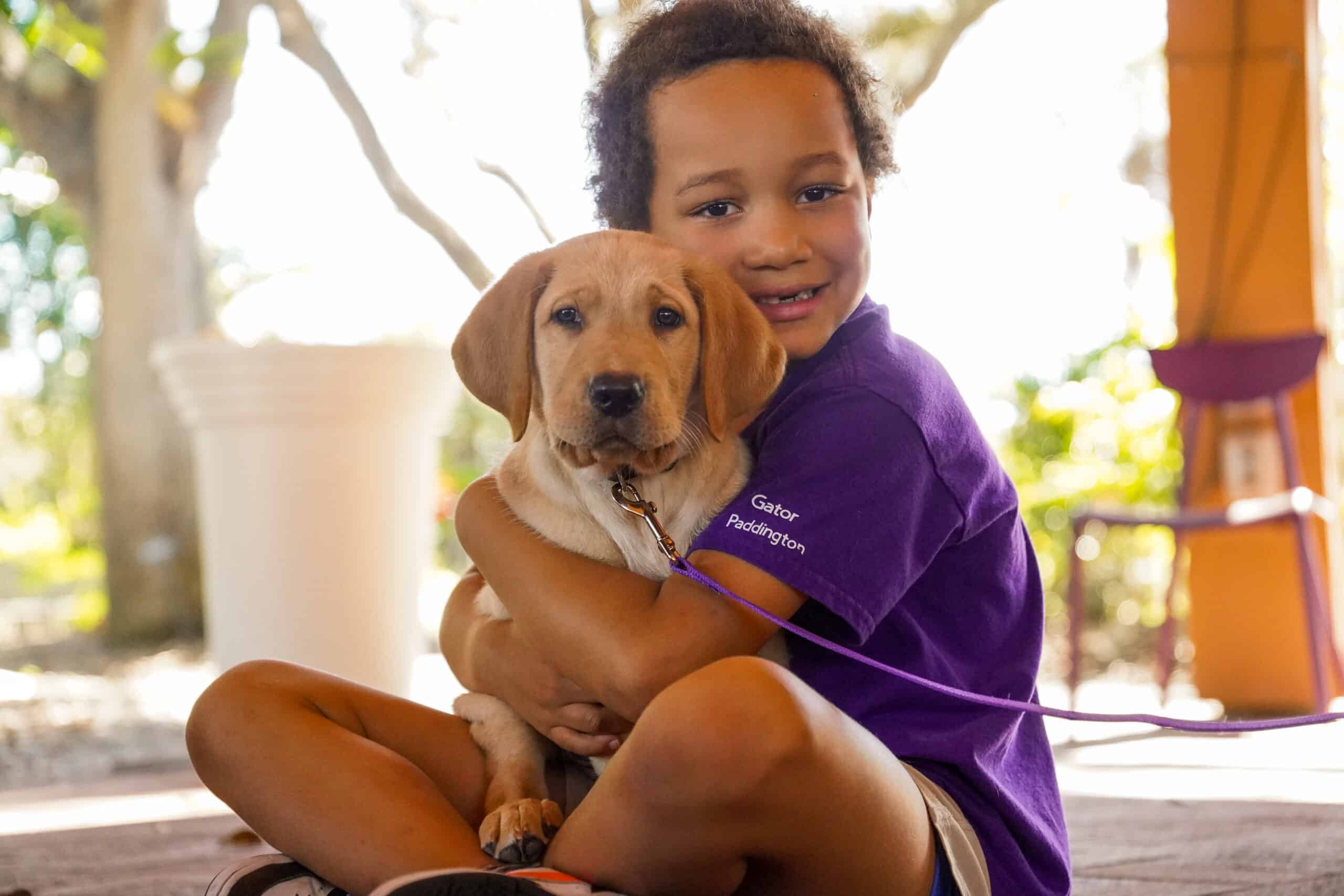
- The Rise of Curiosity vs. Fear: Initially, puppies possess an innate sense of curiosity with virtually zero fear response. As they move through weeks five, six, and seven, caution and fear responses gradually emerge.
- The Power of Positive Exposure: It is during this narrow window that deliberate, gentle exposure to novel stimuli is paramount. Introducing puppies to diverse human demographics (children, adults, individuals using mobility aids), varying auditory landscapes (vacuum cleaners, sirens, dropping pots and pans), and multiple surface textures (grass, gravel, tile, metal grates) teaches the brain that new things are safe rather than threatening.
- Littermate Dynamics: Remaining with the litter through at least week eight allows puppies to learn "bite inhibition." If a puppy bites a sibling too hard during play, the sibling yelps and stops playing, teaching the offender a vital lesson in impulse control and social moderation.
Days 71 to 90+ (Weeks 10 to 13+): Consolidation, Routine, and Independence
As puppies transition past their tenth week, the initial rapid-fire socialization phase merges into a period of integration, confidence-building, and foundational obedience.
- Establishing Predictable Routines: This is when structured household habits become deeply influential. Predictable cycles of feeding, active exploration, basic training, and enforced crate rest provide a psychological safety net.
- Deepening Trust: As puppies are placed into the homes of specialized volunteer puppy raisers, they begin generalizing their early socialization lessons to broader community settings. Every successful trip to a quiet park, every calm elevator ride, and every successfully navigated threshold reinforces the core emotional resilience they will rely upon as working adults.
Supporting Context & Metrics: The Science of Neuroplasticity and Resilience
The emphasis placed on the first 90 days is not merely anecdotal; it is rooted in decades of ethological research and behavioral science. Neuroplasticity—the brain’s ability to reorganize itself by forming new neural connections—peaks during puppyhood.
The Cost of Sensory Deprivation
Scientific studies on canine development have consistently demonstrated that puppies who experience prolonged sensory deprivation during their primary socialization window suffer from what behaviorists call "kennelosis" or generalized isolation syndrome. These dogs often exhibit extreme phobias, chronic anxiety, inability to cope with environmental changes, and reactive behaviors later in life. For a family pet, this can create severe behavioral challenges; for a working service dog, it represents an insurmountable barrier to public access work.
Conversely, intentional early exposure acts as a form of psychological vaccination. By introducing controlled stressors and novel challenges while pairing them with positive reinforcement, puppy raisers build what researchers term "situational resilience." When a service dog-in-training encounters an unexpected loud noise or a complex urban obstacle later in life, its brain references those early 90-day experiences, allowing the dog to process the event calmly rather than entering a state of panic.
The Metrics of Success at Dogs Inc
Organizations like Dogs Inc understand that the quantitative measurement of a service dog’s career success begins with qualitative metrics during puppyhood. Tracking data points such as:
- Recovery Time: How quickly a puppy returns to a baseline state of calm after encountering a startle stimulus.
- Environmental Adaptability: The ease with which a pup transitions from rural or suburban home environments to bustling public accommodations (airports, grocery stores, medical facilities).
- Focus Maintenance: The dog’s ability to remain engaged with its handler amidst high-distraction environments.
These metrics prove that the deliberate curation of a puppy’s environment during its first three months directly correlates with graduation rates from advanced training programs.

Official Statements and Perspectives from the Field
The intricate process of guiding a puppy through its first 90 days requires a synchronized community effort. Behind every confident, poised service dog is an army of volunteers, trainers, and coordinators dedicated to the mission.
Industry experts and organizational leadership at Dogs Inc emphasize that the journey of a service dog is a collaborative relay race. While professional trainers eventually impart specialized technical tasks—such as retrieving dropped items, guiding around physical barriers, or alerting to medical indicators—they cannot manufacture emotional stability out of thin air.
"By the time most people meet a puppy, important learning has already begun," notes program literature from Dogs Inc. "The first 90 days are a major part of puppy development, shaping how a young puppy responds to the world, builds confidence, and develops lifelong behaviors."
This perspective shifts the paradigm of dog training away from mere obedience toward holistic emotional development. According to veteran puppy raising coordinators, the goal of the first 90 days is never perfection:
"Rather than expecting perfection, the goal is to help each pup become confident and emotionally balanced before formal training begins. Positive reinforcement, consistency, and structure all help support the process."
Volunteer puppy raisers echo this sentiment, noting that the experience is as transformative for the human participants as it is for the animals. Stepping into the role of a raiser requires patience, humility, and an acute awareness of canine body language.
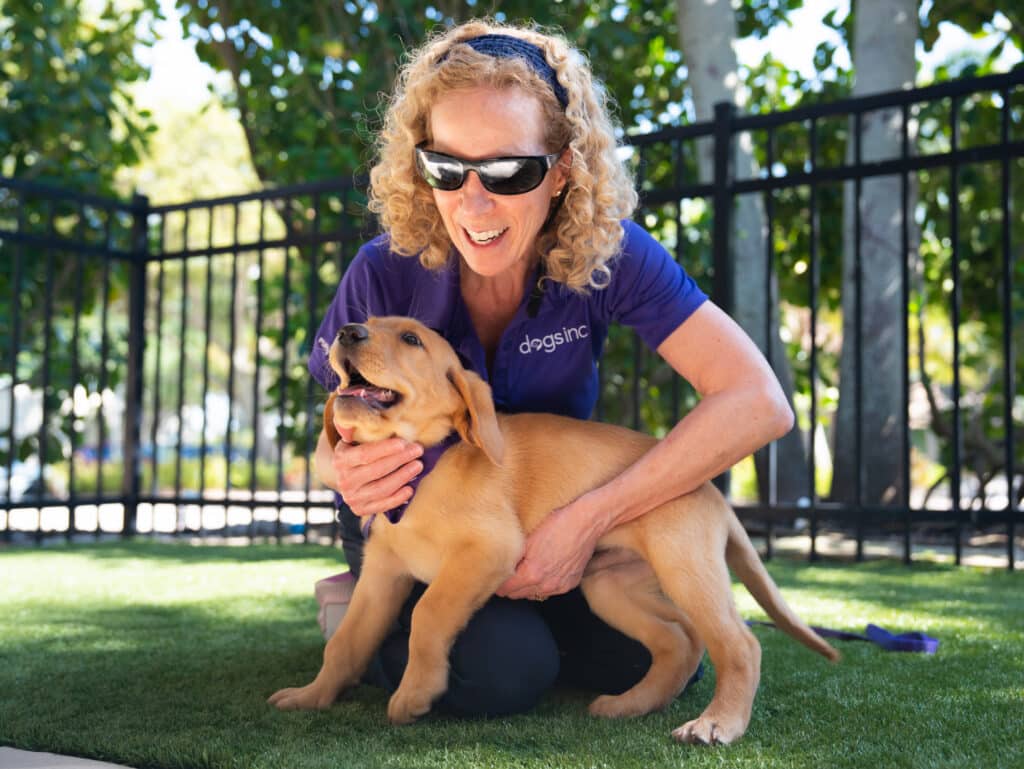
"Volunteer puppy raising is also supported by a larger community," notes Dogs Inc. "Fellow puppy raisers, puppy sitters, area coordinators, and other volunteers help provide guidance and support throughout the journey, ensuring that every pup builds a strong foundation before formal training even begins."
How Service Dog Puppies Are Raised Differently
While pet puppies enjoy wonderful, loving homes, the upbringing of a service dog-in-training involves a specialized curriculum designed to prepare them for demanding public environments. The differences lie in intentionality, exposure depth, and emotional conditioning.
Public Access Socialization
Pet dogs are rarely permitted in grocery stores, restaurants, hospitals, or bustling transit hubs. Service dog puppies, however, must become completely habituated to these environments. Under the guidance of their volunteer raisers, puppies are systematically introduced to:
- Sliding automatic doors and spinning security gates.
- The rumbling floors of elevators and escalators.
- Slippery tile floors, metal grates, and slick commercial surfaces.
- The unpredictable movements and vocalizations of crowds, children, and individuals using wheelchairs or walkers.
Managing Distractions with Calmness
A pet dog is allowed to chase a squirrel, bark at the doorbell, or investigate dropped food. A service dog must master impulse control in the face of intense distractions. During the first 90 days and the months that follow, puppy raisers use structured routines to teach puppies that ignoring distractions yields high rewards. Whether it is resting quietly under a restaurant table while patrons bustle about or ignoring a passing bicycle on a neighborhood walk, the puppy learns that its primary focus remains anchored to its handler.
The Role of Structure and Crate Training
Structure provides safety. Predictable daily routines involving measured exercise, balanced nutrition, designated play intervals, and consistent crate training help puppies regulate their nervous systems. Crate training, in particular, teaches young dogs how to self-soothe and rest in unfamiliar surroundings—a vital skill for working dogs that may need to accompany their handlers into tight spaces, airplanes, or office environments for extended periods.
Future Outlook: The Ripple Effect of Early Intervention
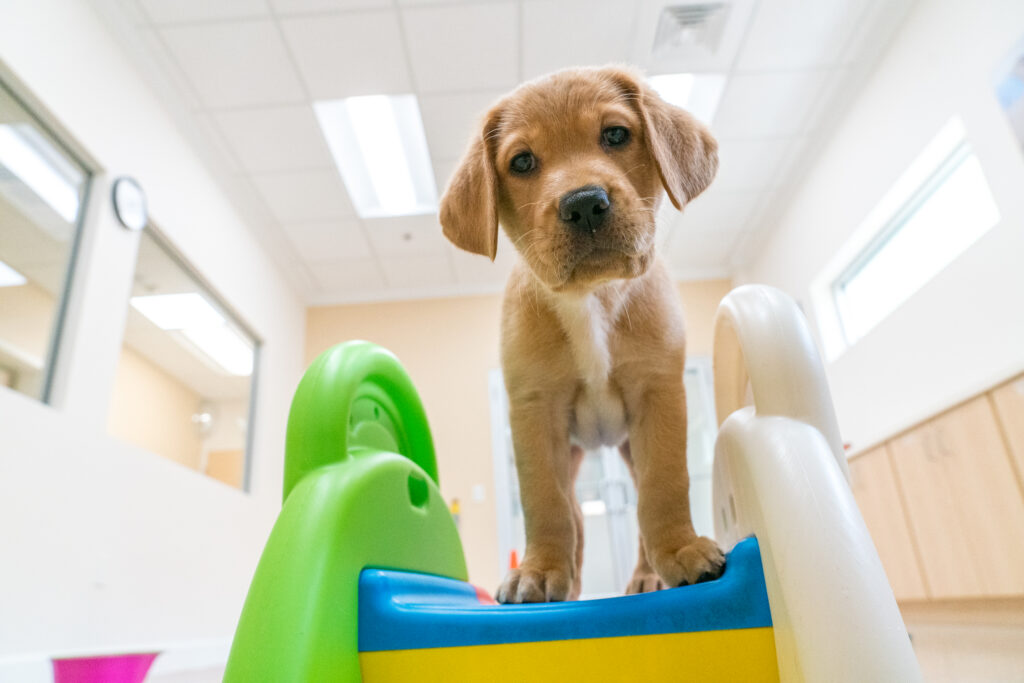
As the demand for mobility assistance, guide work, and specialized service dogs continues to rise globally, the protocols surrounding early puppy development are evolving. Modern organizations are placing an even greater emphasis on early neurological stimulation (ENS) and early scent introduction (ESI) during the neonatal and transitional periods, pushing the boundaries of what puppies can absorb and process before they leave their whelping environments.
Empowering the Next Generation of Volunteers
The future of organizations like Dogs Inc relies heavily on expanding awareness and engagement within local communities. Educating future puppy owners, pet enthusiasts, and community members on the principles of early socialization creates a cultural shift in how society views canine behavior. When everyday pet owners understand the value of positive exposure, patience, and structured routines during a puppy’s formative weeks, the overall standard of canine welfare rises.
A Call to Action
The journey of a service dog begins long before a harness is fitted or a command is issued. It begins in the quiet moments of trust-building, the gentle exposure to a strange sound, the comforting security of a crate, and the tireless dedication of volunteer raisers who invest their hearts into shaping a better tomorrow.
For those inspired by this profound mission, the opportunities to make an impact are expansive. Whether stepping forward to become a volunteer puppy raiser, offering temporary relief as a puppy sitter, supporting developmental programs through donations, or simply following the remarkable journey of the next generation of pups, every contribution matters.
To learn more about how Dogs Inc helps puppies grow into extraordinary animals that change lives, or to discover how you can become part of this life-changing community, visit Dogs Inc today.