
Executive Overview
In the high-stakes world of emergency services, first responders are trained to expect the unexpected. However, a recent rescue operation in Joppatowne, Maryland, challenged the conventional boundaries of domestic rescue. Highway, a small Terrier with an unfortunate penchant for exploration, became deeply entangled within the complex undercarriage of a household reclining chair. What began as a routine day for a local family quickly escalated into a high-stakes, time-sensitive emergency when the pet became physically wedged within the heavy metal mechanisms of the furniture.
The incident required the deployment of the Joppa Magnolia Volunteer Fire Company (JMVFC), whose responding crew quickly realized that manual extrication was impossible. To free the animal without causing catastrophic injury, firefighters resorted to utilizing a heavy-duty HURST "Jaws of Life" rescue tool—an advanced hydraulic apparatus typically reserved for high-impact vehicular extrications.
Following a successful and delicate operation, Highway was extracted and immediately transferred to local emergency medical services for transport to a veterinary hospital. This unusual incident has ignited a broader public conversation regarding the hidden mechanical hazards that standard household furniture poses to domestic pets, highlighting the intersection of emergency engineering, animal welfare, and public safety.
Detailed Chronology
[00:00] Pet Enters Undercarriage -> [00:15] Family Identifies Entrapment -> [00:30] JMVFC Dispatch & Arrival -> [00:45] Tactical Assessment & Tool Selection -> [01:05] Precision Hydraulic Extraction -> [01:20] Medical Transport via Medic 81The Initial Entrapment
The emergency began in the quiet residential community of Joppatowne, located in Harford County, Maryland. Highway, a small and highly curious Terrier, sought out a dark, confined space beneath a family reclining chair. Whether driven by a natural denning instinct, a desire for a quiet nap, or curiosity, the dog managed to navigate deep into the interior framework of the recliner.
When the chair’s mechanism shifted—either through natural movement or an attempt by the family to adjust the footrest—the metal scissor-linkage and heavy springs closed around Highway’s body. The Terrier was instantly pinned, unable to retreat or advance. His family quickly discovered the predicament but realized that any attempt to force the chair open manually could apply lethal pressure to the dog’s fragile skeletal structure. Realizing the severity of the entrapment, they placed an emergency call to 911.
First Responders Arrive on Scene
The Joppa Magnolia Volunteer Fire Company dispatched a rescue crew to the residence. Upon arrival, officers conducted a 360-degree tactical assessment of the furniture. The responding firefighters faced a complex problem:
- The steel framework of the recliner was under high spring tension.
- Standard hand tools, such as screwdrivers or manual bolt cutters, lacked the necessary leverage and risked sudden, uncontrolled releases of mechanical energy.
- The dog was highly stressed, increasing his heart rate and risk of shock, which limited the time window for a safe extrication.
The Decision to Deploy Hydraulic Tools
Recognizing that manual disassembly was too dangerous, the incident commander authorized the deployment of the HURST Jaws of Life. This decision was not made lightly; the tool is engineered to cut through reinforced steel pillars in motor vehicles, and applying such immense force within inches of a small animal required surgical precision.

+-----------------------------------------------------------------+
|              JMVFC TACTICAL EXTRACTION SEQUENCE                 |
+-----------------------------------------------------------------+
|  1. Stabilization: The chair frame was manually secured to      |
|     prevent shifting.                                           |
|                                                                 |
|  2. Tool Positioning: The hydraulic spreader tips were placed  |
|     into the primary mechanical pivot point of the recliner.    |
|                                                                 |
|  3. Micro-Spreading: Incremental hydraulic pressure was applied |
|     to slowly bend the steel frame away from the dog.           |
|                                                                 |
|  4. Extraction: Firefighters shielded the dog's body while      |
|     gently sliding him free from the widened opening.           |
+-----------------------------------------------------------------+
The operation was executed flawlessly. Firefighters operated the heavy hydraulic spreader with extreme care, widening the metal gap millimeter by millimeter until the pressure on Highway was relieved.
Post-Rescue Medical Care
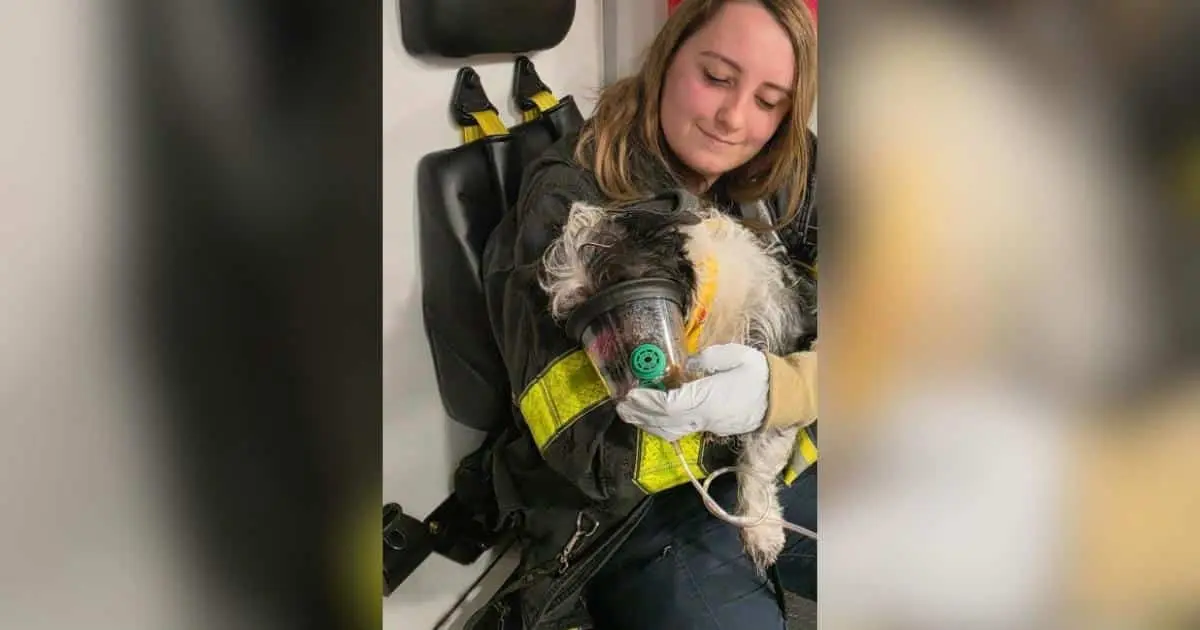
Once freed, the immediate focus shifted to Highway’s physical condition. Pinned under metal machinery for an extended period, the dog faced potential crush injuries, internal bleeding, and severe psychological shock.
Harford County Department of Emergency Services Medic 81 took custody of the patient at the Joppa station. Due to the potential for hidden trauma, Medic 81 transported Highway to a local emergency veterinary clinic. This rapid transfer ensured that professional veterinary staff could run diagnostic imaging and treat any soft-tissue injuries sustained during the entrapment.
Supporting Context & Metrics
The Physics of the Hazard: Why Recliners are Mechanical Traps
Reclining sofas and chairs are common in modern households, yet few owners recognize the mechanical dangers they present to domestic animals. The undercarriage of a standard recliner operates on a system of:
- Scissor-Action Linkages: Flat metal bars that slide past one another to extend the footrest. These act as high-force shears.
- Heavy-Duty Tension Springs: Steel springs that store mechanical energy to assist in lifting the user’s weight.
- Counter-Balance Frameworks: Heavy wooden and steel frames that shift weight based on gravity.
When a human sits on a recliner, their body weight translates into hundreds of pounds of mechanical force across these pivot points. If a small dog or cat (typically weighing between 5 and 20 pounds) is resting inside the frame, even a minor adjustment of the chair can exert crushing forces that far exceed the structural tolerance of animal bones.
| Animal Type | Average Weight | Common Hiding Driver | Primary Risk Point |
|---|---|---|---|
| Small Terriers / Toy Dogs | 8–15 lbs | Curiosity, warmth-seeking | Lower scissor-linkage |
| Domestic Cats | 7–12 lbs | Fear (thunderstorms, guests) | Upper spring-tension coils |
| Puppies / Kittens | 1–5 lbs | Playful exploration | Gear-track and motor drive (Power recliners) |
Technical Specifications: The Power of the HURST Tool
The contrast between the rescue subject and the rescue tool highlights the unique nature of this operation. The HURST Jaws of Life used in this extraction is a highly advanced piece of engineering:
- Operating Pressure: Up to 10,000 PSI (pounds per square inch).
- Spreading Force: Capable of delivering tens of thousands of pounds of force.
- Primary Design Purpose: Penetrating high-strength, low-alloy steels in modern electric and combustion vehicles.
Using a tool designed to lift or tear metal structures on a fragile household chair occupied by a small terrier required the operator to utilize micro-adjustments, ensuring the tool did not slip or over-extend, which could have proved fatal for the pet.

Official Statements and Public Reaction
The Joppa Magnolia Volunteer Fire Company documented the rescue on their official social media channels, sharing photos of the intricate extraction process. The post quickly went viral, drawing widespread praise from the local community and animal lovers worldwide.
A representative from the fire company emphasized the department’s dedication to preserving all lives, regardless of species:
"Our members are trained to handle a wide array of emergencies, and while we most frequently use our hydraulic tools at vehicle accident scenes, our mission is to protect life—and that includes our beloved four-legged family members. The crew on scene exercised incredible patience and skill to ensure Highway was freed safely."
Community Response
The public response highlighted a growing cultural shift where pets are widely viewed as core family members. Commenters praised the first responders for treating the call with the same urgency and professionalism as a human rescue.
Furthermore, the post served as an unexpected public service announcement. Dozens of pet owners shared their own near-miss experiences with reclining furniture:
- One resident recounted having to completely disassemble a sectional couch during a thunderstorm to free a frightened rescue dog.
- Another commenter noted that their cat had suffered a broken leg years prior under similar circumstances, warning others to always check the undercarriage before closing a footrest.
Future Outlook: Preventing Domestic Mechanical Injuries
While Highway’s rescue concluded with a successful extraction, the incident serves as a stark warning to pet owners. Emergency management agencies and veterinary associations recommend several preventative measures to mitigate the risks associated with reclining furniture.
        [Pet Safety Protocol for Reclining Furniture]
                              |
       +----------------------+----------------------+
       |                                             |
[Behavioral Control]                          [Physical Barriers]
  - Visual verification before operating        - Under-chair blockades
  - Training pets away from furniture           - Enclosed fabric undercarriages
  - Safe alternative "denning" spaces           - Mechanical lockouts
1. Pre-Operation Inspections
Pet owners should establish a strict habit of visually verifying the location of their pets before operating any reclining mechanism. If a dog or cat is unaccounted for in the home, the footrest should remain closed, and the chair should not be sat upon or adjusted until the animal is located.

2. Utilizing Physical Barriers
Many modern recliners feature open-back designs that allow easy access to the interior machinery. Pet owners can install aftermarket fabric barriers, netting, or custom-fit wooden panels to block access to the undercarriage. Some pet-friendly furniture manufacturers are now designing recliners with fully enclosed, zippered under-cloths to prevent animals from crawling inside.
3. Alternative Denning Options
Pets often crawl under furniture because they are seeking a secure, dark environment—especially during high-stress events like thunderstorms, fireworks, or loud gatherings. Providing designated safe spaces, such as covered pet beds or crate setups in quiet rooms, can significantly reduce their desire to hide inside mechanical furniture.
4. Technical and Design Solutions
Moving forward, there is an increasing call for furniture manufacturers to consider pet safety in their product designs. Incorporating pressure-sensitive auto-stop sensors in motorized recliners—similar to the safety mechanisms found in automatic garage doors—could prevent entrapment incidents before they require the intervention of emergency services.
Until such safety standards become industry-wide, the responsibility falls on pet parents to remain vigilant, ensuring that comfortable living room amenities do not become dangerous traps for their companion animals.