
Executive Overview
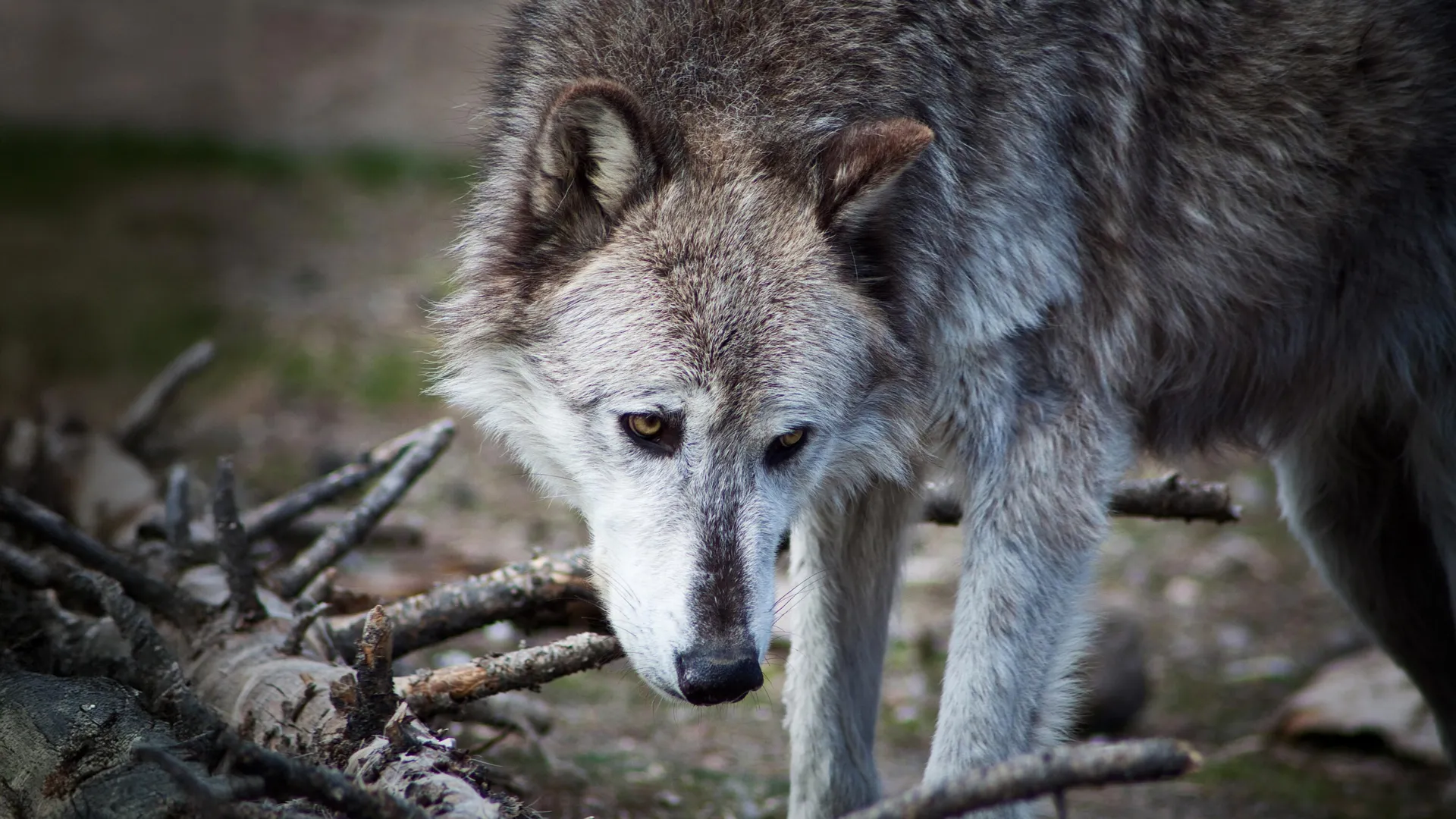
For nearly three decades, the reintroduction of gray wolves (Canis lupus) into Yellowstone National Park has been hailed as one of the greatest triumphs in modern conservation history. Across textbooks, documentaries, and academic journals, the narrative has remained largely undisputed: when apex predators returned to the landscape in 1995 after a 70-year absence, they dramatically curbed the population of overbrowsing elk (Cervus canadensis). This behavioral and demographic shift supposedly triggered a classic "trophic cascade," allowing once-suppleted streamside vegetation—specifically willows, aspens, and cottonwoods—to regenerate. In turn, these thriving riparian zones allegedly stabilized riverbanks, brought back beavers, and reshaped the very geography of the world’s first national park.
Now, a provocative new peer-reviewed study published in Global Ecology and Conservation threatens to upend this ecological folklore.
In a formal scientific comment, researchers from Utah State University and Colorado State University have launched a rigorous critique of a prominent 2025 paper by Ripple et al., which had reaffirmed monumental claims about the park’s post-wolf recovery. According to the re-analysis led by Dr. Daniel MacNulty and Dr. David Cooper, the foundational evidence supporting the most dramatic assertions of a park-wide, wolf-driven ecosystem overhaul is fundamentally flawed.
The new study demonstrates that the famous claim of a 1,500% surge in willow growth relies heavily on circular reasoning and mathematical artifacts rather than sweeping biological reality. By picking apart the statistical modeling, sampling methodologies, and underlying assumptions of previous research, the authors contend that the true ecological impacts of wolf recovery are far more modest, highly localized, and deeply intertwined with complex environmental variables like hydrology and localized browsing pressure.
While the new findings do not discount the vital ecological role of large carnivores, they deliver a sobering reality check to the conservation community. They highlight the dangers of romanticizing ecological narratives and underscore the absolute necessity of methodological rigor when studying complex, dynamic natural systems.
Detailed Chronology: From Eradication to Re-Evaluation
To understand the profound weight of this methodological clash, it is necessary to retrace the historical timeline of Yellowstone’s apex predators and the scientific inquiries that followed their dramatic return.
1. The Erasure of the Apex Predator (1926–1994)
By the mid-1920s, federal predator-control programs had successfully eradicated the gray wolf from Yellowstone National Park. Without their primary natural predator, the northern Yellowstone elk herds expanded unchecked. For decades, biologists watched as heavy, continuous browsing by massive numbers of elk decimated the park’s woody vegetation, particularly the delicate willows and aspens lining Yellowstone’s streams and rivers. This overbrowsing degraded riparian habitats, destabilized stream channels, and triggered a cascade of negative environmental impacts throughout the ecosystem.
2. The Historic Reintroduction (1995–1996)
In one of the most ambitious wildlife restoration efforts in history, the U.S. Fish and Wildlife Service captured 41 wild gray wolves from Canada and western Montana and released them into Yellowstone. Conservationists and scientists watched with bated breath, eager to see if the return of the top predator would reverse decades of environmental degradation.
3. The Birth of the Trophic Cascade Legend (Late 1990s–2010s)
In the years following the reintroduction, researchers began publishing observations suggesting that the park was healing. The concept of the "trophic cascade"—whereby carnivores control herbivores, thereby benefiting plants and secondary species—became the dominant framework for explaining Yellowstone’s recovery. Studies spearheaded by researchers like Ripple et al. captured the public imagination. The narrative crystallized into an iconic ecological fable: wolves kill elk; elk fear open spaces and stop browsing streamsides; willows explode in growth; beavers return; songbirds and fish flourish. This story became a cornerstone of conservation biology syllabi worldwide.
4. Mounting Dissent and Empirical Divergence (2024)
Cracks in the consensus began widening over time as long-term field studies accumulated empirical data. A notable turning point occurred with the publication of Hobbs et al. (2024). Drawing on two decades of meticulous, on-the-ground field experiments and direct monitoring, Hobbs and his colleagues reported only weak, highly localized cascade effects. Their findings stood in stark contrast to the sweeping, park-wide transformations trumpeted by advocates of the dominant trophic cascade theory.
5. The 2025 Ripple Paper and the New Challenge (2025–Present)
The scientific friction reached a boiling point following the publication of a 2025 paper by Ripple et al., which doubled down on the magnitude of the wolf-driven ecosystem recovery, citing staggering metrics like a 1,500% increase in willow crown volume.
Prompted by what they viewed as severe analytical overreaches, Dr. Daniel MacNulty (Utah State University) and Dr. David Cooper (Colorado State University) mobilized a formal scientific comment in Global Ecology and Conservation. Their re-analysis systematically dismantled the statistical architecture underpinning the 1,500% willow claim, pushing the scientific community to re-examine how ecological data is modeled, interpreted, and communicated.
Supporting Context & Metrics: Unpacking the Statistical Disconnect
At the heart of the debate between MacNulty, Cooper, and their peers is a deep methodological dispute over how plant growth was measured, modeled, and extrapolated across the Yellowstone landscape.
The Anatomy of the 1,500% Willow Claim
The staggering statistic of a 1,500% surge in willow crown volume has been cited countless times in academic literature and popular media as the premier quantitative proof of the wolf’s restorative power. However, MacNulty’s re-analysis reveals that this figure is an artifact of a profound statistical pitfall: circular reasoning.
[Plant Height Measurement] ──> Used to Calculate Volume
                                       │
                                       ▼
[Regression Model] ──────────> Used to Predict Volume
                                       │
                                       ▼
                       (Result: Mathematically Guaranteed
                           "Strong" Growth Signal)
As MacNulty explains, the original estimate was not derived from direct, independent tracking of crown volume over time. Instead, it was calculated using plant height measurements fed into a regression model that both calculated and predicted crown volume strictly from height alone.
"Because height was used both to compute and to predict volume, the relationship is circular—mathematically guaranteed to look strong even if no biological change occurred," MacNulty noted. In practical terms, if a statistical model is designed in such a way that an increase in one variable ($X$) mathematically forces an increase in a derived variable ($Y$), the resulting correlation reflects the mathematics of the formula, not necessarily a dramatic ecological awakening on the ground.
Sampling Bias and Spatial Heterogeneity
Beyond the circular mathematics of the willow volume calculations, the new commentary highlights critical concerns regarding sampling bias. The authors point out that early studies often concentrated sampling efforts in specific, highly localized areas where recovery was most visible, inadvertently masking the broader ecological reality across the wider park.
When these methodological flaws and sampling biases are properly corrected, the data tells a radically different story. According to Dr. David Cooper, the corrected evidence reveals that willow recovery is not a uniform, park-wide phenomenon sweeping across all riparian zones. Rather, it is modest, patchy, and highly variable.
The true drivers of this localized plant regeneration include:
- Hydrology: Water table levels, seasonal flooding, and moisture availability play a far more dominant role in willow survival and growth than previously acknowledged.
- Browsing Pressure: While elk do browse on willows, local browsing intensity varies dramatically based on terrain, snowpack, and proximity to wolf packs, rather than responding uniformly to predator presence.
- Local Site Conditions: Soil composition, microclimates, and historical channel geomorphology dictate whether a specific stand of willows will rebound or stagnate.
Official Statements and Expert Perspectives
The academic discourse surrounding the new paper reflects a delicate balance: scientists are eager to correct the historical record without inadvertently fueling anti-conservation rhetoric or undermining the foundational importance of apex predators.
"Ripple et al. argued that carnivore recovery produced one of the world’s strongest trophic cascades. But our re-analysis shows their conclusion is invalid because it relies on circular reasoning and violations of basic modeling assumptions."
— Dr. Daniel MacNulty, Lead Author and Wildlife Ecologist, Utah State University
MacNulty emphasizes that the intention of the commentary is not to diminish the profound ecological significance of wolves, but rather to hold ecological science to the highest possible standard of empirical proof.
"Our goal is to clarify the evidence, not downplay the role of predators. Predator effects in Yellowstone are real but context-dependent—and strong claims require strong evidence."
— Dr. Daniel MacNulty
Echoing these sentiments, co-author Dr. David Cooper stresses that acknowledging the complexity of the ecosystem does not invalidate conservation efforts; instead, it refines our understanding of how nature actually functions.
"Once these problems are accounted for, there is no evidence that predator recovery caused a large or system-wide increase in willow growth. The data instead support a more modest and spatially variable response influenced by hydrology, browsing, and local site conditions."
— Dr. David Cooper, Emeritus Senior Research Scientist, Colorado State University
Independent observers note that this debate bridges a long-standing divide in Yellowstone research. For years, a palpable tension has existed between proponents of the sweeping top-down trophic cascade hypothesis and field researchers who have spent decades tracking subtle, variable ecological responses on the ground. The alignment between MacNulty’s critique and the empirical findings of Hobbs et al. (2024) suggests a growing movement within wildlife ecology toward nuance, skepticism of silver-bullet narratives, and multi-factor ecosystem models.
Future Outlook: Implications for Conservation Science
The publication of MacNulty and Cooper’s critique in Global Ecology and Conservation marks a significant methodological inflection point for conservation biology, extending far beyond the borders of Yellowstone National Park.
1. Raising the Bar for Ecological Modeling
As computational power increases and complex ecological datasets become standard, the temptation to rely on indirect proxies, regression models, and extrapolated metrics grows. The Yellowstone willow debate serves as a cautionary tale for researchers worldwide. It underscores the vital importance of auditing statistical models for circularity, ensuring that predictor variables and response variables remain strictly independent. Journals and peer reviewers will likely place heightened scrutiny on statistical architectures in future ecosystem-wide studies.
2. Embracing Ecological Complexity
The narrative of the Yellowstone wolf is often weaponized in political and public relations battles surrounding wildlife rewilding initiatives across the globe. While simple, compelling stories ("wolves saved the rivers") are effective for public outreach, they can oversimplify the messy, multivariate realities of natural systems.
Moving forward, conservation science must embrace more nuanced frameworks. Ecosystems are not governed by single-variable switches; they are intricate webs influenced by climate change, hydrological shifts, human encroachment, disease, and shifting herbivore migration patterns. Acknowledging that apex predators play a critical, yet context-dependent, role in these systems honors the true complexity of nature.
3. The Enduring Legacy of Yellowstone’s Wolves
It is vital to underscore what is not being challenged by this new study. No reputable scientist is arguing that Yellowstone’s wolves have had no effect on the park, nor is anyone suggesting that the reintroduction was a failure. Wolves have fundamentally altered elk behavior, reduced vulnerable herbivore populations during harsh winters, provided vital carrion for scavengers like eagles, ravens, and grizzly bears, and restored a crucial evolutionary pressure that was missing for generations.
The debate is no longer about whether wolves matter to Yellowstone, but how their influence ripples through a complex, dynamic landscape. By stripping away hyperbole and correcting statistical missteps, scientists are paving the way for a more mature, accurate, and deeply grounded understanding of carnivore ecology—ensuring that the next chapter of Yellowstone’s conservation legacy is built not on captivating myths, but on uncompromised scientific truth.