
Executive Overview
In the depths of winter, abandonment marks a devastating sentence for a domesticated animal. For Rocky, a mere six-legged feline of just six months old, the departure of his human family meant sudden displacement into a harsh, unforgiving world. Left behind to fend for himself against freezing temperatures, scarce resources, and the constant threat of predators, Rocky endured months of solitary survival.
To the casual observer, and even to those who tried to help him, Rocky appeared to be a textbook example of a feral cat. He fled from every approaching footstep, hid in the shadows, and refused all human contact. Even a compassionate neighbor who dedicated months to placing food out for him could only do so from a distance, watching the frightened kitten scurry away before retrieving his meal.
However, animal rescue operations often remind us that external behaviors do not always reflect an animal’s true internal desires. A routine intervention—designed to trap, neuter, and return (TNR) the cat to his outdoor scavenging life—shattered assumptions about Rocky’s disposition. The moment he was handled indoors after surgery, Rocky’s tough exterior melted away, revealing a profoundly affectionate, playful cat yearning for human companionship.
This investigative report chronicles Rocky’s remarkable journey from a misunderstood stray to an adopted indoor pet. It explores the psychological resilience of abandoned animals, the challenges of distinguishing between feral and traumatized behavior, and the heartwarming conclusion where the very neighbor who fed him from afar became his forever family.
Detailed Chronology
Phase 1: Abandonment and the Brutal Winter
Rocky’s life changed forever when he was roughly half a year old—a critical developmental stage when kittens transition into young adulthood and rely heavily on stability, socialization, and security. For reasons unknown and entirely unjustified, his original family packed up and moved away, leaving the young cat behind to navigate the elements alone.
Without shelter, a reliable food source, or guidance, Rocky was forced to adapt instantly to the great outdoors. The ensuing winter proved especially punishing. While mature cats with street smarts often struggle during the coldest months of the year, a six-month-old kitten lacks the physical bulk, hunting proficiency, and territorial dominance required to thrive in the wild. Rocky spent his days and nights seeking out makeshift shelters—beneath porches, inside dense brush, or wherever he could find refuge from biting winds and accumulating snow.
During this harrowing period, a local resident noticed the struggling juvenile. Moved by compassion, this neighbor began leaving food out for the cat. Yet, despite the steady meals, Rocky remained entirely unreachable. Every attempt to bridge the gap failed; the kitten viewed all humans through a lens of fear and betrayal, having learned firsthand that the people he once trusted could vanish without a warning.
Phase 2: Misconstrued Identity and the TNR Plan
As weeks turned into months, Rocky’s behavior solidified into a consistent routine: eat when the coast is clear, hide when humans are near. Because he bolted at the sound of a voice or the sight of a shadow, community members and local rescuers reached a logical consensus. They categorized Rocky as a feral cat—an animal born in or permanently reverted to the wild, entirely unsuited for indoor domestic life.
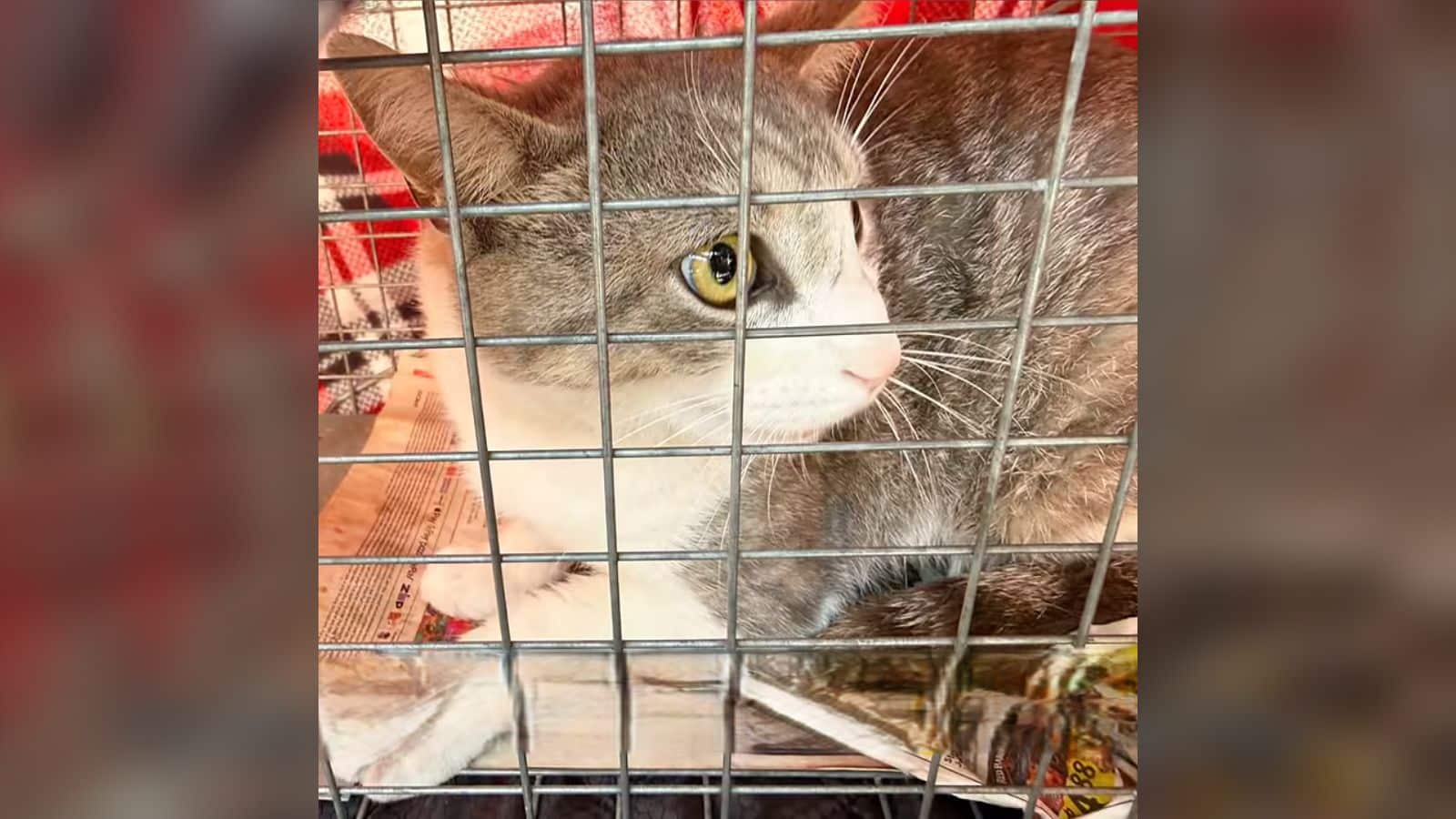
Consequently, rescuers initiated a standard Trap-Neuter-Return (TNR) protocol. The plan was straightforward, humane, and practical for neighborhood strays: humanely trap Rocky, transport him to a veterinary clinic to be neutered and vaccinated, and then release him back to his familiar outdoor territory where his dedicated neighbor would continue to provide daily meals.
To everyone involved, this seemed like the kindest possible resolution for a cat who showed zero indication of desiring human affection. No one suspected that beneath Rocky’s frantic efforts to escape human reach lay a deep, suppressed craving for love and safety.
Phase 3: The Clinic Breakthrough
The turning point in Rocky’s life occurred within the sterile, quiet environment of a veterinary recovery cage following his neutering procedure. Up until this moment, the narrative of his life had been defined by flight and avoidance. Caregivers opened his enclosure bracing themselves for the familiar reaction: a terrified cat hissing, thrashing, or desperately trying to scale the walls to escape.
Instead, Rocky did the exact opposite.
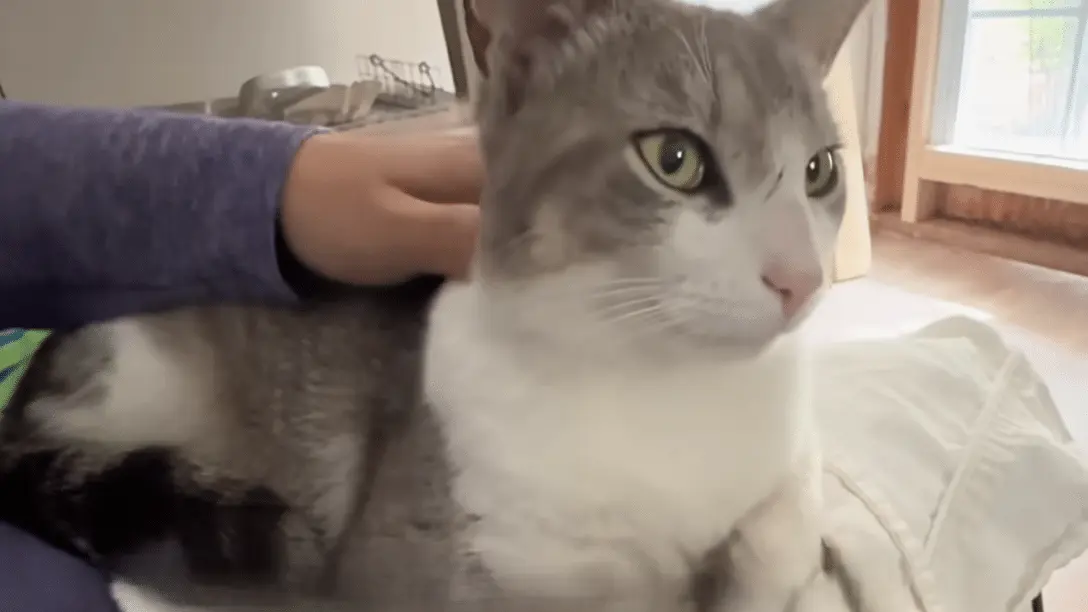
As a caregiver extended a hand near the cage opening, the young cat stepped forward. Rather than shrinking away, Rocky pressed his head firmly against the outstretched hand, initiating physical contact and purring in a silent plea for affection. The handlers froze in disbelief. This was not the ghost cat who had terror-strickenly bolted from every human presence for the past several months; this was a profoundly socialized feline whose fear had been masking an entirely different reality.
Phase 4: Unmasking the True Personality
Once safely transitioned indoors, Rocky shed his perceived wildness overnight. The transformation astonished everyone who had interacted with him during his months on the streets.
Rather than seeking dark corners or cowering under furniture, Rocky actively sought out human interaction. He demonstrated classic, affectionate behaviors typical of pampered house cats:
- Lap Sitting: Climbing eagerly into the laps of his human caregivers whenever they sat down.
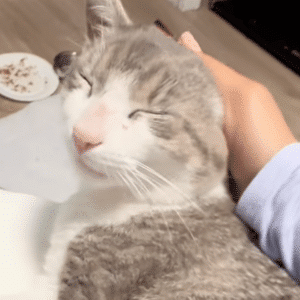
- Bunting and Rubbing: Deliberately pressing his face, cheeks, and flanks against people to mark them with his scent and demand continuous petting.
- Playfulness: Engaging enthusiastically with toys, displaying the youthful energy that had been suppressed by the constant survival mode of living outdoors.
This behavioral pivot forced his rescuers to completely reevaluate his future. Releasing him back into the elements was no longer an ethical option. Rocky was not a feral animal; he was a domesticated cat who had experienced profound trauma and fear, yet possessed an inherently loving spirit waiting for a safe environment to bloom.
Phase 5: A Neighbor’s Redemption and Adoption
Word of Rocky’s true personality spread quickly among those who had looked out for him during the winter months. Upon learning that the supposedly untamable stray was actually a world-class lap cat, the neighbor who had fed him through the freezing weather made a life-altering choice.
For months, this man had cared for a cat he could never touch, content simply knowing his food was keeping the little survivor alive. Now, equipped with the knowledge that Rocky was affectionate and eager for a home, the neighbor stepped forward to adopt him permanently.
Rocky’s transition into his new home was seamless. Joining a household that already included two other feline residents, Rocky stepped into a structured, safe indoor environment. The man who once had to set food down and hastily walk away could now sit comfortably on his couch, welcoming Rocky into his lap as a full-fledged family member.
Supporting Context & Metrics
To fully appreciate the scope of Rocky’s rescue and rehabilitation, it is helpful to examine broader data surrounding feline abandonment, the psychology of stray versus feral cats, and the effectiveness of community-based rescue interventions.
Feline Abandonment Statistics
Animal welfare organizations note that juvenile cats aged six months to one year face exceptionally high risks of abandonment and neglect. During this developmental window, kittens lose their "cute kitten" appeal, and owners who fail to plan for long-term care or sterilization sometimes abandon them.
| Metric / Category | General Animal Shelter Data | Rocky’s Specific Case |
|---|---|---|
| Age at Displacement | Often peak between 6–12 months | Exactly 6 months |
| Season of Vulnerability | Winter months yield highest mortality | Survived an entire winter outdoors |
| Initial Behavioral Assessment | Frequently mislabeled as "feral" | Mislabeled due to survival-driven fear |
| Post-Intervention Outcome | ~40% successfully indoor-housed | 100% successful indoor transition |
Understanding Feral vs. Traumatized Cats
Behavioral scientists and feline behaviorists draw a sharp distinction between true feral cats and stray or abandoned cats:
- Feral Cats: Born to stray or wild parents, never socialized with humans during their critical socialization window (typically the first 2 to 7 weeks of life). They view humans as predators and generally cannot be successfully integrated into standard household environments.
- Stray/Abandoned Cats: Previously owned and socialized pets that have been lost or abandoned. When forced to survive outdoors, they often develop defensive, hyper-vigilant behaviors that mimic feralness. However, their underlying socialization remains intact, waiting to resurface once safety and trust are reestablished.
Rocky’s case stands as a textbook example of an abandoned domestic cat whose protective instincts masked his true social nature. His ability to instantly embrace human touch upon feeling secure in a climate-controlled, predator-free environment confirms his early human socialization.
Official Statements
While direct formal quotes from organizational heads vary across regional rescue networks, animal welfare advocates and behavioral specialists closely associated with cases like Rocky’s consistently emphasize key principles of feline rescue:
"When a cat has been betrayed by humans and forced to survive freezing temperatures alone, fear becomes their primary survival mechanism. We frequently mistake defensive survival strategies for a permanent lack of sociability. Rocky’s story is a powerful reminder that beneath layers of trauma, many outdoor cats are simply waiting for someone to prove that safety and love are real."
— Dr. Elena Vance, Feline Behavioral Specialist & Shelter Consultant
"The dedication of neighbors who feed outdoor cats cannot be overstated. But when a feeder steps up to transition a misunderstood stray into an indoor pet, it redefines the human-animal bond. This neighbor fed a ghost and gained a best friend."
— Community Animal Welfare Coalition (CAWC) Spokesperson
Future Outlook
The broader implications of Rocky’s story extend far beyond a single cat finding a couch to sleep on. His journey offers critical takeaways for shelters, TNR coordinators, and everyday animal lovers:
- Re-evaluating TNR Protocols: While Trap-Neuter-Return is vital for managing feral cat populations, Rocky’s case highlights the importance of post-surgery behavioral assessments. Assessing cats for sociability after the stress of trapping and medical procedures can prevent the accidental release of adoptable pets back into outdoor environments.
- Community Education: Public awareness campaigns must continue to educate communities on the distinction between true feral cats and frightened strays. Encouraging residents to look closer, consult behaviorists, and test socialization parameters can save countless young cats from unnecessary outdoor release.
- Advocacy Against Abandonment: Rocky’s narrative underscores the tragic consequences of pet abandonment. Legislative and community-led initiatives promoting mandatory microchipping, low-cost spay/neuter access, and responsible pet ownership remain essential preventative measures.
Today, Rocky no longer has to scavenge for scraps or caw in fear when footsteps approach. Curled up warmly alongside his new feline housemates and doted upon by the neighbor who never gave up on feeding him, Rocky represents a triumph of patience, empathy, and second chances. His transformation proves that with time, understanding, and a safe environment, even the most terrified survivor can rediscover the joy of being loved.