Executive Overview: The Regulatory Divide in Pet Food Labeling
To the average consumer walking down the supermarket aisle, a single word on a pet food packaging label—"chicken"—evokes an image of wholesome, inspected poultry meat similar to what one buys at a meat counter. However, beneath this single ingredient declaration lies one of the most significant regulatory divides in modern agriculture and food safety law. In human food, an ingredient labeled as "chicken" is legally bound to strict definitions: it must be derived from United States Department of Agriculture (USDA) inspected and passed poultry, with specific cuts like breast meat or wings clearly identified.
In the pet food sector, however, the term "chicken" operates under a vastly different standard—or more accurately, the complete absence of one.
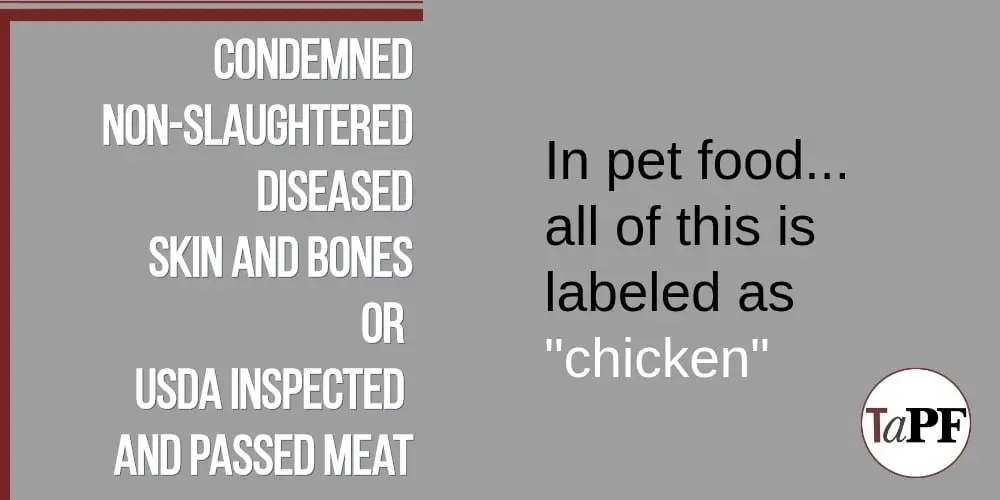
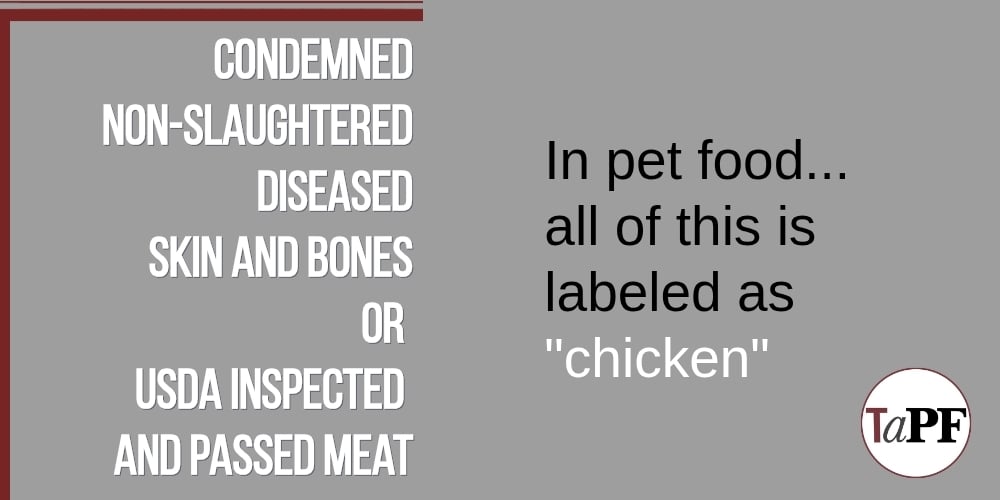
Because pet food ingredients lack formal federal Standards of Identity (SOI), the label "chicken" can legally encompass an astonishingly wide spectrum of materials. It can signify USDA-inspected meat identical to human-grade food; conversely, it can represent diseased or condemned poultry, animals that died from causes other than slaughter, or processing remnants consisting almost entirely of skin and bones with negligible protein value. Because all of these disparate items fall under the single, unadorned regulatory label of "chicken," pet owners are left unable to discern high-quality nutrition from rendered industrial waste.
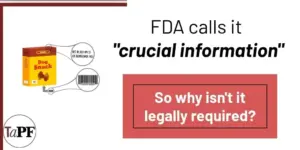
This systemic ambiguity is the direct result of a decades-long regulatory vacuum. While the U.S. Food and Drug Administration (FDA) aggressively enforces Standards of Identity for human foods to prevent Economically Motivated Adulteration (EMA), it has consistently declined to enforce equivalent standards for companion animals. The consequence is a marketplace structured around information asymmetry, where pet food manufacturers can utilize low-cost, condemned materials while charging premium prices to unwitting consumers.
A Timeline of Regulatory Erosion: From Oversight to Deregulation
The current state of pet food labeling is not an accident of history, but the result of explicit policy decisions, regulatory rollbacks, and legislative interventions spanning over eight decades.
+-----------------------------------------------------------------------------------+
|                            HISTORICAL TIMELINE                                    |
+-----------------------------------------------------------------------------------+
| 1939: FDA creates Standards of Identity (SOIs) to prevent economic adulteration. |
| 1980: FDA policy permits diseased/non-slaughtered meat in pet food without disclosure. |
| 1999: FDA repeals animal food SOI procedural rules, deeming them "unnecessary."   |
| 2004: Debut of "Human Grade" pet food highlights ingredient quality disparity.   |
| 2007: Melamine contamination kills thousands; Congress passes FDAAA Section 1002. |
| 2018: Legislative addendum repeals FDA's mandate to issue pet food standards.     |
+-----------------------------------------------------------------------------------+
1939–1980: The Origin of Standards and Early Exemptions
The conceptual framework for food standards was established in 1939 when the FDA introduced Standards of Identity under the Federal Food, Drug, and Cosmetic Act. These standards were created to curb rampant economic adulteration in the human food market. For example, products sold as "fruit jam" often contained minimal fruit, padded out with cheap fillers and synthetic colorings. The FDA’s SOIs mandated strict recipe baselines—requiring a minimum percentage of real fruit—to protect consumers from deceptive trade practices and promote commercial honesty.
However, animal food was systematically excluded from these consumer-protection benchmarks. By 1980, the FDA had formalized a policy of regulatory discretion regarding pet food ingredients. In an official Compliance Policy Guide published that year, the agency explicitly acknowledged the use of substandard animal tissues in pet food:
"Pet food consisting of material from diseased animals or animals which have died otherwise than by slaughter, which is in violation of 402(a)(5) will not ordinarily be actionable, if it is not otherwise in violation of the law. It will be considered fit for animal consumption."
This directive effectively codified a dual standard: while human food laws strictly prohibited diseased or non-slaughtered animal tissues, the pet food industry was granted administrative immunity to incorporate condemned materials into animal feed without informing the public.
1999–2004: Erasure of Rules and the "Human Grade" Emergence
Prior to 1999, administrative mechanisms remained on the books for the FDA to establish standardized definitions for animal food ingredients. However, in January 1999, the agency officially deleted these procedural regulations from the Federal Register, claiming that formal rule-making processes for animal food standards were "unnecessary." At the time, the FDA assured Congress and the public that if a demonstrated need ever arose, the agency could re-establish procedures through notice-and-comment rulemaking.
That need became public in 2004 with the commercial debut of the first certified "Human Grade" pet food. The entry of Human Grade products created an undeniable market contrast. To claim a "Human Grade" designation, manufacturers were mandated by regulatory authorities to source only USDA-inspected and passed ingredients, processed in human-food-grade facilities.
This development highlighted a stark reality: two products sitting on the same retail shelf could both list "chicken" as their primary ingredient, yet one contained whole, USDA-inspected meat fit for human consumption, while the other contained feed-grade, condemned poultry unfit for humans. Without Standards of Identity, feed-grade manufacturers were free to market their products using identical nomenclature, capturing higher profit margins through economic adulteration.
+-----------------------------------------------------------------------------------+
|                        INGREDIENT NOMENCLATURE GAP                               |
+-----------------------------------------------------------------------------------+
| Ingredient Label Term | Human Grade Pet Food          | Feed Grade Pet Food       |
+-----------------------+-------------------------------+---------------------------+
| "Chicken"             | • USDA Inspected & Passed     | • Condemned/Diseased meat |
|                       | • Human-edible facilities     | • Dead non-slaughtered    |
|                       | • Whole meat cuts             | • Pure skin & bone waste  |
+-----------------------------------------------------------------------------------+
2007–2018: Toxic Recalls, Unfulfilled Mandates, and Legislative Deregulation
In 2007, the structural vulnerability of the pet food supply chain culminated in a catastrophic global safety crisis. Overseas suppliers of vegetable proteins (such as wheat gluten and rice protein concentrate) intentionally spiked their raw materials with melamine and cyanuric acid. These nitrogen-rich industrial chemicals were used to artificially boost the measured protein content of raw ingredients during laboratory testing—a classic case of Economically Motivated Adulteration.
The contaminated ingredients entered thousands of pet food formulations, resulting in widespread kidney failure and the deaths of thousands of companion animals across North America.
2007 Melamine Crisis ──► Congress passes FDAAA §1002 ──► Deadline Ignored (2009) ──► 2018 Legislative Repeal
(Mass Pet Mortality)     (Mandates Pet Food Standards)   (FDA Takes No Action)       (Oversight Erased)
In response to public outrage, Congress enacted the Food and Drug Administration Amendments Act (FDAAA) of 2007. Section 1002 of the Act explicitly commanded the FDA to establish, by regulation:
Explicit ingredient standards and definitions for pet food.
Updated processing standards.
Clear labeling requirements for pet food products.
Congress assigned a firm statutory deadline for completion: September 2009.
Despite the federal statutory directive, the FDA failed to issue the required pet food ingredient standards by the 2009 deadline. Year after year, the agency allowed the mandate to languish without enacting enforceable regulations.
The final blow to legislative oversight occurred in 2018, when Senator Rand Paul of Kentucky attached an addendum to an unrelated congressional bill. This legislative rider quietly repealed the statutory mandate established under Section 1002 of the FDAAA. With the passage of the amendment, the FDA was permanently relieved of its legal obligation to develop binding ingredient Standards of Identity for pet food, leaving the market unregulated in terms of raw ingredient quality disclosure.
Supporting Context & Metrics: Quantifying the Waste Stream
The absence of Standards of Identity carries immense financial implications for the pet food industry and allows massive volumes of agricultural waste to enter the consumer pet food market unnoticed.
The Scale of Condemned Poultry Integration
To understand the volume of substandard meat diverted into the pet food supply chain, consider data published by the USDA Food Safety and Inspection Service (FSIS). In its quarterly enforcement reports (e.g., Q3 FY2026 reporting data):
Quarterly Condemnations: In a single three-month window (April through June), federal inspectors condemned over 1,000,000 poultry carcasses at processing facilities due to disease, contamination, or systemic pathology.
Volume Calculation: Assuming an average carcass weight of 6 pounds, this quarterly tally equates to more than 6,000,000 pounds of condemned poultry meat removed from the human food chain in just 90 days.
Annualized Divergence: Extrapolated annually, tens of millions of pounds of condemned, diseased, or non-slaughtered poultry are legally cleared for disposal into the feed-grade pet food processing chain.
Because no Standard of Identity requires manufacturers to distinguish between whole inspected meat and condemned waste on the ingredient panel, this massive volume of discarded tissue is processed into pet foods and legally labeled simply as "chicken."
+-----------------------------------------------------------------------------------+
|                   USDA QUARTERLY POULTRY CONDEMNATION METRICS                     |
+-----------------------------------------------------------------------------------+
| Timeframe Assessed          | 3 Months (Quarterly FSIS Data)                      |
| Carcasses Condemned         | > 1,000,000 units                                   |
| Average Unit Weight         | ~ 6.0 lbs per carcass                               |
| Volume Diverted to Feed     | > 6,000,000 lbs of condemned poultry                |
| Labeling Required for Feed  | Labeled simply as "Chicken"                         |
+-----------------------------------------------------------------------------------+
The Legal Framework of Economically Motivated Adulteration
The FDA defines Economically Motivated Adulteration (EMA) as the intentional, fraudulent substitution or omission of an ingredient to lower production costs or inflate perceived value. According to official FDA guidance:
"Economically motivated adulteration (EMA) occurs when someone intentionally leaves out, takes out, or substitutes a valuable ingredient or part of a food."
When applied to human food, replacing wholesome chicken breast with rendered diseased carcasses or skin-and-bone trimmings constitutes criminal fraud and economic adulteration. In pet food, however, the lack of SOIs renders this practice completely legal. By allowing feed-grade manufacturers to use the identical term ("chicken") used by premium human-grade producers, the regulatory framework actively enables a form of legal economic adulteration at the expense of pet owners.
Official Statements and Regulatory Gaps
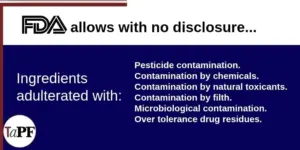
Throughout this history, a central point of contention has been the FDA’s policy of non-disclosure regarding the permissible quality levels of animal food ingredients. While the agency maintains extensive public databases detailing permissible contaminants, action levels, and definitions for human foodstuffs, it has consistently declined to publish comprehensive consumer guides explaining the quality tiers of pet food inputs.
The Agency’s Non-Enforcement Stance
Historically, when questioned regarding the divergence between human and animal food standards, regulatory officials have cited the processing methods of commercial pet food—such as high-heat extrusion and rendering—as sufficient to neutralize pathogenic threats in diseased tissues. However, this approach conflates biological safety (freedom from active pathogens) with ingredient quality and labeling honesty.
By failing to mandate ingredient standards, the FDA has created a regulatory environment characterized by several key features:
Information Asymmetry: Consumers cannot evaluate the intrinsic quality of raw ingredients based on the mandatory ingredient statement alone.
Protection of Feed-Grade Practice: By keeping pet owners unaware that diseased or non-slaughtered materials are legally permitted in feed-grade products, commercial rendering operations and feed manufacturers are shielded from market pressure.
Disincentivization of Quality: Producers sourcing premium, USDA-inspected human-grade meats operate at a cost disadvantage compared to competitors using cheap feed-grade inputs, yet both use identical labeling terms.
Future Outlook: Consumer Navigation and Systemic Advocacy
As federal regulatory agencies continue to defer the implementation of binding Standards of Identity for pet food ingredients, the responsibility for navigating the market falls largely on individual consumers and consumer advocacy groups.
Currently, the primary mechanism for consumers to ensure ingredient quality is to seek out products that explicitly meet Human Grade standards. Under state and federal regulatory frameworks, for a pet food product to legally display the claim "Human Grade" on its packaging:
Every ingredient in the product must be certified as human-edible (USDA inspected and passed).
The final product must be manufactured, packaged, and stored in compliance with federal regulations for human food manufacturing facilities (21 CFR part 117).
Products that do not carry verifiable Human Grade certifications operate under feed-grade allowances, meaning their raw components may include rendered by-products, diseased animal tissues, and non-slaughtered carcasses.
Advocacy and Civic Action Steps
Consumer advocates, led by organizations such as the Association for Truth in Pet Food, emphasize that institutional reform requires sustained public pressure on both regulatory agencies and legislative bodies. Suggested avenues for civic engagement include:
Direct Petitions to the FDA CVM: Pet owners can submit formal correspondence to the FDA Center for Veterinary Medicine ([email protected]), requesting the administrative establishment of enforceable Standards of Identity for all companion animal food ingredients. Establishing an official record of public opposition challenges the agency’s assertion that standards are "unnecessary."
Legislative Contact: Engaging federal representatives to highlight the systemic repeal of pet food oversight (such as the 2018 FDAAA amendments) and advocating for statutory mandates that require clear ingredient disclosure.
Supporting Independent Stakeholders: Participating in public comment periods hosted by regulatory entities like the Association of American Feed Control Officials (AAFCO) to champion consumer representation in ingredient definition drafting.
Without structural reform and the formal establishment of Standards of Identity, the pet food market will remain an environment where marketing claims obscure reality, leaving millions of pet owners in the dark about what is truly filling their pets’ bowls.