The U.S. Food and Drug Administration (FDA) has escalated its regulatory enforcement against independent pet food producers, wielding the full weight of federal injunctive power to permanently shutter small-scale operations. In recent legal filings, federal prosecutors—acting on behalf of the FDA—have sought emergency court orders under the Federal Food, Drug, and Cosmetic Act (FD&C Act) to halt the distribution of pet food products deemed "adulterated" under federal law.
Specifically, the agency relies on 21 U.S.C. § 331(a), which prohibits introducing adulterated food into interstate commerce, alongside 21 U.S.C. § 342(a)(1) and (a)(4), which define food as adulterated if it contains harmful substances or has been prepared, packed, or held under insanitary conditions.
While regulatory oversight is essential to public health and animal welfare, an investigation into the FDA’s enforcement record reveals a stark institutional paradox. While small, independent pet food manufacturers face immediate court-ordered injunctions and business liquidation over technical or localized compliance issues, multi-billion-dollar commercial pet food conglomerates routinely escape formal legal consequences for comparable—and often more severe—statutory violations.
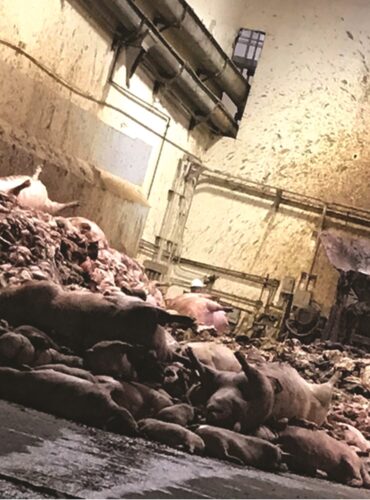
Documented FDA inspection records demonstrate that major corporate facilities operating with severe pest infestations, chronic filth, and structurally unsanitary rendering practices are frequently granted administrative leniency. This regulatory double standard raises critical questions about corporate capture, arbitrary administrative discretion, and the systemic erosion of consumer trust in the nation’s pet food supply.
Detailed Chronology of Legal and Regulatory Actions
To understand the mechanics of federal pet food oversight, one must examine the legal pathway through which the FDA exercises its statutory authority. The agency’s statutory mandate stems from the FD&C Act, designed to ensure that human and animal foods are safe, wholesome, and produced under sanitary conditions.
       STATUTORY ENFORCEMENT PATHWAY: SMALL VS. LARGE MANUFACTURERS

  [ FDA Facility Inspection / Form 483 Observations ]
                          |
        +-----------------+-----------------+
        |                                   |
 [ Small / Independent ]           [ Corporate Conglomerate ]
        |                                   |
        v                                   v
 [ Emergency Injunction ]           [ Voluntary Action Indicated (VAI) ]
   21 U.S.C. § 331(a)                  No Injunction
   21 U.S.C. § 342(a)(4)               No Warning Letter
        |                                   |
        v                                   v
 [ Permanent Closure ]              [ Uninterrupted Production ]
The Statutory Baseline: 21 U.S.C. § 342(a)(4)
When filing civil enforcement lawsuits or seeking injunctions, federal regulators cite 21 U.S.C. § 342(a)(4), which stipulates:
"A food shall be deemed to be adulterated—(a) Poisonous, insanitary, etc., ingredients… (4) if it has been prepared, packed, or held under insanitary conditions whereby it may have become contaminated with filth, or whereby it may have been rendered injurious to health."
The statute does not require proof that a finished food product actively contains a pathogen or toxin. Under the strict text of the law, the mere existence of insanitary conditions during preparation, packing, or holding—whereby the food may become contaminated or rendered injurious—constitutes a federal violation.
The Enforcement Timeline: A Divergent Standard
Phase 1: Inspection & Form 483 Issuance
FDA investigators conduct routine or cause-based facility inspections. Findings of sanitation deficiencies are recorded on an FDA Form 483.
Phase 2: Administrative Review & Escalation
For smaller manufacturers, observations of potential contamination frequently trigger rapid escalation, culminating in Warning Letters, mandatory recalls, and federal civil complaints for permanent injunctive relief.
Phase 3: The Corporate Exception
When identical or more severe insanitary conditions are documented inside large-scale industrial plants, the administrative path shifts. The FDA routinely classifies observations as "Voluntary Action Indicated" (VAI), allowing facilities to resolve systemic filth internally without public warning letters, consent decrees, or product seizures.
Supporting Context & Regulatory Metrics
Case Study 1: The Mars Petcare Inspection Record
The contrast in regulatory application is illustrated by official FDA inspection records of major corporate facilities. An establishment inspection report (EIR) for a manufacturing plant operated by Mars Petcare—one of the world’s largest pet food producers—documented structural pest infestations within active food production environments.
According to official FDA inspection reports, investigators observed widespread infestation, including documented findings of "millions of roaches" and severe German cockroach populations inside areas where raw materials were handled and processed. The official records note:
"The severity of our observations as related to filth and the failure to take adequate measures to exclude pests from the manufacturing and related areas of the firm."
"Failure to handle raw materials and ingredients used in manufacturing under conditions that will protect the animal food against contamination and minimize deterioration."
The language recorded by federal inspectors directly mirrors the legal standards of 21 U.S.C. § 342(a)(4) ("contaminated with filth"). Furthermore, federal records indicate that the facility was a repeat offender, with prior inspections identifying similar pest exclusion failures.
Regulatory Outcome
Despite repeated findings of structural filth and active pest contamination across multiple inspection cycles, the FDA did not file an emergency injunction, did not seek court-ordered facility closure, issued no public Warning Letter, and required no mandatory consumer recall. The facility was permitted to continue manufacturing and distributing pet food products into interstate commerce.
Case Study 2: Rendered Ingredients and Open-Air Facilities
The regulatory double standard extends beyond finished manufacturing plants into the raw ingredient supply chain. A significant portion of commercial kibble and canned pet food produced by major brands—including Purina, Mars Petcare, Hill’s Pet Nutrition, and Blue Buffalo—utilizes rendered ingredients such as meat meal, poultry by-product meal, and animal fat.
       THE RENDERED INGREDIENT SUPPLY CHAIN

  [ Offal, Carcasses, Restaurant Grease ]
                     |
                     v
  [ Open-Air Holding Piles (Exposed to Pests/Elements) ]
                     |
                     v
  [ High-Heat Industrial Rendering ]
                     |
                     v
  [ Meat Meal / Rendered Fats ] ---> [ Used in Major Pet Food Brands ]
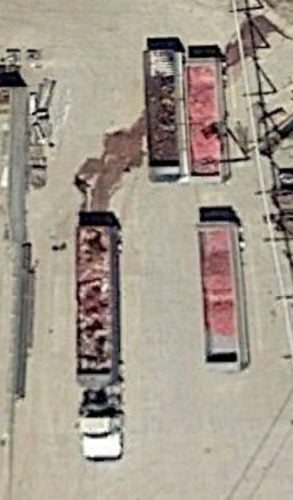
Rendering facilities process animal tissues, offal, expired supermarket meats, and livestock carcasses into concentrated protein meals and fats. Aerial photography, satellite imaging, and whistleblower documentation reveal that raw rendering materials are routinely held in outdoor, open-air piles exposed to extreme heat, birds, rodents, insects, and environmental decay prior to processing.
Under a literal reading of 21 U.S.C. § 342(a)(4), holding animal food ingredients in open-air, insanitary conditions where they decompose and attract vermin constitutes structural adulteration. Nevertheless, the FDA exercises explicit administrative discretion—often codified through informal Compliance Policy Guides (CPGs)—allowing the rendering industry and the major pet food manufacturers who rely on their outputs to operate outside strict federal adulteration standards.
Asymmetric Regulatory Metrics
A comparative analysis of federal enforcement mechanisms highlights the disparity between small independent producers and commercial industry leaders:
Metric / Action Parameter
Independent / Small Manufacturers
Major Corporate Conglomerates
Statutory Standard Applied
Strict liability under 21 U.S.C. § 342(a)
Administrative discretion / CPG leniency
Enforcement Mechanism
Federal court injunctions, civil shut-down suits
Form 483 observations, informal meetings
Response to Filth/Pests
Swift business closure, mandatory recalls
Internal remediation, continued operation
Public Transparency
Press releases, public DOJ court filings
Undisclosed EIRs, unannounced resolutions
Ingredient Sourcing Oversight
Rigorous testing for raw/fresh inputs
Immunity for open-air rendered ingredients
Official Statements & Stakeholder Perspectives
The disparity in enforcement has sparked criticism from consumer advocates, legal scholars, and industry watchdogs, who argue that federal regulators have established a two-tiered compliance ecosystem.
Consumer Advocacy Perspective
Susan Thixton, prominent pet food consumer advocate, founder of TruthaboutPetFood.com, and representative at the Association for Truth in Pet Food (ATPF), has tracked federal enforcement disparities for decades. Commenting on the FDA’s recent injunctive actions against smaller firms, Thixton stated:
*"This statutory injunction proceeding is brought under the Federal Food, Drug, and Cosmetic Act to permanently enjoin small defendants from violating the law. We are not defending unlawful practices, but we must ask: Why is the FDA turning a blind eye to massive corporate giants committing the exact same law violations?
When FDA inspectors document millions of roaches crawling over active food production lines in a major corporate plant and take zero regulatory action—no warning letter, no injunction, no recall—that isn’t mere selective enforcement. It is regulatory favoritism that betrays every pet owner in America. It is a double standard that shields corporate profits while bankrupting smaller competitors."*
Regulatory & Industry Defense
The FDA maintains that its enforcement decisions are guided by risk-based prioritization and available regulatory resources. In official statements regarding its oversight of animal food facilities, agency representatives argue that enforcement discretion allows regulators to focus immediate legal remedies on facilities presenting acute, direct public health threats.
Industry trade groups representing major manufacturers maintain that rendered ingredients undergo high-heat thermal processing capable of neutralizing microbiological pathogens. From a regulatory standpoint, the agency often differentiates between raw, unpasteurized products—which it views as carrying higher inherent pathogen risks for human handling—and high-heat processed kibble, even when the underlying raw ingredients of the latter are stored under insanitary conditions prior to processing.
However, legal experts point out that 21 U.S.C. § 342(a)(4) makes no statutory distinction based on post-processing heat treatments. The law focuses on the conditions under which ingredients are held or prepared, creating a fundamental friction between statutory text and administrative practice.
Future Outlook & Systemic Implications
The FDA’s pattern of asymmetric enforcement carries broad implications for market competition, legal integrity, and consumer safety.
       SYSTEMIC IMPACT OF REGULATORY FAVORITISM

  [ Unfair Regulatory Enforcement ]
                 |
        +--------+--------+
        |                 |
        v                 v
  [ Market Consolidation ]  [ Consumer Erosion ]
  - Small firms exit        - Unknown food quality
  - Dominance by giants     - Diminished oversight
Market Consolidation and Regulatory Capture
By subjecting small, independent producers to strict liability while offering corporate giants administrative leeway, federal oversight risks driving market consolidation. Smaller companies—often pioneering fresh, raw, or minimally processed alternatives—lack the legal departments and lobbying influence required to navigate prolonged FDA litigation. As small firms are forced out of the market through permanent injunctions, industry control shifts to a handful of multinational corporations.
Demands for Legislative and Administrative Reform
Advocacy groups, including the Association for Truth in Pet Food, are pressing for key policy reforms to restore equal protection under the law:
Uniform Enforcement of Adulteration Laws: Mandatory application of 21 U.S.C. § 342(a)(4) across all manufacturing facilities, regardless of annual revenue or corporate size.
Elimination of Enforcement Discretion for Rendered Filth: Phasing out informal FDA policies that permit rendering plants to hold raw animal material in unsanitary open-air settings.
Mandatory Public Transparency: Requiring all FDA Form 483 inspection reports, Warning Letters, and corporate remediation agreements to be published in a searchable public database within 30 days of inspection completion.
Independent Regulatory Audits: Congressional oversight hearings to investigate the FDA Center for Veterinary Medicine’s (CVM) enforcement choices and evaluate potential regulatory capture.
The Path Forward for Consumers
As regulatory agencies navigate resource constraints and competing industry interests, pet owners are increasingly scrutinizing supply chain transparency. Consumer advocacy networks continue to publish independent ingredient audits, tracking raw material sourcing, facility sanitation records, and regulatory compliance histories.
Until federal regulators apply food safety statutes uniformly across all market participants, the pet food industry will remain defined by a legal double standard—one where small producers face federal injunctions, while industry giants operate under a blanket of administrative immunity.