
Executive Overview
For generations, evolutionary biologists and paleontologists have relied on a foundational assumption to map the dawn of animal life on Earth: the absence of evidence in exceptionally preserved fossil deposits meant the evidence simply did not exist. Because ancient, pristine fossil beds dating back nearly 600 million years failed to yield any trace of multicellular animal bodies, scientists long concluded that the metazoan kingdom had not yet come into being.
However, groundbreaking research published on October 2 in Science Advances shatters this critical baseline. Led by an international team of paleontologists and geobiologists from the University of Oxford—in collaboration with institutions such as the University of California, Berkeley, ETH Zürich, and Yale University—the new study demonstrates that exceptionally preserved ecosystems can completely fail to capture animal life, even when it is definitively known to have existed elsewhere on the planet.
By analyzing newly documented, pristine microfossils from the Kheseen Biota in Mongolia, researchers disproved the long-standing "absence equals non-existence" logic historically applied to older sites like China’s Weng’an Biota. When this flawed assumption was removed and replaced with older geological constraints in sophisticated molecular clock analyses, the estimated origin of the animal kingdom was pushed backward by an astonishing 200 million years.
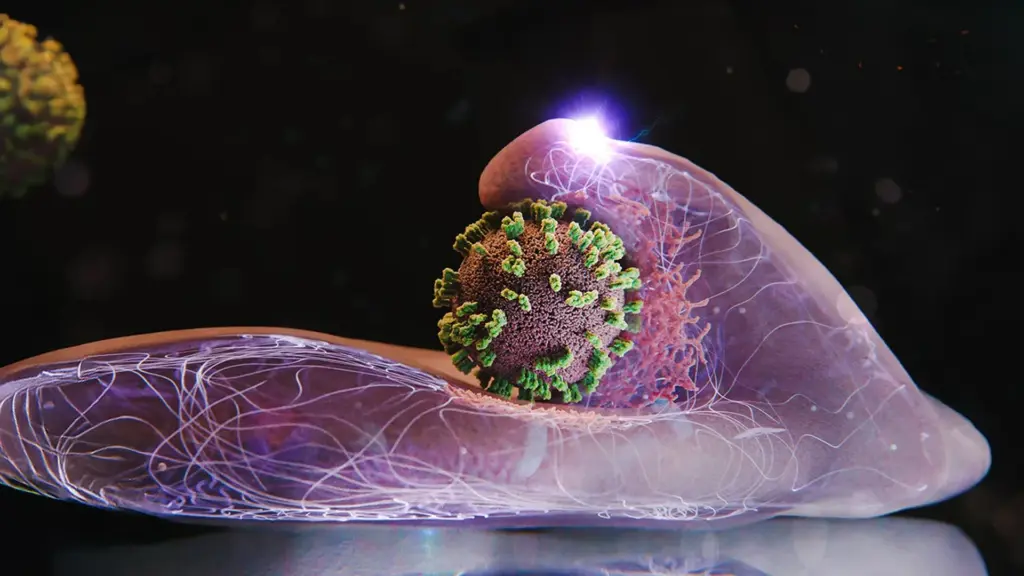
This dramatic recalibration suggests that the earliest animals may have originated deep within the Neoproterozoic Era—between 800 and 700 million years ago—potentially preceding or evolving right alongside the catastrophic global glaciations known as "Snowball Earth." While definitive body fossils from this deep-time window remain elusive, this study fundamentally reshapes our understanding of evolutionary biology, forcing science to reconsider how and when complex life first staked a claim on our planet.
Detailed Chronology: From the Cambrian Explosion to the Neoproterozoic
To fully grasp the magnitude of the Oxford-led study, one must trace the timeline of Earth’s biological history as it has been understood for decades, and recognize where the historical gaps have plagued researchers.
The Apparent Abruptness of the Cambrian Explosion
For centuries, the earliest chapters of animal evolution appeared deceptively concise. Historically, the fossil record showcased a seemingly sudden burst of complex, multi-cellular life forms right at the dawn of the Cambrian Period, spanning from roughly 539 to 487 million years ago. During this epoch, almost all modern animal phyla materialized in the fossil record within a geologically brief window, inspiring Charles Darwin’s famous frustration regarding the abrupt appearance of complex organisms without a clear, gradual lineage of ancestral fossils.
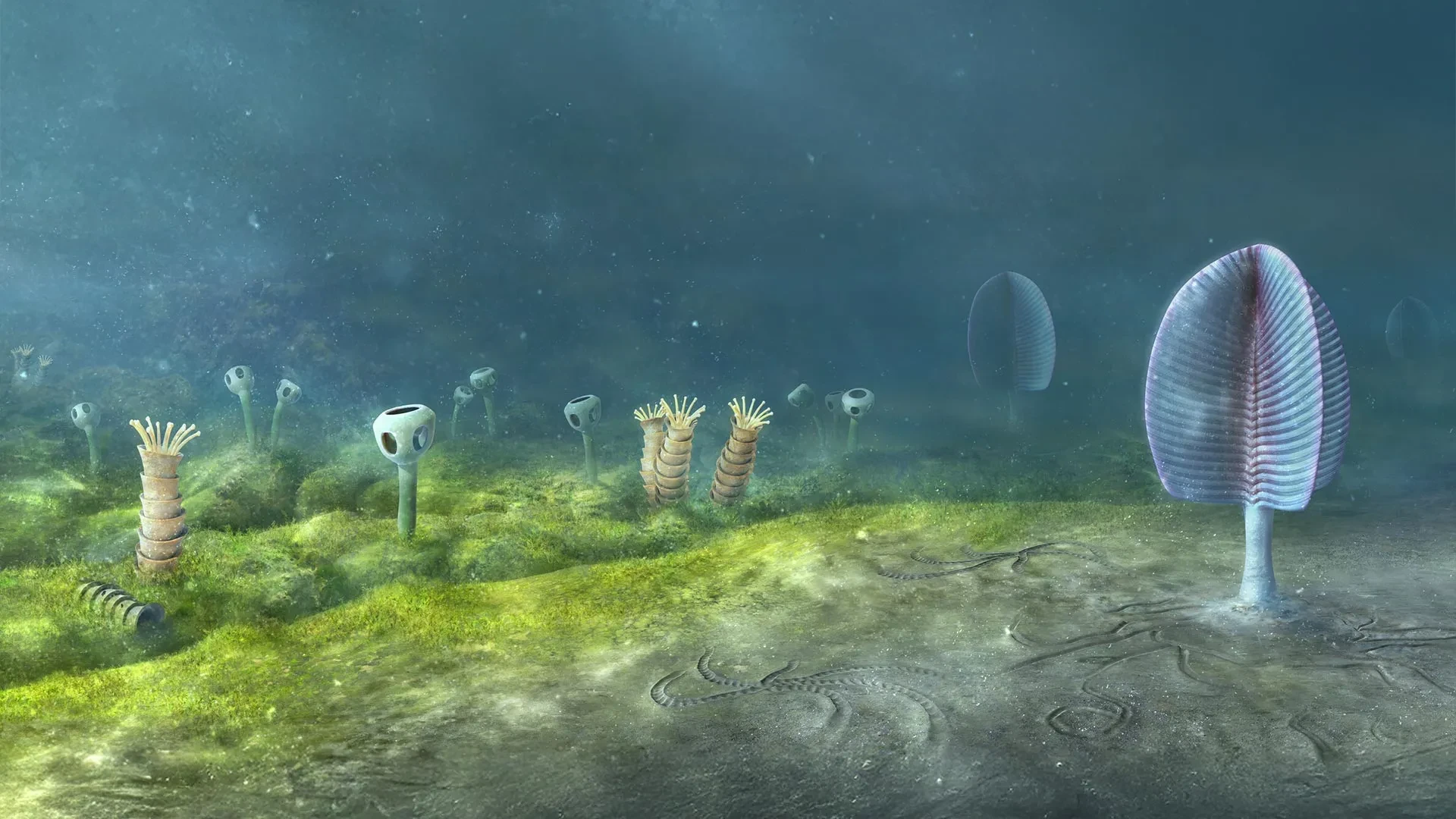
While subsequent discoveries gradually pushed the timeline slightly backward into the Ediacaran Period (635 to 539 million years ago)—revealing strange, frond-like, soft-bodied organisms known as the Ediacara biota—the definitive origins of animals remained heavily constrained by a reliance on exceptional fossil lagerstätten (deposits with extraordinary preservation).
The Weng’an Biota Constraint
At the heart of the older timeline models was the Weng’an Biota in South China, a fossil deposit aged at approximately 590 million years old (Ediacaran Period). The Weng’an site is a paleontological treasure trove, preserving microscopic organisms, cellular clusters, and putative embryonic structures in exquisite, three-dimensional detail through phosphatization.
Because the Weng’an Biota is so meticulously preserved, scientists previously operated under a logical, albeit rigid, premise: if animals had already evolved by 590 million years ago, this specific environment—with its uncanny ability to capture microscopic, fragile biological structures—should have preserved them. Because no definitive animal fossils have ever been discovered in the Weng’an deposits, scientists utilized the site to establish a strict maximum age for the origin of the animal kingdom, arguing that metazoans simply could not have evolved prior to its formation.
The Kheseen Biota Turning Point
The new research upends this baseline by studying a younger, yet equally pristine, fossil assemblage: the Kheseen Biota in Mongolia. Dated to be more than 40 million years younger than Weng’an, the Kheseen Biota shares several overlapping microfossil species with the Chinese deposit. Crucially, however, the paleontological record firmly establishes that by the time the Kheseen Biota formed, animals were already swimming and crawling in marine environments elsewhere across the globe, with confirmed animal-bearing sites in places like Namibia and South China.
An international team of researchers conducted an exhaustive microscopic analysis of over 140 rock samples from the Kheseen Biota, leveraging advanced scanning electron microscopy. They recovered beautifully preserved microfossil species, including intricate acritarchs—tiny spherical organisms adorned with spines and branching projections—alongside complex, embryo-like fossils featuring visible internal cell structures.
Despite this microscopic perfection, none of the fossils from the Kheseen Biota could be identified as an animal.
This finding dismantled the foundational logic of the Weng’an Biota. If the Kheseen deposit can boast exceptional, museum-grade preservation of microfossils while entirely missing animal remains—despite undeniable proof that animals existed concurrently elsewhere on Earth—then the absence of animals in Weng’an no longer proves they hadn’t evolved yet. They may have inhabited unsampled ecological niches, or the localized chemical conditions simply weren’t right for preserving their soft tissues.
Rewinding the Molecular Clock by 200 Million Years
With the Weng’an constraint invalidated as a hard ceiling for animal origins, the research team turned their attention to much older geological deposits. They evaluated ancient, fossil-rich sedimentary formations dating back between 850 and 730 million years, including:
- The Svanbergfjellet Formation in Norway
- The Bitter Springs Group in Australia
- The Chuar Group in Arizona, USA
These ancient deposits possess the geological characteristics required to preserve micro-organisms, yet they have yielded no confirmed animal fossils to date. Historically, scientists avoided using these deep layers to anchor molecular clocks because younger sites like Weng’an were thought to provide a tighter, more reliable maximum boundary.
By applying these older, pre-Ediacaran constraints to a rigorous molecular clock analysis—a technique that mathematically measures genetic mutations across living descendant species, combined with fossil calibration points and estimated evolutionary rates—the researchers calculated when the last common ancestors of modern animals must have branched off.
When calibrated against these older 850-to-730-million-year-old formations, the calculated origin of the animal kingdom was pushed backward by approximately 200 million years. The resulting chronological window places the birth of the animal lineage squarely between 800 and 700 million years ago.
Supporting Context & Metrics: Decoding the Deep-Time Puzzle
Understanding why animals remained invisible for hundreds of millions of years requires looking closely at taphonomy (the study of how organisms decay and become fossilized) and ancient geochemistry.
Why Soft-Bodied Animals Elude the Fossil Record
The earliest animals bore no resemblance to the armored trilobites or shelled mollusks of later eras. They were diminutive, fragile, and entirely soft-bodied—lacking bones, teeth, shells, or sclerites.
In order for a soft-bodied organism to fossilize, a vanishingly rare sequence of geochemical events must occur:
- Rapid Burial: The organism must be buried in fine-grained sediment almost immediately after death to protect it from scavengers and aerobic decay.
- Early Diagenesis: Minerals—such as phosphate, silica, or pyrite—must rapidly infiltrate and replace the organic tissues at a cellular level before complete microbial degradation takes place.
- Favorable Micro-Environments: The chemical conditions of the surrounding water and sediment must facilitate this mineral replacement rather than destroying the delicate structures.
Consequently, tiny, soft-bodied ancestral animals living in open-water columns or non-favorable sediment regimes would have vanished utterly, leaving no physical trace for future paleontologists to unearth.
Chemical Fossils and Biomarkers
While body fossils are missing from the deep Neoproterozoic, circumstantial chemical evidence has long whispered of an earlier genesis. Organic geochemists studying ancient sedimentary rocks have identified biomarkers—complex molecular fossils derived from biological molecules—that are consistent with the presence of demosponges living at least 650 million years ago.
These molecular fingerprints predate the oldest definitive macroscopic animal body fossils by tens of millions of years. The new Oxford-led study bridges the gap between these isolated chemical clues and evolutionary theory, showing that an 800-to-700-million-year-old origin for animals is not only mathematically viable under molecular clock models, but increasingly probable.
The Shadow of "Snowball Earth"
Perhaps the most profound implication of pushing the animal origin timeline back to 800–700 million years ago involves its intersection with the most severe climatic upheavals in planetary history: the Cryogenian Period.
Beginning around 720 million years ago, Earth experienced a series of extreme global glaciations known colloquially as "Snowball Earth," during which ice sheets advanced from the poles all the way to the tropics, locking the oceans beneath thick layers of glacial ice for millions of years.
If animals indeed originated between 800 and 700 million years ago, it means metazoan life either managed to establish itself before the planet plunged into this deep freeze, or successfully evolved through the environmental stresses of the Cryogenian glaciations. This revelation upends traditional paradigms, suggesting that extreme climate change may have acted as a radical evolutionary driver rather than an absolute barrier to the development of complex multicellular life.
Official Statements and Expert Insights
The study’s authors emphasize both the paradigm-shifting nature of their findings and the cautious scientific rigor required moving forward.
Associate Professor Ross Anderson of the Oxford University Museum of Natural History, and senior author of the study, explained how the Mongolian fossil beds altered long-held paleontological assumptions:
"The Kheseen Biota breaks the argument that the exceptional microfossils of Weng’an mean we would have seen animal fossils in the assemblage had they existed at the time. The Kheseen microfossils are just as well-preserved, yet animals continue to be absent—despite the fact we know at that point they existed."
Anderson further highlighted the implications for habitat and preservation bias:
"This suggests animals may have occupied environments different from those represented in the Kheseen deposits, or that the chemical conditions responsible for fossilization there were not suitable for preserving animal remains."
Orin Lole Durbin, a PhD student at the University of Oxford (and undergraduate researcher during the core of the study, now based at Virginia Tech) served as the study’s first author. He noted the careful balance between new data and lingering mysteries:
"Pre-Ediacaran animal body fossils still elude us, and this analysis does not prove that animals existed 800 million years ago. However, our new fossil evidence from Mongolia undermines one of the main arguments for restricting animal origins to the Ediacaran interval. Meanwhile, our molecular-clock analyses show how much further back their evolutionary history could extend."
Future Outlook: The Next Frontier in Paleontology
As the scientific community digests these findings, researchers are charting a new course for how deep-time paleontology must be conducted. The reliance on single, pristine fossil deposits as definitive time-barriers is officially a relic of the past.
Toward a Multi-Pronged Exploratory Approach
Moving forward, paleontologists argue that hunting for the earliest chapters of animal life requires a multi-disciplinary strategy that bridges disciplines that historically operated in silos:
- Expanded Geographic Surveys: Researchers must scour pre-Ediacaran strata across diverse global localities, exploring varied sedimentary environments and depositional settings rather than relying on a handful of well-known basins.
- Integrated Biomarker Tracking: Geochemists and paleontologists will need to pair micro-fossil searches with high-resolution organic geochemical analyses, tracking lipid biomarkers and isotopic signatures that signal the metabolic presence of early organisms.
- Trace Fossil Inventories: Beyond body fossils, future expeditions will focus intensely on identifying trace fossils—such as early burrowing, bioturbation, or microbial mat disruption—that indicate motile, multicellular organisms interacting with their substrate long before skeletal parts evolved.
Concluding on a note of measured anticipation, Professor Anderson summarized the road ahead:
"Until that evidence becomes available, the precise birth date of the animal kingdom remains uncertain."
Until those elusive pre-Ediacaran body fossils are finally dragged into the light of day, science must content itself with the realization that the history of life on Earth is far older, more resilient, and much better hidden than we ever dared to imagine.