
Executive Overview
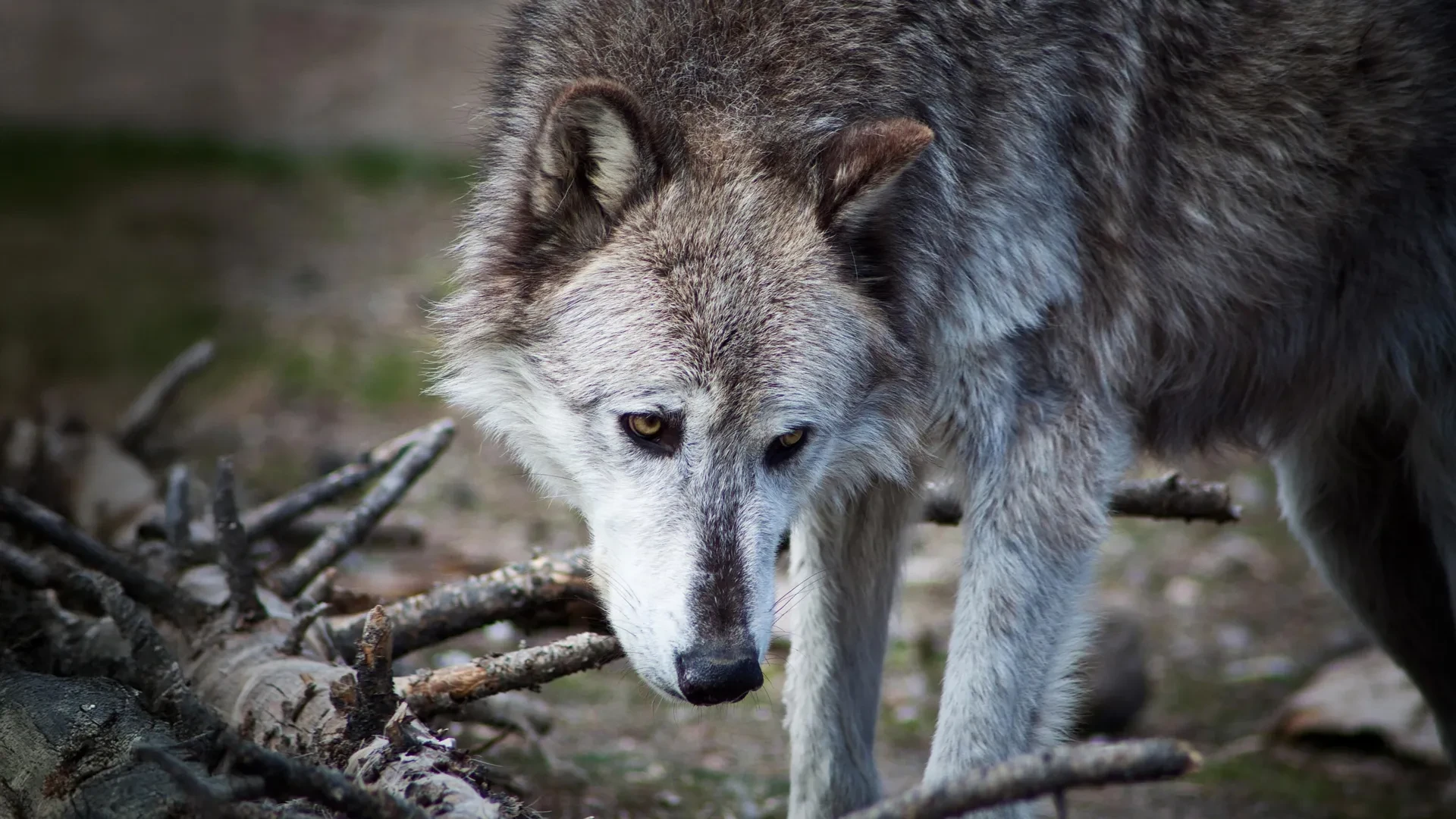
For nearly three decades, the successful reintroduction of gray wolves (Canis lupus) to Yellowstone National Park has been heralded as one of the greatest triumphs of modern conservation biology. The dominant narrative—embraced by textbooks, documentaries, academic papers, and environmental advocates alike—suggests that apex predators fundamentally healed a degraded ecosystem. According to this widely circulated story, the return of wolves suppressed and shifted elk browsing behaviors, which in turn allowed willows, aspens, and cottonwoods to recover along streams. This vegetative recovery supposedly stabilized riverbanks, brought back beavers, songbirds, and fish, and restored the park to a pristine, balanced state—a classic textbook example of a powerful "trophic cascade."
However, a rigorous new peer-reviewed study published in the journal Global Ecology and Conservation threatens to upend this ecological fairy tale. Scientists from Utah State University and Colorado State University have formally challenged the foundational evidence underpinning the most dramatic claims of Yellowstone’s wolf-induced recovery. Focusing their critique on a prominent 2025 paper by Ripple and colleagues, the researchers argue that the extraordinary claims of ecosystem-wide transformation—most notably a staggering 1,500% increase in willow growth—are the statistical artifacts of circular reasoning, flawed modeling assumptions, and selective sampling bias rather than an unmitigated natural miracle.
This investigative report explores the core mechanics of the new critique, reviews the historical context of the Yellowstone wolf experiment, examines the specific methodological errors identified by the researchers, and analyzes what this pivotal scientific debate means for the future of wildlife management and conservation ecology. Far from dismissing the ecological importance of wolves, this critical re-evaluation calls for a more nuanced, sober, and evidence-based approach to understanding complex predator-prey dynamics in wild landscapes.
Detailed Chronology: From the 1995 Reintroduction to the 2025 Statistical Showdown
To understand the weight of the new study, it is essential to trace the timeline of the Yellowstone wolf saga, tracking how a bold wildlife management experiment evolved into an immutable global dogma—and how modern scientists are now interrogating its underlying data.
1926–1995: The Erasure and Absence of Apex Predators
For the first half of the 20th century, predator eradication programs orchestrated by the federal government systematically removed gray wolves from Yellowstone National Park. The last known packs inside the park were killed in the 1920s. Without top-down pressure from carnivores, the park’s northern elk (Cervus canadensis) population swelled. Unchecked by natural predators, massive herds concentrated heavily along riparian corridors, browsing down young willows, cottonwoods, and aspens. Over decades, this relentless herbivory degraded stream-side habitats, destabilized riverbanks, and contributed to a precipitous decline in beaver populations, which depend on woody vegetation for food and dam-building materials.
January 1995: The Historic Return
Amid mounting ecological concern and shifting public attitudes toward wildlife, the U.S. Fish and Wildlife Service orchestrated a monumental conservation milestone. In January 1995, biologists captured 14 gray wolves in Alberta, Canada, and transported them to Yellowstone, releasing them into remote backcountry enclosures before setting them free. A second cohort of wolves from British Columbia followed in 1996.
Almost immediately, the conservation world and media seized on the potential ripple effects. Researchers began monitoring how the park’s elk would respond to a newly minted landscape of fear.
Late 1990s–2010s: The Birth of the "Trophic Cascade" Mythos
As packs established territories and elk numbers adjusted, field researchers documented localized decreases in elk browsing along certain streams. Concurrently, some patches of willows began to show signs of upward vertical growth.
Before long, these localized observations were synthesized into a sweeping paradigm. Prominent papers—led by researchers such as William Ripple and Eric Beschta—argued that wolf reintroduction had triggered a classic trophic cascade. The narrative quickly transcended academic circles. It became a cornerstone of environmental education, popularized by viral videos like "How Wolves Change Rivers," which claimed that wolves directly altered the physical geography of the park by liberating vegetation.
2004–2024: The Accumulation of Counter-Evidence and Long-Term Field Experiments
While the public-facing narrative celebrated a uniform ecological renaissance, a parallel scientific effort was quietly producing more ambiguous results. Over a 20-year period, independent teams of field researchers—including scientists who contributed to a major 2024 study led by Dr. N. Thompson Hobbs—conducted rigorous, empirical field experiments across the park.
Rather than finding a park-wide, uniform explosion of vegetative recovery, Hobbs and his colleagues documented highly variable, weak cascade effects. They found that willow recovery was erratic, heavily restricted to specific hydrological zones, and dictated by complex local environmental variables rather than being a direct, linear gift of wolf presence.
2025: The Ripple et al. Paper and the Immediate Backlash
The tension between sweeping macro-level claims and nuanced empirical data came to a head following the publication of a 2025 paper by Ripple et al. in Global Ecology and Conservation. The paper doubled down on the narrative of an overwhelming, park-wide trophic cascade driven by carnivores, prominently featuring the eye-popping metric of a 1,500% increase in willow crown volume following wolf recovery.
Sensing fundamental flaws in the statistical architecture of the paper, Dr. Daniel MacNulty of Utah State University and Dr. David Cooper of Colorado State University mobilized a formal scientific response. Their critical comment, published in the same journal, dismantled the 2025 study’s foundational claims, exposing the mathematical vulnerabilities that had allowed an overstated legend to masquerade as definitive science.
Supporting Context & Metrics: Deconstructing the 1,500% Willow Claim
At the absolute center of the scientific controversy is the claim that willow crown volume surged by 1,500% following the return of wolves. To the lay observer, a 1,500% increase represents an unmistakable, jaw-dropping ecological recovery. However, when MacNulty, Cooper, and their colleagues audited the mathematical engine behind this number, they uncovered a textbook case of statistical self-fulfilling prophecy.
The Anatomy of Circular Reasoning
To estimate willow crown volume across expansive, difficult-to-survey wilderness areas, researchers historically relied on accessible plant height measurements as a proxy. Measuring the exact three-dimensional volume of a sprawling, multi-stemmed willow shrub is extraordinarily labor-intensive.
In the disputed 2025 paper, the researchers derived their volume estimates by feeding plant height measurements into a regression model. The critical error, according to MacNulty and his co-authors, lay in the fact that the very same variable—height—was used both to calculate the baseline metric and to predict the final crown volume.
"Because height was used both to compute and to predict volume," explained Dr. Daniel MacNulty, lead author and wildlife ecologist at Utah State University, "the relationship is circular—mathematically guaranteed to look strong even if no biological change occurred."
In plain terms, the statistical methodology was rigged by design. If a mathematical model uses height to define volume, and then uses height changes to prove volume growth, the resulting output will inevitably show massive growth—even if the physical willows in the field have barely budged. The statistical method manufactured a powerful connection out of mathematical necessity rather than empirical reality.
Unmasking Sampling Bias and Spatial Variability
Beyond the circular reasoning embedded in the volume calculations, the re-analysis highlighted severe methodological concerns regarding how data was sampled across the landscape.
Ecological phenomena in dynamic wilderness systems like Yellowstone are rarely uniform. Weather patterns, winter severity, snowpack depth, micro-climates, and localized water tables vary wildly from one valley to the next, and even from one river bend to the immediate adjacent bank. Furthermore, elk are mobile, intelligent ungulates that shift their grazing pressure in response to hunting pressure, terrain topography, snow depth, and human presence.
When the Utah State and Colorado State researchers accounted for these confounding variables and stripped away the circular modeling techniques, the dramatic evidence for a park-wide ecosystem rebound evaporated.
"Once these problems are accounted for, there is no evidence that predator recovery caused a large or system-wide increase in willow growth," stated Dr. David Cooper, co-author and emeritus senior research scientist at Colorado State University. "The data instead support a more modest and spatially variable response influenced by hydrology, browsing, and local site conditions."
In reality, willow recovery in Yellowstone is an uneven, hyper-localized affair. Where a stream features a high water table, constant subterranean moisture, and physical barriers that deter browsing elk, willows can thrive. Just a few hundred yards away, under slightly drier soil conditions or heavier localized browsing pressure, willows remain stunted. The blanket explanation of "wolves fixed the willows" glosses over these messy, localized ecological realities.
Official Statements and Expert Perspectives
The scientific debate sparked by the MacNulty and Cooper comment touches on sensitive nerves within the conservation community, balancing the desire for inspiring conservation wins against the uncompromising demands of empirical accuracy.
Dr. Daniel MacNulty: Clarifying, Not Downplaying
Dr. MacNulty has been careful to frame his team’s critique not as an attack on the concept of top-down predation, but as an essential course correction for the integrity of wildlife science. The goal is to ensure that future ecological policy is built on bedrock data rather than romanticized folklore.
"Our goal is to clarify the evidence, not downplay the role of predators," Dr. MacNulty emphasized. "Predator effects in Yellowstone are real but context-dependent—and strong claims require strong evidence."
MacNulty points out that acknowledging the limitations of the wolf trophic cascade model does not mean wolves are ecologically irrelevant. Wolves undeniably shape elk behavior, cull weak or diseased animals, and redistribute herbivore pressure across the landscape. However, recognizing these real, nuanced effects is vastly different from accepting a narrative that portrays wolves as magical landscape architects capable of single-handedly engineering complete ecosystem restoration regardless of environmental context.
Reconciling Divergent Scientific Conclusions
The new paper sheds valuable light on a long-standing mystery within the Yellowstone scientific community: why did different research groups analyzing overlapping datasets arrive at such wildly contradictory conclusions?
- The Ripple et al. (2025) Camp: Argued that wolf recovery triggered one of the world’s most powerful, widespread trophic cascades, fundamentally reversing decades of degradation across the entire park ecosystem.
- The Hobbs et al. (2024) Camp: Gathered exhaustive empirical data during 20 years of meticulous field experiments and concluded that cascade effects were weak, highly variable, and subservient to local hydrological and environmental factors.
By exposing the circular modeling assumptions in the 2025 paper, MacNulty and Cooper provide a compelling explanation for the discrepancy. The extreme conclusions of the trophic cascade camp were largely an artifact of statistical scaffolding rather than an accurate reflection of field data. When evaluated using transparent, uncompromised modeling, the dataset aligns far more closely with the modest, variable findings of long-term field experiments.
Future Outlook: Implications for Conservation Science and Wildlife Management
The publication of this peer-reviewed critique signals a maturing of carnivore ecology. As ecosystems around the globe face unprecedented pressures from climate change, habitat fragmentation, and human encroachment, the stakes for accurate ecological science have never been higher.
1. The Death of Ecological Fairy Tales
While simple, sweeping narratives are exceptionally useful for public relations, fundraising, and environmental education, they often do a disservice to the complexity of natural systems. The Yellowstone wolf story demonstrates how easily an appealing hypothesis can morph into unassailable dogma within popular culture.
Moving forward, conservation biologists face the challenge of communicating complex, messy truths to the public without undermining public support for vital conservation initiatives. Predators are essential components of healthy ecosystems, but they are not ecological silver bullets. Acknowledging that ecosystems are governed by multi-variable feedback loops—including water availability, climate shifts, disease, and human land use—presents a more accurate, albeit less cinematic, picture of nature.
2. Heightened Standards for Statistical Rigor
The exposure of circular reasoning in a high-profile ecological paper serves as a cautionary tale for the broader scientific community. Journals, reviewers, and authors must maintain rigorous oversight of statistical models, particularly those used to extrapolate large-scale environmental conclusions from proxy measurements.
As ecological datasets grow larger and more complex, the potential for hidden circularity and sampling bias increases. The scientific method relies on falsifiable hypotheses and independent variables; when models allow variables to predict themselves, the integrity of the entire discipline is compromised.
3. Redefining Yellowstone’s Next Chapter
As Yellowstone National Park enters its fourth decade with wolves roaming its valleys, wildlife managers and researchers can use this methodological reset to chart a more objective course for future monitoring. By discarding exaggerated expectations of a uniform "trophic cascade," scientists can focus on understanding the true, localized dynamics of predator-prey relationships.
Ultimately, the story of Yellowstone’s wolves remains a remarkable conservation success story. The return of apex predators restored an essential ecological actor to a landscape that had been artificially stripped of its natural heritage. But by embracing a more nuanced, evidence-based understanding of how those predators interact with willows, rivers, elk, and hydrology, science can better prepare itself to protect not just Yellowstone, but complex wild ecosystems across the globe.