
Executive Overview
In an era defined by rapid urbanization, habitat fragmentation, and the relentless march of development, nature often finds sanctuary in the most unexpected places. On a warm October morning in 2021, at the historic Woodlawn Cemetery in Fort Myers, Florida, family historian and preservation advocate Ramona D. Miller experienced a convergence of history and ecology that would alter her perspective forever. Patrolling the verdant, shaded grounds of a segregated Black burial ground dating back to the Jim Crow era, Miller encountered a trio of Crested Caracaras—distinctive, falcon-like raptors typically associated with sprawling rangelands, pastures, and remote prairies.
This chance encounter opened a window into a broader, often overlooked phenomenon: historic green spaces, particularly sacred Black cemeteries, function as vital ecological refuges. While cities expand and consume the native habitats of Southwest Florida, these protected historical sanctuaries preserve not only the remains of marginalized ancestors but also the fragile ecosystems that sustain local wildlife.
Woodlawn Cemetery, established circa 1915 as a designated burial ground for African American families—including those from Immokalee who were systematically denied burial access in Collier County during segregation—is far more than a monument to the past. It is a living, breathing landscape. As Miller and conservationists like Keith Laakkonen of Audubon’s Corkscrew Swamp Sanctuary note, protecting historic green spaces inherently means safeguarding biodiversity. From subadult Bald Eagles and hawks to Northern Cardinals and the unexpected Crested Caracaras, these hallowed grounds offer critical shelter, food sources, and open skies for species grappling with habitat loss. This report explores the intersection of genealogy, historical preservation, and avian conservation at Woodlawn Cemetery, illuminating how remembering the dead can actively protect the living.
Detailed Chronology
The Discovery: October 9, 2021
The morning sun was climbing over downtown Fort Myers when Ramona D. Miller arrived at Woodlawn Cemetery. A dedicated family historian and relentless advocate for the preservation of historic Black burial grounds, Miller was deeply attuned to the historical weight of the land. However, on this particular day, her mission shifted from genealogy to ornithology.
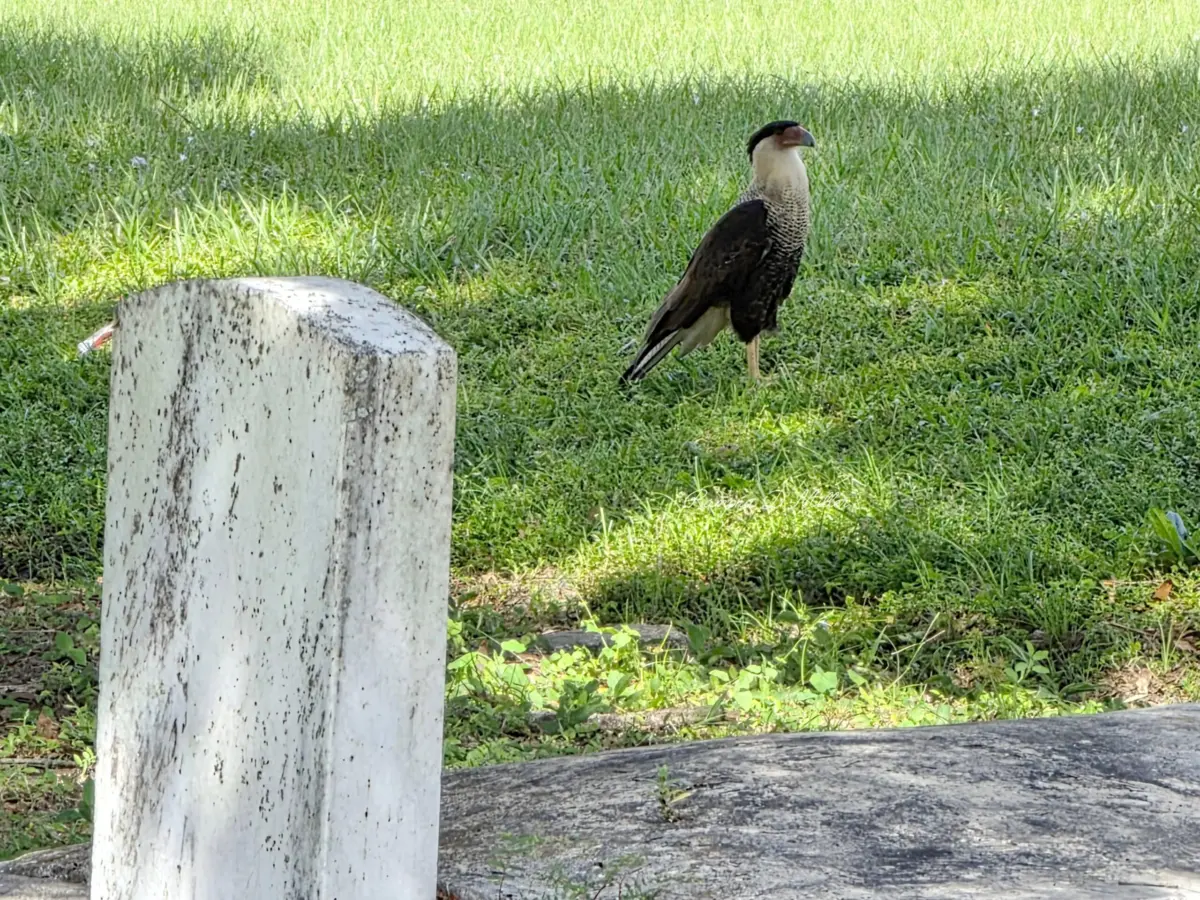
While walking the grounds, Miller’s attention was drawn to three large, unfamiliar birds moving purposefully across the open turf. Standing long-legged and upright, the raptors cut a striking silhouette against the green landscape.
"A black cap like a crown. A bright face. Long legs built for walking the earth," Miller recalls, describing her initial awe.
Unfamiliar with the species,
she raised her smartphone and used an identification app to query the digital world. The search returned a surprising result: Polyborus plancus—the Crested Caracara. Growing up in the inland agricultural community of Immokalee, located in neighboring Collier County, Miller was no stranger to the region’s wildlife. Yet, despite a lifetime spent in Southwest Florida, she had never laid eyes on a Crested Caracara, let alone a trio of them roaming a cemetery near downtown Fort Myers. In that moment of identification, a deeper personal connection formed. To Miller, the birds were living emblems of resilience: "Survivors on sacred ground."
The Preceding Days: A Tapestry of Raptor Life
The appearance of the Crested Caracaras was not an isolated wildlife sighting, but rather part of a richer ecological tapestry that Miller had been documenting at Woodlawn. Just days prior to the caracara encounter, Miller spotted a subadult Bald Eagle surveying the property from a high perch. As an experienced beekeeper who frequently observed and photographed local fauna—including Northern Cardinals, various hawks, and Blue Jays—Miller was already developing a keen eye for avian life.
Yet, the caracaras struck a different chord. Knowing that Crested Caracaras are a threatened species in Florida, she recognized the ecological significance of her observation. Rather than keeping the sighting to herself, she photographed the raptors and submitted her findings to Audubon Florida, initiating a personal and civic journey into citizen science. She soon began logging her observations on eBird, the global bird-sighting database curated by the Cornell Lab of Ornithology, transforming her role from casual observer to active ecological steward.
Supporting Context & Metrics: History, Ecology, and the Threat of Habitat Loss
Woodlawn Cemetery: A Sanctuary Born of Segregation
To fully appreciate the ecological significance of Woodlawn Cemetery, one must first understand its profound historical roots. According to the Black Cemetery Network, Woodlawn is a vital historic burial ground holding the remains of African American families from across Southwest Florida. During the height of the Jim Crow era, segregation dictated every aspect of life—and death. Black residents of nearby Immokalee and surrounding areas were routinely denied burial access in white-designated cemeteries throughout Collier County.
In response to this systemic exclusion, the Woodlawn section of the Fort Myers Cemetery was established around 1915 by the City of Fort Myers to serve as the segregated burial ground for the African American community. For decades, families laid their loved ones to rest in this space, often facing institutional neglect and marginalization that extended long past the funeral rites. Today, activists, descendants, and preservationists are fighting to restore dignity to these forgotten or under-resourced sites. Yet, as Miller emphasizes, preserving these spaces protects more than names carved into headstones; it protects the living ecosystem that has quietly enveloped the graves over the past century.
The Crested Caracara: Ecology and Vulnerability in Florida
The Crested Caracara is a unique and charismatic member of the falcon family (Falconidae). Unlike most falcons that rely almost exclusively on aerial agility to capture prey, the Crested Caracara behaves more like a vulture or a roadrunner, frequently walking on the ground to forage for insects, small mammals, reptiles, and carrion.
Historically, Florida’s Crested Caracara population has been isolated from western populations in Texas, Arizona, and Mexico, making the Florida subspecies (Polyborus plancus audubonii) genetically distinct and particularly vulnerable. Listed as Threatened by the U.S. Fish and Wildlife Service and the State of Florida, the subspecies has suffered steep population declines due to intensive habitat destruction. As Florida’s native dry prairies, pine flatwoods, and ranchlands are cleared for real estate development, agriculture, and infrastructure, the caracara’s required foraging habitat vanishes.
The presence of Crested Caracaras in an urban-adjacent historic cemetery highlights a desperate adaptability. When native prairies are paved over, open-canopy green spaces—such as parks, golf courses, and cemeteries—can occasionally serve as makeshift foraging grounds, provided they offer low ground cover and minimal human disturbance.
Official Statements and Expert Perspectives
Insights from Audubon Leadership
The phenomenon of wildlife utilizing unconventional urban green spaces is drawing increased attention from ornithologists and conservation experts across Southwest Florida. Keith Laakkonen, an avid birder and the director of Audubon’s Corkscrew Swamp Sanctuary in Naples, offers valuable context on the shifting distribution of the Crested Caracara in the region.
"Their populations around here have been doing fairly well, and I have been seeing them in more and more places in Collier County that I never did before," Laakkonen notes, reflecting on the species’ behavioral resilience in the face of landscape-level changes.
According to historical data compiled on eBird, a scattering of Crested Caracara sightings has been recorded over the decades in the broader neighborhood surrounding the Fort Myers cemetery. However, regular documentation by community scientists like Miller is crucial for mapping how these threatened raptors navigate an increasingly fragmented suburban matrix.
The Philosophy of Ramona D. Miller
For Ramona D. Miller, the convergence of genealogy and ornithology is neither accidental nor trivial. Her advocacy bridges the artificial divide between cultural preservation and environmental conservation.
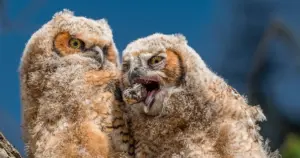
"Protecting historic green space protects more than history," Miller reflects. "It protects habitat. Shade for the owl. A perch for the hawk. Open ground for the caracara. Sky for a young eagle to grow into its crown."
Miller’s transition into birdwatching—or what she playfully describes as being "initiated into birdwatching"—exemplifies the power of citizen science. By integrating her family history research with ecological observation, she demonstrates that sacred spaces are holistic ecosystems. The trees that shade the graves of segregated families also shelter migratory songbirds; the open turf that allows visitors to walk between headstones also provides foraging ground for raptors. Preservation, in Miller’s view, is an active, ongoing responsibility to everything that currently inhabits the land.
Future Outlook: Conservation, Stewardship, and Public Awareness
The Intersection of Cultural Heritage and Urban Ecology
As Florida’s population continues to surge—with hundreds of new residents arriving daily—the pressure on remaining green spaces intensifies. Historic cemeteries, parks, and religious grounds face constant threats from commercial development, encroachment, and deferred maintenance. However, the story of Woodlawn Cemetery suggests a compelling new framework for urban planning and conservation: viewing historic cemeteries not merely as real estate assets or static memorials, but as vital urban wildlife corridors and ecological refuges.
Conservation organizations and historic preservation societies are increasingly recognizing the mutual benefits of collaborative stewardship. By designating historic Black burial grounds as protected ecological zones, municipalities can simultaneously honor marginalized histories and secure critical urban tree canopies and wildlife habitats.
Empowering the Next Generation of Stewards
Audubon’s ongoing mission emphasizes that birds serve as an emotional and intellectual bridge to the natural world. Their striking colors, complex songs, and observable behaviors capture human imagination across all demographics. Incidents like Miller’s encounter at Woodlawn Cemetery illustrate how ordinary citizens can become frontline defenders of biodiversity through simple acts of observation and documentation.
By uploading sighting data to platforms like eBird, everyday visitors to historic sites contribute to rigorous scientific databases that inform land-use policies, conservation grants, and urban forestry initiatives. Education campaigns that link cultural heritage with environmental science can inspire entirely new constituencies—particularly descendants of historically marginalized communities—to engage in advocacy that champions both human history and wildlife protection.
A Call to Slow Down
In a fast-paced world dominated by digital screens and concrete infrastructure, humanity often rushes past the quiet, sacred corners of our communities. Ramona D. Miller’s experience offers a timely and poetic reminder to pause.
The next time you find yourself passing a quiet old cemetery, a secluded church lot, or an overgrown, forgotten field on the edge of town, take a cue from the historian turned birdwatcher. Slow down. Study the architecture of the ancient trees. Pay close attention to the silhouettes in the branches and the shadows moving across the grass. You might just bear witness to something extraordinary—a living survivor holding its ground on sacred soil.