
Executive Overview
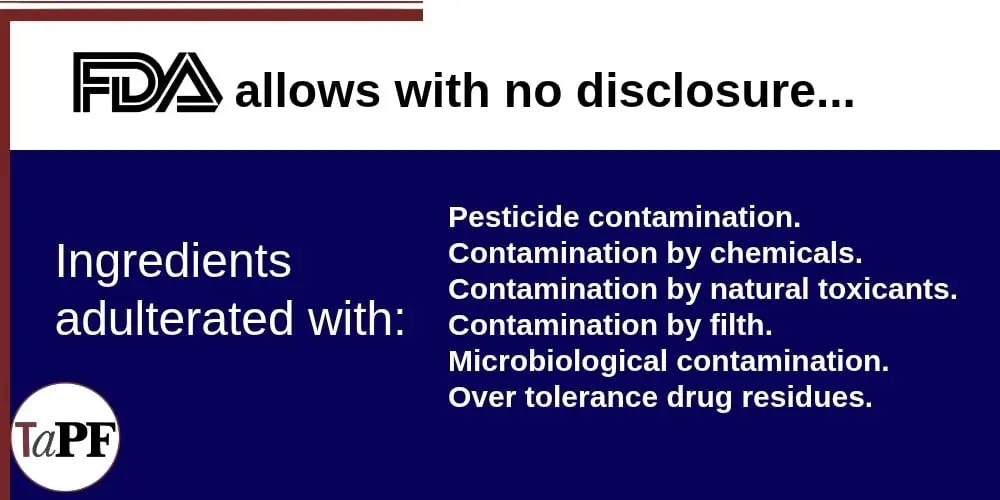
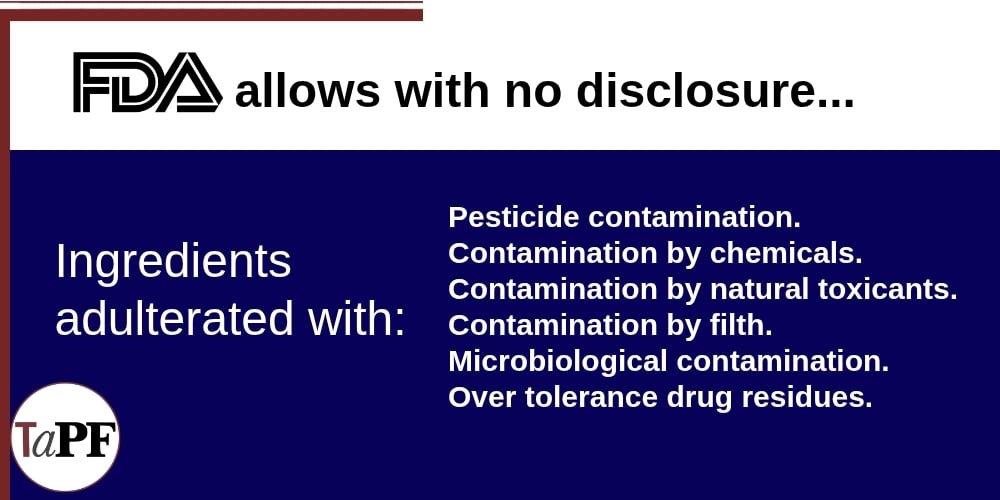
Behind the multi-billion-dollar commercial pet food and animal feed industry lies a little-known regulatory mechanism that allows human food rejected for contamination, filth, or chemical residues to be diverted directly into animal nutrition products. Through a series of formal administrative directives known as Compliance Policy Guides (CPGs), the U.S. Food and Drug Administration (FDA) grants explicit allowances for food products deemed "adulterated" under federal law to be repurposed as pet food or livestock feed.
While federal law strictly prohibits adulterated food from entering human supply chains, FDA CPGs establish a dual standard. Food contaminated with rodent or avian excreta, moldy or sewage-exposed grains, and meat products containing veterinary drug or chemical residues can be legally rendered safe—or deemed acceptable—for animal consumption, provided the processing firm obtains prior authorization from the agency.
Although the FDA maintains strict oversight requiring advance notification and case-by-case approval before these diversion requests are granted, the agency does not compel manufacturers to disclose these diverted, processed ingredients on product labels. Consequently, consumers, pet owners, and livestock producers remain unaware when commercial feed or kibble contains salvaged ingredients previously contaminated by biological, chemical, or environmental hazards.
This investigative report examines the regulatory architecture governing food diversion, the health implications of repurposed contaminants, the agency’s internal review procedures, and the ongoing legal battles surrounding administrative transparency under the Freedom of Information Act (FOIA).
Detailed Chronology and Analysis of FDA Compliance Policies
To understand how contaminated human food is re-routed into animal feed, one must examine three key Compliance Policy Guides issued by the FDA’s Center for Veterinary Medicine (CVM) and the Center for Food Safety and Applied Nutrition (CFSAN). These directives outline the operational rules, pathogen treatments, and approval pathways required for adulterated food salvage.
       HUMAN FOOD SUPPLY CHAIN
                  │
     [Food Deemed Adulterated/Unfit]
                  │
   ┌──────────────┼──────────────┐
   ▼              ▼              ▼
CPG 675.100    CPG 675.300    CPG 675.200
(Biological)    (Damaged)     (Chemical)
   │              │              │
   └──────────────┼──────────────┘
                  ▼
      FDA / CVM Review & Approval
                  │
                  ▼
     ANIMAL FEED & PET FOOD SUPPLY
1. Biological Contamination: CPG Sec. 675.100 (Diversion of Contaminated Food for Animal Use)
Under CPG Sec. 675.100, the FDA addresses human food contaminated with biological vector filth—specifically excreta from rodents, cockroaches, and birds. Under standard provisions of the Federal Food, Drug, and Cosmetic Act (FD&C Act), such material is legally classified as adulterated and banned from human consumption due to high microbial risks.
However, the agency’s official guidance policy clarifies that it does not object to transferring these materials to animal feed, provided a thermal decontamination process is applied:
"FDA does not object to the diversion to animal feed of human food adulterated with rodent, roach, or bird excreta. However, since rodent, roach, or bird excreta are vectors for microorganisms deleterious to the health of animals, including such things as parasite eggs, salmonella, leptospira, or other pathogenic organisms, diversion has not been authorized except following a heat treatment appropriate to destroy such organisms."
The policy specifies that whether the diversion occurs via voluntary industry salvage or court-ordered disposition, the processing company must submit its proposed treatment plan directly to the Center for Veterinary Medicine (HFV-236) for case-by-case review. While heat treatments (such as high-pressure extrusion or rendering) are designed to kill active vegetative pathogens like Salmonella and Leptospira, they do not necessarily remove non-viable biological matter, heat-stable bacterial endotoxins, or residual organic waste from the end product.
2. Flood, Mold, and Chemical Hazard: CPG Sec. 675.300 (Moisture Damaged Grain)
Agricultural commodities exposed to environmental disasters present complex toxicological risks. Under CPG Sec. 675.300, the FDA governs the conversion of moisture-damaged, flooded, or moldy grains into animal feed stock.
In its background documentation, the Center for Veterinary Medicine acknowledges the severe nature of contaminants often present in water-damaged grain:
"In the past CVM has authorized the diversion of moisture-damaged grain as well as other food materials for animal feed use. Such authorization has always had to take into consideration the nature and source of the water since fires from grain elevator explosions are often quenched using sea water or river water which may contain sewage, pathogenic organisms, chemical wastes or other toxic substances. Similar problems are posed when foodstuff is flooded following hurricanes or other natural disasters. Even more serious is the mold growth which may occur in wet foods."
Despite acknowledging that floodwaters may carry human sewage, heavy industrial runoff, and toxic chemicals, CVM policy allows these foodstuffs to be considered for animal conversion. Authorization is granted jointly by CVM and CFSAN after evaluating the moisture source, potential chemical or biological contaminants, and whether post-processing rendering can bring the material within broad tolerance limits.
3. Chemical Residues and Systemic Adulteration: CPG Sec. 675.200
The broadest of the three guidance documents, CPG Sec. 675.200 (Diversion of Adulterated Food to Acceptable Animal Feed Use), addresses human foods adulterated by chemical residues, veterinary drugs, or structural defect levels.
The policy draws a legal distinction between human food safety thresholds and animal feed tolerances, explicitly referencing Sections 402(a)(3) and 402(a)(4) of the FD&C Act:
"In the past, FDA has authorized the salvage of human or animal food considered to be adulterated for its intended use by diverting that food to an acceptable animal feed use. Most of these instances have involved, but have not been limited to, the interpretation of section 402(a)(3) and (4) of the Federal Food, Drug, and Cosmetic Act to allow different standards for foods intended for human use vs. food intended for animal feed use… Diversion requests, however, have also included USDA detained meat and poultry products contaminated with drug or other chemical residues, as well as food and feed under voluntary industry recall or quarantine…"
Under this framework, meat and poultry products detained or rejected by the United States Department of Agriculture (USDA) for exceeding human drug residue tolerances can be cleared for re-routing into pet food formulations, provided the residue levels do not pose an immediate fatal risk to the target animal species.
Supporting Context & Regulatory Metrics
The Two-Tiered Safety Paradigm
The operational logic behind these CPGs rests on a regulatory distinction: food unfit for humans may still be legally utilized for animals under modified safety thresholds.
| Contaminant / Condition | Human Food Standard | Animal Feed Diversion Standard (CPG Allowed) | Required Pre-Condition / Treatment |
|---|---|---|---|
| Rodent / Avian Excreta | Zero tolerance; legally adulterated | Allowed for conversion into pet/animal feed | Pre-approved high-heat processing to kill pathogens |
| Flood / Sewage Water Exposure | Immediate destruction mandated | Case-by-case conversion allowed | Joint CVM/CFSAN review of chemical/microbial risk |
| Mold / Mycotoxin Damage | Strict actionable limits (e.g., Aflatoxin) | Blending or processing allowed within animal tolerances | Chemical testing and CVM hazard evaluation |
| Drug / Chemical Residues in Meat | USDA rejection / mandatory destruction | Permitted for salvage into animal feed | Evaluation of target species toxicity limits |
Regulatory Mechanics of Diversion Approval
To execute a legal diversion of adulterated food, a manufacturer or distributor ("consignee") cannot simply transfer the product. They must engage in an explicit administrative process with federal regulators:
- Submission of Application: The consignee submits a formal diversion request detailing the nature, volume, and exact contamination profile of the adulterated lot.
- Toxicological & Microbiological Assessment: CVM scientists evaluate whether the proposed re-processing (such as thermal extrusion, acid washing, or blending) will mitigate acute biological hazards to acceptable levels for animal health.
- Conditioned Approval: The agency issues an ad hoc authorization specifying exact parameters for processing, storage, and distribution.
- Distribution without Consumer Notice: Once processed, the ingredient enters the commercial feed stream. Existing labeling regulations do not require manufacturers to disclose that a given component—such as "poultry meal" or "ground corn"—originated from a diverted, contaminated batch.
Official Statements and Regulatory Authorities
The regulatory guidelines explicitly define the internal review protocols that bind both industry actors and federal regulators.

According to CPG Sec. 675.100, case-by-case regulatory consultation is mandatory:
"Diversion of rodent, roach, or bird contaminated food for animal feed use, whether pursuant to a court order or a voluntary action, requires heat treatment to destroy pathogenic organisms. The Center for Veterinary Medicine (HFV-236) should be contacted on a case-by-case basis concerning suitability of proposed treatment…"
Similarly, regarding moisture-damaged and moldy agricultural stocks, CPG Sec. 675.300 specifies:
"Moisture-damaged and/or moldy foodstuffs may be considered for conversion to animal feed use. However, in each case authorization will be made by CVM in consultation with CFSAN based upon information concerning the nature and source of the moisture and the actual or suspected type of contamination…"
While these regulatory passages confirm that the agency exercises direct oversight and maintains records of every approved diversion request, consumer advocates point out that this creates an information asymmetry: the FDA knows precisely which pet food manufacturers utilize adulterated ingredients, but this information is shielded from the public.
The Transparency Battle: FOIA Demands and Systemic Delays
Because federal ingredient labeling standards do not distinguish between standard agricultural inputs and salvaged adulterated materials, pet owners and livestock managers cannot determine whether a commercial product contains diverted ingredients.
In response to this lack of disclosure, pet food consumer advocates and stakeholder groups—including TruthaboutPetFood.com and the Association for Truth in Pet Food—have turned to legal mechanisms to force public disclosure.
       CHRONOLOGY OF TRANSPARENCY DEMANDS
┌────────────────────────────────────────────────────────┐
│  September 17, 2026: Comprehensive FOIA Filed          │
│  - Targets all FDA-approved diversion requests          │
│  - Covers period: Jan 1, 2020 – Sept 17, 2026          │
│  - Demands consignee names, ingredient profiles, dates │
└───────────────────────────┬────────────────────────────┘
                            │
                            ▼
┌────────────────────────────────────────────────────────┐
│  Historical Precedent & Expected Hurdles               │
│  - Standard FOIA processing delays: 5+ years           │
│  - Commercial confidentiality claims by industry       │
│  - Regulatory withholding under Exemption 4 (Trade)   │
└────────────────────────────────────────────────────────┘
The September 2026 FOIA Filing
On September 17, 2026, consumer advocate Susan Thixton filed a detailed Freedom of Information Act (FOIA) request demanding that the FDA release all approved adulterated food diversion records spanning from January 1, 2020, through September 17, 2026.
The scope of the request explicitly targets:
- The identity of the consignees (the processing firms and pet food manufacturers purchasing and receiving adulterated shipments).
- The specific nature of the original contamination (biological filth, chemical residues, flood exposure, or mycotoxins).
- The volume and final destination of the diverted agricultural commodities.
Regulatory Backlogs and Institutional Secrecy
Securing these records through FOIA requests presents significant challenges. Historical records reveal that consumer advocacy organizations routinely encounter administrative backlogs exceeding five years when requesting agency records regarding commercial animal feed enforcement.
The core legal friction centers on federal regulatory exemptions—specifically FOIA Exemption 4, which protects commercial or financial information deemed trade secrets or confidential business practices. The FDA has historically maintained that disclosing corporate consignee names in diversion filings could inflict competitive harm on commercial feed brands. Advocates argue, however, that public safety and consumer rights supersede corporate privacy claims when adulterated, potentially hazardous materials enter consumer supply chains.
Future Outlook and Impact on the Pet Food Industry
The debate over FDA Compliance Policy Guides touches on systemic questions regarding food waste management, regulatory transparency, and consumer choice.
Economic Salvage vs. Consumer Transparency
From an industrial and environmental perspective, the diversion framework offers an economic safety valve. Re-purposing millions of tons of damaged or slightly contaminated grain and animal by-products prevents agricultural waste and lowers raw material costs across the commercial pet food sector. Proponents argue that properly controlled heat treatments and chemical testing mitigate acute health hazards while supporting circular economic practices within agribusiness.
Conversely, veterinary professionals, toxicologists, and pet consumer advocates argue that thermal processing does not solve every safety risk. Issues of concern include:
- Heat-Stable Toxins: Certain fungal toxins (such as aflatoxins) and bacterial endotoxins remain heat-stable and survive standard rendering temperatures.
- Bioaccumulation: Chronic exposure to low levels of drug residues, industrial chemicals, or pesticide traces can bioaccumulate in domestic animals over lifetime diets.
- Right to Information: Consumers paying premium prices for pet products are denied critical information regarding the origin and handling history of raw ingredients.
Prospective Regulatory Reforms
As public scrutiny around commercial pet food manufacturing continues to grow, pressure is mounting on federal policymakers and the Association of American Feed Control Officials (AAFCO) to update labeling standards.
Potential policy changes under discussion include:
- Mandatory Ingredient Disclosure: Requiring distinct labeling terminology (e.g., "salvaged grain" or "reprocessed animal protein") for components sourced via FDA CPG diversion authorizations.
- Public Diversion Databases: Creating an online agency registry where approved diversion requests, volume metrics, and post-treatment verification testing are made accessible to the public.
-
Legislative Reform of the FD&C Act: Amending section 402 to harmonize safety standards between human and animal foods, narrowing the allowance for salvage of
contaminated human supply stocks.
Whether through FOIA disclosures, potential court challenges, or legislative reforms, the ongoing legal fight over CPG diversion policies ensures that the regulatory mechanics of animal feed manufacturing will remain under scrutiny by advocates, consumers, and lawmakers.