
Executive Overview
When the mind conjures the image of a guide dog or professional service animal, it almost invariably paints a portrait of a Labrador Retriever. For decades, this quintessential breed has served as the undisputed cornerstone of assistance dog programs worldwide. This status is no historical accident; rather, it is the result of a rare, highly specialized convergence of temperament, cognitive adaptability, high-level trainability, and an innate, deeply ingrained desire to collaborate with human partners.
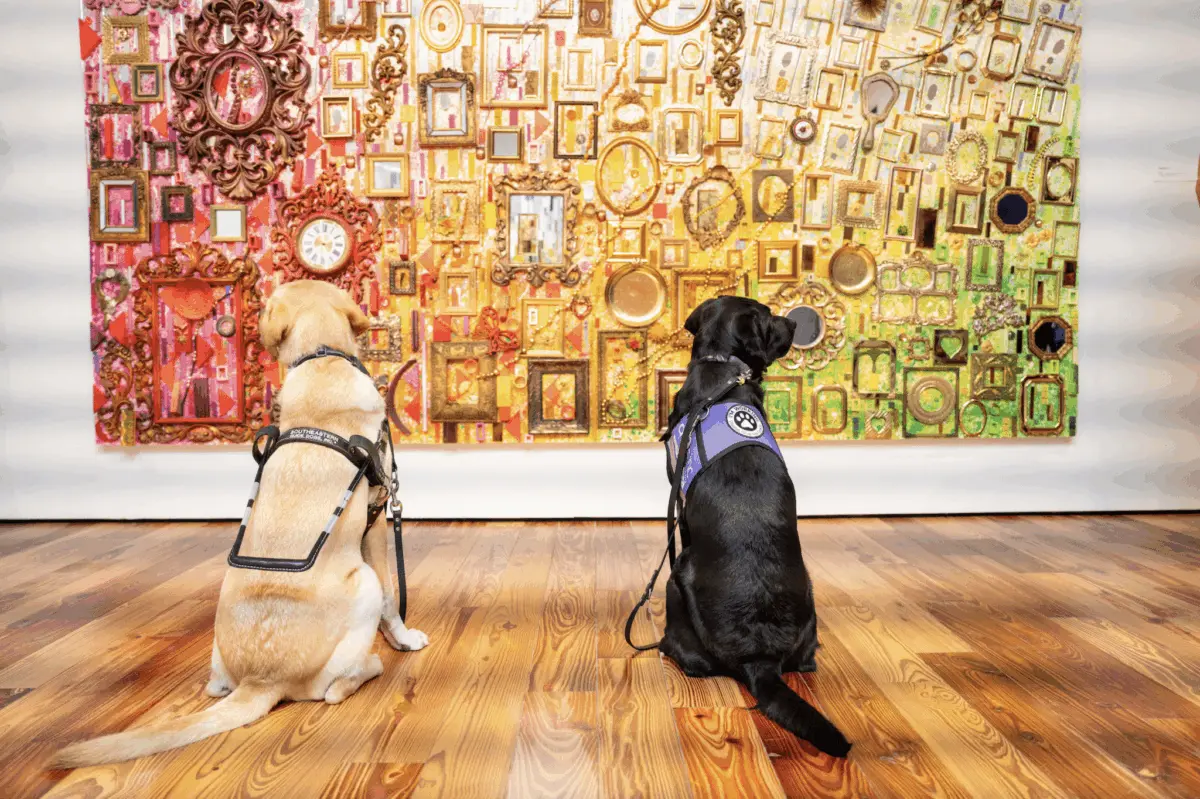
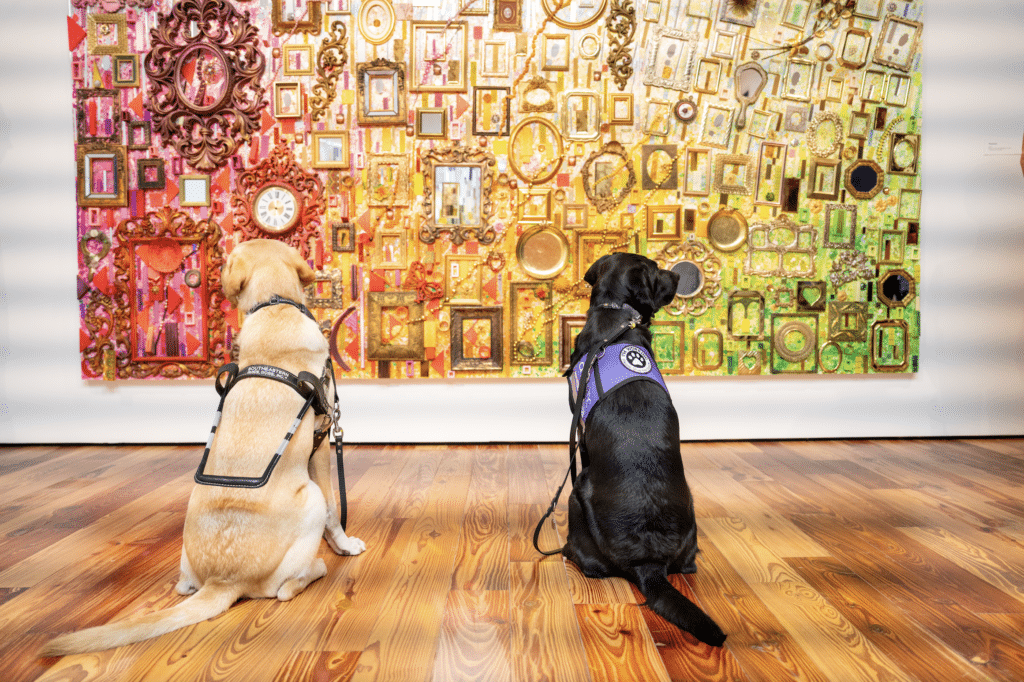
While several canine breeds demonstrate baseline success in working roles, the Labrador Retriever consistently outperforms its peers across standardized metrics used by organizations like Dogs Inc. These institutions evaluate candidates on an individual basis, yet the foundational blueprint of the breed consistently provides a remarkably high success rate. From bustling, chaotic international airports and high-traffic restaurant environments to quiet residential neighborhoods and critical medical offices, Labrador Retrievers navigate complex social and physical landscapes with a blend of emotional equilibrium and unwavering focus.
This report investigates the multi-year trajectory of these exceptional animals, exploring the intricate genetic, environmental, and behavioral milestones that transform a playful puppy into a life-changing lifeline. We will analyze the stringent evaluative criteria governing modern service dog programs, the science of positive reinforcement, the imperative nature of canine physical health, and the profound human-animal partnerships that define this critical tier of working dogs.

Detailed Chronology: From Puppyhood to Partnership
The journey of a working Labrador Retriever is long, rigorous, and carefully mapped out. It begins well before formal advanced training commences, tracing a deliberate developmental arc from early neonatal socialization to mature, life-changing public service.
Phase 1: Neonatal Imprinting and Early Socialization (Birth to 8 Weeks)
The foundational stage of a working dog’s life occurs within specialized breeding facilities and breeder-caretaker homes. From birth, Labrador puppies are introduced to controlled sensory stimuli—varying textures, gentle sounds, and safe human interactions. This early exposure is designed to inoculate the puppy against sensory overload, fostering neural pathways that promote emotional stability and quick recovery from novel stimuli.
Phase 2: The Puppy Raising Era (8 Weeks to 12–18 Months)
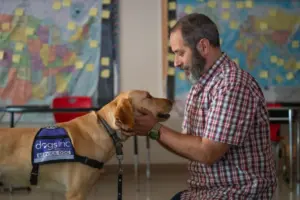
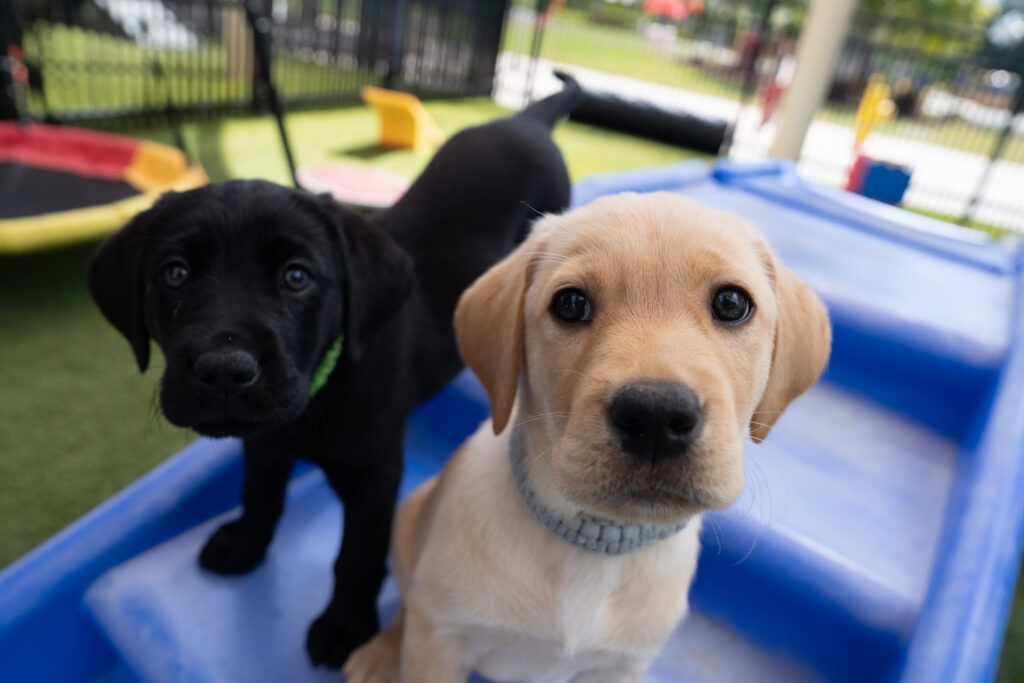
Once weaned, the puppy is placed with a volunteer "Puppy Parent" or foster handler. This phase is critical for establishing basic house manners, house-training, crate training, and foundational obedience. More importantly, it represents an intensive socialization window. Handlers take these young Labs to grocery stores, public parks, public transportation hubs, and community gatherings. They are exposed to children, other animals, flashing lights, loud noises, and diverse walking surfaces.
Despite their intelligence, adolescent Labradors are famously exuberant and can retain playful, puppy-like behaviors up to three years of age. Navigating this exuberant phase requires immense patience from volunteer handlers, who must reinforce boundaries while keeping the dog’s natural enthusiasm intact.
Phase 3: Formal Advanced Training (12 to 24 Months)
Upon completing their time with puppy raisers, candidate dogs return to formal training facilities, such as the campuses of Dogs Inc. Here, professional instructors take over, transitioning basic manners into highly specialized working tasks.
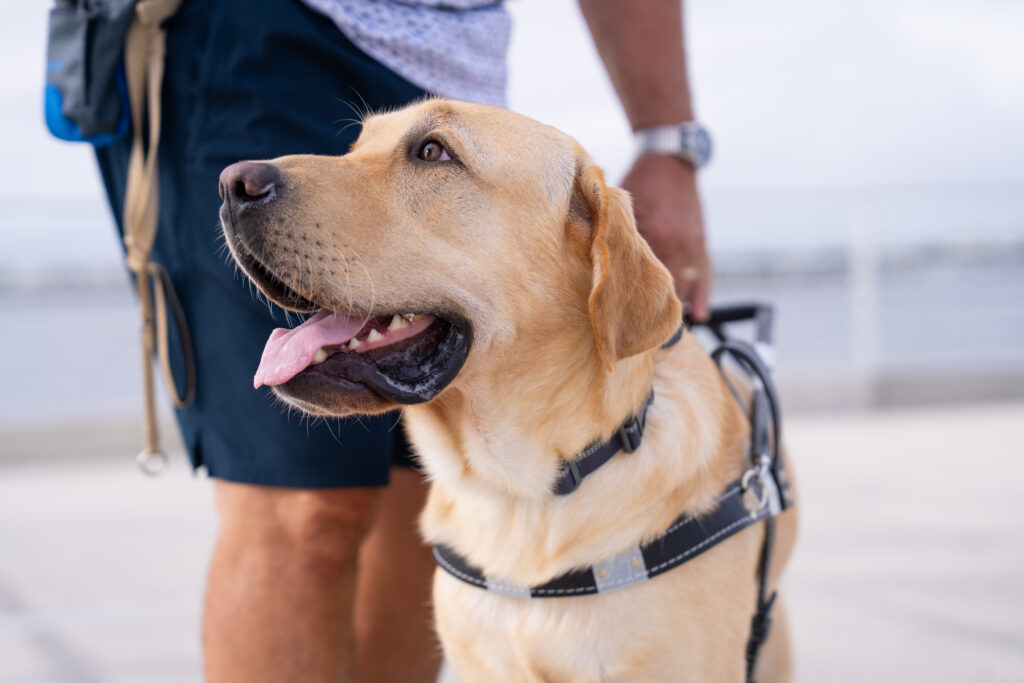
- For Guide Dogs: Training focuses on obstacle navigation, intelligent disobedience (knowing when to refuse a handler’s command if it puts them in danger, such as stepping into oncoming traffic), stopping safely at curbs, and maintaining a straight line of travel through crowded spaces.
- For Service Dogs: Training involves mitigating the specific effects of physical or psychological disabilities. Dogs learn to retrieve dropped items, pull wheelchairs, open heavy doors, trigger alert systems, or provide deep-pressure therapy during medical episodes.
Phase 4: Matching and Team Training (24 to 30 Months)
Once a dog masters its curriculum, it undergoes exhaustive evaluations to ensure its specific pacing, energy level, and temperament match an applicant’s lifestyle. The handler and dog then undergo intensive on-campus team training together. This period cements the mutual trust and operational synchronicity required for a successful, lifelong partnership.

Supporting Context & Metrics: Defining the Working Standard
To understand why the Labrador Retriever dominates this field, one must examine the precise behavioral criteria that separate a standard family pet from an elite assistance animal. Organizations look at a holistic package often referred to as "service dog temperament."
Core Behavioral Traits Required for Success
- Emotional Stability: The dog must remain unflappable in chaotic or high-stress environments. Sudden sirens, dropping dishes, or aggressive crowds should not trigger panic or defensive aggression.
- Resilience and Bounce-Back: When startled by an unexpected noise or movement, a qualified working dog must recover almost instantaneously, shaking off the stressor and resuming its task without lingering hesitation.
- Task-Focused Concentration: The ability to ignore powerful distractions—such as dropped food, roaming wildlife, or unfamiliar pets—is non-negotiable.
- Adaptive Problem-Solving: Working dogs often encounter novel obstacles that do not appear in training manuals. They must possess the cognitive flexibility to assess a new environment and make safe decisions on behalf of their handlers.
Breed Demographics and Physiological Profile
The Labrador Retriever’s physical attributes are as well-suited to the work as its mind. According to American Kennel Club (AKC) data, Labradors have historically reigned as one of the most popular breeds in the United States.
- Weight: Healthy adult working Labs typically range from 55 to 80 pounds, depending on sex. This provides enough heft to stabilize a handler or pull a mobility cart, yet leaves the dog small enough to comfortably curl under an airline seat or tuck neatly under a restaurant table.
- Coat & Hardiness: Originally developed from the Lesser Newfoundland (working alongside fishermen in cold northern waters) and later refined as hunting retrievers, Labs possess an inherently weather-resistant double coat and robust physical stamina.
- Lifespan: With a typical life expectancy of 10 to 14 years, a successful working Labrador provides its handler with a long, stable, and highly productive working career.
Official Statements and Institutional Perspectives
Organizations at the forefront of assistance dog breeding and training emphasize that while breed genetics provide a profound head start, individual evaluation remains the absolute gold standard.

The Individual Evaluation Paradigm
Representatives from organizations like Dogs Inc consistently stress that not every Labrador Retriever is destined to be a working dog. While the breed boasts a high statistical probability of success, canine candidates are continuously assessed through rigorous behavioral audits.
"Breed can influence certain characteristics, but breed alone does not determine success. Every service dog candidate is evaluated as an individual," program notes emphasize. "While Labrador Retrievers, Golden Retrievers, and some other breeds are common in assistance dog programs, temperament remains one of the most important factors."
The Dual Outcomes of Breeding Programs
Not all dogs entered into training programs graduate into working careers. Canine development is complex, and some dogs reveal subtle stress sensitivities, lower drive, or physical predispositions that make full-time public access work an ill fit.
When a Labrador Retriever—or any candidate dog—demonstrates that working life is not suited to their personality, programs ensure they are thoughtfully reallocated. Some dogs transition to alternative professional careers (such as facility support or detection work), while others find placement in loving pet homes. This individualized approach ensures that the psychological well-being of the animal remains paramount, avoiding forcing a mismatched dog into a high-stress role.
Future Outlook: Health, Innovation, and the Evolution of Assistance Work
As the science of canine care and training evolves, the future of Labrador Retrievers in assistance work relies heavily on proactive health management and innovative training methodologies.
Safeguarding Canine Health
Because the physical demands placed on working dogs are immense, institutional breeding programs prioritize comprehensive genetic health testing. Responsible organizations monitor breeding stock to minimize the incidence of inherited conditions common to the breed, including:
- Hip and elbow dysplasia
- Progressive retinal atrophy (PRA)
- Hereditary myopathy
By combining rigorous genetic screening with optimal nutritional management, low-impact exercise regimens, and lifelong veterinary care, modern programs ensure that working Labs maintain peak physical condition throughout their demanding careers.
The Human-Animal Bond as a Medical Intervention
Looking forward, the societal value of Labrador Retriever service dogs extends far beyond physical navigation and mobility support. Emerging research underscores the profound psychological and physiological benefits these animals provide. The tactile comfort of a Lab’s presence, combined with their unwavering emotional consistency, has been shown to lower cortisol levels, reduce hypervigilance in trauma survivors, and provide an invaluable anchor for individuals managing invisible disabilities.
As long as humans require support to navigate an increasingly complex world, the Labrador Retriever—backed by scientific breeding, compassionate socialization, and elite professional training—will remain a steadfast, trusted partner in independence.