
Executive Overview
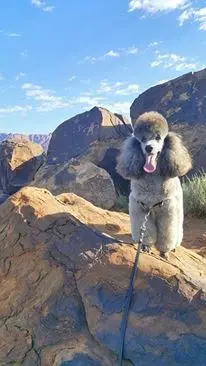
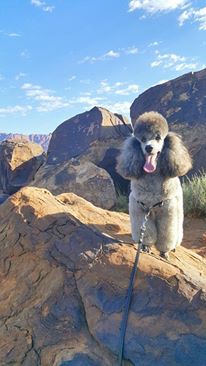
Traveling by commercial airline with a small pet under ten pounds is generally straightforward, governed by well-established guidelines and standard soft-sided carrier dimensions. However, navigating the strict constraints of in-cabin pet policies with an animal exceeding standard size parameters—such as a tall Miniature Poodle standing 16 inches at the shoulder and weighing roughly 17 pounds—presents a complex logistical challenge.
This report details the innovative travel strategies of reader and pet owner Amy, who successfully transported her Miniature Poodle, Calvin, from Providence, Rhode Island, to Las Vegas, Nevada, and back. Utilizing a heavily modified Extra-Large (XL) SturdiBag paired with a meticulous back-up contingency plan, Amy’s journey offers a masterclass in canine air travel adaptability. Operating across major U.S. carriers including Delta Air Lines and Southwest Airlines, this case study illuminates the fine line between rigid airline regulations and the real-world flexibility required to ensure a safe, stress-free journey for larger canine companions.
Detailed Chronology: The Providence-to-Las Vegas Excursion
Outbound Leg: Providence (PVD) to Las Vegas (LAS) via Delta Air Lines
The journey began in Providence, Rhode Island, with a flight reservation booked through Delta Air Lines. Given the frequent industry scrutiny surrounding pet carrier dimensions—which typically mandate that carriers fit entirely beneath the forward seat—Amy proactively managed the booking conversation.
Rather than facing interrogation, Amy’s interaction with Delta’s telephone reservation agent was refreshingly accommodating. When she explicitly noted she would be traveling with a "large-small dog" and an oversized soft carrier, the representative provided verbal reassurance: provided the flexible carrier could be compressed ("smooshed") beneath the seat in front of her, it would be acceptable.
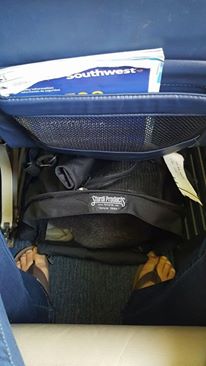
The initial leg of the trip utilized a Delta MD-88 aircraft. Securing a middle seat presented immediate spatial complications when maneuvering the XL SturdiBag into the designated footwell. While the rigid structures of standard carriers would have failed this spatial test, the flexible framing of the SturdiBag allowed it to be wedged between the seats. Once properly positioned, the carrier remained secure and stable for the duration of the flight.
The Atlanta Layover and Relief Operations
The itinerary included a layover at Hartsfield-Jackson Atlanta International Airport. Utilizing this transition window, Amy successfully cleared security to provide Calvin with a much-needed outdoor biological break.
Although a dedicated, official pet relief area proved elusive during this specific window, resourcefulness prevailed: Calvin utilized a patch of decorative terminal landscaping. This minor logistical hurdle highlights a systemic issue across major aviation hubs—the frequent inadequacy or obscurity of designated animal relief zones within secure terminal boundaries.
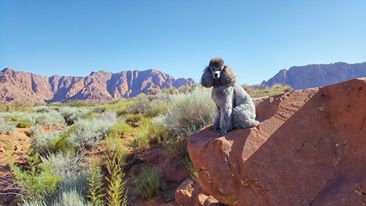
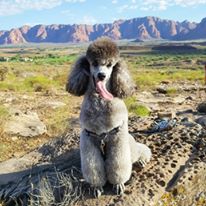
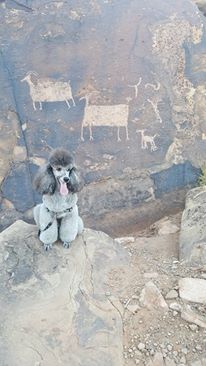
Following the layover, the second flight segment from Atlanta to Las Vegas operated on a Boeing 737-700. This leg proceeded without incident, with Calvin remaining calm and contained within his modified in-cabin quarters. Upon arrival in Nevada, the pair embarked on a scenic exploration of the American Southwest, notably visiting areas adjacent to Snow Canyon State Park.
Return Leg: Las Vegas (LAS) to Providence (PVD) via Southwest Airlines
The return journey introduced an unexpected operational pivot. Due to a major computer system outage at Delta Air Lines that resulted in significant flight delays, Amy made the tactical decision to abandon her original itinerary and purchase a new ticket home via Southwest Airlines to avoid protracted delays with an animal in tow.
Transitioning to Southwest brought a new set of protocols. Southwest operates an open-seating policy, which alters the boarding and seating dynamic for pet owners. During the boarding process, a Southwest gate agent briefly intercepted Amy and Calvin, but the interaction was limited strictly to verifying that a pet fare had been properly registered and attached to the carrier.
The first leg of the Southwest journey utilized a Boeing 737-700 aircraft, featuring a middle-seat configuration. Despite the confined space, the XL SturdiBag fit smoothly, granting Calvin ample interior room to shift positions. The subsequent connecting flight also operated on a Boeing 737-700, this time featuring a window seat configuration that provided even greater spatial latitude and comfort.
Chicago Midway (MDW) and Providence Return
The connection routed through Chicago Midway International Airport, offering another opportunity for canine relief outside the secure perimeter. Unlike Atlanta’s ad-hoc landscaping solutions, Midway features a designated outdoor pet relief area. However, Amy noted that the official space—a fenced-in concrete enclosure—offered a sterile, uninviting environment for the animal. Fortunately, surrounding pockets of natural grass and trees provided a comfortable alternative where Calvin could relieve himself successfully.
Re-clearing security at Midway proceeded with efficiency, allowing Amy and Calvin to board their final flight segment back to Providence. Notably, upon arrival at Rhode Island T.F. Green International Airport (PVD), Amy utilized a newly installed indoor pet relief facility, underscoring the gradual improvements being made in airport infrastructure nationwide.
Supporting Context & Metrics: Carrier Modifications and Specifications
The success of this cross-country transit hinged entirely on precise equipment modifications. Understanding the physical dimensions of both the dog and the equipment is vital for evaluating how this arrangement succeeded where standard configurations would fail.
Dimensional Analysis of Dog and Carrier
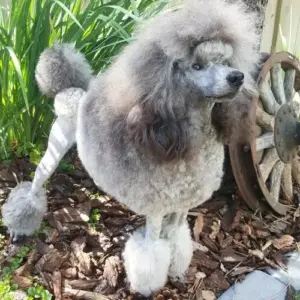
- Canine Specifications: Calvin the Miniature Poodle stands between 16 and 16.5 inches tall at the shoulder and weighs approximately 17 pounds.
- Standard Carrier Limits: Traditional large pet carriers are optimized for animals standing roughly 12 inches tall at the shoulder and weighing under 15 pounds. Calvin clearly exceeded these standard metrics in both height and mass.
- The Equipment: The SturdiBag Extra-Large (XL) is structurally designed to handle larger pets, but its standard length of 20 inches can create severe under-seat clearance and floor-space issues on regional and narrow-body commercial aircraft.
Amy’s Ingenious Modification Strategy
To mitigate the risk of airline rejection and ensure a guaranteed backup plan, Amy engineered a brilliant tactical modification:
- The Backup Component: Amy packed a standard Large SturdiBag completely folded inside her carry-on luggage.
- The Floorboard Swap: Before departure, she extracted the rigid bottom floor insert and the soft interior pad from the Large SturdiBag and placed them into the Extra-Large SturdiBag, replacing the XL’s original floor pieces.
- Dimensional Impact: This strategic substitution effectively compressed the functional length of the XL SturdiBag from its original 20 inches down to approximately 18 inches. This reduction was critical in ensuring the carrier could conform to the variable, restricted under-seat dimensions of commercial aircraft without sacrificing vertical headroom.
- Contingency Ready: If gate agents had rejected the XL bag based on size, Amy possessed the exact hardware required to immediately transfer Calvin into the standard Large SturdiBag on the spot.
Official Statements and Industry Insights
Reflecting on the broader implications of this successful trip, seasoned pet-travel advocates and aviation observers have highlighted several key takeaways regarding airline pet policies.
Delta Air Lines’ official policy dictates that soft-sided pet carriers can exceed standard rigid kennel dimensions slightly, provided they are flexible enough to compress without blocking emergency egress or encroaching upon neighboring passenger foot space. As Amy’s phone interaction demonstrated, frontline reservation staff often apply common-sense interpretations of these rules: "As long as it will smoosh under the seat, it will be fine."
Similarly, Southwest Airlines enforces strict limits on container dimensions—recommending soft-sided carriers with maximum dimensions of roughly 18.5" x 8.5" x 13.5"—yet focuses primarily on documentation compliance (the mandatory pet reservation fee) at the boarding gate rather than rigorous physical measurement of the carrier itself.
Industry experts emphasize that a pet’s raw numerical measurements do not always tell the complete story. While Calvin stood 16 inches tall—four inches above the optimal threshold for standard pet carriers—his anatomy featured long, slender legs that allowed him to easily curl into a compact ball once inside the enclosure. Understanding an animal’s resting posture is just as crucial as tracking linear dimensions when selecting a travel kennel.
Future Outlook: Best Practices for Oversized In-Cabin Pet Travel
As commercial aviation continues to evolve, the accommodation of pets—particularly those bridging the gap between "small cabin pet" and "cargo hold animal"—remains a critical topic for animal welfare advocates and frequent flyers.
Amy’s successful voyage provides a valuable blueprint for owners of larger small-breeds (such as Miniature Poodles, larger Terriers, or substantial Cocker Spaniels) attempting to navigate cabin travel. Key recommendations moving forward include:
- Redundant Equipment Strategy: Always pack a smaller, compliant backup carrier folded flat within carry-on luggage. This eliminates the catastrophic risk of being grounded if a gate agent interprets size restrictions strictly.
- Strategic Component Swapping: Utilize customizable soft-sided carriers like the SturdiBag, which allow for structural modifications (such as swapping floorboards) to alter rigidity and overall spatial footprint.
- Pre-Flight Conditioning: Ensure the animal undergoes intensive physical exercise prior to departure and manage feeding schedules (withholding heavy meals immediately prior to flight) to minimize anxiety and biological accidents en route.
- Infrastructure Research: Map out airport pet relief facilities in advance—both pre-security and post-security—while maintaining a flexible attitude toward ad-hoc solutions when official terminal amenities fall short.
By combining meticulous preparation, clever equipment modifications, and a calm, polite demeanor with airline personnel, traveling with an oversized canine companion transitions from an impossible logistical hurdle into an entirely manageable, rewarding adventure.