
Executive Overview
Across the United States, millions of pet owners make daily purchasing decisions based on package imagery promising wholesome, high-grade ingredients. Pictures of juicy tenderloin steaks, plump chicken breasts, and farm-fresh vegetables frequently adorn pet food bags and cans. However, behind these appealing visual representations often lies a starkly different reality: mechanically separated meats, rendered byproducts, and low-cost agricultural substitutes that bear little resemblance to the imagery on the package.
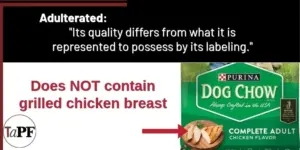
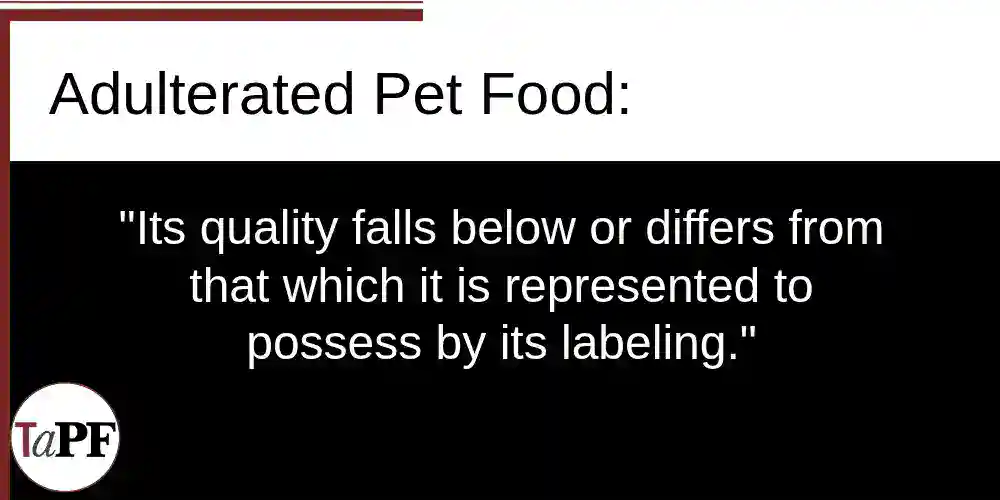
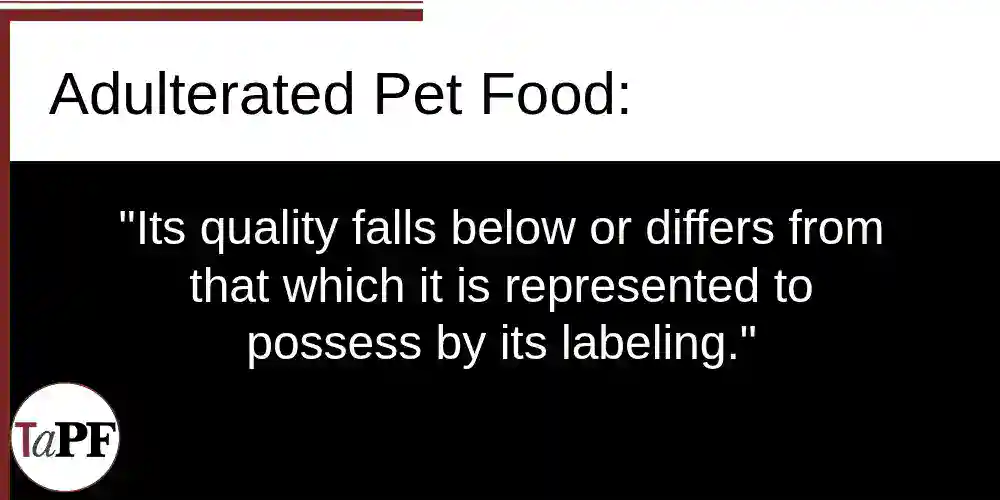
While consumers often assume that regulatory authorities tightly audit these visual marketing practices, an investigation into state commercial feed statutes reveals a striking legal paradox. The laws prohibiting misleading labeling and ingredient substitution already exist on the books in nearly every state. Under long-standing state statutes governing commercial feed—a legal category that encompasses pet food—selling a product whose contents fall below or differ from what its labeling represents is explicitly classified as illegal "adulteration."
Despite these mandatory statutes, enforcement has stagnated for decades. State regulatory agencies, constrained by limited budgets and administrative inertia, have historically prioritized chemical safety and pathogen control while leaving visual labeling misrepresentations unscrutinized.
Now, consumer advocates led by Susan Thixton of TruthaboutPetFood.com and the Association for Truth in Pet Food are initiating a nationwide movement. By mobilizing pet owners to challenge manufacturers directly and systematically lodge formal complaints with State Departments of Agriculture, advocates aim to force regulatory agencies to enforce existing laws.
Detailed Chronology: The Evolution of Pet Food Labeling and Regulatory Inertia
To understand how visual representation diverged from regulatory enforcement, it is necessary to trace the legislative and marketing evolution of the commercial pet food industry over the past century.
+-----------------------------------------------------------------------------------+
| HISTORICAL TIMELINE OF PET FOOD REGULATION & MARKETING                            |
+-----------------------------------------------------------------------------------+
| 1930s-1950s: Rise of Commercial Feed Statutes                                     |
| • States pass Commercial Feed Acts targeting livestock feeds.                     |
| • Pet food is legally classified alongside agricultural livestock feed.          |
+-----------------------------------------------------------------------------------+
| 1970s-1990s: Visual Marketing Revolution                                          |
| • Pet food marketing shifts from basic nutrition to "humanization."               |
| • High-end graphic packaging features prime cuts of meat and fresh vegetables.   |
| • Regulatory oversight remains focused on basic minimum nutrient guarantees.       |
+-----------------------------------------------------------------------------------+
| 2000s-2010s: Regulatory Divergence                                                |
| • Widespread pet food recalls (e.g., 2007 melamine crisis) shift state focus      |
|   almost exclusively to pathogen and toxic contamination testing.                  |
| • Label enforcement falls behind visual marketing strategies.                      |
+-----------------------------------------------------------------------------------+
| Present Day: Consumer Enforcement Mobilization                                     |
| • Advocates identify latent state "adulteration" clauses to demand enforcement.   |
| • Grassroots campaign launched to systematically challenge mislabeled products.    |
+-----------------------------------------------------------------------------------+
1. The Post-War Commercial Feed Era (1930s–1950s)
The legal foundation of modern pet food regulation was laid during the expansion of agricultural industrialization in the mid-20th century. States enacted comprehensive "Commercial Feed Acts" to protect farmers from fraudulent animal feed formulations. These statutes defined feed adulteration strictly: if a product substituted a less valuable ingredient for a prime constituent, or failed to meet its labeled quality, it was deemed illegal. When commercial dog and cat food emerged as a major market segment, state legislatures simply subsumed pet food under these existing commercial feed laws.
2. The Humanization Movement and Marketing Boom (1970s–1990s)
As pets transitioned from outdoor working animals to indoor family members, pet food manufacturers shifted their branding strategy. Packaging evolved from utilitarian paper sacks detailing crude protein ratios to colorful boxes and bags displaying images of gourmet human meals. During this era, regulatory updates maintained by the Association of American Feed Control Officials (AAFCO) focused primarily on nutritional adequacy profiles (protein, fat, vitamin minimums). Visual graphics on packaging, however, operated in a regulatory grey zone—rarely audited as long as the mandatory text-based ingredient list met technical definition standards.
3. Pathogen Focus and the Enforcement Void (2000s–2010s)
The catastrophic pet food recalls of 2007—triggered by melamine contamination in imported wheat gluten—fundamentally reoriented state agricultural enforcement priorities. State Departments of Agriculture and the U.S. Food and Drug Administration (FDA) concentrated resources on microbiological testing, foreign residue screening, and heavy metal detection. Consequently, compliance audits regarding visual packaging claims fell by the wayside. Manufacturers increasingly leveraged imagery depicting premium whole meats while using lower-tier rendered proteins in the underlying formulas.
4. The Grassroots Accountability Push (Present Day)
Recognizing that state laws had not changed—only their enforcement had—consumer advocacy groups began uncovering state-level statutory provisions. Recent campaigns focus on leveraging these existing statutes to compel state agricultural commissioners to issue stop-sale orders or mandate labeling updates for products that fail to match their packaging imagery.
Supporting Context & Metrics: Analyzing State Adulteration Laws
The legal argument advanced by consumer advocates relies on explicit statutory language governing commercial feed across multiple states. A comparative legal analysis highlights that state laws consistently define adulteration to include visual and compositional misrepresentation.
+------------------------------------------------------------------------------------+
| LEGAL ANALYSIS: STATE ADULTERATION DEFINITIONS IN COMMERCIAL FEED LAWS             |
+------------------------------------------------------------------------------------+
| State       | Statute Citation               | Core Statutory Language             |
+-------------+--------------------------------+-------------------------------------+
| Arizona     | A.R.S. § 3-2611(6)-(7)         | Adulterated if valuable constituent |
|             |                                | is omitted/substituted or quality   |
|             |                                | falls below labeled representation. |
+-------------+--------------------------------+-------------------------------------+
| California  | Cal. Food & Ag. Code § 15041   | Adulterated if valuable constituent |
|             |                                | is omitted/substituted or quality   |
|             |                                | differs from labeled representation.|
+-------------+--------------------------------+-------------------------------------+
| Pennsylvania| 3 Pa.C.S. § 5106(7)-(8)        | Adulterated if less valuable        |
|             |                                | substance is substituted or quality |
|             |                                | falls below labeled representation. |
+-------------+--------------------------------+-------------------------------------+
| Florida     | Fla. Stat. § 580.071(4)-(5)    | Adulterated if valuable constituent |
|             |                                | is omitted/removed or quality       |
|             |                                | differs from labeled representation.|
+------------------------------------------------------------------------------------+
Comparative Statutory Provisions
Arizona Commercial Feed Law
Under Arizona Revised Statutes (A.R.S.) § 3-2611, a commercial feed product—which legally includes pet food—is explicitly classified as adulterated if:
- "6. Any valuable constituent has been in whole or in part omitted or abstracted or any less valuable substance substituted."
- "7. Its composition or quality falls below or differs from that which it is purported or is represented to possess by its labeling."
California Food and Agricultural Code
Similarly, California Code § 15041 establishes that a commercial feed is adulterated:
- "(b) If any valuable constituent has been in whole or in part omitted or abstracted therefrom or any less valuable substance substituted therefor."
- "(c) Its composition differs from, or quality falls below, that which it is purported or is represented to possess by its labeling."
Pennsylvania Commercial Feed Act
Pennsylvania’s 3 Pa.C.S. § 5106 echoes these exact provisions, stating that adulteration occurs if:
- "(7) Any valuable constituent has been, in whole or in part, omitted or abstracted therefrom or any less valuable substance substituted therefor."
- "(8) Its composition or quality falls below or differs from that which it is purported or represented to possess by its labeling."
Florida Commercial Feed Law
Under Florida Statutes § 580.071, the distribution of adulterated feed is prohibited, defining adulteration:
- "(4) If any valuable constituent has been in whole or in part omitted or removed, or any less valuable substance has been substituted."
- "(5) If its composition or quality falls below or differs from that which it is purported or is represented to possess by its labeling."
The "Valuable Constituent" Disconnect
The legal issue hinges on the definition of a "valuable constituent." When packaging displays high-value protein cuts—such as whole grilled chicken breasts or prime beef steak—the packaging legally purports that the product contains those specific quality components.
However, formulation audits reveal significant compositional gaps:

+------------------------------------------------------------------------------------+
| PACKAGING IMPRESSION VS. INGREDIENT REALITY                                        |
+------------------------------------------------------------------------------------+
| Visual Representation on Packaging | Actual Formulated Ingredient (Typical)       |
+------------------------------------+-----------------------------------------------+
| Prime USDA-Style Beef Steak Cuts   | Mechanically Separated Beef / Offal Slurry    |
| Whole Roasted Chicken Breasts      | Poultry By-Product Meal / Feather Meal Digest |
| Fresh Whole Atlantic Salmon Fillet | Fish Meal / Unspecified Marine Rendering      |
| Garden-Fresh Whole Carrots & Peas  | Processed Carrot Pomace / Starch Extracts     |
+------------------------------------------------------------------------------------+
When a manufacturer features high-grade muscle meat on packaging but utilizes mechanically separated meat or rendered by-products in the actual recipe, a less valuable substance has been substituted for the depicted valuable constituent. Under state statutes, this gap makes the product adulterated by law. Furthermore, regulatory precedents establish that promotional websites and digital marketing materials serve as functional extensions of the physical product label.
Official Statements and Regulatory Perspectives
The debate over pet food label enforcement involves distinct viewpoints from consumer advocates, state regulatory officials, and industry trade groups.
The Advocate Perspective: Demand for Direct Legal Enforcement
Susan Thixton, leading pet food consumer advocate and founder of TruthaboutPetFood.com and the Association for Truth in Pet Food, argues that regulatory inaction stems from systemic apathy rather than a lack of legal authority.
"If pet food consumers work together and report law violations to state regulatory authorities, officials will have no option but to enforce the law," states Thixton. "Pet food laws in most states directly require manufacturers to have truthful labels—laws designed specifically to prevent misleading words and images. By spending just five minutes submitting formal complaints, pet owners can help protect thousands of consumers from deceptive practices."
Thixton stresses that consumers should directly question manufacturers regarding product imagery:
"If the label displays grilled chicken breasts or cut steak, ask the manufacturer directly if that specific cut of meat is used in the food. If they refuse to verify it or confirm a lower-grade substitution, submit that response directly to your State Department of Agriculture. If state authorities refuse to act, escalate the matter to elected state representatives."
The Regulatory Position: Resource Allocation and Statutory Limits
State Departments of Agriculture and feed control officials contend that administrative challenges limit their ability to police visual packaging claims. Off-the-record statements from state feed inspectors highlight key constraints:
- Resource Allocation: The majority of state agricultural inspection budgets are directed toward identifying biological hazards (e.g., Salmonella, Listeria) and chemical toxins (e.g., mycotoxins, heavy metals) that pose immediate safety risks to human and animal health.
- AAFCO Model Guidelines: Many state feed control officials rely on guidelines established by the Association of American Feed Control Officials (AAFCO). While AAFCO sets rules for text-based ingredient definitions, visual graphics on packaging historically receive less enforcement priority unless accompanied by explicit, false textual guarantees.
- Complaint-Driven Enforcement: State authorities acknowledge that formal, written consumer complaints detailing specific statutory violations serve as a primary administrative mechanism to initiate official product reviews and factory audits.
The Industry Defense: Artistic Depiction and Technical Compliance
Trade associations representing pet food manufacturers maintain that package graphics serve as artistic depictions of general flavor profiles rather than exact structural diagrams of raw ingredients.

- Nutritional Adequacy: Industry representatives argue that products meet all legally mandated nutritional profiles (complete and balanced diets) as verified by laboratory analysis and feeding trials.
- Regulatory Compliance: Manufacturers contend that their ingredient lists comply fully with AAFCO definitions and FDA regulations, arguing that standard packaging graphics do not violate federal standards under the Federal Food, Drug, and Cosmetic Act (FD&C Act).
Action Plan for Consumer Enforcement
To address this enforcement gap, consumer advocates have outlined a structured, step-by-step strategy to enable pet owners to report potential label violations directly to state authorities.
+-----------------------------------------------------------------------------------+
| CONSUMER ACTION ROADMAP FOR AUDITING PET FOOD LABELS                              |
+-----------------------------------------------------------------------------------+
| STEP 1: IDENTIFY DISCREPANCIES                                                    |
| Compare packaging/website imagery (e.g., steak cuts) against the written          |
| ingredient list (e.g., mechanically separated meat, rendered meal).              |
+-----------------------------------------------------------------------------------+
| STEP 2: SUBMIT DIRECT INQUIRY TO MANUFACTURER                                     |
| Contact customer support with a specific query:                                  |
| "Does this product contain the exact cut/quality of meat shown on the label?"     |
+-----------------------------------------------------------------------------------+
| STEP 3: DOCUMENT THE RESPONSE                                                     |
| Save written replies, evasive answers, or records of unresponsiveness.            |
+-----------------------------------------------------------------------------------+
| STEP 4: FILE FORMAL COMPLAINT WITH STATE DEPT. OF AGRICULTURE                     |
| Submit findings to the state Commercial Feed Licensing/Inspection division.       |
| Cite state statutory provisions regarding "Adulteration via Substitution."        |
+-----------------------------------------------------------------------------------+
| STEP 5: ESCALATE TO ELECTED OFFICIALS (IF NECESSARY)                              |
| If state inspectors fail to investigate, forward the complaint dossier to state   |
| legislators oversight committees governing agricultural regulation.               |
+-----------------------------------------------------------------------------------+
Future Outlook: Structural Reform and Regulatory Transparency
The movement targeting misleading pet food packaging signals a broader shift toward regulatory transparency within the commercial feed sector. As consumer awareness grows, several developments could reshape the market landscape:
1. Increased Administrative Audits and Stop-Sale Orders
If State Departments of Agriculture experience a sustained surge in formal consumer complaints citing statutory adulteration provisions, state feed commissioners may be forced to alter inspection priorities. Heightened scrutiny could lead to official warning letters, administrative fines, or stop-sale orders for products whose visual packaging fundamentally misrepresents their actual contents.
2. Standardization of Graphic Labeling Rules at AAFCO
The influx of consumer complaints may force the Association of American Feed Control Officials (AAFCO) and the FDA to establish explicit rules regarding visual packaging depictions. Future regulatory updates could require clear disclaimers on packaging or mandate that graphics accurately reflect the actual form and quality of the ingredients used.
3. Market Growth for Transparent Brands
As regulatory scrutiny intensifies, pet food manufacturers that prioritize full supply-chain transparency stand to gain significant market share. Brands utilizing human-grade ingredients, verified muscle meats, and fully traceable sourcing are increasingly adopting clear labeling practices, forcing legacy manufacturers to reconsider their reliance on stylized packaging imagery.
4. Expansion of Consumer Advocacy Representation
Grassroots organizations like the Association for Truth in Pet Food continue to expand their presence as voting and advisory stakeholders at semi-annual AAFCO meetings and FDA public forums. By directly linking state-level statutory violations with broader policy discussions, consumer advocates aim to bridge the gap between written law and everyday regulatory enforcement.
Through structured consumer action, legal advocacy, and targeted regulatory complaints, pet owners are beginning to leverage long-standing commercial feed laws to demand truth in packaging across the pet food industry.