
Executive Overview
To an ordinary canine, the world is a symphony of sensory data waiting to be explored: food on the pavement, the scent of wildlife in the brush, the unpredictable cadence of human voices, and the chaotic movement of traffic. For a working service dog, however, this same environment must be filtered into a calm, predictable landscape. The ability to maintain unwavering attention amid a barrage of external stimuli is not merely a training preference—it is the foundational pillar of service animal proficiency.
At organizations like Dogs Inc., cultivating this specialized focus is a meticulous, multi-year endeavor. It bridges the gap between raw canine instinct and life-altering reliability. When a service dog locks its attention onto its handler, it creates a secure communication channel that directly impacts the safety, mobility, and independence of individuals with disabilities. This report investigates the architecture of focus training: examining why neutrality is the ultimate goal, analyzing the physiological and psychological hurdles of canine distraction, and detailing the systematic methodology utilized by professional trainers and volunteer puppy raisers to turn the chaotic modern world into background noise.
Detailed Chronology: The Lifecycle of Service Dog Focus Training
The journey from an easily distracted puppy to a steadfast, unflappable working partner does not happen overnight. It follows a rigorous, developmental timeline designed to shape neural pathways, reinforce impulse control, and systematically inoculate the animal against environmental stress.
Phase 1: Early Infancy and Foundation (The Puppy Raiser Era)
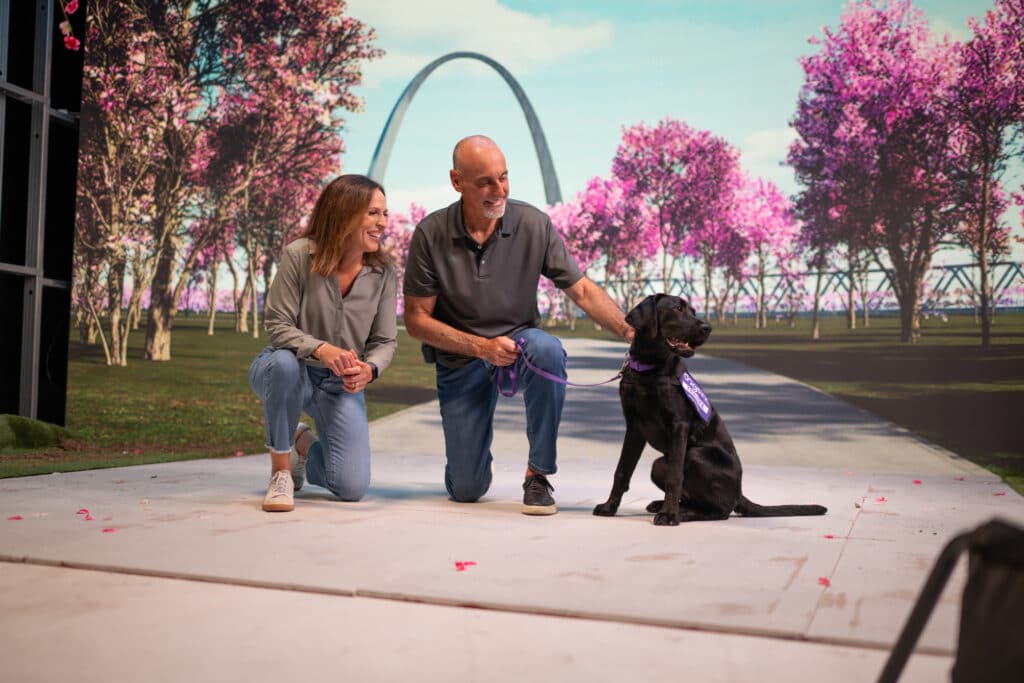
Focus training begins long before a dog is ever asked to perform a complex mitigation task. During the earliest weeks of life, puppies are introduced to novel environments under the careful guidance of dedicated puppy raisers.
- Sensory Introductions: Pups are exposed to varied textures under their paws, gentle sounds, and low-level environmental changes.
- Early Check-Ins: Raisers actively reward puppies for voluntarily offering eye contact and looking back toward their human handler, establishing the baseline premise that looking at the human yields the highest possible reward.
Phase 2: Controlled Adolescence and Gradual Exposure
As the dogs enter adolescence—a notoriously difficult developmental stage marked by hormonal shifts and heightened curiosity—training intensifies through controlled exposure.
- Distance Conditioning: Trainers and raisers introduce environmental stimuli (such as bustling sidewalks, passing cyclists, or distant machinery) at a safe distance where the puppy can remain calm.
- Positive Association: Instead of allowing fear or over-excitement to take root, new experiences are immediately paired with high-value rewards, teaching the dog to approach novelty with confidence rather than hesitation.
Phase 3: Advanced Public Access and Distraction Proofing
Once foundational cues are reliably understood in quiet settings, training shifts to high-stakes, real-world environments.
- Commercial and Social Settings: Dogs are brought into grocery stores, restaurants, public transit hubs, and crowded thoroughfares.
- Targeted Neutrality: During this phase, dogs learn to systematically ignore social distractions, such as well-meaning strangers attempting to make eye contact or initiate unauthorized leash greetings, as well as olfactory temptations like dropped food.
Phase 4: Final Placement and Lifelong Maintenance
The final stage of the chronological pipeline involves matching the fully trained service dog with a recipient who has a specific physical or neurological need. Even after formal graduation, focus is maintained through daily reinforcement, ensuring that the working partnership remains resilient throughout the animal’s working career.
Supporting Context & Metrics: Understanding Canine Distractions
To appreciate the magnitude of service dog focus training, one must understand what constitutes a distraction to a dog and how these stimuli test the animal’s neurological limits. Distractions are categorized into several distinct vectors, each requiring specialized conditioning protocols.
Categorizing the Stimuli
+-----------------------------------------------------------------+
│                     CANINE DISTRACTION VECTORS                  │
+-----------------------+-----------------------------------------+
│ Environmental         │ Crowds, traffic, sudden movements,      │
│                       │ loud acoustic triggers, unusual flooring│
+-----------------------+-----------------------------------------+
│ Social                │ Strangers, children, unauthorized       │
│                       │ leash greetings, direct eye contact     │
+-----------------------+-----------------------------------------+
│ Olfactory / Gustatory │ Restaurant aromas, dropped food,        │
│                       │ wildlife scents, urban trash            │
+-----------------------+-----------------------------------------+
│ Animal / Prey Drive   │ Squirrels, birds, loose pet dogs        │
+-----------------------+-----------------------------------------+- Environmental Distractions: Urban landscapes present sudden movements, flashing lights, and unexpected acoustic spikes. A service dog must navigate these without flinching or breaking stride.
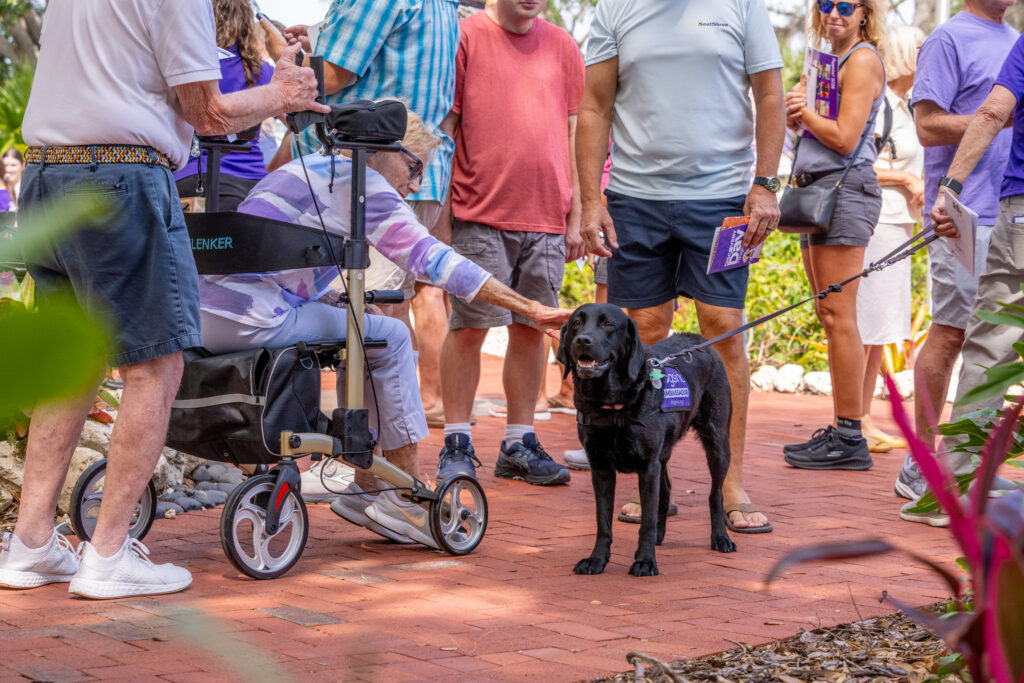
- Social Distractions: Perhaps one of the trickiest hurdles involves human behavior. The public often struggles with service dog etiquette, attempting to call out, whistle, or pet the animal. Focus training ensures the dog remains entirely indifferent to human solicitation.
- Olfactory and Gustatory Temptations: For a dog, the nose is the primary lens through which the world is experienced. Scent trails—particularly dropped food in restaurants or grocery stores—represent a powerful biological pull. Training teaches the dog that scent is merely data to be noted, not an invitation to investigate.
- Biological Triggers (Animals): The instinct to chase a squirrel or investigate an off-leash pet is deeply hardwired. Through rigorous repetition and impulse-control drills, service dogs learn to suppress these predatory or social instincts in favor of task execution.
The Mechanics of Impulse Control
At the core of distraction management is impulse control—the psychological mechanism that allows a dog to pause between a stimulus and its natural reaction. When a dog encounters a distraction, a trained pause occurs. In that fraction of a second, the animal chooses compliance and focus over instinct, a behavioral shift achieved through the consistent application of positive reinforcement.

Official Statements and Industry Perspective
Leading animal behaviorists and institutional leaders emphasize that absolute focus is not about suppressing a dog’s vibrant personality, but rather about establishing a harmonious working relationship rooted in mutual trust.
"A service dog is not trained to live in a vacuum or to completely ignore the world around them," notes a senior canine development coordinator at Dogs Inc. "True focus is about purposeful neutrality. It is the ability to look at a complex, dynamic environment, process the stimuli, and consciously choose to anchor one’s attention to the handler. When a dog views its human as the most rewarding, safe part of its environment, everything else naturally fades into the background."
Furthermore, training directors stress that the partnership between volunteer puppy raisers and professional instructors is indispensable.
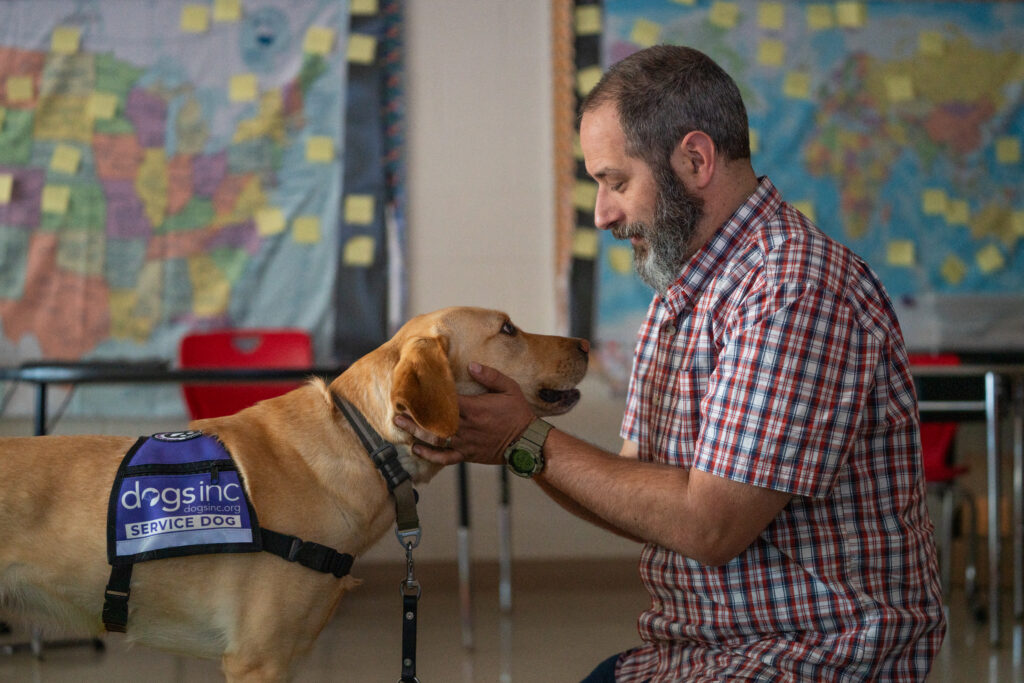
"Building a reliable working dog is a relay race," explains an institutional master trainer. "Our puppy raisers lay the vital groundwork by normalizing the everyday world. When our professional instructors step in to refine those skills, they aren’t starting from scratch; they are elevating an already solid foundation into a bulletproof working mindset that can withstand the unpredictable nature of public spaces."
Future Outlook: The Evolution of Service Dog Training Methodologies
As urban environments grow denser and public spaces become increasingly crowded, the demands placed upon service animals continue to evolve. The future of service dog training relies on refining cognitive-behavioral techniques and leveraging data-driven insights into canine learning curves.
1. Advanced Customization in Socialization
Future training pipelines are moving toward highly individualized socialization matrices. By identifying a puppy’s specific genetic sensitivities early on, trainers can tailor distraction-proofing protocols to preemptively address potential anxiety triggers or high-prey-drive tendencies.

2. Public Education and Etiquette Integration
A significant frontier in preserving service dog focus lies outside the training facility and within the general public. Future advocacy initiatives aim to educate communities on proper service dog etiquette—specifically reducing the frequency of social distractions caused by unauthorized interactions. When the public respects the working boundary, the cognitive load on the service dog is substantially reduced.
3. Sustainable Support Networks
The integration of digital tracking and mentorship programs for puppy raisers ensures that foundational focus training remains standardized across diverse geographic regions. This guarantees that whether a puppy is raised in a bustling metropolitan area or a quiet rural suburb, the resulting adult service dog possesses the identical, unwavering stability required for public access work.
Conclusion
The transformation of a curious, easily distracted puppy into an elite service animal is a testament to the power of structured guidance, positive reinforcement, and deep interspecies bonding. Through systematic exposure, rigorous impulse control, and an unyielding commitment to neutrality, organizations like Dogs Inc. ensure that their graduates can walk through the most chaotic environments with absolute poise. By mastering the art of attention, these extraordinary working dogs do more than simply ignore distractions—they provide their human partners with the priceless gifts of safety, autonomy, and unshakeable confidence to move forward into the world.