Executive Overview
For over three decades, Montreal-born Michael Zelniker built a prolific career as an award-winning actor, director, and stage performer across the globe. Yet, beneath the glamour of the entertainment industry lay a lifelong commitment to ecological preservation. In 2018, this underlying passion crystallized when Zelniker joined the Climate Reality Project’s Leadership Corps, eventually serving a two-and-a-half-year tenure as the Co-Chair of the organization’s Los Angeles chapter.
Driven by an acute awareness of accelerating ecological collapse, Zelniker channeled his artistic prowess into a sweeping investigative project: The Issue with Tissue — A Boreal Love Story. What began as a profound personal realization blossomed into an acclaimed feature-length documentary, followed closely by an immersive, six-part, five-hour docuseries.
The project exposes a startling paradox of modern consumerism: the clear-cutting of Canada’s ancient Boreal Forest—often celebrated as the "lungs of the planet"—not for timber or infrastructure, but for the mass production of disposable tissue products, including everyday toilet paper.
In the following in-depth conservation, Dr. Jeff Wells—Vice President of Boreal Conservation for the National Audubon Society—sits down with Zelniker to discuss the genesis of the project, the harrowing realities of industrial logging in North America’s bird nursery, and the resilient Indigenous communities and scientists spearheading the resistance.
Detailed Chronology: From Childhood Memories to an International Crusade
To fully understand the gravity of The Issue with Tissue, one must trace the personal trajectory of its creator. Zelniker’s environmental consciousness was forged in his youth. Growing up in Montreal, he spent his summers approximately 100 miles north of the city, immersed in the sprawling landscapes that represent the southern edge of the vast Canadian Boreal biome. Those formative months instilled a deep, visceral attachment to the northern woodlands, establishing an emotional baseline that would influence him decades later.
The Catalyst: The Absurdity of Industrial Deforestation
After spending more than thirty years navigating film sets, television studios, and theatrical stages internationally, Zelniker’s latent environmental activism demanded a larger platform. Upon pivoting his career toward climate advocacy in 2018, he began digging into industrial supply chains, eventually uncovering a devastating ecological truth: millions of acres of pristine, ancient Boreal forest are systematically clear-cut annually to supply raw pulp for single-use tissue products.
For Zelniker, this realization struck a profound nerve. The notion that irreplaceable, carbon-dense old-growth ecosystems were being leveled to manufacture disposable bathroom tissue represented the absolute apex of systemic ecological failure. Motivated by a mixture of grief and righteous indignation, he resolved to bring this hidden crisis to the global stage.
The Research Phase and the Partnership with Audubon
During the early developmental stages of his research, Zelniker repeatedly encountered the work of Dr. Jeff Wells. First stumbling upon his insights via the Boreal Songbird Initiative, Zelniker later identified Wells in his official capacity as Audubon’s Vice President of Boreal Conservation. Recognizing the urgency of the filmmaker’s mission, Wells welcomed the opportunity to share his extensive scientific expertise.
Their collaboration unlocked crucial doors. Wells introduced Zelniker to the complex web of conservation initiatives spearheaded by the National Audubon Society across the northern landscape—a region where billions of migratory birds breed annually. More importantly, Wells connected Zelniker with the front-line network of First Nations leaders, academic researchers, and grassroots activists who have spent generations defending the biome from unchecked industrial exploitation.
Production: A 12,000-Mile Odyssey
Armed with funding, determination, and vital introductions, Zelniker traded his home in Los Angeles for an ambitious, grueling cross-country expedition. Flying into Vancouver, he embarked on a 42-day, 12,000-mile odyssey spanning coast-to-coast across the Canadian Boreal.
Along the way, Zelniker met with more than 50 First Nations Elders, traditional leaders, field scientists, and environmental defenders. These individuals shared their intimate knowledge, cultural histories, and personal struggles with striking candor. The raw footage captured during this massive undertaking formed the foundation of both his award-winning feature documentary and the expanded, six-part docuseries now streaming across multiple platforms.
Supporting Context & Metrics: The Ecological Significance of the Boreal Forest
To appreciate the stakes of Zelniker’s documentary, it is vital to examine the ecological metrics that make the Canadian Boreal Forest one of the most indispensable landscapes on Earth.
1. The Planet’s Ultimate Carbon Sink
Often overlooked in mainstream climate discussions centered purely on tropical rainforests, the Boreal Forest is a powerhouse of terrestrial carbon storage. It stores twice as much carbon per acre as tropical forests. The vast majority of this carbon is locked away not just in the trees, but deep within the peatlands, permafrost, and organic soils beneath the forest floor. When industrial loggers clear-cut these areas and heavy machinery disrupts the soil, massive plumes of ancient carbon are released back into the atmosphere, directly accelerating global climate change.
2. North America’s Bird Nursery
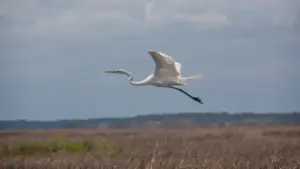
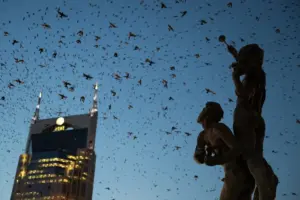
The Boreal is an irreplaceable ecological cradle for avian biodiversity. Approximately two billion birds belonging to hundreds of species nest and breed within the Boreal biome every single spring and summer. When the breeding season concludes, an estimated five billion birds migrate southward across the Americas in the autumn. Without the undisturbed nesting grounds provided by the Boreal, populations of warblers, waterfowl, shorebirds, and raptors face catastrophic declines.
3. Indigenous Stewardship and Cultural Heritage
Spanning millions of square miles, the Boreal Forest is far from an uninhabited wilderness. It is a living cultural landscape that has sustained more than 600 First Nations communities for thousands of years. For these Indigenous peoples, the forest provides spiritual grounding, traditional sustenance, and a sovereign way of life. The fight to protect the Boreal is, therefore, fundamentally an issue of human rights, Indigenous sovereignty, and environmental justice.
Official Conversation: Jeff Wells & Michael Zelniker
The following transcript captures the dialogue between Dr. Jeff Wells and filmmaker Michael Zelniker regarding the creation, impact, and legacy of The Issue with Tissue — A Boreal Love Story.
Jeff: Where did the idea of creating a documentary on the Boreal Forest come from? What motivated you to make it?
Michael: Having grown up in Montreal, spending summers about 100 miles north of the city in what I now know is the southern edge of the Boreal, I felt deeply bonded to these forests. So, when I learned that the Boreal was being cut down for the manufacture of toilet paper and other tissue products, I could hardly think of a more obscene example for what’s gone wrong. And I wanted to make people aware of what was happening.
Jeff: Why do you think the Boreal is worth protecting? Why should people care about what happens there?
Michael: It wasn’t until I began working on this project that I learned just how vitally important an ecosystem the Boreal is—and I grew up in Canada! As Elder Dave Porter, Kaska First Nation, says in the film: “The Boreal Forest is the lungs of the planet.” It stores more carbon than any other terrestrial landscape; it is home to iconic species like caribou, wolverines, and bears. It is America’s bird nursery, as approximately two billion birds nest in the Boreal every year, with as many as five billion migrating south in the fall. Perhaps most importantly, it is home to more than 600 First Nations communities, a place they’ve called home for many thousands of years.
Jeff: Can you share a little about the experience you had while making the documentary?
Michael: Flying from my home in Los Angeles to Vancouver, I embarked on a 42-day, 12,000-mile journey from coast to coast across the Boreal, meeting with more than 50 First Nations Elders and leaders, scientists, and activists, all who opened their hearts and shared their stories with stunning candor and intimacy. The result is a 6-part, 5-hour documentary series that is now available to stream on various platforms.
Jeff: There was also a documentary film, correct?
Michael: Yes. The acclaimed feature-length version just completed a run across North America and Europe, screening in theaters, at film festivals, and universities, garnering Best Documentary Feature nominations along with a treasure trove of great reviews.
Jeff: Any final words you want to share with Audubon members and supporters?
Michael: I hope you will watch our series. Among the many themes The Issue with Tissue explores is a delightful segment on birds. At every step of the filmmaking process, Audubon—and especially you, Jeff—have been indispensable supporters and partners, for which I will forever be grateful. But I’m also grateful to you and Audubon because you were responsible for unleashing my inner birder. I’m now the proud owner of a great pair of binoculars, and birding has become an important part of my life.
Future Outlook: Streaming and the Path Forward
The completion of The Issue with Tissue — A Boreal Love Story marks not the end of a creative journey, but the beginning of an urgent advocacy campaign. Following a successful theatrical and film festival circuit that earned critical acclaim and prestigious award nominations across North America and Europe, the project has transitioned to digital distribution to ensure maximum global reach.
By packaging the exhaustive research, Indigenous interviews, and stunning aerial cinematography into an accessible, six-part episodic format, Zelniker aims to ignite consumer consciousness regarding everyday purchasing habits. The documentary challenges major corporations to shift away from clear-cutting virgin old-growth forests and toward sustainable, recycled-content alternatives for paper manufacturing.
For conservationists, ornithologists, and everyday citizens looking to engage, the docuseries serves as both an educational masterclass and an urgent call to action.
Where to Watch
Audiences can stream the comprehensive docuseries The Issue with Tissue — A Boreal Love Story across multiple major digital streaming providers:
As industrial pressures on northern ecosystems continue to mount, works like Michael Zelniker’s serve as a vital reminder that the fate of the Boreal Forest—and the billions of birds and countless communities that depend on it—rests in the hands of informed, active global citizens.