
The dawn of the 2025 California wildfire season brought a stark realization that decades of hard-fought public health and environmental gains are being aggressively unwound by atmospheric toxicity. When the catastrophic Palisades and Eaton fires converged on the Los Angeles metropolitan area in January 2025, they did more than incinerate 16,000 structures, displace over 200,000 residents, and claim 31 lives. They released a toxic slurry of synthetic and natural particulate matter that quietly triggered an invisible public health catastrophe.
Emergency room visits for pulmonary distress surged by 24 percent, while heart attacks spiked by 46 percent across regional medical centers in the months following the disaster. Hundreds of excess fatalities that month went largely unrecorded in immediate headlines, signaling a grim new epidemiological reality for North America.
This crisis is not isolated to Southern California. Across the continent, larger and more intense fires fueled by climate change, historical fire suppression, and invasive species are generating unprecedented waves of air pollution. Fine particulate matter—specifically PM 2.5—travels thousands of miles, stalling and reversing the historic improvements in air quality achieved under the 1970 Clean Air Act.
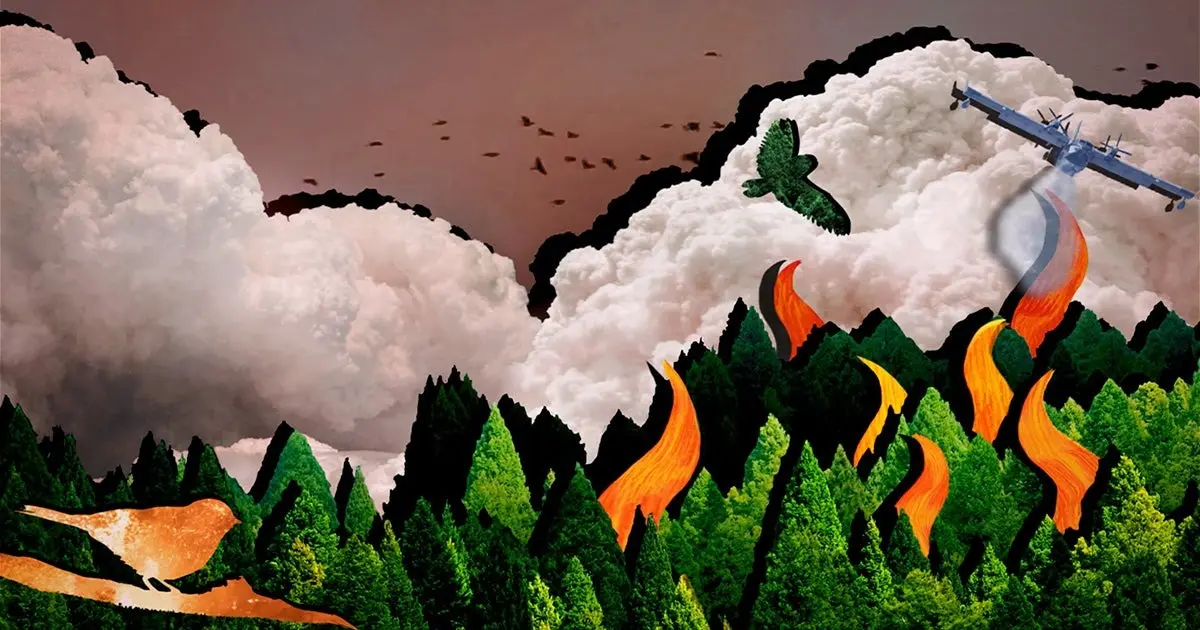
Simultaneously, a new scientific discipline known as "smoke ecology" is emerging to study the profound disruptions this atmospheric haze causes to wildlife. From migratory birds altering flight paths and reducing breeding rates to the daily struggles of vulnerable outdoor workers and wildland firefighters, the collateral damage of wildfire smoke threatens the foundational balance of interconnected ecosystems. Addressing this multifaceted emergency requires a radical evolution in land management, public health communications, and international climate policy.
Detailed Chronology: The January 2025 Los Angeles Fires
The Warning Signs and Immediate Evacuations
On the morning of January 7, 2025, environmental ecologist Olivia Sanderfoot, like many Angeleno residents, viewed wildfire risk warnings as an unwelcome but familiar part of California life. That sense of normalcy evaporated when her husband texted her a photograph of a rapidly expanding column of smoke billowing through the Santa Monica Mountains. Stepping outside her West Los Angeles apartment, Sanderfoot witnessed the encroaching, suffocating pall.
News reports quickly saturated communication channels: traffic was deadlocked as thousands attempted to flee neighborhoods roughly 10 miles away. Acting on instinct and professional training, Sanderfoot picked up her nine-month-old son early from daycare, packed essential items, and braced for the worst.
The Flight Through Toxic Fumes
By early evening, the evacuation warning zone for the Palisades Fire reached within a block of her home. As an ecologist specializing in the effects of wildfire smoke, Sanderfoot understood the invisible chemical threats far better than the average citizen. She knew that inhaling the microscopic toxins suspended in the haze could cause immediate and long-term respiratory damage.
"Even just thinking about the smoke in small quantities, I was like: ‘I am not doing this to my kid,’" Sanderfoot recounts.
Amid wailing sirens and high-velocity winds that whipped the flames forward, the family piled into their vehicle and fled toward her father’s home a few hours away. During their escape, noxious, dense smoke from a secondary conflagration—the Eaton Fire—briefly engulfed their vehicle, highlighting the inescapable reach of the twin disasters.
While Sanderfoot and her family ultimately returned to an intact home, tens of thousands of others were not as fortunate. The January fires etched their names into the ledger of the costliest and most destructive blazes in U.S. history, forever altering the landscape of Southern California.
Supporting Context & Metrics: The Hidden Toll of Air Pollution
The physical devastation of the Los Angeles fires—22,000 acres burned and 16,000 structures destroyed—belies a much deadlier, invisible cost. Epidemiological comparisons reveal that hundreds more people died in Los Angeles during January 2025 than during a typical, historical baseline month. The primary driver of this excess mortality was the catastrophic drop in regional air quality.
Data compiled by regional medical systems in the 90 days following the disaster revealed staggering public health metrics:
- Pulmonary Illness: Emergency room visits surged by 24 percent.
- Cardiovascular Crises: Myocardial infarctions (heart attacks) spiked by 46 percent.
- Systemic Toxicity: Abnormal blood work indicators linked to general, systemic illnesses more than doubled.
The Threat of PM 2.5
Unlike the uniform industrial pollution of the mid-20th century, modern wildfire smoke contains a hazardous cocktail of incinerated building materials, synthetic plastics, vehicles, and household chemicals. At the center of this hazard is PM 2.5—particulate matter measuring less than 2.5 microns in diameter. These microscopic particles easily bypass the human respiratory system’s natural defenses, penetrating deep into lung tissue and entering the bloodstream.
According to air quality experts, chronic and acute exposure to PM 2.5 correlates with a staggering array of adverse health outcomes, including:
- Exacerbated asthma and chronic obstructive pulmonary disease (COPD).
- Heightened risks of cardiovascular disease and stroke.
- Elevated rates of preterm births and reduced human fertility.
- Increased incidences of dementia, depression, and autism.
- Compromised success rates for organ transplants.
Research led by Stanford University’s Environmental Change and Human Outcomes Lab, directed by Marshall Burke, indicates that between 2016 and 2022, wildfires erased roughly 25 percent of all PM 2.5 air quality improvements made across three-quarters of the United States since 2000. Furthermore, models published by climate researchers estimate that wildfire smoke is currently responsible for 40,000 premature deaths annually in the contiguous United States—surpassing the annual death toll from motor vehicle crashes. Under current greenhouse gas warming trajectories, that number could soar to 70,000 by 2050.
Official Statements & Expert Insights
The convergence of climate change, air pollution, and ecological decline has prompted scientists, medical researchers, and public policy experts to sound urgent alarms.
"What the data really show is how rapidly we’re unraveling decades of progress we had made," states Marshall Burke, director of the Environmental Change and Human Outcomes Lab at Stanford University.
The medical implications of this regression are profound. Dr. Susan Cheng, a cardiologist and researcher at Cedars-Sinai who is co-leading a 10-year public health study on the Los Angeles fires, notes the unprecedented nature of the recent surges in illness: "While all wildfires produce pollution, this smoke may have been particularly toxic given how many buildings, vehicles, and hazardous materials incinerated. The consequences for the millions of people exposed to the emissions will take years to unravel."
The Impact on Avian and Wildlife Populations
Long before industrial monitors were deployed, coal miners carried caged canaries into subterranean shafts because birds possess hyper-efficient respiratory systems designed to fuel high-metabolism flight. This same physiological efficiency makes them exquisitely vulnerable to airborne toxins.
"Their efficiency is a double-edged sword," explains Lauren Hamlett, director of the wildlife program for Pasadena Humane, who treated numerous birds suffering from acute smoke inhalation following the Los Angeles blazes.
Ecologists like Morgan Tingley, an expert at UCLA, note that the biological disruptions caused by smoke are remarkably pervasive: "Everywhere we look, we find some response… It means that the impact of smoke is relatively strong and appears to be pervasive across birds."
Studies tracking avian responses during recent wildfire seasons have documented:
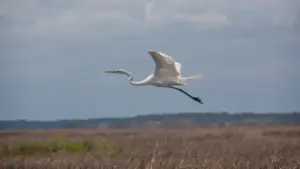
- Route Diversions: GPS tracking showed Greater White-fronted Geese altering their migration paths by hundreds of miles to bypass massive smoke plumes.
- Suppressed Vocalizations: Bioacoustic monitoring in eastern Washington and New York revealed dramatic reductions in birdsong during heavy smoke events.
- Reproductive Delays: Analysis of community science databases like NestWatch showed that cavity-nesting species—including Eastern Bluebirds, Northern House Wrens, Tree Swallows, and Purple Martins—delayed egg-laying when heavy smoke blanketed their habitats.
- Chronic Depletion: Long-term data from the San Francisco Bay Bird Observatory linked chronic smoke exposure to lower body fat in resident birds, elevating their risk of starvation.
Emergency Management and Frontline Defenders
As communities attempt to adapt, public health infrastructure faces severe strain. Heidi Huber-Stearns, director of the University of Oregon’s Center for Wildfire Smoke Research and Practice, points out the communication dilemma: "We’re asking public health officials to communicate about yet another crisis, when they’re in the middle of 17 other major issues. We don’t want to inundate people with so many messages that they no longer can pay attention."
Furthermore, frontline workers remain dangerously underprotected. Riva Duncan, president of Grassroots Wildland Firefighters and a former federal firefighter, emphasizes that those battling blazes directly are routinely denied adequate respiratory protection: "We’ve got to take better care of the people on the front lines."
Future Outlook: Mitigation, Smoke Ecology, and Adaptation
Mitigating the escalating threat of wildfire smoke requires a paradigm shift that integrates historical ecological management with modern technological and policy interventions.
The Prescription for Prescribed Burns
For millennia, North American landscapes maintained health through low-intensity fires—some sparked naturally by lightning, others managed deliberately through Indigenous cultural burn practices. These frequent, low-intensity fires cleared out heavy underbrush and accumulated dry timber, preventing the explosive, catastrophic crown fires seen today.
Twentieth-century fire suppression policies interrupted this natural cycle, causing massive fuel loads to accumulate. Today, land managers are slowly returning to prescribed burns. Research by Marshall Burke demonstrates that increasing controlled burns to 500,000 acres annually in California’s conifer forests could reduce fine soot pollution by roughly 10 percent over a decade, proving that controlled, intentional smoke yields a net air quality benefit by preempting mega-fires.
Successful models are already emerging. In southwest Georgia, near Albany, landowners managing 700,000 acres of privately owned quail-hunting preserves utilize real-time air quality, wind, and weather data to execute controlled burns strategically. Through this collaborative pilot project managed by the conservancy Tall Timbers, regional groups successfully burned an additional 5,000 acres in a single season without increasing average PM 2.5 levels.
The Rise of Smoke Ecology
As global fire regimes shift and emissions accelerate worldwide, a new interdisciplinary field known as smoke ecology is taking shape. Researchers like Olivia Sanderfoot—now at the Cornell Lab of Ornithology—are spearheading initiatives like Project Phoenix, mobilizing citizen scientists and volunteers to monitor how backyard birds utilize feeders and water sources during heavy smoke events. By combining community science databases, weather radar tracking programs like BirdCast, and physiological monitoring of soot accumulation on feathers, scientists are mapping out a holistic framework to understand ecosystem-wide connectivity.
Ultimately, while localized adaptations such as indoor air purifiers, upgraded school HVAC systems, improved agricultural labor protections, and prescribed burns offer vital temporary relief, they cannot replace comprehensive climate action. As long as global temperatures rise and severe droughts persist, the atmospheric veil of smoke will continue to challenge human resilience and wildlife survival alike—forcing society to confront the reality that the air we share respects no boundaries.