
Executive Overview
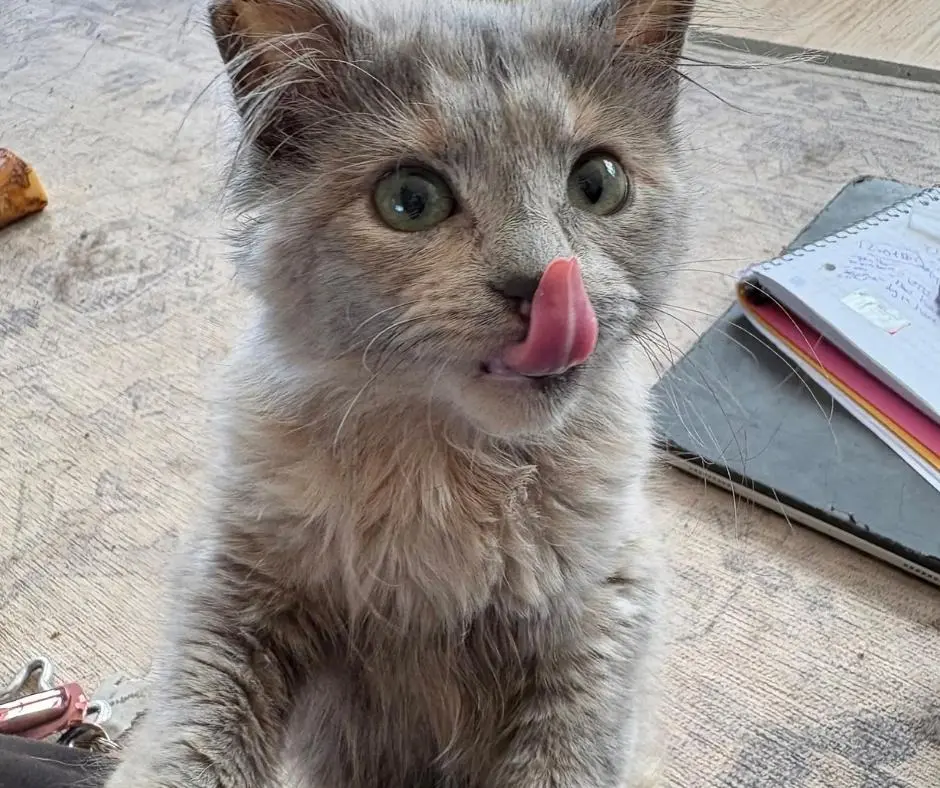
In the quiet corridors of a historic Wisconsin dairy farm, a tiny revolution is taking place on two miniature wheels. Mochi, a two-pound kitten born with congenital spina bifida and completely paralyzed hind legs, represents the triumph of relentless engineering, compassionate animal rescue, and an indomitable feline spirit. Once facing an uncertain future that included the grim prospect of euthanasia at a Tomah veterinary clinic, Mochi’s trajectory shifted dramatically when she was welcomed into the fold of the Cold Noses Sanctuary in Pewaukee, Wisconsin.
Faced with a patient too small for commercially available mobility equipment, the sanctuary team leveraged modern technology to design and print a custom 3D wheelchair tailored explicitly to Mochi’s micro-frame. This narrative details not merely a feel-good rescue story, but an illuminating case study in the intersection of assistive technology, specialized veterinary care, and the evolving philosophy of animal welfare. By shifting the paradigm from what a disabled animal cannot do to enabling what she can achieve, Mochi and her caregivers are redefining the boundaries of what is possible for special-needs companion animals.
Detailed Chronology: From Uncertain Beginnings to High-Speed Freedom
The Surrender in Tomah
Mochi’s story began in Tomah, Wisconsin, where she entered the world with severe developmental anomalies. Diagnosed with spina bifida—a neural tube defect that disrupts the normal development of the spinal cord and bones of the spine—Mochi was left with complete paralysis of her hindquarters. In many traditional veterinary settings, the specialized, round-the-clock supportive care required to manage an animal with such profound congenital deficits presents an insurmountable burden. Consequently, the clinic was faced with difficult choices regarding her quality of life, and euthanasia was unfortunately on the table.
Intervention by Cold Noses Sanctuary
Recognizing that Mochi’s paralysis was localized to her lower body while her cognitive faculties, upper-body strength, and zest for life remained intact, advocates intervened to bridge the gap between her needs and her survival. The case caught the attention of the Cold Noses Sanctuary, an organization explicitly founded to shoulder the complex logistical, medical, and emotional responsibilities of caring for animals deemed "unadoptable" or too complex for standard shelters. Transferred to Pewaukee, Mochi transitioned from a cat with a terminal outlook on her future to a resident of a specialized sanctuary geared toward maximizing her potential.
Engineering the Micro-Device
Upon arrival, the primary obstacle was physical scale. Weighing in at approximately two pounds, Mochi was far too small for any standard canine or feline cart available on the commercial market. Standard devices would weigh her down, impede her upper-body mobility, or fail to distribute weight properly, leading to friction sores and musculoskeletal strain.
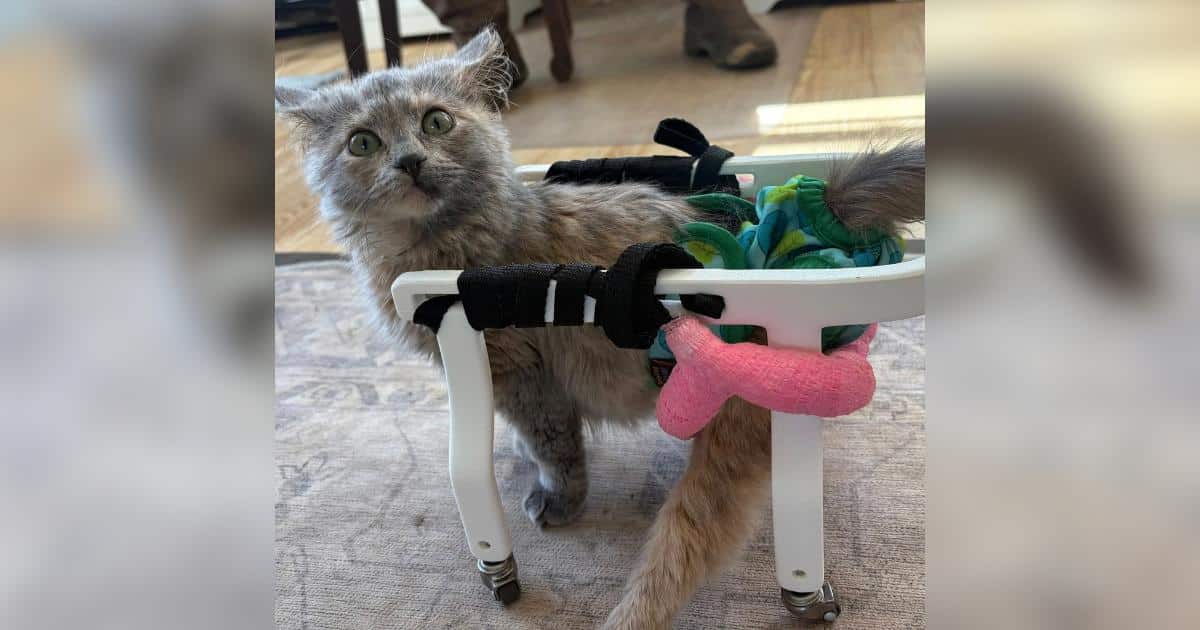
The sanctuary team solved this by turning to rapid prototyping. Utilizing a 3D printer, they engineered a bespoke mobility frame. The device was constructed to cradle her tiny torso securely while lifting her paralyzed hind legs safely off the ground. This left her front limbs entirely unencumbered, allowing her to pull, steer, and propel herself forward with surprising velocity.
The Breakthrough: Exploring the Sanctuary Halls
The moment Mochi was fitted into her custom cart, her world expanded exponentially. Instead of dragging herself or relying entirely on being carried, the kitten discovered that she could dictate her own movements. Today, sanctuary staff report that Mochi routinely races down the historic hallways, transforming what would otherwise be insurmountable architectural barriers into racetracks for exploration and play.
Supporting Context & Metrics: The Architecture of Specialized Rescue
Understanding Spina Bifida in Felines
Spina bifida in cats is a rare congenital condition caused by the failure of the neural tube to close properly during embryonic development. Depending on the severity and location of the lesion, symptoms can range from mild urinary incontinence to complete paraplegia, loss of sensation, and spinal deformities. Managing a cat with spina bifida requires meticulous hygiene, manual bladder expression, skin care to prevent pressure ulcers, and ongoing veterinary monitoring to stave off urinary tract infections and secondary complications.
The inclusion of mobility devices like Mochi’s 3D-printed wheelchair plays a critical role beyond mere locomotion. By keeping an animal upright, carts promote healthy gastrointestinal motility, improve circulation, and prevent muscle atrophy in the shoulders and chest through natural exercise.
Cold Noses Sanctuary: A Multi-Species Haven
Mochi’s home, the Cold Noses Sanctuary, is situated on a sprawling, 100-year-old dairy farm in Pewaukee, Wisconsin. The facility is currently undergoing extensive, ongoing renovations to transition historical agricultural structures into specialized, barrier-free habitats capable of housing a diverse array of special-needs species.
Unlike traditional animal shelters focused primarily on high-turnover adoption models, Cold Noses operates as a permanent haven. Its census routinely includes:
- Canines and Felines: Animals with neurological deficits, amputations, blindness, and chronic organ disease.
- Equines: Horses and donkeys requiring palliative care, geriatric management, or rehabilitation from injuries.
- Farm Animals: Goats, sheep, and other livestock with congenital deformities or physical disabilities that preclude them from standard farming environments.
The sanctuary model challenges the conventional economics of animal rescue by investing heavily in long-term palliative infrastructure, proving that quality of life is not strictly tethered to bodily perfection.
Official Statements and Perspectives
The philosophy driving Mochi’s rehabilitation is rooted in a fundamental rethinking of animal capabilities. Thalia Haseotes, the founder and president of Cold Noses Sanctuary, has been vocal about the importance of reframing how society views disabled pets.
"No one can know exactly how much time Mochi will have," Haseotes notes, addressing the uncertain prognoses often accompanying severe congenital conditions like spina bifida. "Whether that means months or years, our priority is making sure the little kitten remains comfortable, pain-free, and fully able to enjoy her life."
This perspective rejects the impulse to measure an animal’s worth solely by its physical independence or longevity. Instead, Haseotes and her team emphasize experiential richness—measuring success in moments of curiosity, purrs, social interaction, and unmitigated play.
"Her wheelchair may be miniature, but the freedom it provides is anything but small," sanctuary staff emphasize. "Each trip down the hallway is another opportunity for Mochi to explore on her own terms, surrounded by people committed to adapting her care as her needs change."
Veterinary technologists and engineers involved in designing assistive devices for micro-animals echo these sentiments, noting that 3D printing has democratized specialized care. By lowering the cost and iteration time of custom orthotics and mobility carts, sanctuaries can now create millimeter-precise solutions for animals that previously would have had no options.
Future Outlook: The Road Ahead for Mochi and Special-Needs Rescue
As Mochi continues to grow, her journey is far from static. Spina bifida presents evolving challenges; as her skeletal frame develops, her 3D-printed wheelchair will inevitably require modifications, scaling up in size and adjustments to accommodate shifts in her center of gravity and weight distribution. The team at Cold Noses Sanctuary remains prepared for this iterative process, pledging that as long as Mochi exhibits her trademark tenacity and joie de vivre, they will keep her equipped with wheels.
Beyond Mochi’s individual prognosis, her story highlights a broader, encouraging trend in veterinary medicine and animal rescue: the mainstream adoption of additive manufacturing (3D printing) for customized animal prosthetics and mobility aids. What was once the exclusive domain of high-end research universities is now increasingly accessible to grassroots sanctuaries and rural clinics.
Mochi’s transformation from a fragile kitten facing euthanasia to a high-speed explorer tearing down sanctuary hallways serves as a powerful testament to modern compassionate engineering. It challenges shelters, veterinarians, and animal lovers alike to look past physical limitations and invest in the ingenuity required to give every life a fighting chance—proving conclusively that two tiny wheels can carry a remarkably heavy spirit forward into a boundless world.