
Executive Overview
For centuries, feline behavior has been a subject of fascination, mystery, and occasional frustration for pet owners worldwide. While popular culture often paints cats as aloof, emotionally detached creatures who merely tolerate human presence in exchange for a daily ration of kibble, modern science tells a fundamentally different story.
Recent landmark research published in the journal Current Biology (Vitale, Behnke, & Udell, 2019) shatters the longstanding myth that cats are incapable of true emotional bonding. In reality, the vast majority of felines form secure attachment bonds with their human caregivers—bonds that closely mirror the attachment styles seen in human infants and dogs. However, unlike dogs, which often distribute affection broadly across a household, cats frequently select a single "chosen" human.
Intriguingly, this coveted title is rarely awarded to the person who fills the food bowl, scoops the litter box, or provides basic shelter. Instead, feline favoritism is a calculated, deeply psychological choice dictated by autonomy, energy synchronization, and absolute trust. This article explores the science behind cat-human attachment, the behavioral mechanics of feline preference, and how neglected humans can rewrite their relationship status with their feline companions.
Detailed Chronology: The Evolution of Scientific Understanding Regarding Cat-Human Bonds
To truly understand why a cat chooses one human over another, it is helpful to trace how scientific consensus regarding feline behavior has evolved over the past several decades.
Early Behavioral Assumptions (Pre-2000s)
For generations, ethologists and animal behaviorists viewed cats primarily through the lens of solitary survival. Unlike wolves—and subsequently domesticated dogs—which evolved as cooperative pack hunters dependent on social hierarchies, wild felid ancestors (Felis lybica) were solitary predators. Consequently, early domestic cat studies operated under the assumption that felines were incapable of forming genuine social attachments. They were viewed as "opportunistic" residents of human households, staying solely because human environments offered an abundance of prey (rodents) and shelter. Emotional reciprocity was largely dismissed as anthropomorphism—human projection onto an animal driven entirely by instinct.
The Shift Toward Domestic Socialization (2000–2010)
As pet ownership surged globally, researchers began looking closer at the nuances of multi-species households. Studies in the mid-2000s began documenting that cats possess sophisticated communication repertoires specifically tailored for humans, such as the "purr-cry," a vocalization that mimics human infant distress to prompt feeding. This era proved that cats understood how to manipulate human behavior, but scientists still debated whether these interactions were transactional or genuinely affectionate.
The Landmark Attachment Study (2019)
The watershed moment in feline behavioral science arrived in 2019 with a study conducted by Kristyn Vitale, Megan Behnke, and Monique Udell, published in Current Biology. Utilizing the "secure base test"—a methodology long established in developmental psychology to measure infant-parent attachment—researchers observed adult cats and kittens in a room with their primary caregivers.
The test measured how cats reacted when their owners left the room and subsequently returned. The results were definitive: approximately 65% of the cats demonstrated a "secure attachment bond." When their owners returned, these cats exhibited reduced stress responses and balanced their time between exploring the environment and interacting with their human. This proved conclusively that cats view their humans as secure bases of safety, mirroring the attachment bonds seen in dogs and human children.
Supporting Context & Metrics: The Anatomy of Feline Favoritism
Why do cats bypass the provider of meals in favor of someone else in the household? The answer lies in a complex matrix of psychology, environmental control, and sensory perception.
The Myth of the Food Provider
In human psychology, nurturing and provisioning are deeply tied to affection. Naturally, owners assume that maintaining a cat’s physical survival translates directly to emotional devotion. Felines, however, operate on a different wavelength. Because cats are independent predators by nature, they do not view survival as a cooperative group effort in the way dogs do. When a cat evaluates who to trust, resource distribution is viewed as a baseline service, not an emotional currency.
Autonomy and the Psychology of Space
Cats are hyper-sensitive to physical boundaries. In the aforementioned studies on feline stress and behavior, researchers noted that cats thrive when they feel they are in control of their environment.
- The "Ignorer" Effect: Ever noticed how the cat in the room invariably gravitates toward the person who is allergic, indifferent, or actively ignoring them? This is not an accident. People who ignore cats naturally project safe body language: they avoid direct eye contact, do not loom over the animal, and do not force unwanted physical contact.
- Consent-Based Interaction: Cats prefer individuals who respect their autonomy. When a human allows a cat to dictate the terms of engagement—letting the cat approach, sniff, and decide when and where to be petted—the cat registers this behavior as predictable and safe. Conversely, humans who pick up cats without warning, corner them, or force prolonged cuddles create an environment of unpredictability, instantly disqualifying themselves from "favorite" status.
Personality Matching and Energy Synchronization
Beyond spatial respect, a cat’s choice of companion is heavily influenced by personality alignment. Cats are master observers of routine, micro-movements, and vocal tones.
- Calm vs. Playful: A sedentary, quiet cat will naturally seek out the calmest, quietest person in a household, viewing them as a sanctuary of peace. Conversely, a high-energy Bengal or a playful mixed-breed kitten will shadow the household member who initiates interactive play, matching their dynamic rhythm.
- Sensory Cues: Cats pick up on physical attributes, voice pitch, and even emotional states. Individuals who move slowly and speak in softer tones are consistently preferred over loud, erratic individuals who startle easily.
Official Statements and Expert Insights
To understand the practical implications of these behavioral dynamics, veterinary authorities and animal behaviorists offer clear guidelines on how to interpret and improve human-cat relationships.
According to guidelines issued by the Cornell Feline Health Center, feline behavioral issues and social preferences are deeply rooted in early socialization and past experiences:
"Cats pick their favorite people based on who they can trust. If you’re left out in the cold, it could be because your actions have proved unpredictable in the past. Watching for early trust signals, like a cat choosing to stay close to you on its own, can tell you where you stand before it ever plays favorites out loud."
Furthermore, behavioral experts emphasize that perceived rejection is often merely a misunderstanding of feline communication. As noted in the 2019 Current Biology findings, attachment is an individual bond formed between one cat and one person, rather than a generalized trait of the species or a fixed breed characteristic.
While popular folklore often labels certain breeds—such as Siamese, Himalayans, Bengals, and Norwegian Forest Cats—as "one-person cats" due to their vocal and clingy tendencies, science shows that pedigree matters far less than the day-to-day history built between the individual animal and its caregiver.
Future Outlook: Can You Change Your Status?
For those currently holding the runner-up position in their cat’s affections, there is good news: feline hearts are not set in stone. Because attachment bonds are forged through consistency, predictability, and respect, human behavior modification can effectively shift a cat’s perspective over time.
Steps to Become Your Cat’s Preferred Human:
- relinquish Control: Stop chasing your cat for affection. Let the cat come to you. Sit quietly in a room, read a book, and allow the animal to investigate on its own terms.
- Master the Slow Blink: In feline communication, a slow blink is the ultimate sign of trust and affection. Returning a slow blink signals to the cat that you are non-threatening.
- Respect the Pause: Pay attention to tactile sensitivity. If a cat’s tail begins to twitch or their skin ripples while you are petting them, stop immediately. Respecting their subtle "stop" signals builds immense trust.
- Be the Bringer of Joy: While feeding doesn’t automatically buy love, pairing mealtime or high-value play sessions (using wand toys that mimic natural prey movement) with calm, positive reinforcement helps rebrand you as a source of safety and fun.
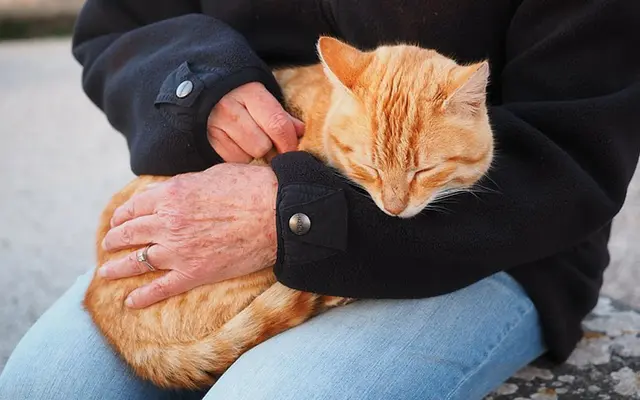
As research continues to illuminate the rich emotional lives of our feline companions, one thing becomes abundantly clear: earning a cat’s love cannot be forced. It must be earned through patience, empathy, and a profound respect for their independent spirit. When a cat finally chooses to curl up in your lap, it is a testament not to obligation, but to genuine, hard-earned trust.