
Executive Overview
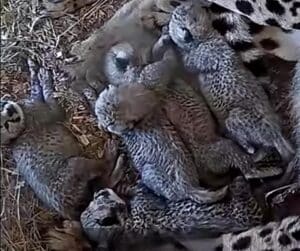
In the quiet, rolling hills of Front Royal, Virginia, a fragile and extraordinary milestone for wildlife conservation has quietly unfolded. On October 5, 2026, five tiny cheetah cubs entered the world at the Smithsonian Conservation Biology Institute (SCBI). Born to a five-year-old mother named Zura—herself an SCBI alumna—these newborns represent much more than just a litter of playful felines. They are the living embodiment of decades of meticulous conservation science, genetic management, and institutional dedication.
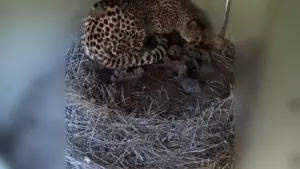
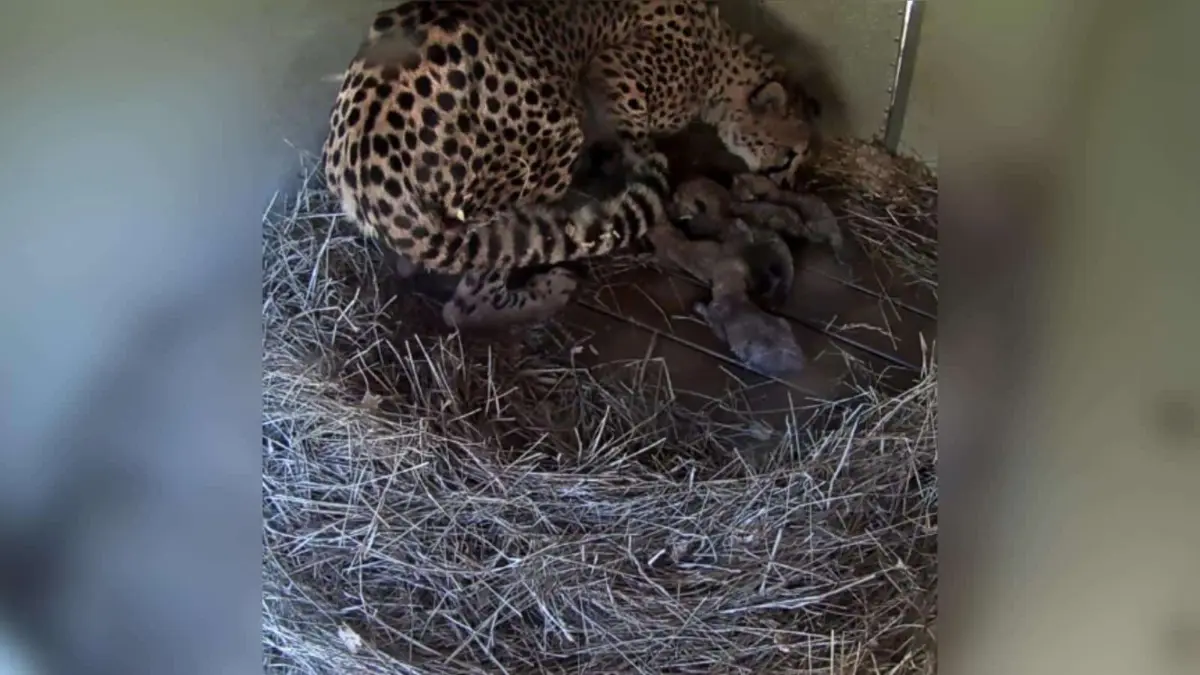
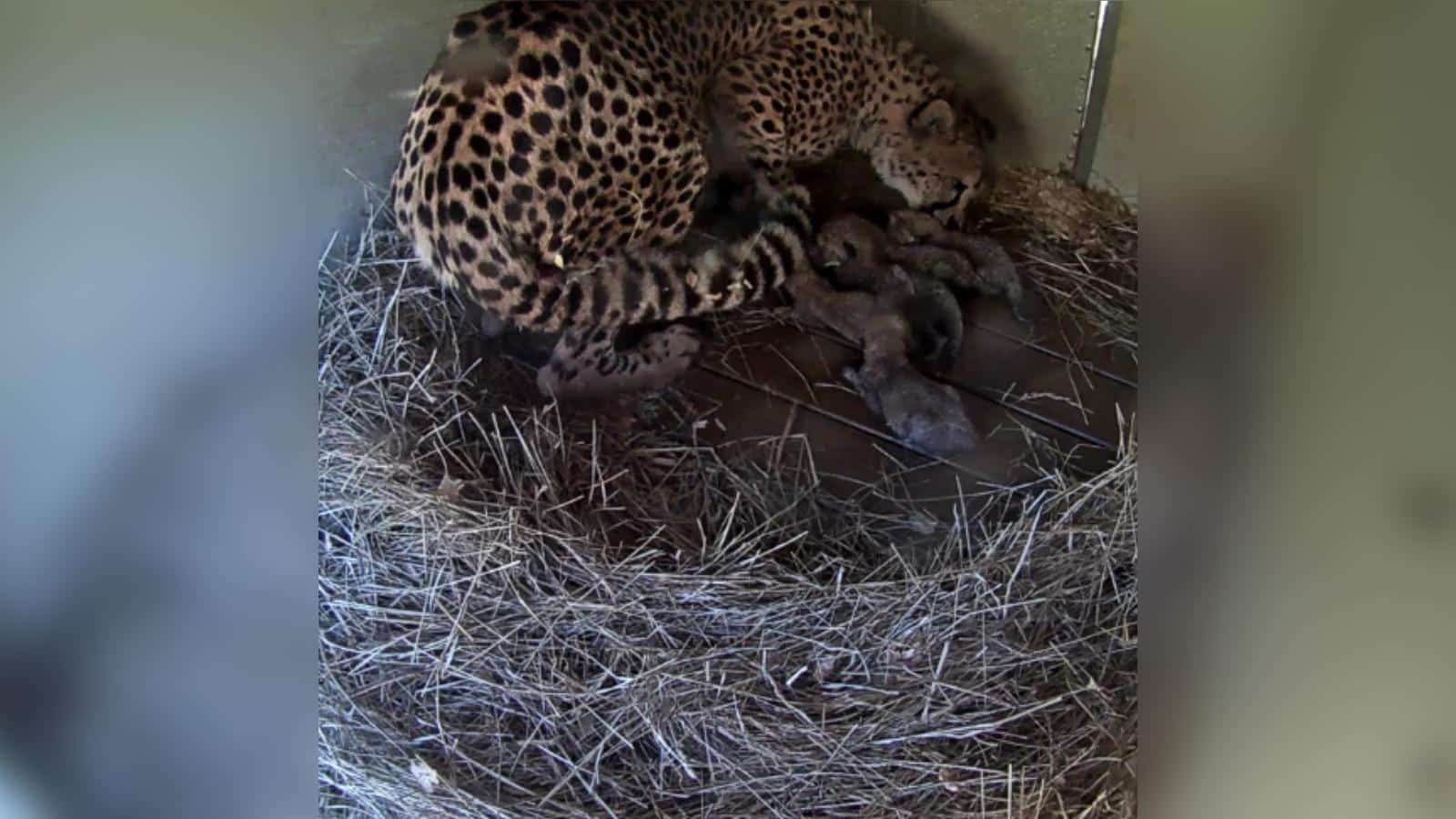
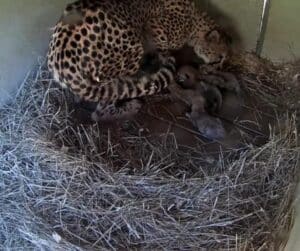
For animal lovers and researchers alike, these cubs offer an unprecedented, intimate look at the earliest days of felid life. Housed away from the bustling public crowds of a traditional zoo, Zura and her litter reside in a private, secure maternity den designed to minimize stress and foster natural maternal bonding. Yet, thanks to the institute’s high-definition "Cheetah Cub Cam," this secluded sanctuary is not entirely hidden. Wildlife enthusiasts worldwide can tune into a live broadcast to watch the quintet nurse, sleep, and take their very first wobbly steps.
Beyond the undeniable charm of five newborn cheetahs, this birth is a monumental victory for a species teetering on the edge of extinction. With fewer than 7,000 cheetahs remaining in the wild across a mere nine percent of their historic range, captive breeding programs have transformed into vital arks. The arrival of Zura’s litter marks the third generation of this specific lineage at SCBI, bringing the institute’s specialized care network to a remarkable four living generations of the same family line. As researchers race against time to understand the complex reproductive hurdles facing the world’s fastest land mammal, every successful birth serves as a beacon of hope for the future of the species.
Detailed Chronology: The Journey to October 5, 2026
The story of these five cubs did not begin on an autumn morning in October; it is the culmination of years of strategic planning, behavioral tracking, and physiological monitoring by the expert animal care and veterinary teams at the Smithsonian Conservation Biology Institute.
Months prior to the birth, SCBI curators and endocrinologists closely monitored Zura, a healthy and genetically valuable female. Cheetah reproduction is notoriously delicate, requiring precise timing, environmental stability, and careful compatibility matching. Once pregnancy was confirmed through hormonal assays and behavioral assessments, the animal care team began preparing a specialized, low-stress maternity environment.
On October 5, 2026, Zura successfully delivered her litter of five. In the wild, a cheetah mother faces immense pressure to keep her vulnerable newborns safe from predators while she hunts. In the controlled, protected environment of the SCBI facility, Zura’s primary challenge was simply navigating early motherhood.
The timeline of the cubs’ development follows a rapid yet delicate trajectory:
- Weeks 1–2 (The Neonatal Phase): The cubs spend their days entirely within the safety of the private den. Born blind and weighing only a fraction of a pound, their existence revolves around nursing, sleeping, and maintaining body heat. During this phase, human intervention is kept to an absolute minimum. The Cheetah Cub Cam allows veterinarians to monitor Zura and her babies remotely, tracking respiratory rates, nursing frequency, and maternal attentiveness without ever breaching the sanctuary of the den.
- Weeks 3–4 (Sensory Awakening and Mobility): Around this time, the cubs’ eyes begin to open, shifting their perception of the world from purely tactile and olfactory to visual. Their motor skills improve rapidly, transitioning from clumsy crawls to stumbling attempts at walking.
- Weeks 5 and Beyond (Socialization and Exploration): As the cubs grow bolder, viewers tuning into the livestream begin to witness the emergence of complex social behaviors. Play-fighting, mutual grooming, and vocalizations—such as the characteristic high-pitched chirping unique to cheetah cubs—start to define their daily routines.
Throughout this timeline, the invisible hand of human science works quietly in the background, ensuring that Zura has the nutritional support, peace, and security required to rear five energetic cubs simultaneously—a demanding physiological task for any carnivore.
Supporting Context & Metrics: The Plight of the World’s Fastest Mammal
To fully appreciate the significance of the SCBI’s recent birth, one must examine the broader, sobering ecological landscape facing Acinonyx jubatus. Known universally for their breathtaking acceleration—capable of sprinting from 0 to 60 miles per hour in a matter of seconds—cheetahs are evolutionary marvels that are simultaneously struggling to survive in the modern world.
A Shrinking Global Population
Historical data indicates that cheetahs once roamed freely across vast expanses of Africa and parts of Asia, stretching from the Mediterranean coast down to the Cape of Good Hope, and eastward into India. Today, their distribution has been utterly decimated. Modern estimates place the wild global population at fewer than 7,000 mature individuals. More alarmingly, these cats now occupy roughly just nine percent of their historical range.
The drivers of this decline are multifaceted and deeply entrenched in human-wildlife conflict:
- Habitat Fragmentation: Expanding human settlements, agriculture, and infrastructure divide continuous ecosystems into isolated pockets, preventing genetic exchange between wild populations.
- Human-Wildlife Conflict: Farmers often view cheetahs as a direct threat to livestock, leading to retaliatory killings, snaring, and the removal of apex predators from agricultural peripheries.
- Depleted Prey Bases: Overhunting and habitat degradation reduce the availability of native ungulates—the cheetah’s primary food source.
- Climate Change: Prolonged droughts and changing weather patterns across sub-Saharan Africa exacerbate resource scarcity for both predators and prey.
The Genetic Bottleneck
Beyond external pressures, cheetahs face an internal enemy: a severe lack of genetic diversity. Evolutionary history reveals that the species survived a massive population bottleneck roughly 10,000 to 12,000 years ago, likely driven by prehistoric climate shifts. This resulted in near-identical genetic profiles among modern cheetahs.
To a geneticist, this lack of diversity is a double-edged sword. It manifests biologically in high rates of abnormal sperm in males, lower cub survival rates, and increased susceptibility to infectious diseases. Because of these inherent reproductive hurdles, captive breeding is far from guaranteed. Data from the Association of Zoos and Aquariums (AZA) indicates that only about half of all captive breeding attempts result in successful litters. This statistical reality underscores why a litter of five healthy cubs is an extraordinary triumph for SCBI and the broader conservation community.
Official Statements and Institutional Expertise
The success at the Smithsonian Conservation Biology Institute is not a matter of chance; it is the direct result of a collaborative, highly specialized framework upheld by leading wildlife professionals.
Adrienne Crosier, the carnivore curator at SCBI, emphasized the profound operational and biological significance of the new litter during a recent institutional statement. Crosier highlighted that the birth of Zura’s cubs—which establishes a rare four-generation family line currently under the institute’s care—stands as a testament to the meticulous husbandry and high standard of animal welfare maintained by the staff.
"Having four generations of the same cheetah family living under our care reflects the dedication, patience, and deep expertise of our animal care team," Crosier noted. By fostering an environment where animals can thrive across multiple generations, SCBI is able to study behavioral traits, maternal lineages, and generational health metrics in ways that are virtually impossible in the wild or in standard public zoos.
Furthermore, the integration of technology—specifically the Cheetah Cub Cam—represents a deliberate shift toward non-invasive conservation management. By utilizing remote cameras, SCBI researchers can collect vital behavioral data while preserving the sanctity of the mother-infant bond. "This limited contact is entirely intentional," institutional researchers explained. "It grants Zura and her babies the undisturbed space they require to form a natural, resilient bond, while giving our scientists an unvarnished look into early neonatal development."
SCBI’s efforts do not exist in a vacuum. The facility is a proud participant in the Cheetah Breeding Coalition, a specialized network comprising ten accredited institutions across the United States. This coalition coordinates breeding recommendations based on rigorous genetic analyses to maintain a sustainable, genetically diverse ark population of cheetahs in human care, serving as a biological safety net against extinction.
Future Outlook: Research, Resilience, and the Road Ahead
As the five SCBI cubs continue to grow, nurse, and transition from helpless neonates into playful, inquisitive juveniles, their future points toward a broader horizon of scientific discovery and species advocacy.
Cutting-Edge Conservation Science
The insights gained from monitoring Zura and her litter extend far beyond simple public enjoyment. Researchers at the Smithsonian are increasingly turning their attention to microscopic frontiers—specifically, the gut microbiome. Emerging studies within conservation science suggest that an animal’s gut microbiota plays a vital role in everything from digestion and immune response to fertility and sperm quality. By analyzing biological samples and observing developmental patterns in environments like SCBI, scientists hope to unlock new clues regarding why cheetahs face such steep reproductive barriers, paving the way for advanced assisted reproductive technologies (ART) if wild populations continue to dwindle.
The Role of Public Engagement
While the Front Royal conservation facility is closed to general public visitors to protect the animals’ peace, the Cheetah Cub Cam bridges the gap between high-level scientific research and public education. Millions of viewers tuning in are transformed from passive observers into active participants in wildlife conservation. Witnessing the tender, vulnerable moments of Zura and her cubs fosters an emotional connection that resonates far more deeply than dry statistics ever could. It cultivates an international constituency of supporters who understand that the fate of the cheetah is intertwined with global biodiversity and environmental stewardship.
Looking to Tomorrow
For Zura, her immediate future is focused on the demanding, beautiful work of raising five lively cubs through their turbulent first year of life. For the scientific community at the Smithsonian Conservation Biology Institute, these five cubs represent renewed energy, validated methodologies, and a continuation of a legacy dedicated to pulling a magnificent species back from the brink.
As the cubs eventually mature, they will contribute to the broader species survival plan—either by remaining within the cooperative breeding network or by serving as ambassadors for their wild counterparts. Until then, the world watches through a digital lens as a historic four-generation cheetah family writes its next chapter in the rolling hills of Virginia.