
Executive Overview
For millennia, the relentless march of human civilization has radically transformed the Earth’s ecosystems. From sprawling metropolitan jungles and agrarian grids to high-speed arterial roadways, humanity has continually forced the natural world to adapt to its physical footprint. Conventional conservation paradigms have long operated on a foundational assumption: that an animal’s behavior, habitat range, and survival strategies are shaped primarily by the physical alteration of its environment—the conversion of forests into strip malls, wetlands into agricultural fields, and grasslands into sprawling suburbs.
However, a monumental new study published in the prestigious journal Science shatters this long-standing ecological orthodoxy. Researchers from the University of California, Santa Barbara (UCSB), the Smithsonian’s National Zoo and Conservation Biology Institute, and Yale University have revealed that wildlife responds not merely to the structural modifications humans impose upon the landscape, but to the simple, dynamic fact of human beings physically being nearby.
By synthesizing cutting-edge, anonymized cellphone geolocation data with high-resolution GPS tracking metrics gathered from thousands of individual mammals and birds across the United States, the research team successfully decoupled the impacts of physical infrastructure from the mere presence of people. The findings indicate that wildlife responses to human proximity are remarkably nuanced, varying substantially across different species and depending heavily on the degree to which an ecosystem has already been altered.
This breakthrough research, born from the unprecedented global disruption of the COVID-19 pandemic, provides a transformative lens through which to view human-wildlife coexistence. As conservationists grapple with the rapid acceleration of the Anthropocene, these insights offer a sophisticated roadmap for designing precision wildlife management strategies that go far beyond traditional land-use planning, heralding a new era of nuanced, data-driven environmental stewardship.
Detailed Chronology: The Genesis and Execution of the COVID-19 "Anthropause" Experiment
Unlocking the Power of the Pandemic Disruption
To understand how human presence distinctively shapes animal behavior, researchers required a scenario where the physical modification of the landscape remained constant, but human movement patterns changed dramatically. Historically, isolating these two variables was virtually impossible. Cities do not vanish overnight, and highways do not suddenly empty out under normal societal conditions.
Enter the COVID-19 pandemic. In the spring of 2020, governments worldwide enacted sweeping lockdown policies, shuttering businesses, restricting travel, and forcing populations to shelter in place. This sudden, global reduction in human mobility created a rare, inadvertent ecological experiment known to scientists as the "anthropause."
Seizing this historic window, an international collective of researchers mobilized the COVID-19 Bio-Logging Initiative. This massive collaborative network eventually encompassed some 600 partners, pooling an astounding one billion location records from roughly 13,000 animals worldwide. For the U.S.-focused subset of this initiative, the research team narrowed their investigation to examine weekly GPS records from 4,581 individual mammals and birds across the continental United States during matching periods in 2019 (pre-pandemic baseline) and 2020 (lockdown period).
Overcoming the Data Deficit
While tracking animal movement via GPS telemetry has become a standard tool in modern ecology, quantifying human movement with equal precision has historically presented a formidable barrier. Publicly available data detailing exact human locations, densities, and movement vectors on a micro-scale is notoriously difficult to acquire.
Consequently, historical studies of human-wildlife interactions were forced to rely on indirect, proxy measures. Researchers typically inferred human impact based on static landscape markers—such as the percentage of urban development, the density of agricultural land, or, during the pandemic, blunt binary indicators like whether a county was subjected to strict lockdown orders. While these proxies offered valuable clues, they failed to capture the fluid, dynamic reality of human presence.
To overcome this methodological bottleneck, the research team deployed a novel data source: anonymized cellphone geolocation data resolved at the neighborhood level. Private corporations typically guard these rich datasets jealously, but the unique circumstances of the pandemic made them temporarily available to researchers studying societal shutdowns. This marked the first time that granular, real-time human mobility data was directly integrated with wildlife tracking telemetry to measure the ecological impact of human presence.
The Analytical Breakthrough
Armed with both high-resolution animal GPS tracks and neighborhood-level human mobility metrics, the researchers embarked on a complex comparative analysis. By holding landscape modification constant while observing shifts in human traffic—and vice versa—the team could finally separate the psychological and behavioral stressors of human proximity from the physical challenges of habitat loss and fragmentation.
The results, unveiled in Science, fundamentally reshape our understanding of human-wildlife dynamics. The study demonstrated that for the vast majority of analyzed species, looking solely at habitat destruction paints an incomplete, and often misleading, picture of human impact. Wildlife behavior is governed by a complex, interactive feedback loop between the physical structures we build and the physical bodies we move through the landscape.
Supporting Context & Metrics: Quantifying the Dual Pressures of the Anthropocene
Unpacking the Numbers
The statistical findings of the UCSB, Smithsonian, and Yale research team underscore just how pervasive the influence of human presence truly is across North American ecosystems.
- 57 Percent: Overall, more than half of all wildlife species analyzed in the study were simultaneously affected by both human presence and structural landscape modification. This proves that traditional conservation models—which focus almost exclusively on habitat preservation while ignoring recreational or industrial human traffic—are missing a critical piece of the ecological puzzle.
- 67 to 68 Percent: Human presence was directly associated with significant alterations in either the total territory occupied (spatial distribution) or the size of the environmental niche for 67% of all mammal species and 68% of all bird species studied.
- The Contraction Effect: When confronted with the combined pressures of human presence and landscape alteration, roughly 67% of mammal species and 41% of bird species responded by actively reducing the amount of habitat they used. Rather than expanding to find new resources, these animals retreated, compressing their home ranges to avoid detection.
- The Protected Area Paradox: Interestingly, sensitivity to human presence was discovered to be exceptionally strong in relatively pristine environments with minimal structural development—such as national parks, wildlife refuges, and wilderness areas—when compared to heavily urbanized zones. In areas where animals rarely encounter dense infrastructure, the sudden or persistent physical presence of hikers, campers, and researchers acts as an acute behavioral stressor.
Interactive Dynamics: Landscape Versus Proximity
A core revelation of the study is that human presence and habitat modification do not act in isolation; they interact in deeply intertwined ways. The magnitude of an animal’s behavioral response to people depends heavily on how intensely the surrounding landscape has already been altered. Conversely, the ecological impact of a modified landscape is heavily mediated by the sheer volume of human traffic moving through it.
For instance, in mildly altered landscapes, animals often exhibit high behavioral plasticity, carefully modulating their movements to steer clear of human activity hotspots. However, in heavily urbanized environments, animals may either become habituated to constant human proximity or be forced into marginal, suboptimal habitat patches where human encounters are minimized.
Official Statements and Expert Perspectives
The profound implications of these findings have drawn commentary from the study’s lead architects, highlighting both the scientific breakthrough and the urgent need for a paradigm shift in conservation policy.
Dr. Ruth Oliver, co-lead author of the study and an assistant professor in UCSB’s Bren School of Environmental Science & Management, emphasized the complexity of humanity’s ecological footprint:
"Humans have complicated effects on wildlife—from our physical presence to how we reshape habitats—but we can’t understand our full impact without information on both. These findings highlight the critical importance of species-based conservation. Every species has different habitat requirements, has its own particular behavioral tendencies, and faces unique threats. Effective conservation requires that we understand the particular challenges that each species faces."
Dr. Scott Yanco, co-lead author and research ecologist at the Smithsonian’s National Zoo and Conservation Biology Institute, underscored the unprecedented nature of the methodology used in the research:
"The cell phone data we used was made available to researchers during the pandemic to help reveal the impacts of COVID-19 shutdowns. Typically, private companies hold onto these, which made this a rare opportunity for us to quantify how human presence impacts wildlife, and to demonstrate that there is more to consider than just land modification to create robust conservation plans."
Despite the sobering realization that human presence exerts a far more pervasive stress on wildlife than previously recognized, Dr. Oliver expressed cautious optimism regarding future conservation frameworks:
"Our results give me some optimism that we can achieve wildlife-coexistence through more nuanced policies that more smartly consider where and when we need to give animals space."
Species-Specific Behavioral Variations: Wolves, Deer, and Cranes
One of the most compelling takeaways from the research is that there is no universal behavioral template governing how wildlife responds to humanity. Different taxonomic groups, and even distinct species within the same family, employ radically divergent survival strategies when confronted with human presence and landscape modification.
The Apex Predator Response: Gray Wolves
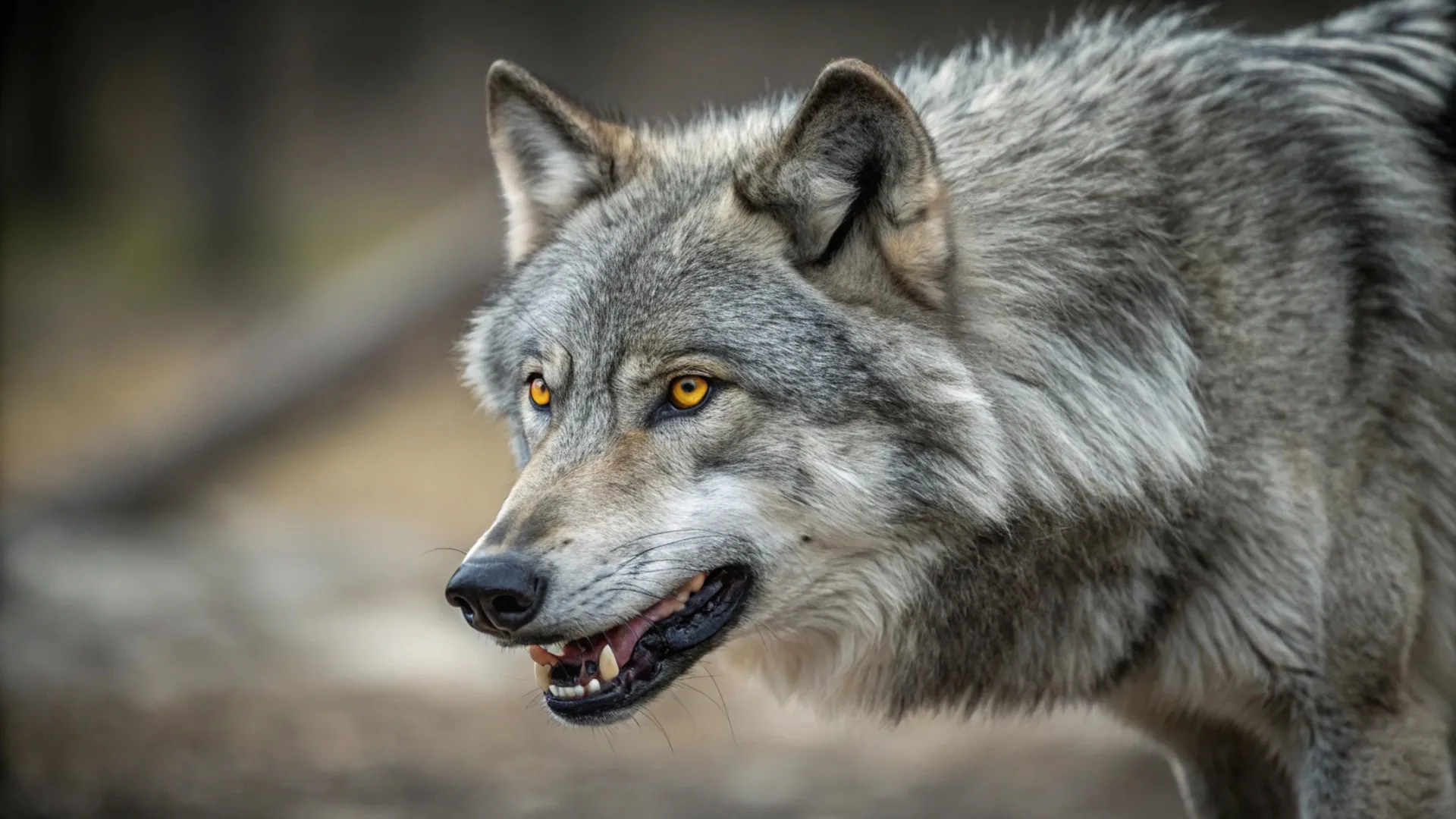
Gray wolves (Canis lupus) provided a striking example of behavioral divergence. Unlike many prey species or smaller mammals that tend to contract their ranges or hide when humans are nearby, wolves exhibited an expansion in habitat use in response to human presence.
Ecologists theorize this expanded movement reflects the fraught historical relationship between wolves and humans. Persecuted for centuries and heavily managed across much of their range, wolves appear to adopt an expansive, highly vigilant strategy. By moving farther and spreading out, wolves may actively seek to minimize encounters with human activity, utilizing vast spatial buffers to navigate landscapes shared with people.
The Cervid Dilemma: White-Tailed Deer
White-tailed deer (Odocoileus virginianus) demonstrated a fascinatingly complex, multi-directional response pattern. Their environmental niches—referring to how they utilize habitats and environmental resources—expanded as their surrounding landscapes became more structurally modified (such as the transition of forests into fragmented agricultural mosaics). However, these same environmental niches contracted sharply as the direct physical presence of humans increased.
This duality suggests that while deer are remarkably adaptable to human-altered landscapes in terms of finding food and cover, they remain acutely sensitive to the immediate behavioral threat posed by the physical presence of people, compressing their daily movements when human traffic spikes.
The Avian Pivot: Sandhill Cranes
In a demonstration of the sheer diversity of animal adaptations, Sandhill cranes (Antigone canadensis) displayed behavioral responses that directly inverted the patterns observed in white-tailed deer. These large, elegant wading birds adjusted their spatial usage in ways that highlighted how avian species process anthropogenic pressures differently than terrestrial mammals.
According to Dr. Oliver, these contrasting behaviors reinforce the foundational truth that blanket, one-size-fits-all conservation policies are bound to fail. Protecting biodiversity requires a granular appreciation of the specific behavioral ecology, sensory capacities, and survival pressures unique to every individual species.
Future Outlook: Survival, Stress, and Smarter Coexistence
As the dust settles on the initial findings of the COVID-19 Bio-Logging Initiative, the scientific community is already pushing past these foundational discoveries to address the next great ecological frontier.
Having proven that animals alter their spatial use and resource allocation in response to human presence, Ruth Oliver and her interdisciplinary research team are now tackling a critical, high-stakes question: Are these behavioral adjustments helping wildlife adapt, or are they mere indicators of chronic physiological stress?
The Survival Equation
When an animal shrinks its home range, avoids preferred feeding grounds, or expands its territory to evade human footsteps, it incurs biological costs. These behavioral shifts can lead to increased energy expenditure, reduced foraging efficiency, elevated stress hormone levels, and lower reproductive success. However, in some contexts, these same adjustments may successfully shield animals from poaching, vehicle collisions, and direct harassment.
To untangle this complex web of cause and effect, Oliver’s research group is currently investigating whether animals that drastically alter their behavior in response to human pressures face a heightened or reduced risk of mortality. By correlating high-resolution GPS movement data with long-term demographic and survival records, the researchers hope to determine the actual fitness costs of human proximity.
Policy Implications for the Anthropocene
The insights harvested from the pandemic "anthropause" arrive at a critical juncture in human history. As global human populations continue to grow and recreational pressures on public lands reach all-time highs, traditional zoning laws—such as drawing boundaries around national parks or establishing static green belts—are proving insufficient to protect vulnerable wildlife populations.
By integrating real-time, anonymized human mobility data with advanced animal telemetry, conservation planners can transition from reactive management to predictive, dynamic stewardship. Imagine temporal zoning systems that restrict human access to sensitive wildlife corridors during critical mating or brooding seasons, or smart recreation planning that shifts hiking trails away from areas where vulnerable species are experiencing acute behavioral compression.
Ultimately, this landmark study bridges the gap between human sociology and wildlife ecology. It demonstrates that living alongside the natural world requires us to look beyond the concrete we pour and the forests we clear, forcing us to acknowledge the profound, invisible weight of our physical presence. Armed with this new scientific clarity, humanity possesses a powerful toolkit to redesign our relationship with nature—moving away from accidental displacement and toward a sophisticated, evidence-based model of true coexistence.