
Executive Overview
In a sweeping legislative overhaul designed to reshape the primary production landscape, the New Zealand government has introduced sweeping reforms aimed at streamlining consent processes for offshore aquaculture developments. Central to this strategy is the exemption of projects located beyond three nautical miles from the coast from stringent environmental assessment requirements traditionally mandated under legacy legislation.
By removing the obligation to evaluate impacts on "outstanding natural landscapes," "outstanding natural features," and "areas of high natural character" in open-ocean environments, Wellington is signaling a decisive pivot toward economic expansion and resource utilization. The policy shifts are embedded within the government’s newly tabled Planning Bill and Natural Environment Bill. These twin pieces of legislation are engineered to dismantle the legacy Resource Management Act (RMA), replacing it with an agile framework explicitly tailored to foster primary sector development while attempting to balance ecological oversight.
Oceans and Fisheries Minister Shane Jones has championed the reforms as a vital catalyst for the nation’s blue economy. New Zealand has set an ambitious target to scale its aquaculture industry to NZ$3 billion in annual revenue by 2035. According to the government, achieving this milestone requires unlocking the vast, underutilized potential of open-ocean aquaculture—ventures that operate beyond the immediate coastal fringe where traditional space and environmental conflicts often stall development.
Beyond regulatory carve-outs, the proposed framework introduces ministerial decision-making mechanisms for aquaculture space allocation in select circumstances. This provision is intended to inject greater certainty into the marine farming pipeline, mitigate protracted legal challenges, and attract the domestic and international capital necessary to fund large-scale open-ocean installations.
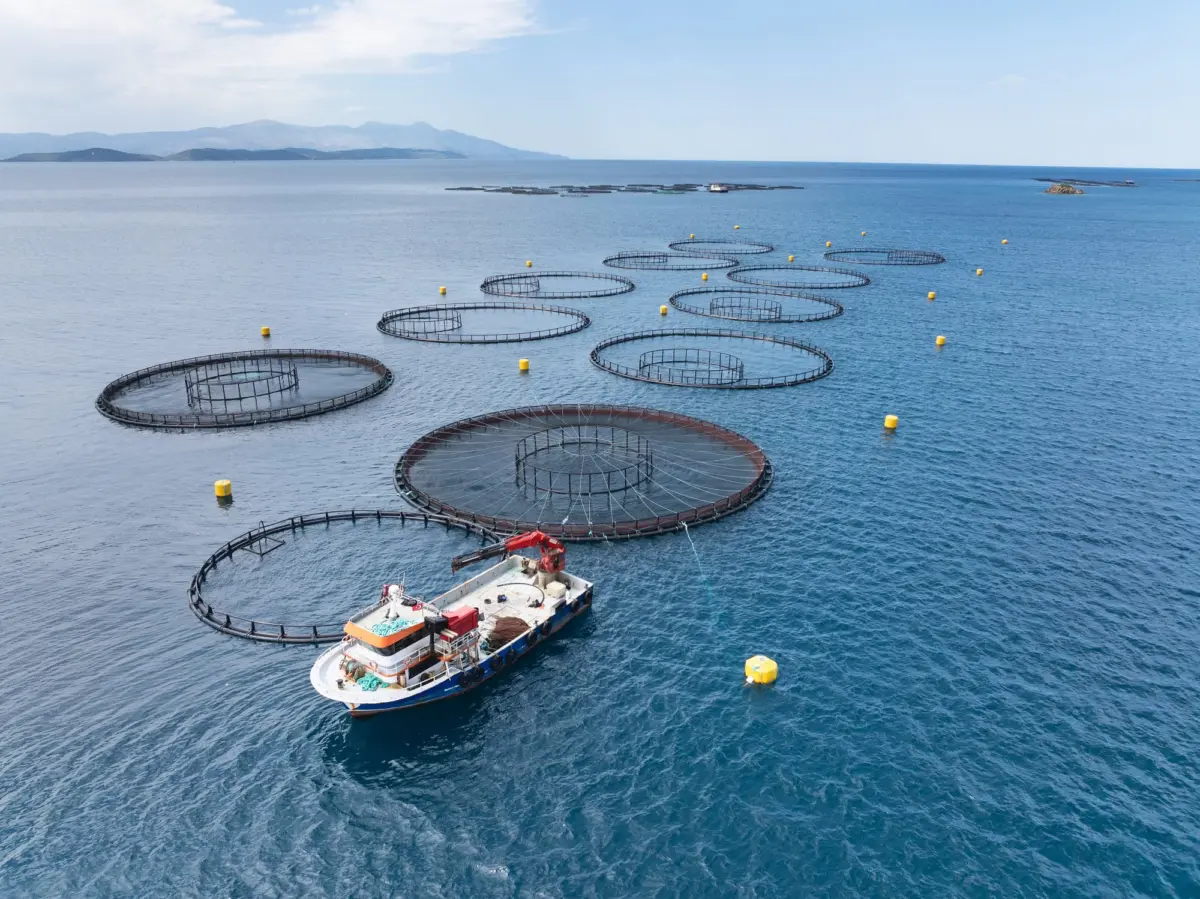
The policy shift arrives on the heels of major structural momentum within the sector, most notably the recent approval of the Hananui Aquaculture Project—a landmark open-ocean salmon farming venture led by Ngāi Tahu Seafood Resources Limited. Approved via the government’s fast-track consenting scheme, Hananui alone is projected to nearly double the nation’s current salmon output, illustrating the immense scale of the developments these new legislative tools are designed to facilitate.
Detailed Chronology: The Path to Regulatory Reform
The restructuring of New Zealand’s resource management framework did not happen in a vacuum. It represents the culmination of years of industry frustration with bureaucratic delays, compounded by a concerted political push to revitalize post-pandemic primary industries.
The Legacy Framework and Industry Bottlenecks
For decades, New Zealand’s aquaculture sector operated under the confines of the Resource Management Act 1991 (RMA). While the RMA was originally enacted to promote the sustainable management of natural and physical resources, it increasingly drew criticism from business leaders, agricultural groups, and marine farmers alike. Critics argued that the legislation had become bogged down by complex, adversarial consent processes, where even remote offshore projects faced exhaustive litigation regarding their visual and environmental impact on coastal landscapes.
For open-ocean aquaculture—which typically requires deep-water engineering, vast capital outlays, and predictable regulatory horizons—the RMA’s cumulative red tape served as a severe deterrent. Marine farmers seeking to pioneer operations miles off the coast found themselves subjected to the same rigid criteria applied to nearshore or terrestrial developments, stalling innovation and limiting foreign and domestic investment.
The Shift Toward Fast-Tracking and Reform
Realizing that the existing legal architecture posed a structural barrier to economic growth, the incoming government made resource management reform a cornerstone of its legislative agenda. The strategy unfolded in two primary phases: immediate administrative intervention via fast-track legislation, followed by systemic legal replacement through the Planning Bill and Natural Environment Bill.
- The Fast-Track Consenting Mechanism: To cut through bureaucratic inertia, the government established a fast-track approvals process aimed at jumping-starting regionally and nationally significant infrastructure and primary sector projects. This mechanism bypassed standard, protracted council-level hearings, placing approval authority in the hands of expert panels and government ministers.
- The Hananui Milestone: The utility of this fast-track approach was vividly demonstrated when the Hananui Aquaculture Project—proposed by Ngāi Tahu Seafood Resources Limited—navigated the scheme. As the 31st project approved under the fast-track process and the very first aquaculture venture to clear the hurdle, Hananui established a working precedent for how large-scale, open-ocean farming could be fast-tracked through the regulatory maze.
- Systemic Legislative Overhaul: Recognizing that fast-tracking was an administrative bandage rather than a permanent cure, the government drafted the Planning Bill and Natural Environment Bill. These statutes are designed to repeal the RMA entirely, replacing it with a modernized framework that explicitly delineates between nearshore sensitivities and the realities of open-ocean industrial production.
Supporting Context & Metrics: The Scale of Ambition
The economic rationale underpinning New Zealand’s regulatory pivot is anchored in robust growth projections and substantial financial investments aimed at establishing the country as a global leader in sustainable seafood production.
The NZ$3 Billion Horizon
The New Zealand aquaculture industry currently generates substantial export revenue, but growth has plateaued under historical regulatory constraints. The government’s strategic roadmap, Aquaculture Strategy 2035, sets a clear benchmark: reaching NZ$3 billion in annual sales by 2035.
Open-ocean aquaculture—often referred to as offshore aquaculture—is viewed as the primary vehicle for this expansion. Unlike nearshore farming, which faces severe spatial limitations, user conflicts with recreational boaters, and localized environmental carrying capacities, the open ocean offers vast expanses of high-energy water with favorable conditions for robust fish health and minimal benthic (seafloor) accumulation issues.
The Hananui Aquaculture Project: A Case Study in Scale
To understand the transformative potential of these legislative reforms, one need only examine the metrics associated with the Hananui Aquaculture Project. Situated in the open waters off Rakiura/Stewart Island, the project is a joint vision spearheaded by Ngāi Tahu Seafood Resources Limited.
- Production Capacity: Hananui is projected to yield an astonishing 14,400 tonnes of salmon per year. To put this figure into perspective, this single farm will produce a volume of salmon roughly equivalent to the output of New Zealand’s entire existing salmon farming industry projected for the 2025–26 period.
- Economic Footprint: The development is expected to generate upwards of NZ$310 million in annual sales, injecting vital liquidity and economic diversification into regional economies.
- Job Creation: The project will directly and indirectly create between 415 and 480 sustainable, high-value jobs in the Southland region, reversing regional brain drain and bolstering local maritime service industries.
Capital Injection and Government Commitment
In tandem with regulatory streamlining, public funding has been deployed to de-risk pioneering open-ocean initiatives. The government has committed an initial NZ$11.72 million (approximately US$6.87 million) specifically targeted at accelerating open-ocean aquaculture research, site identification, and technological development across New Zealand’s exclusive economic zone. This targeted investment is designed to help local operators overcome the initial capital expenditure hurdles associated with operating in high-energy marine environments, where specialized moorings, robust pen designs, and advanced feeding systems are mandatory.
Official Statements and Stakeholder Perspectives
The introduction of the Planning Bill and Natural Environment Bill has ignited a vigorous national debate, drawing sharp contrasts between proponents of economic acceleration and advocates for environmental preservation.
Ministerial Perspective: Driving Investment and Certainty
Defending the reforms, Oceans and Fisheries Minister Shane Jones emphasized that New Zealand must modernize its laws to remain globally competitive in protein production and marine export markets.
"New Zealand has ambitious goals for aquaculture growth, aiming to reach NZ$3亿元 [NZ$3bn] in annual revenue by 2035," Jones stated during the legislative rollout. "Open ocean aquaculture, which has the potential to deliver a large part of this growth, will have a simpler consent process. This includes removing the need to consider outstanding natural landscapes or features, or areas of high natural character, for activities more than three nautical miles offshore."
Jones further underscored that the introduction of ministerial decision-making pathways for space allocation is designed to provide investors with unshakeable regulatory clarity.
"This will help attract greater investment in the sector and help unlock the enormous potential for growth," he added, framing the reforms as a necessary corrective to decades of over-regulation that have stifled maritime enterprise.
Environmental and Conservation Concerns
While industry groups and primary sector advocates have largely welcomed the changes, environmental organizations and conservation advocates have raised pressing concerns regarding the dilution of environmental impact assessments.
Critics argue that exempting open-ocean projects beyond three nautical miles from evaluating impacts on "outstanding natural landscapes" and "areas of high natural character" creates a dangerous legal blind spot. Environmental watchdogs point out that the open ocean is not a barren expanse, but a complex, interconnected marine ecosystem supporting vital pelagic species, marine mammals, and unique benthic habitats.
Furthermore, conservation groups question whether fast-tracked ministerial approvals undermine public consultation processes, potentially disenfranchising indigenous Māori communities, commercial fishers, and recreational stakeholders who rely on healthy, unpolluted marine ecosystems. While proponents argue that open-ocean currents disperse waste more efficiently than sheltered bays, opponents caution that cumulative ecological impacts—such as feed-derived nutrient enrichment, disease transfer to wild fish stocks, and marine mammal entanglements—require rigorous, transparent scrutiny rather than expedited rubber-stamping.
Future Outlook: Navigating the Blue Economy
As the Planning Bill and Natural Environment Bill wind their way through Parliament, New Zealand stands at a critical crossroads in its economic and environmental history. The legislative shift represents a calculated gamble: trading traditional, highly precautionary coastal management frameworks for an agile, growth-oriented model designed to capture global market share in sustainable seafood.
Technological and Engineering Frontiers
The success of New Zealand’s open-ocean aquaculture push will depend heavily on technological innovation. Operating beyond three nautical miles exposes infrastructure to extreme weather events, massive wave action, and severe tidal currents. Local marine engineering firms, technology providers, and aquaculture operators will need to collaborate closely to deploy submersible pens, automated feeding logistics, and resilient monitoring systems capable of withstanding hostile maritime conditions without human intervention.
Global Market Dynamics
Demand for high-quality, sustainably sourced animal protein continues to surge globally, particularly across Asia-Pacific markets. New Zealand’s pristine reputation as an exporter of premium primary products places it in an advantageous position to command premium pricing for open-ocean-farmed finfish and shellfish. By removing regulatory roadblocks, Wellington is betting that domestic producers can scale quickly enough to meet this international appetite before competing jurisdictions in Chile, Norway, or North America capture the market share.
The Balancing Act
Ultimately, the long-term viability of New Zealand’s reformed aquaculture sector will rest on its ability to prove that economic expansion and environmental stewardship are not mutually exclusive. While the new legislation significantly lowers the barriers to entry and operation in the open ocean, maintaining social license—both domestically and internationally—will require rigorous self-regulation, transparent ecological monitoring, and genuine partnership with indigenous guardians and coastal communities.
As projects like Hananui transition from blueprint to operational reality over the coming years, they will serve as the litmus test for whether New Zealand’s bold legislative experiment can successfully deliver a multi-billion-dollar blue economy without compromising the integrity of its vast marine domain.