
Executive Overview
In urban centers across the United States, the sudden hospitalization of an unhoused individual frequently triggers a secondary, unaddressed crisis: the displacement and potential loss of their companion animals. A recent case in Houston, Texas, highlights both the vulnerabilities inherent in these situations and the evolving methodologies of modern animal rescue.
When an unhoused man was critically injured in a stabbing incident at an urban encampment, emergency medical services transported him to a local trauma center. Left behind in the chaos was his dog, Chuck, who refused to abandon the immediate perimeter of their shared living space. Surrounded by discarded personal effects and shifting environmental hazards, Chuck remained stationed at the site for days, exhibiting extreme site fidelity while awaiting his owner’s return.
The subsequent intervention by Sunnyside Street Dogs, a Houston-based non-profit rescue organization, illustrates a critical shift in animal welfare paradigms. Rather than treating the abandoned animal as a stray slated for immediate public adoption, the rescue prioritized a trauma-informed field extraction, comprehensive veterinary care, and temporary custodial holding. This approach was designed to preserve the existing human-animal bond.
Following the owner’s discharge from the hospital, a carefully managed reunion confirmed the resilience of their connection. The duo has since been transitioned into temporary family housing while seeking permanent residential stability. This report examines the chronology of Chuck’s rescue, the behavioral dynamics of canine grief and site fidelity, the broader systemic challenges facing pet owners experiencing homelessness, and the imperative for pet-inclusive crisis management.
Detailed Chronology of Events
+-----------------------------------------------------------------------------------+
|                               TIMELINE OF EVENTS                                  |
+-----------------------------------------------------------------------------------+
| 1. CRIME & DISPLACEMENT : Owner hospitalized following violent stabbing in Houston|
|                           encampment; Chuck remains anchored at the site.         |
|                                                                                   |
| 2. DISCOVERY & ALERT    : Community post alerts Sunnyside Street Dogs; advocate    |
|                           Annie flags the case for immediate field dispatch.      |
|                                                                                   |
| 3. TACTICAL EXTRACTION  : Rescuers Mike & behaviorist navigate fearful retreat;   |
|                           Chuck secured safely beneath vehicle using food lures.  |
|                                                                                   |
| 4. MEDICAL & HOLDING    : Full clinical checkup confirms physical health; foster  |
|                           care maintained while owner completes hospital stay.    |
|                                                                                   |
| 5. REUNION & TRANSITION : Controlled, low-arousal reunion successful; duo moves   |
|                           into temporary family housing with owner's sister.      |
+-----------------------------------------------------------------------------------+
Phase 1: The Encampment Trauma and Abandonment
The crisis began when a violent altercation occurred at an informal encampment in Houston, resulting in the severe stabbing of Chuck’s owner. Emergency first responders stabilized and evacuated the human victim to an area hospital. However, municipal emergency medical services (EMS) and law enforcement protocols rarely include provisions for companion animals present at crime scenes or medical emergencies.
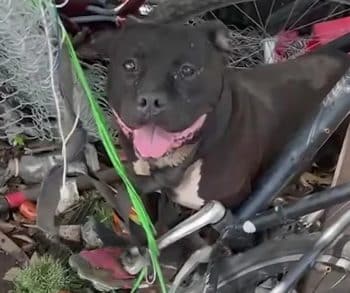
In the immediate aftermath, Chuck was left unattended in a highly volatile environment. Driven by strong territorial anchoring and attachment behavior, the dog refused to leave the precise location where he and his owner had resided. For several days, Chuck navigated environmental stressors—including high foot traffic, vehicle movement, and urban debris—while remaining within meters of his owner’s remaining possessions.
Phase 2: Social Media Alert and Emergency Response
The situation came to light when local community advocates posted photos and location details of the stranded dog on social media. Annie, a representative with Sunnyside Street Dogs, identified the post and recognized the acute risk of animal control impoundment, injury, or severe psychological trauma.
Sunnyside Street Dogs Director Mike coordinated an emergency extraction team, joining a certified professional dog behaviorist to evaluate the site. Recognizing that an unsocialized or deeply frightened dog in an open space poses significant flight and safety risks, the team prepared a low-arousal, non-coercive capture strategy.
+-------------------------------------------------------------------------------+
|                        FIELD EXTRACTION PROTOCOL                              |
+-------------------------------------------------------------------------------+
|  [Site Assessment]  --> Identify flight risks & environmental hazards         |
|         |                                                                     |
|  [De-escalation]    --> Deploy high-value food lures & passive body language  |
|         |                                                                     |
|  [Debris Clearance] --> Gently create physical access without cornering       |
|         |                                                                     |
|  [Safe Capture]     --> Apply double-slip lead lead under behaviorist guidance|
+-------------------------------------------------------------------------------+
Phase 3: Tactical Field Extraction Under High-Stress Conditions
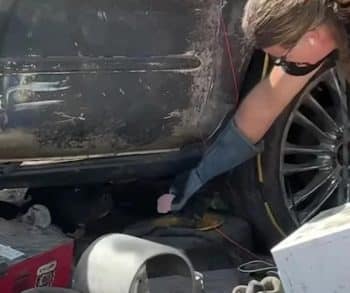
Upon the rescue team’s arrival at the encampment, Chuck displayed classic fear-based defensive behavior. Retreating beneath a nearby parked vehicle, he utilized the undercarriage as a defensive barrier against strangers.
Mike and the behaviorist implemented a patient, non-confrontational approach:
- Environmental Clearance: The team quietly removed surrounding debris to establish a clear, safe pathway for physical access without escalating the dog’s alarm.
- High-Value Olfactory Engagement: High-value food lures were introduced to shift Chuck’s mental state from fear-induced retreat to foraging behavior.
- Passive Physical Securing: Operating at ground level, Mike established continuous visual and vocal de-escalation, eventually placing a secure, non-restrictive rescue leash around Chuck without triggering a flight response.
The extraction was executed without physical injury or acute distress to the animal, transitioning him immediately into a climate-controlled transport vehicle.
Phase 4: Clinical Assessment and Temporary Custodial Care
Following extraction, Chuck was transported to a partner veterinary facility for a comprehensive health evaluation. The clinical assessment aimed to identify any secondary injuries sustained during the stabbing incident, underlying parasitic infections, or nutritional deficits common among animals living in unhoused environments.
- Physical Status: The diagnostic examination revealed that Chuck was in good physical condition, free of major trauma, and maintaining adequate body condition score (BCS) metrics.
- Psychological Status: While physically healthy, Chuck exhibited signs of environmental shutdown and hypervigilance, consistent with acute separation trauma.
Rather than listing Chuck for general adoption, Sunnyside Street Dogs designated his status as "Temporary Crisis Hold." This operational distinction reserved the animal’s ownership rights while the organization tracked the medical recovery of his owner in the hospital system.
+---------------------------------------------------------------------------------+
|                        RESCUE PROTOCOL COMPARISON                               |
+---------------------------------------------------------------------------------+
| Standard Intake Model      : Stray Pick-up -> 3-5 Day Hold -> General Adoption |
| Crisis Preservation Model  : Field Rescue -> Medical Care -> Temporary Hold ->  |
|                              Owner Reunification                                |
+---------------------------------------------------------------------------------+
Phase 5: The Controlled Reunification
Upon receiving notification that the owner had been medically cleared and discharged from the hospital, Sunnyside Street Dogs scheduled a structured reunification at their facility.
To prevent overwhelming the animal, rescuers established a choice-based interaction framework:
- The owner was seated in an open, quiet area.
- Chuck was brought into the space on a loose lead, allowing him to initiate physical contact at his own pace.
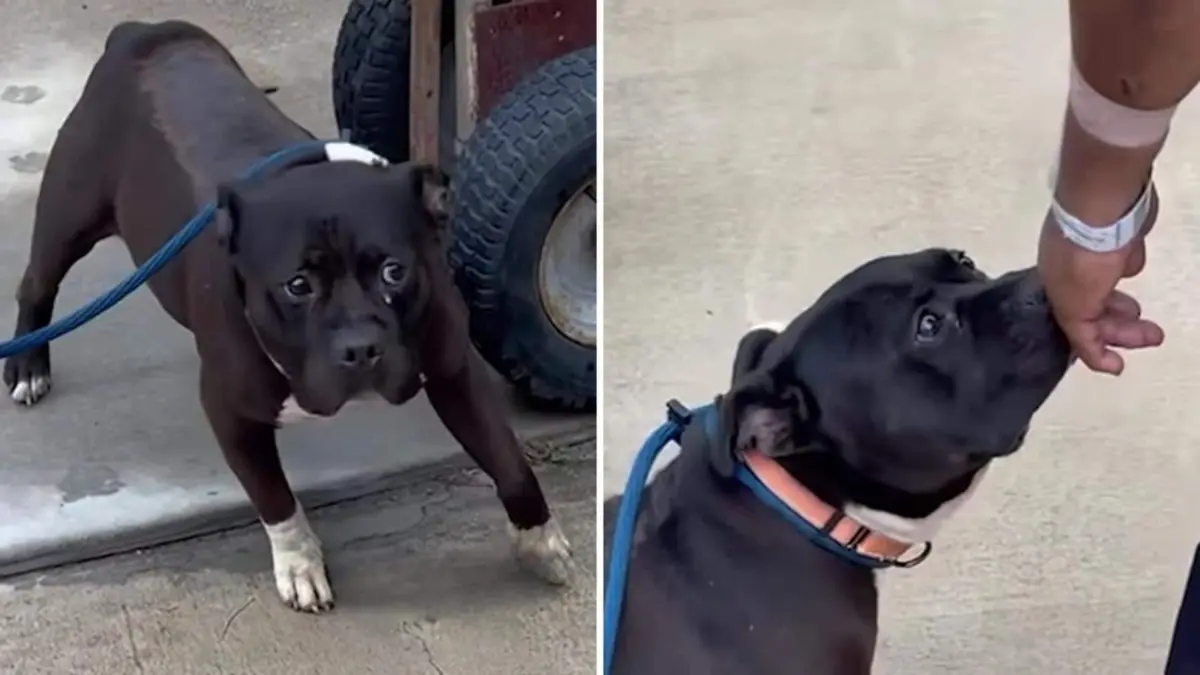
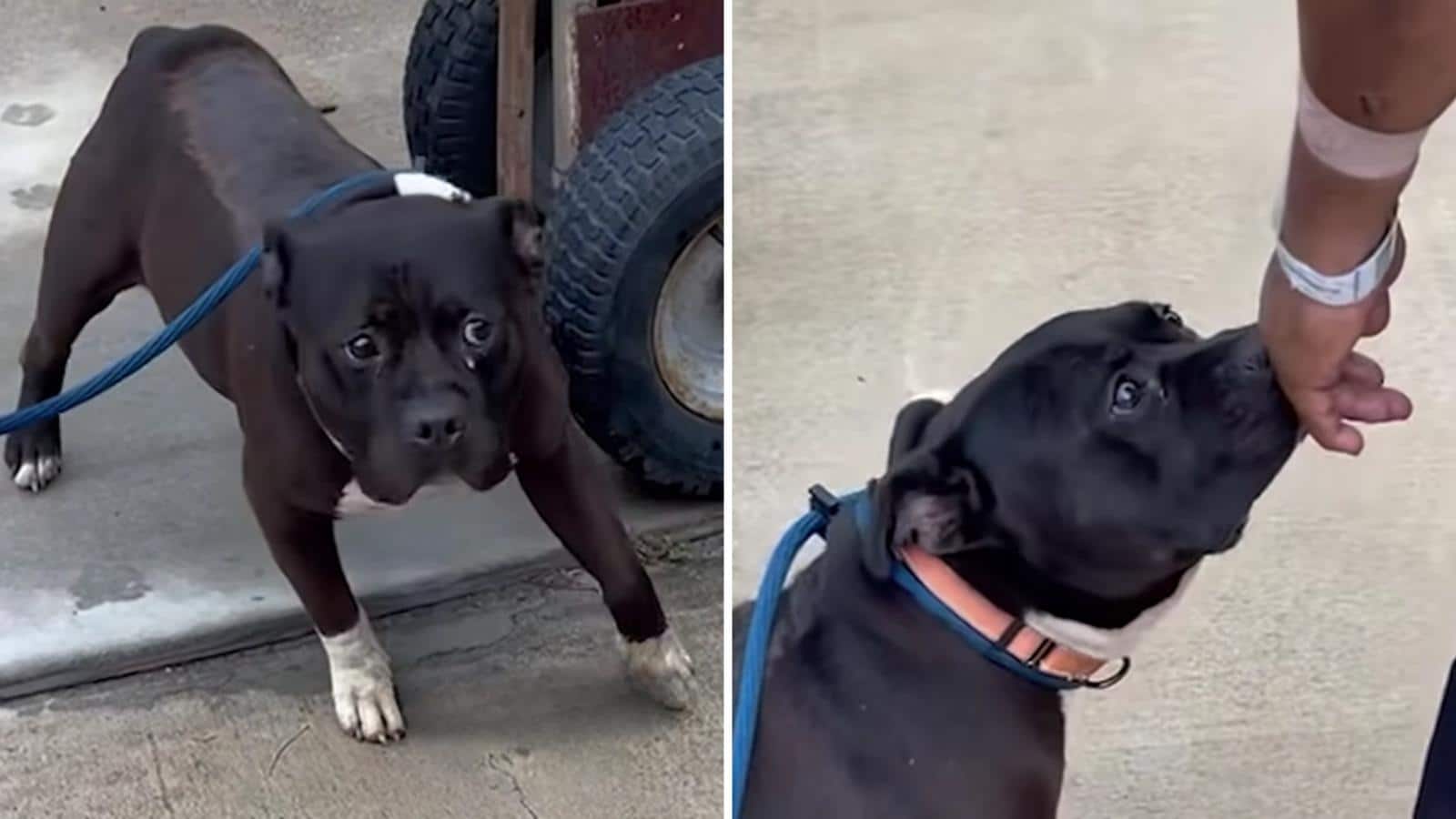
Upon entering the room, Chuck visually identified his owner, immediately shed his protective stiffness, and approached him directly. Observers noted an instant shift in the dog’s posture—from guarded anxiety to active engagement, tail-wagging, and vocalizations of relief.
Supporting Context & Industry Metrics
The Intersection of Homelessness and Pet Ownership
Chuck’s experience underscores a broader, systemic phenomenon within urban animal welfare. National studies in veterinary human services estimate that 5% to 10% of unhoused individuals in the United States care for companion animals, with some regional urban estimates reaching as high as 24%.
Pet Ownership Among Unhoused Populations (U.S. National Averages)
+-------------------------------------------------------------------+
|  [###########...................................] 5% - 10% (Low)  |
|  [#######################.......................] 24% (Urban High)|
+-------------------------------------------------------------------+
For unhoused individuals, companion animals provide profound psychological stability, security, and unconditional emotional support. However, this bond also presents distinct structural vulnerabilities:
- Crisis Disruption: Emergency medical events, law enforcement detentions, or shelter displacements frequently separate pets from their owners without designated safety nets.
- Barrier to Housing: Over 90% of traditional emergency human shelters do not permit pets, forcing individuals to choose between personal shelter and abandoning their animals.
Shelter Dynamics and Rescue Infrastructure in Houston
The city of Houston and Harris County face persistent pet overpopulation and intake pressures. Municipal open-admission shelters regularly operate at or above maximum capacity, leading to elevated euthanasia rates for animals entering the system without clear ownership documentation.
| Operational Metric | Standard Municipal Shelter | Community-Based Street Rescue (e.g., Sunnyside) |
|---|---|---|
| Intake Philosophy | Open admission / High volume | Targeted field intervention / Trauma-informed |
| Primary Goal | Capacity management & rehoming | Family preservation & targeted safety net |
| Crisis Holding Period | Mandated 3–7 days | Flexible, case-dependent medical/social hold |
| Pet Owner Support | Limited by municipal budgets | Direct community outreach and temporary foster care |
In this environment, independent, non-profit rescue groups fulfill a vital specialized role. By intervening directly in encampments and offering temporary custodial care during human medical emergencies, organizations like Sunnyside Street Dogs prevent stable human-animal bonds from being permanently severed by municipal shelter turnover.
Official Statements & Behavioral Analysis
Canine Behavior: Understanding Site Fidelity and Separation Trauma
Dr. Elizabeth Thorne, a consultant in veterinary behavioral medicine (synthesizing established canine behavior principles), offers insight into Chuck’s refusal to leave the encampment site:
"When an animal experiences a sudden, unexplained rupture in their primary bond, their immediate behavioral response is often anchored to environmental familiarity. The location where the human was last seen becomes a primary safety anchor.
What appears to an outside observer as stubbornness or fear is actually a highly evolved loyalty strategy—the dog remains in place because that location represents the highest probability of reuniting with their social group. Attempting to force an extraction without accounting for the animal’s stress state can lead to severe behavioral regression or defensive aggression."
Operational Perspective: Sunnyside Street Dogs
Reflecting on the rescue strategy, representatives from Sunnyside Street Dogs highlighted the necessity of non-judgmental community outreach:
"Our mission extends beyond simply pulling dogs off the street. We must look at the human element of every story. Chuck wasn’t an abandoned dog in the traditional sense; he had a owner who loved him dearly and was torn away by a catastrophic act of violence.
If we had treated Chuck as just another homeless stray to be adopted out to the highest bidder, we would have inflicted a second trauma on both the dog and his owner. Our goal in these specific crisis scenarios is family preservation whenever safe and feasible."
Future Outlook & Systemic Infrastructure Needs
Current Living Status and Immediate Stabilization
Following their successful reunion, Chuck and his owner have transitioned away from the encampment environment. They are currently residing temporarily with the owner’s sister in the greater Houston area. This familial support network provides a safe, climate-controlled setting while the owner continues his physical rehabilitation from the stabbing injuries and actively pursues long-term, independent permanent housing.
+------------------------------------------------------------------------+
|                      CURRENT HOUSING TRANSITION                        |
+------------------------------------------------------------------------+
|  [Encampment Site]  --> Unsheltered, high vulnerability (Past)         |
|         |                                                              |
|  [Hospital / Foster]--> Medical recovery & temporary holding           |
|         |                                                              |
|  [Familial Housing] --> Safe interim placement with sister (Current)   |
|         |                                                              |
|  [Permanent Home]   --> Target: Pet-inclusive supportive housing (Future) |
+------------------------------------------------------------------------+
Systemic Imperatives for Community Infrastructure
Chuck’s case highlights several actionable opportunities for municipal policy reform and emergency management:
- Integrated First Responder Protocols: Establishing formal channels between municipal Emergency Medical Services (EMS), law enforcement, and local animal rescue organizations to ensure companion animals are safely secured during emergency human transports.
- Expansion of Pet-Inclusive Transitional Housing: Increasing funding and structural support for emergency shelters and transitional housing facilities that accommodate pets, removing a major obstacle to housing stability for vulnerable populations.
- Crisis Foster Networks: Developing dedicated, short-term crisis foster programs designed specifically to hold companion animals while owners recover from temporary medical or housing emergencies.
Through patient field intervention and a focus on family retention, rescue organizations demonstrate that protecting vulnerable animals often means protecting the human-animal bond that sustains them through crisis.