
Executive Overview
Few canine comparisons generate as much public debate, fascination, and regulatory scrutiny as the juxtaposition between the American Bulldog and the American Pit Bull Terrier. Often conflated by the casual observer due to their robust, muscular builds, short coats, and historical association with blood sports, these two distinct breeds are separated by centuries of divergent breeding, physical architecture, and behavioral traits.
In an era where canine legislation, housing restrictions, and public safety debates frequently target bully breeds, understanding the precise differences between the American Bulldog and the Pit Bull has never been more critical. While both share a common ancestry rooted in the now-extinct Old English Bulldog, their evolutionary paths branched significantly. The American Bulldog developed primarily as a versatile farm guardian, stock dog, and hunter, while the American Pit Bull Terrier was engineered through the infusion of terrier bloodlines to maximize agility, tenacity, and gameness for pit-fighting contests.
This comprehensive analysis delves past surface-level similarities to examine the anatomical, historical, psychological, and sociological profiles of both breeds. By evaluating authoritative breed standards, historical registries, and expert behavioral insights, this report aims to dismantle persistent myths—such as the anatomical impossibility of a "locking jaw"—and provide a definitive, objective resource for prospective owners, legislators, and canine enthusiasts alike.
Detailed Chronology: The Evolutionary Divergence of Two Powerhouses
To understand the modern American Bulldog and American Pit Bull Terrier, one must trace their lineage back through centuries of human utility, economic shifts, and selective breeding practices.
The Common Ancestor: The Old English Bulldog
The historical genesis of both breeds traces back to the Old English Bulldog of the British Isles. Developed primarily for the brutal blood sports of bull-baiting and bear-baiting, these ancestral dogs possessed immense jaw strength, thick hides, and a low center of gravity designed to latch onto large livestock. When the British Parliament passed the Cruelty to Animals Act of 1835, outlawing public animal-baiting sports, the utility of the original Old English Bulldog plummeted overnight, steering the phenotype toward near-extinction.
The American Bulldog: Preservation and Agricultural Utility
Immigrants traveling to North America brought their working Bulldogs with them, valuing the dogs for their utility on rugged homesteads. In the American South, these resilient canines served an indispensable role: catching feral pigs, guarding farmsteads against predators, and driving cattle.
Unlike their British counterparts, American Bulldogs were bred for stamina, size, and working versatility. By the mid-20th century, however, the breed had once again dwindled to dangerously low numbers. The resurgence and ultimate survival of the American Bulldog are credited almost entirely to the tireless preservation efforts of Dr. John D. Johnson and Alan Scott. Beginning in the late 1940s, Johnson and Scott traveled through the rural American South to locate, document, and selectively breed the remaining working-type bulldogs, establishing the foundation lines (the "Johnson" standard and the "Scott" standard) that define the breed today.
The American Pit Bull Terrier: The Creation of an Athlete
In contrast, the creation of the American Pit Bull Terrier occurred through a deliberate hybridization process. Breeders in England, Ireland, and later the United States crossed the remnants of the Old English Bulldog with various terrier breeds (such as the Old English Black and Tan Terrier).

The goal was clear: combine the raw power and tenacity of the bulldog with the speed, fiery gameness, and high prey drive of the terrier. The resulting dog was smaller, leaner, and exceptionally agile, engineered specifically for success within the confines of a fighting pit. Following the criminalization of these blood sports, the breed transitioned into an all-around farm dog, hunter, and companion. In 1898, UKC founder C.Z. Bennett officially recognized the breed, naming it the American Pit Bull Terrier to honor its historical working context, while the AKC later admitted a slightly modified version of the breed under the moniker "American Staffordshire Terrier."
Supporting Context & Metrics: Anatomy, Biometrics, and Breed Profiles
A side-by-side comparative analysis reveals stark differences in scale, structural geometry, and physiological design.
Comparative Metrics Table
| Metric | American Bulldog | American Pit Bull Terrier |
|---|---|---|
| Height (Adult) | Males: 22–27 inches (56–69 cm) Females: 20–24 inches (51–61 cm) |
Males: 18–21 inches (46–53 cm) Females: 17–20 inches (43–51 cm) |
| Weight (Adult) | Males: 75–125 lbs (34–57 kg) Females: 60–100 lbs (27–45 kg) |
Males: 35–65 lbs (16–29 kg) Females: 30–50 lbs (14–23 kg) |
| Coat & Colors | Short, harsh coat. Predominantly white with patches of brindle, red, brown, or black. | Short, glossy, single coat. Wide spectrum including blue, fawn, red, black, brindle, and tricolor. |
| Skeletal Build | Heavy-boned, stocky, powerful, and rectangular with a deep, broad chest. | Streamlined, muscular, athletic, and balanced with a pronounced waist. |
| Energy Output | Moderate to High; requires sustained endurance exercise. | Exceptionally High; requires intense physical and mental engagement. |
| Lifespan | 10 to 12 years | 12 to 15 years |
Anatomical Analysis: Strength Versus Agility
The physical disparities between the two breeds reflect their intended historical functions.
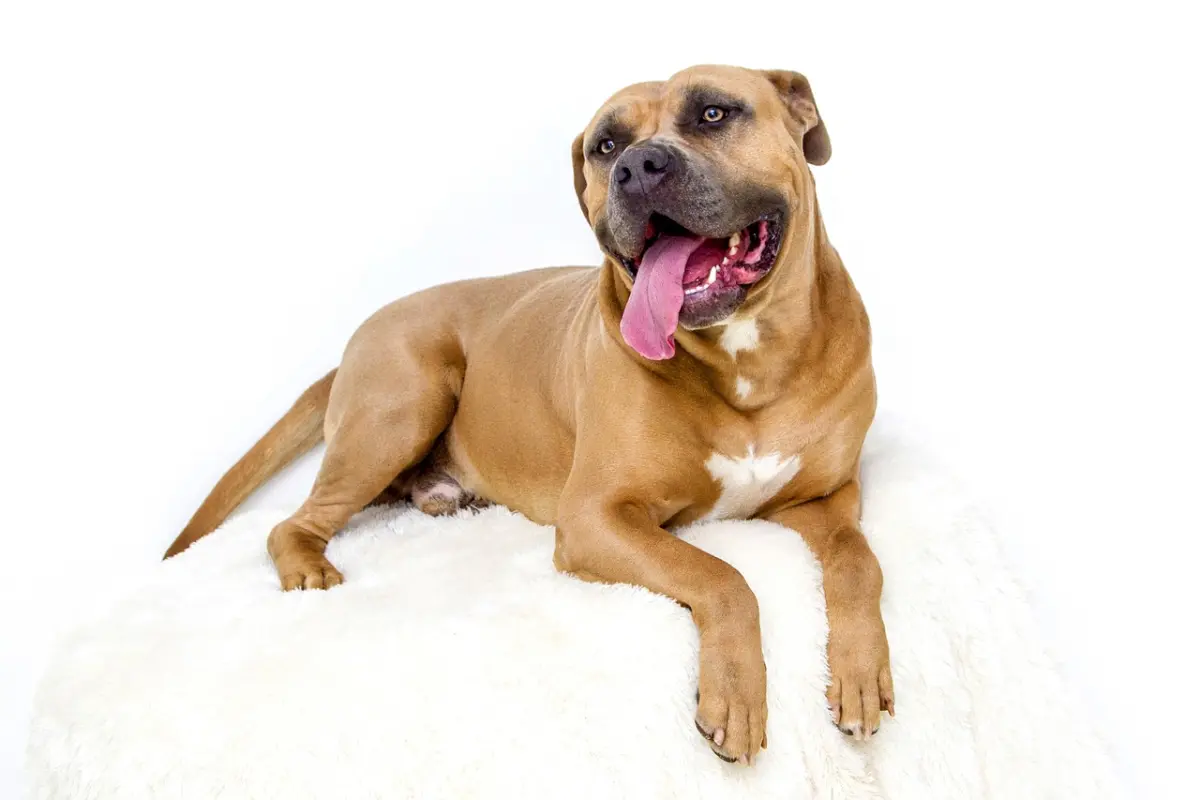
The American Bulldog is a heavyweight contender. Standing significantly taller and outweighing the Pit Bull by upwards of 40 to 60 pounds in many instances, the Bulldog features a massive skull, powerful jaws, and heavy bone density. Its deep chest and thick musculature are engineered for brute force, capable of subduing livestock or warding off large predators.
Conversely, the American Pit Bull Terrier is built along the lines of a middleweight athlete or martial artist. Though pound-for-pound exceptionally strong, its frame is notably lighter and more streamlined. The Pit Bull possesses a wedge-shaped head, defined cheek muscles, and a taut, muscular body designed for explosive acceleration, high vertical leaps, and enduring stamina over long periods of strenuous activity.
Official Statements and Behavioral Realities
Public perception of both breeds is frequently skewed by sensationalized media coverage, leading to extreme viewpoints that range from viewing them as inherently dangerous weapons to treating them with unrealistic anthropomorphism. Canine behaviorists, veterinarians, and animal welfare organizations emphasize that behavior is shaped by a complex interplay of genetics, early socialization, training, and environmental stewardship.
Temperament and Drive
- The American Bulldog: Known for an unshakeable, fierce loyalty to its human family, the American Bulldog is naturally protective and confident. Originally tasked with independent guarding duties, this breed can display a strong-willed or stubborn streak. Without early socialization, their protective instincts can manifest as wariness toward strangers or unfamiliar animals. However, under the guidance of an experienced, consistent handler, they mature into exceptionally stable, loving family companions.
- The American Pit Bull Terrier: Characterized by an irrepressible zest for life and an intense desire to please their owners, Pit Bulls are famously affectionate with humans. Contrary to the myth that they are aggressive toward people, well-bred Pit Bulls generally exhibit a profound fondness for human interaction. However, due to their historical selection for dog-fighting, many individual Pit Bulls retain a predisposition toward animal reactivity or dog-aggression as they reach maturity. This makes vigilant management, socialization, and responsible ownership non-negotiable prerequisites.
Energy Demands and Exercise Requirements
Both breeds are high-energy working dogs unsuited for sedentary, apartment-bound lifestyles without dedicated intervention.
- American Bulldogs require at least 60 to 90 minutes of daily exercise. Because of their shorter muzzles (brachycephalic tendencies in certain lines), owners must monitor them closely in hot weather to prevent heat exhaustion and respiratory distress.
- Pit Bulls are kinetic dynamos. They thrive on high-intensity tasks such as weight pulling, agility training, flirt-pole exercises, and long-distance running. Depriving a Pit Bull of adequate physical and mental stimulation frequently leads to destructive chewing, fence-jumping, or hyperactive behavioral issues.
Debunking Common Myths and Misconceptions
Misinformation surrounding these breeds has fueled restrictive Breed-Specific Legislation (BSL) across various municipalities worldwide. Addressing these myths with factual, scientific clarity is essential for public education.

Myth 1: "Pit Bulls have a locking jaw mechanism."
The Fact: Anatomically and physiologically, no canine species possesses a "locking jaw." Veterinary anatomists and researchers have thoroughly examined the skulls and jaw structures of Pit Bulls and found no physical mechanism, bone structure, or ligamentary lock that differentiates them from any other dog breed. The origin of this myth lies in the dog’s tenacious psychological drive and gameness; once a Pit Bull or Bulldog bites down, its mental focus and determination to maintain its grip are exceptionally high compared to more pliable breeds.
Myth 2: "American Bulldogs and Pit Bulls are naturally vicious toward humans."
The Fact: Aggression toward humans is not a breed trait endorsed by reputable breeders of either type. Historically, fighting dogs that displayed aggression toward their handlers were culled immediately, as handlers needed to safely separate fighting dogs barehanded in the pit. While poor breeding practices, abuse, and systemic neglect can produce aggressive dogs of any breed, well-socialized American Bulldogs and Pit Bulls are remarkably stable, gentle, and trustworthy with family members.
Future Outlook: Responsible Ownership, Regulation, and Welfare
As urban densities increase and legislative bodies continue to grapple with public safety concerns, the future of both the American Bulldog and the American Pit Bull Terrier depends heavily on the evolution of responsible ownership culture and humane laws.
The Shift Away from Breed-Specific Legislation (BSL)
A growing body of research from veterinary medical associations, animal behaviorists, and organizations like the American Veterinary Medical Association (AVMA) indicates that BSL is ineffective at reducing dog bite incidents. Instead, modern legislative trends are shifting toward "owner-liability" laws, mandatory spay/neuter programs, and strict enforcement of leash laws. Educating the public on recognizing canine body language and investing in community-wide dog training initiatives offer sustainable solutions for public safety.
The Imperative of Early Socialization and Training
For prospective owners, understanding the distinct operational histories of these breeds dictates the standard of care required. Bringing an American Bulldog or an American Pit Bull Terrier into a modern household requires a commitment to:
- Early and Continuous Socialization: Exposing puppies to novel environments, varied human demographics, and controlled animal interactions during their critical developmental windows.
- Positive Reinforcement Training: Establishing firm, fair, and consistent boundaries that respect the dog’s intelligence and work ethic without relying on punitive methods.
- Physical and Mental Outlets: Channeling their innate strength and endurance into constructive outlets, transforming raw, high-powered energy into disciplined companionship.
Conclusion
The American Bulldog and the American Pit Bull Terrier are magnificent testaments to canine resilience, power, and history. While they share a distant evolutionary branch, their divergence has created two distinct entities: the heavyweight, protective guardian of the farm, and the athletic, tenacious dynamo of the pit. Recognizing these differences allows owners, breeders, and communities to appreciate each breed on its own terms, ensuring that these powerful companions thrive safely and successfully in human society.