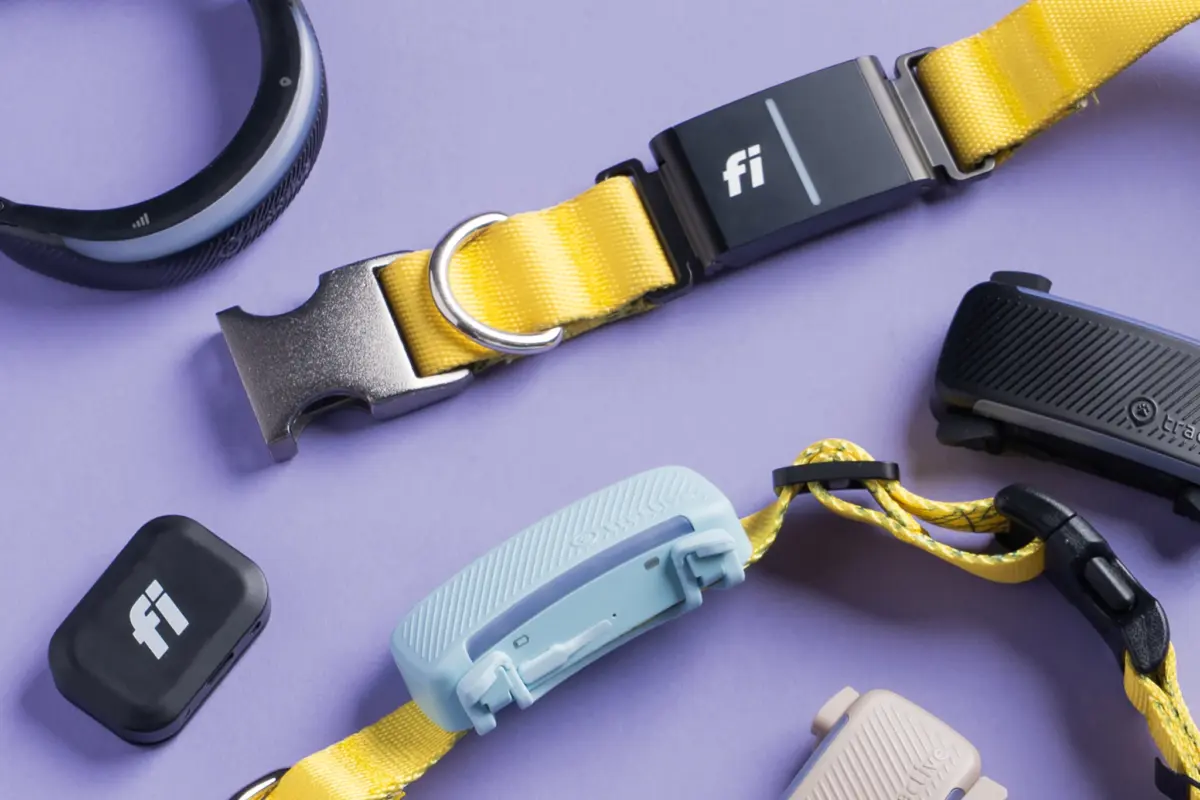

Every year, an estimated 10 million cats and dogs go missing across the United States. While traditional identification methods like microchips and engraved ID tags remain critical baseline defenses for eventual reunions, they do little to actively locate a frightened animal out on the run. The psychological toll of an unrecovered pet—a phenomenon clinical psychologists term "ambiguous loss"—differs fundamentally from grief following bereavement. Resembling the agonizing open-ended trauma of a missing person case, this lack of closure frequently leaves pet owners trapped in fractured, unresolved stages of the grieving process.
To mitigate this modern pet-owner anxiety, the consumer tech market has increasingly embraced dedicated GPS pet trackers. Utilizing a blend of satellite GPS positioning and cellular data infrastructure, these smart collars provide near-real-time location data and escape alerts. However, as revealed by exhaustive, multi-year testing cycles evaluating 26 different models, no device is entirely without flaws. Performance depends heavily on cellular network density, satellite visibility, and subscription models. This definitive guide examines the top-performing GPS collars for dogs and cats on the market, analyzing their accuracy, battery longevity, physical design, and data privacy implications.
Detailed Chronology and Testing Methodology
To separate marketing hype from functional reliability, Wirecutter’s pet tech editorial team executed an exhaustive, multi-year testing protocol spanning multiple geographic regions and seasons. Beginning initial evaluations in 2024 and continuing through 2026, reviewers considered 26 distinct GPS and Bluetooth tracking systems, ultimately putting 16 models through rigorous real-world trials.
The Testing Grounds and Canine/Feline Test Pilots
Field tests were conducted across more than 30 outings in Lincoln, Nebraska, and an additional 35 outings in New Haven, Connecticut. Testing conditions intentionally varied across extreme temperatures, pouring rain, heavy snow, and dense cloud cover capable of interfering with satellite transmissions.
- Canine Testers: The primary test subject, a dog named Dave, was outfitted with various collars during standard 30- to 45-minute walks. Trials also utilized professional dog walkers and family members to simulate emergency separation scenarios. Additional long-term feedback was gathered using smaller breeds, including Mia (a 16-pound Chihuahua-poodle mix) and Piglet (a 24-pound miniature schnauzer-Chihuahua mix).
- Feline Testers: Because indoor-outdoor cats present unique tracking challenges, testing relied on specialized feline participants: Six (a 9-pound cat in Nebraska) and Midnight Vampire (a 12-pound cat in Philadelphia), alongside long-term insights from a 14-pound cat named Hobbes.
Core Evaluation Metrics
Every device was subjected to standardized benchmarks designed to evaluate real-world performance under duress:
- Location Accuracy During Live Tracking: Reviewers compared real-time app mapping against the actual physical locations of pets during controlled head-start walks and off-leash park runs.
- GPS Connection Speed: Testers timed how rapidly each device activated its high-frequency live-tracking mode after a user initiated a search.
- Escape-Alert Response Time: Geofenced "safe zones" were established to measure the exact delay between a pet crossing a virtual boundary and the app pushing an alert.
- Battery Longevity: Performance was tracked across 18 intensive outings, noting the drain caused by continuous live-tracking modes and evaluating the efficacy of power-saving Wi-Fi/Bluetooth zones.
- Physical Form Factor & Subscriptions: Devices were inspected for weight distribution, collar attachment security, waterproofing ratings, and the cost-to-value ratio of mandatory cellular subscription plans.
Supporting Context & Metrics: Why Bluetooth and Shock Collars Fall Short
The Bluetooth Limitation
Before committing to dedicated GPS hardware, many consumers consider general-purpose Bluetooth trackers such as Apple’s AirTag or Life360’s Tile devices. While inexpensive and effective for locating misplaced house keys, these devices proved inadequate for runaway pets. Bluetooth trackers depend entirely on proximity to an active smartphone network (such as Apple’s Find My network). If a lost dog or cat wanders into a wooded area, a quiet suburb, or a location devoid of compatible smartphones, tracking ceases entirely—rendering them more frustrating than useful during an emergency.
The Exclusion of Electronic Training Collars
Reviewers intentionally dismissed GPS collars that incorporate physical stimulation, such as static signals or electrical shocks designed to enforce "invisible fences." Beyond ethical concerns—such devices are entirely banned in several countries due to animal welfare violations—published veterinary research indicates that electrical stimulation can induce severe psychological distress, fear, and adverse behavioral modifications in domestic dogs.
Official Statements and Industry Insights
The integration of GPS hardware into pet accessories brings significant engineering challenges, particularly regarding battery preservation and data privacy.
Battery Management Strategies
Balancing continuous location updates with reasonable battery life requires innovative engineering. Jonathan Bensamoun, CEO and founder of Fi, explained the multi-layered connectivity approach used in the Fi Series 3+:
"When your dog is inside your home, it’s going to connect to the base via Bluetooth Low Energy. And that connection is super cheap from an energy perspective… Once the dog disconnects from all of those ‘safe’ signals, the algorithm considers it an escape and starts looking for the more-battery-intensive GPS signal."
Similarly, Tractive’s executive vice president, Andrew Bleiman, noted the high-frequency optimization of their hardware:
"Our devices update every 2-3 seconds under good conditions during live tracking."
The Data Privacy Debate
Because these devices rely on cellular networks and location-based software, they inherently collect significant amounts of user metadata. Max Eddy, Wirecutter’s privacy and security expert, highlighted the potential risks:
"Remember that your dog is probably near you most of the time. Using just the dog’s data, some inferences could potentially be made about the person’s life and habits… All this data, including the geolocation data of you and your dog, would be available to law enforcement."
Both Tractive and Fi representatives defended their data practices. Bleiman emphasized Tractive’s European compliance:
"As a European company, we operate under the strict guidelines of the General Data Protection Regulation (GDPR), which typically are considered more strict than data privacy guidelines in the US. At no time does Tractive sell or license this data."
Fi executives echoed these sentiments regarding monetization, with Bensamoun stating, "We do not and will never sell any data," while noting that limited metadata is shared strictly to power internal digital marketing pipelines on platforms like Meta under strict legal frameworks.
Comprehensive Product Breakdown
Top Pick for Dogs: Tractive Dog 6 Smart Dog Tracker
The Tractive Dog 6 Smart Dog Tracker emerged as a premier choice for canine owners, offering industry-leading location accuracy and lightning-fast connection speeds.
- Performance: During live tracking, it established connection links in an average of just 13 seconds. Location accuracy routinely stayed within a few yards of the actual position.
- Battery & Build: After 18 grueling test walks, the battery retained 71% of its charge. It features an IP68 waterproof rating (capable of 1.5-meter submersions for 30 minutes), dual-sided LED light strips for nighttime visibility, and a convenient USB-C charging port.
- Drawbacks: The device is relatively bulky compared to sleeker alternatives, and Tractive requires a minimum prepaid one-year subscription commitment.
Top Pick for Dogs: Fi Series 3+
For owners prioritizing a sleek, lightweight profile without sacrificing cellular tracking power, the Fi Series 3+ serves as an exceptional alternative.
- Performance: Encased in marine-grade stainless steel and plastic, this 1-ounce tracker connects to "Lost Mode" in an average of 16 seconds.
- Features: It features advanced behavioral tracking—monitoring eating, drinking, licking, and sleeping metrics. Battery conservation is managed brilliantly via a dedicated home charging base utilizing Bluetooth Low Energy.
- Drawbacks: The Fi Series 3+ cannot be attached to standard, pre-owned collars; it requires proprietary "endlink" connectors or specific third-party compatible bands. Some users report a minor rattling sound from the metal hardware during movement.
Runner-Up for Dogs: Fi Mini
The Fi Mini distills the core tracking capabilities of the Series 3+ into an ultralight package weighing a mere 0.56 ounces—less than half the weight of standard GPS units.
- Compatibility: Unlike its larger counterpart, the Mini ships with flexible silicone straps and cases, allowing it to attach securely to almost any existing collar or harness.
- Drawbacks: It lacks built-in LED display lights, relies entirely on plastic construction, and drains battery reserves significantly faster if the user lacks the official Fi charging base.
Top Pick for Cats: Tractive Cat 6 Mini
Feline tracking demands specialized ergonomics, and the Tractive Cat 6 Mini meets this challenge with a curved housing unit tailored for smaller necks.
- Features: The companion app features robust historical mapping, territorial range toggles, and thermal heat maps illustrating where a cat lingers or hunts. Integrated safety lights assist owners in locating animals trapped in trees or dense brush.
- Drawbacks: Real-world battery life is relatively modest, completely depleting after roughly 5.5 days of active outdoor exploration. Furthermore, the charging cable relies on a proprietary magnetic port rather than universal USB-C.
Alternative Noteworthy Mentions
- For Extra-Large Dogs: The Tractive Dog 6 XL is tailored for hounds weighing 70 to 80 pounds and up, offering extraordinary battery longevity that retained 93% of its charge after standard testing rounds.
- For Indoor-Only Hiding: The TabCat V2 Cat & Kitten Tracker utilizes low-tech radio-frequency homing instead of cellular GPS. While limited to a 500-foot range and lacking GPS mapping, it incurs zero subscription fees and excels at locating cats trapped inside walls, beneath floorboards, or deep within home closets.
Future Outlook
As cellular infrastructure evolves and satellite-to-cellular direct messaging standards improve, the next generation of pet tracking hardware is expected to feature increasingly miniaturized footprints, extended battery capacities, and enhanced dead-zone resilience. Upcoming evaluations by Wirecutter will test emerging market contenders, such as the Life360 Pet GPS, to determine whether alternative tech ecosystems can surpass current industry benchmarks set by Tractive and Fi. For now, investing in a dedicated GPS tracker remains the most proactive step an owner can take to shorten the agonizing window of ambiguous loss should their companion ever slip away.