
Executive Overview
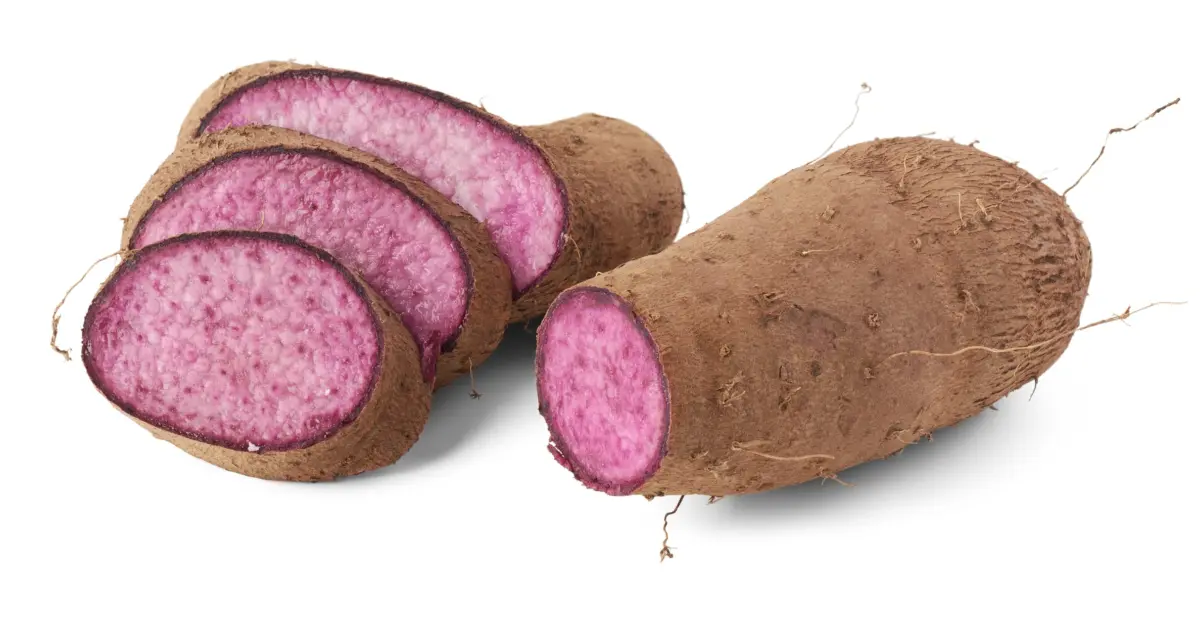
For years, the vibrant purple hue of ube (greater yam, Dioscorea alata) has dominated social media feeds across the globe. From artisanal pastries in New York and London to fusion desserts in Tokyo, the striking natural coloration and distinct, earthy-sweet flavor profile of the Philippine purple yam have captured the imagination of international food enthusiasts. Yet, beneath the viral fame and aesthetic appeal lies a sobering reality for agricultural authorities in Southeast Asia: social media trends are fleeting, but the foundations of a robust global agricultural supply chain require deep structural investment, scientific rigor, and institutional organization.
Recognizing this critical juncture, the Philippine Department of Agriculture (DA) has initiated a sweeping national strategy to transition ube from a traditional backyard food ingredient into a high-value, highly competitive commercial agricultural commodity. No longer content to rely merely on the unpredictable momentum of internet food crazes, the Philippine government, alongside leading academic institutions and newly formed industry coalitions, is systematically overhauling the nation’s ube sector.
Recent milestones underscore this deliberate shift. Groundbreaking germplasm evaluations conducted by scientists at the University of the Philippines Los Baños (UPLB) have pinpointed high-potential breeding lines from nearly 200 accessions, identifying exceptional traits in yield, aroma, and antioxidant-rich pigmentation. Simultaneously, the official launch of the United Ube PH Association—a national federation established to unify producers, processors, and exporters—marks a monumental step toward structured market access, international trade partnerships, and long-term agricultural resilience.
This comprehensive report examines the multifaceted efforts underway to secure ube’s status as a lasting global export superstar, detailing the scientific breakthroughs, economic imperatives, and strategic partnerships shaping the future of the Philippine purple yam industry.
Detailed Chronology: Milestones in the Modernization of the Ube Sector
The transformation of the Philippine ube industry from a fragmented cottage sector into an organized, export-oriented economic powerhouse has accelerated through a series of calculated governmental, scientific, and organizational interventions.
Laying the Scientific Foundation: UPLB Germplasm Evaluation
The modern push for agricultural standardization began in the laboratories and experimental plots of the University of the Philippines Los Baños (UPLB). Recognizing that export markets demand absolute consistency in color, texture, and flavor—attributes that traditional, unstandardized backyard farming could not guarantee—researchers embarked on an exhaustive evaluation project.
The team collected and analyzed 188 greater yam (Dioscorea alata) accessions sourced from diverse domestic farms and institutional gene banks. By subjecting this extensive germplasm collection to rigorous agronomic and sensory testing, scientists sought to map the genetic diversity of Philippine ube and identify specific accessions harboring superior commercial traits. This months-long undertaking culminated in the identification of 10 standout varieties that exhibit exceptional characteristics, laying the groundwork for a targeted national breeding program.
Formalizing the Industry: The Birth of United Ube PH
As researchers unlocked the genetic keys to superior ube production, industry stakeholders realized that scientific advancements alone could not capture international market share. Supply fragmentation, logistical bottlenecks, and a lack of collective bargaining power continued to plague local farmers.
To bridge this gap, the Department of Agriculture spearheaded the creation of the United Ube PH Association. Following intensive preparatory work, the organization achieved formal recognition on August 17, when it was officially registered with the Securities and Exchange Commission (SEC) as a non-stock, non-profit national federation.
Designed to serve as the unified voice of the Philippine ube sector, United Ube PH immediately set to work on establishing institutional linkages. Within weeks of its registration, the federation initiated exploratory talks with both local and international business chambers—including German trade representatives—to explore long-term supply agreements, institutional buyer partnerships, and direct export channels. Furthermore, the association began drafting a formal bilateral memorandum of agreement with the DA to institutionalize public-private cooperation and launch a nationwide membership campaign aimed at consolidating producers across the archipelago.
Supporting Context & Metrics: The Science, Economics, and Diversity of Ube
To appreciate the magnitude of the modernization effort, one must examine the agronomic realities and economic metrics defining the contemporary ube landscape.
Unpacking Ube Diversity: Not All Purple Yams Are Created Equal
A common misconception among consumers is that all ube is identical in composition and quality. In reality, the Philippine ube germplasm exhibits profound genetic and phenotypic diversity. The UPLB study revealed that local varieties vary drastically not only in flavor profiles, but also in physical attributes, with flesh colors ranging from deep, saturated violet to stark white and vibrant orange.
This wide spectrum of color and composition reflects a rich underlying genetic diversity that is both a challenge and an opportunity. For international food manufacturers, uniformity is paramount; an industrial bakery or beverage producer requires an ingredient that delivers the exact same shade of purple, sugar content, and moisture level in every batch. Consequently, identifying which specific accessions possess these stable traits is vital for export development.
Among the 188 accessions evaluated by UPLB researchers, distinct champions emerged across various categories:
- Yield Performance: Villasis 2 established itself as the leading productivity powerhouse, capable of yielding over 60 metric tons per hectare under optimal conditions.
- Flavor Benchmark: Kinampay retained its reputation as the gold standard for traditional, highly desirable ube flavor and aroma.
- Functional Compounds: Several other accessions stood out for their exceptionally high concentrations of anthocyanins—the water-soluble flavonoid pigments responsible for ube’s iconic purple coloration. Beyond aesthetics, anthocyanins are potent antioxidants associated with various health benefits, adding significant value for the burgeoning functional food and nutraceutical markets.
Researchers noted that while no single "super-variety" excelled across every conceivable metric, the top 10 identified accessions provide an exceptional gene pool for future breeding programs. By cross-breeding high-yield varieties like Villasis 2 with flavor-and-pigment giants like Kinampay, agricultural scientists aim to develop resilient, high-performing commercial cultivars tailored to industrial needs.
Economic Baseline and Production Scale
At present, the domestic ube sector remains largely characterized by small-to-medium-scale farming operations. Industry data indicates that average farm production hovers around 50 to 60 metric tons per producer.
While these figures reflect respectable output for traditional farming models, agricultural economists and industry stakeholders agree that this volume is insufficient to satisfy surging global demand. Scaling up production, however, cannot be achieved simply by clearing more land. It requires:
- Widespread Distribution of Quality Planting Materials: Ensuring that farmers have access to disease-free, high-yielding tissue-cultured seed pieces derived from the UPLB-identified elite varieties.
- Improved Supply Chain Coordination: Streamlining logistics from rural farms to urban processing facilities and international ports to minimize post-harvest losses.
- Enhanced Agronomic Training: Educating growers on modern soil management, pest control, and efficient harvesting techniques to bridge the gap between experimental yields and commercial farm outputs.
Official Statements: Perspectives from Agricultural Leadership
The strategic realignment of the Philippine agricultural sector toward ube commercialization has been championed at the highest levels of government. Key officials emphasize that this initiative represents a calculated pivot from passive trade participation to proactive global market leadership.
Agriculture Undersecretary Philip Young on Ube’s Economic Evolution
Highlighting the shift in how the government perceives the crop, Agriculture Undersecretary Philip Young emphasized that ube has outgrown its traditional domestic niche.
"Ube is no longer simply a traditional crop associated with our local food culture," Undersecretary Young stated. "It has become a high-potential agricultural commodity with growing demand for fresh ube and value-added products in both domestic and international markets."
Young noted that this explosive international interest places immediate, constructive pressure on the local supply chain. To maintain credibility on the global stage, the Philippine agricultural sector must elevate quality control, ensure production consistency, and enhance overall market competitiveness.
Agriculture Secretary Francis P. Tiu Laurel Jr. on Institutional Empowerment
Echoing these sentiments, Agriculture Secretary Francis P. Tiu Laurel Jr. underscored the importance of organizational unity and value retention for Filipino farmers through the establishment of the United Ube PH Association.
"This organisation gives the ube industry a stronger advocate and a clearer path to market," said Secretary Tiu Laurel. "We want Philippine ube to become one of our export winners, and that means building an industry strong enough to meet global demand while ensuring our farmers capture more of its value."
Secretary Tiu Laurel’s remarks address a historical structural flaw in tropical agriculture: while developing nations often supply raw commodities that capture international attention, local farmers frequently reap only a fraction of the final retail value. By organizing producers under the United Ube PH banner and fostering direct institutional partnerships, the Department of Agriculture aims to shorten the supply chain, eliminate predatory middleman markups, and empower rural farming communities economically.
Future Outlook: Sustaining the Purple Wave Beyond the Social Media Cycle
As the agricultural sector looks toward the horizon, the challenge facing the Philippines is clear: how to build an enduring economic institution out of a culinary trend.
Social media algorithms are notoriously fickle. Food trends driven by aesthetic appeal and viral videos can evaporate overnight as consumer attention shifts to the next novelty. However, the intrinsic qualities of Dioscorea alata—its unique flavor profile, nutritional benefits, and versatile processing capabilities in baking, confectionery, and beverage manufacturing—provide a permanent commercial foundation if managed correctly.
Strategic Priorities for the Coming Decade
To secure ube’s position as a permanent fixture in global gastronomy and trade, agricultural experts and industry leaders have outlined several strategic imperatives for the coming years:
- Intensified Varietal Commercialization: Accelerating the propagation and distribution of the 10 elite UPLB-identified accessions to commercial farms nationwide. By replacing low-yielding, disease-prone native stocks with standardized elite cultivars, farmers can guarantee the uniform color, starch content, and flavor profile that international food corporations demand.
- Value-Added Processing Infrastructure: Moving beyond the export of raw roots or basic pastes by investing in domestic processing plants equipped to produce high-value derivatives—such as spray-dried ube powders, frozen purees, and specialized extracts. Processing goods locally retains a significantly higher proportion of economic value within the Philippines.
- Strengthened International Trade Alliances: Leveraging the diplomatic and commercial networks of the United Ube PH Association—including ongoing talks with European and Asian trade chambers—to secure long-term, predictable supply contracts with multinational food and beverage conglomerates.
- Rigorous Quality Assurance and Phytosanitary Compliance: Establishing stringent national grading standards that align with international import requirements, ensuring that Philippine ube exports consistently pass the rigorous regulatory inspections of major markets in North America, Europe, and East Asia.
The Ultimate Ambition
The ultimate vision for the Philippine ube sector was perhaps best encapsulated by researchers and industry advocates reflecting on the humble origins of the crop:
"The next Philippine export superstar may not come from discovering a new crop at all. It may already be quietly growing in a backyard somewhere. The challenge is making sure the right ube reaches the world and keeps winning hearts long after the next viral food craze has faded into yesterday’s feed."
Through the convergence of cutting-edge agricultural science, rigorous germplasm management, and unprecedented institutional organization via the United Ube PH Association, the Philippines is ensuring that its purple yam legacy is built to last. By transforming backyard harvests into a disciplined, high-tech global commodity, the nation is laying the groundwork for an agricultural success story that will endure long after the internet’s latest viral trend has faded away.