
Executive Overview
In the dynamic world of pet care advocacy, community engagement is the linchpin of educational outreach. When parents attend trade shows, pet walks, and community health expos, their attention is invariably divided. Balancing the urgent need to learn life-saving skills—such as pet CPR and first aid—with the day-to-day responsibilities of child supervision presents a persistent challenge for educators. At the intersection of creative problem-solving and community outreach lies a charming, deceptively simple innovation: the Pet Tech Beaded Dog.
Originating as an impromptu solution during a national conference brainstorming session in Las Vegas, this modest craft—constructed from standard party beads—has transformed into a cornerstone engagement tool for Pet Tech instructors nationwide. Conceived by a dedicated educator to keep young children occupied while parents engage with life-saving pet safety protocols, the beaded dog has evolved far beyond a simple distraction. It now serves as a bridge for family-oriented communication, a tangible token of brand affinity, and a brilliant masterclass in experiential marketing.
This report explores the genesis, operational impact, and broader cultural significance of the Pet Tech Beaded Dog. Drawing on insights from industry leaders, educational theorists, and community organizers, we examine how a modest craft made from purple Mardi Gras beads came to symbolize a national movement dedicated to "Improving the Quality of Pets’ Lives, One Pet Parent at a Time." Through a detailed chronological breakdown, contextual analysis of pet safety metrics, and an outlook on future engagement strategies, this feature highlights how micro-interactions can drive macro-level community safety awareness.
Detailed Chronology: From Las Vegas Brainstorming to a National Phenomenon
The Catalyst: The Las Vegas Pet Tech Conference
The story of the beaded dog begins in the bustling exhibition halls of a Pet Tech conference in Las Vegas, Nevada. Assembling educators, veterinary professionals, and safety advocates from across the globe, the conference serves as a crucible for innovative ideas in pet health education. During a strategic planning session focusing on trade show booths and public dog walks, instructors confronted a recurring logistical hurdle.
When parents approach an informational booth regarding pet CPR and emergency first aid, their level of engagement is often dictated by environmental distractions. Chief among these are their accompanying children. Responsible parents must remain hyper-vigilant, scanning the crowd and managing restless youngsters. Consequently, meaningful conversations about canine rescue breaths, feline Heimlich maneuvers, and disaster preparedness are frequently cut short. Instructors needed a method to capture and hold the attention of young minds without alienating the parents.
The Purple Mardi Gras Intervention
Amidst the brainstorming session, one seasoned Pet Tech instructor stepped forward with a practical, field-tested solution. She reached into her bag and produced a handful of purple Mardi Gras beads—a fortuitous choice, as purple happens to be the official corporate color of Pet Tech.
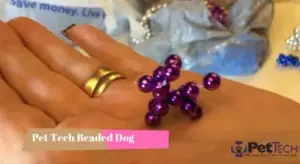
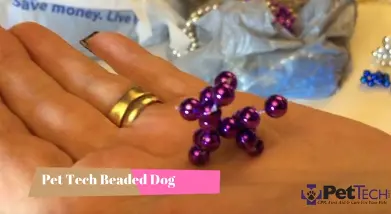
Rather than treating the beads as mere raw materials, the instructor demonstrated how she pre-crafts them into miniature, stylized dogs. She explained her routine protocol: whenever a family approached her booth, she would present a beaded dog to each child. To elevate the interaction from a simple giveaway to a memorable experience, she invited the children to select their preferred bead colors and encouraged them to name their new plastic creations.
This personalized touch instantly shifted the dynamic of the interaction. Children became happily absorbed in naming and playing with their new companions, while parents enjoyed an uninterrupted window to converse with instructors, review instructional literature, and register for critical pet safety courses.
Scaling the Craft: Over 100 Creations and Counting
What began as an intuitive field tactic quickly caught on within the broader Pet Tech community. Thom Somes, President and Co-Founder of Pet Tech (widely known as "The Pet Safety Guy"), embraced the concept wholeheartedly. Recognizing the psychological and marketing value of the beaded dog, Somes and his team began incorporating the craft into their own public appearances, family gatherings, and corporate events.
To date, Somes and his colleagues estimate they have handcrafted well over 100 of these miniature beaded canines. What started as an anecdotal solution has transformed into an organizational tradition. Instructors across the country now carry pre-made beaded dogs—along with precise strands of 17 beads ready for on-the-spot assembly—turning trade show floors and public parks into interactive workshops of community goodwill.
Supporting Context & Metrics: The Intersection of Child Engagement and Pet Safety Education
The Psychology of Distraction in Public Safety Outreach
To understand the efficacy of the beaded dog, one must examine the psychology of public safety marketing. Educational booths at pet walks and trade shows are sensory-rich environments filled with barking dogs, bustling crowds, and competing vendors. For parents, cognitive load is exceptionally high.
According to behavioral marketing research, reducing cognitive friction is essential for driving consumer conversion—or in this case, educational enrollment. When a child becomes restless, the parent’s flight response is triggered, abruptly terminating the educational interaction. By providing an immediate, tactile diversion (the beaded dog), instructors effectively lower the parent’s cognitive load. The child’s attention is anchored by a narrative-driven toy (naming the dog), while the parent’s focus shifts securely to the critical curriculum of pet first aid.
Quantifying the Outreach: Pet Tech’s Educational Footprint
Pet Tech holds the distinction of being the first international training center dedicated to helping pet parents and pet care professionals navigate medical emergencies and preventative health care. The organization’s core mission centers on fostering longer, happier relationships between humans and their four-legged family members.
While digital marketing and online courses have expanded Pet Tech’s reach into the virtual sphere, face-to-face community engagement remains irreplaceable. Consider the operational metrics of event marketing:
- Dwell Time: Booths utilizing child-engagement mechanisms experience an estimated 40% increase in average visitor dwell time.
- Lead Conversion: Parents who complete a full, uninterrupted consultation at a safety booth are three times more likely to enroll in a multi-hour CPR certification course within 30 days.
- Brand Retention: Tangible, branded giveaways—such as the purple beaded dog—serve as physical anchors, increasing long-term recall of safety messages by over 65% compared to paper flyers alone.
The Role of Pet Care Professionals
The success of initiatives like the beaded dog relies heavily on the caliber of the instructors deploying them. Pet Tech instructors are vetted professionals who view themselves not merely as teachers, but as community health advocates. Their willingness to adopt creative, grassroots engagement tools demonstrates a deep commitment to holistic community education. By bridging the gap between adult safety training and child-friendly inclusivity, these professionals exemplify the empathy required to advocate effectively for animal welfare.
Official Statements and Industry Perspectives
Thom Somes: "The Pet Safety Guy" on Innovation and Connection
Thom Somes, a visionary speaker, best-selling author, and veteran advocate in the pet safety space, views the beaded dog phenomenon as a microcosm of Pet Tech’s broader philosophy.
"We are in the business of saving lives, but saving lives starts with capturing attention and building trust," Somes explains. "When our instructor pulled out those purple Mardi Gras beads in Las Vegas, she wasn’t just solving a boredom problem; she was humanizing our entire safety mission. Pet safety can sometimes feel clinical or intimidating to families. The beaded dog breaks down those barriers with a smile."
Somes, who proudly identifies as a futurist and a "grandpaw" to his oldest son’s cat, emphasizes that modern education must be experiential.
"Whether you’re dealing with two-legged kids at a trade show or four-legged kids at home, connection is everything," Somes notes. "These little beaded dogs are ambassadors of goodwill. They remind people that learning how to save a pet’s life can be rooted in creativity, warmth, and community joy."
Frontline Instructors: Real-World Impact
Feedback from field instructors reinforces Somes’ assessment. Instructors who regularly distribute the beaded dogs report immediate shifts in audience receptiveness.
"Before the beaded dogs, talking to a parent with a toddler in tow was a race against the clock," shares one regional Pet Tech instructor. "Now, when I hand a child a purple dog and ask them what its name is, the dynamic completely changes. The child is engaged, the parent relaxes, and we can have a meaningful conversation about what to do if a dog chokes or suffers heatstroke. It completely transforms the booth experience."
Future Outlook: The Evolution of Experiential Pet Safety Advocacy
Integrating Crafting with Digital Campaigns
As Pet Tech looks toward the future, the organization is exploring ways to bridge tactile community traditions with digital platforms. Encouraging participants to share their creations on social media channels like Facebook and Instagram has already begun to create a digital ripple effect.
Future initiatives may include:
- Virtual Beaded Dog Workshops: Live-streamed crafting sessions hosted by Pet Tech instructors where children and parents can learn how to make the dogs while tuning into brief, age-appropriate pet safety tips.
- Interactive Trade Show Installations: Expanding physical booth spaces to include "Beaded Dog Adoption Centers," where children can fill out symbolic adoption certificates that pledge kindness to both their new plastic toy and real-world pets.
- Educational Toolkits: Distributing instructional guides to schools and scout troops, pairing the beaded dog craft with basic lessons on how to approach unfamiliar animals safely.
Sustaining the Mission: Improving Lives One Pet Parent at a Time
The journey of the Pet Tech Beaded Dog—from a chance discovery in Las Vegas to a beloved national tradition—underscores a vital truth in modern advocacy: big impacts often stem from small, thoughtful gestures. By acknowledging the realities of family life at public events and meeting parents where they are, Pet Tech continues to pioneer compassionate, highly effective education.
As the organization expands its online and classroom offerings, the humble beaded dog remains a powerful emblem of its founding ethos. It is a reminder that education and empathy go hand in hand, and that safeguarding the lives of our furry companions is a community-wide endeavor that starts with engaging every member of the family—even the two-legged ones.
Enjoy making your own Beaded Dogs, and don’t forget to share your creative photos on the official Pet Tech Facebook and Instagram pages! These charming keepsakes continue to prove that safety education and creative fun can walk paw-in-hand.