
Executive Overview
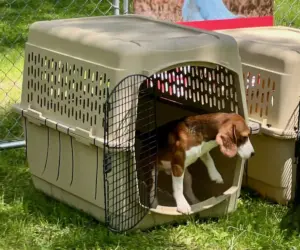
On Saturday, April 18, outside the rural community of Blue Mounds, Wisconsin, a flashpoint occurred in the ongoing national debate over animal research. Approximately 1,000 animal rights activists gathered outside the perimeter of Ridglan Farms—a contentious breeding and research facility housing thousands of beagles destined for laboratories worldwide. The demonstration escalated into an attempted break-in as activists sought to rescue an estimated 1,900 dogs confined within the warehouse-like structure.
While the facility breach was ultimately unsuccessful, the protest laid bare a deep societal chasm over the ethics of institutionalized animal testing, state regulatory oversight, and corporate accountability. Activists and civil disobedience leaders reported experiencing excessive police and security force before being arrested. Beyond the immediate chaos of the protest, the incident has reignited a profound legal and ethical inquiry: Are breeding and research facilities like Ridglan Farms adhering to the law, and more fundamentally, are our federal regulations governing laboratory animals ethical in the modern era?
Detailed Chronology: From Whistleblower Footage to Civil Unrest
The events of April 18 did not happen in a vacuum; they represent the boiling point of a multi-year battle driven by whistleblower accounts, legal maneuvers, and systemic regulatory failures.
The Whistleblower Revelations
The modern legal crusade against Ridglan Farms gained significant traction when a local advocacy group, Dane4Dogs, acquired undercover footage recorded by a former facility employee. Troubled by the psychological and physical suffering of the animals, the employee sought outside intervention. Dane4Dogs subsequently enlisted applied animal behaviorists to evaluate the video evidence and petitioned the Wisconsin Attorney General to appoint a special prosecutor.
When state officials initially balked, Dane4Dogs took the matter to court, prompting the appointment of special prosecutor Tim Gruemke. Gruemke reviewed extensive depositions and testimonies—including insights from renowned animal behaviorist Marc Bekoff—which ultimately led to felony animal cruelty charges regarding unlicensed, painful procedures, such as unassisted "cherry eye" surgeries performed by untrained staff without painkillers.

The Special Prosecutor’s Deal
Despite the gravity of the evidence, the legal resolution proved deeply controversial. In October 2025, Special Prosecutor Gruemke struck a deal with Ridglan Farms’ ownership: prosecutors agreed to drop the felony charges on the condition that the facility surrender its commercial dog seller’s license by July 1. Crucially, however, the agreement permitted Ridglan to continue its on-site beagle research indefinitely.
This legal compromise left approximately 1,900 beagles in limbo. With the July 1 deadline looming, animal welfare advocates grew increasingly frantic, realizing that the facility’s owners retained the legal right to sell off or depopulate the remaining breeding stock without public oversight. Subsequent offers from rescue organizations to purchase and rehome the dogs were categorically rejected by facility management, paving the way for the high-tension protests on April 18.
Supporting Context & Metrics: Inside the Facility and the Science of Animal Suffering
To understand the urgency behind the protests, one must examine the daily realities of the dogs confined within facilities like Ridglan Farms, contrasted against modern behavioral science and historical inspection records.
Conditions Inside the Warehouse
Official state inspections by the Wisconsin Department of Agriculture, Trade and Consumer Protection (DATCP), alongside independent behavioral evaluations of whistleblower tapes, have consistently painted a grim picture:
- Confinement: Dogs are routinely housed singly or in pairs within barren, wire-bottom cages in massive, warehouse-like environments.
- Sanitation and Health: Inspections have documented accumulation of feces, poor air quality, and untreated physical injuries.
- Deprivation of Agency: The configuration prevents dogs from having meaningful tactile interactions with peers while simultaneously maintaining the agonizing psychological frustration of seeing and smelling other dogs just out of reach.
The Behavioral Toll: Stereotypies and Shutdown
Applied animal behaviorists who reviewed the undercover footage noted unmistakable signs of severe psychological trauma:

- Stereotypic Behaviors: Many dogs were observed engaging in frantic, repetitive circling and spinning—a pathology known as zoonosis or stereotypic behavior.
- Learned Helplessness: Numerous subjects had entirely "shut down," sitting slumped in corners due to chronic pain, inescapable fear, and sensory deprivation.
As noted in formal court depositions submitted by leading behavioral experts, the conditions deprive animals of basic species-specific behaviors—such as foraging, running, and eliminating away from their sleeping quarters—guaranteeing severe psychological and physical deterioration.
Official Statements and Regulatory Standards
The conflict at Ridglan Farms highlights systemic deficiencies within the framework of animal welfare laws in the United States.
The Industry Defense vs. Regulatory Realities
Ridglan Farms has consistently maintained its innocence, publishing statements on its corporate website asserting that “no credible evidence of animal abuse, cruelty, mistreatment or neglect at Ridglan Farms has ever been presented or substantiated.”
However, this stance directly conflicts with findings from federal and state oversight bodies. Under the federal Animal Welfare Act (AWA) enforced by the USDA, minimum housing standards for laboratory dogs are notoriously sparse:
- Cage Sizing: An animal’s enclosure must simply measure six inches larger than the dog on all sides.
- Social Isolation: Wire-floored, solitary confinement cages are legally permissible, even when surrounded by hundreds of other isolated animals.
- Exemptions: The AWA places virtually no restrictions on the types of invasive experimentation researchers can perform, and laboratories can legally bypass existing welfare standards simply by claiming compliance would interfere with their research objectives.
Furthermore, investigations by the USDA’s Inspector General and reports by agricultural oversight groups have revealed that a staggering majority of accredited laboratory animal breeders fail to correct repeated non-compliance infractions, largely due to sluggish enforcement by the Animal and Plant Health Inspection Service (APHIS).

Professional Ethical Stance
The American Veterinary Medical Association (AVMA) explicitly states that animals should be managed in ways that minimize fear, pain, stress, and suffering, with thoughtful consideration for their biological needs. Yet, the stark reality of institutionalized laboratory housing stands in direct opposition to these professional tenets.
Future Outlook & The Path Forward
The situation at Ridglan Farms has reached a critical juncture. With the facility’s commercial seller license set to expire on July 1, the immediate fate of the remaining 1,900 beagles hangs in the balance.
Advocates point to successful precedents—such as the massive shutdown of the Envigo beagle breeding facility in Virginia, where thousands of dogs were successfully rescued and rehomed through collaborative federal and state intervention. Experts argue that a similar coordinated buyout and rehoming strategy is entirely feasible for the Ridglan beagles, provided that facility owners and regulatory agencies are willing to negotiate in good faith.
Ultimately, the crisis in Blue Mounds forces a broader reckoning. As science increasingly confirms that dogs share complex neurobiology, emotional sentience, and profound social needs with humans, the continued tolerance of barren, solitary laboratory confinement becomes untenable. When society knows better, it is obligated to do better. The movement to liberate the Ridglan beagles is more than a localized protest—it is a moral test of our legal obligations to man’s best friend.