
By Veterinary News Desk
Special Report based on clinical insights by Kyla Savick, DVM
Executive Overview
In the fast-paced environment of modern veterinary practice, clinicians face a relentless stream of back-to-back appointments, administrative burdens, and time constraints. A routine wellness exam concludes with a seemingly clean bill of health, and the practitioner reaches for the examination room doorknob. Yet, just as the visit ends, a casual, almost whispered remark drops from the pet owner: "Oh, Fluffy had a hairball earlier, but that’s totally normal."
No previous vomiting was documented in the medical history. The delivery is nonchalant, masking what could be the tip of a dangerous medical iceberg.
According to Kyla Savick, DVM, an experienced small-animal relief veterinarian and member of the Evidence-Based Veterinary Medicine Association (EBVMA), these offhand comments present a profound moral and clinical dilemma. While it is tempting to dismiss such remarks to catch up on a missed lunch or rush to the next scheduled patient, doing so violates the core oath of the veterinary profession: to serve as an advocate for those who cannot speak for themselves.
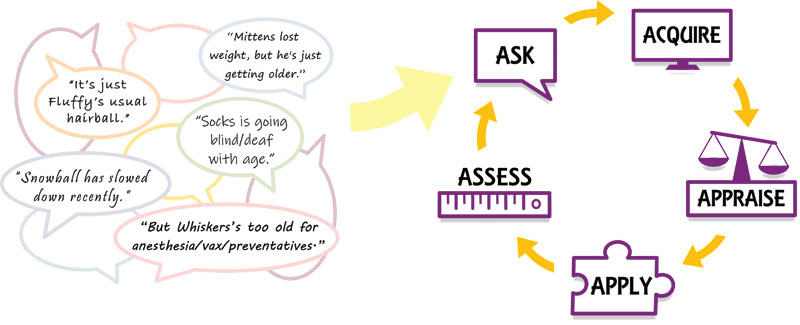
Dr. Savick advocates for treating these latent, casual statements with the same rigorous investigative commitment applied to overt clinical symptoms. To systematically evaluate these remarks, practitioners can adapt the traditional Five ‘A’s cycle of Evidence-Based Veterinary Medicine (EBVMA)—Ask, Acquire, Appraise, Apply, and Assess. Originally designed to navigate complex diagnostic and therapeutic choices, this framework provides a powerful mechanism for translating client casualness into comprehensive, high-quality patient care.
Detailed Chronology of the Investigative Cycle
Translating the Five ‘A’s from traditional literature searches to real-time client communication requires a structured, step-by-step methodology. By analyzing common client remarks regarding elderly feline patients, practitioners can navigate the hidden complexities of everyday wellness visits.
[ASK] ➔ [ACQUIRE] ➔ [APPRAISE] ➔ [APPLY] ➔ [ASSESS]
  │         │            │           │          │
  ▼         ▼            ▼           ▼          ▼
Clarify   Pull Medical  Evaluate     Deliver    Track and
Symptoms   Records      Credibility  Context    Review Outcomes
1. Ask: Parsing the Presenting Complaint
Client remark: "It’s just Fluffy’s usual hairball."
In EBVMA protocols, asking entails constructing a clear, answerable question—often utilizing frameworks like PICO (Patient, Intervention, Comparison, Outcome) to guide literature searches. In the exam room, an offhand comment should immediately trigger a parallel sequence of open-ended inquiries designed to verify the validity of the client’s assumption.
- Differentiating Expulsion Behaviors: Clients frequently mislabel clinical signs. A "hairball" reported by an owner may, upon closer inspection, be actual vomiting, regurgitation, expectoration, lower airway coughing, or even inappropriate elimination. Dr. Savick notes instances where owners insisted a cat was passing hairballs, only to describe a liquid expulsion devoid of any hair ("hairless hairballs").
- Establishing Timelines: Clinicians must drill down into duration, frequency, chronologic progression, and exact physical contents. Did the vomiting coincide with a recent diet transition? Are all fragments of a chewed-up household toy accounted for? Though taking an exhaustive history can feel time-consuming, precise questioning directly reduces diagnostic errors and prevents misdirected treatments.
2. Acquire: Gathering Objective Data Beyond the Surface
Client remark: "Mittens lost weight, but he’s just getting older."
Once a question is framed, the next step is locating valid sources of information. When evaluating weight loss or systemic decline, the medical record must be interrogated well beyond the isolated data point of the current visit’s scale reading.
- Team Verification: Practitioners must consult veterinary nurses and technicians to confirm whether the scale was calibrated, whether identical weighing techniques were utilized, and if environmental stressors could have impacted the reading.
- Longitudinal Trends: Reviewing electronic medical records (EMRs) via weight-history graphs and historical diagnostic trends allows clinicians to distinguish between normal seasonal fluctuations and pathological downward trajectories.
- Distinguishing Muscle Wastage: Exam notes detailing Body Condition Scores (BCS) and Muscle Condition Scores (MCS) help differentiate primary sarcopenia (generalized aging-related muscle loss) from localized atrophy (due to osteoarthritis or nerve injury) or systemic cachexia (driven by chronic inflammatory disease, neoplasia, or organ failure).
3. Appraise: Assessing Information Integrity and Bias
Client remark: "Snowball has slowed down recently."
In traditional EBVMA workflows, appraising literature involves assessing research quality, methodological bias, and clinical applicability. In clinical communications, practitioners must similarly appraise the trustworthiness of the data gathered from clients, secondary caretakers, or team members—avoiding the distortions of a metaphorical "game of telephone."
- Decoding Vague Terminology: Terms like "slowing down" or "recently" are subjective and highly malleable. "Recently" could mean three days to an owner experiencing acute anxiety, or three years to an owner slowly adjusting to a pet’s progressive arthritic decline. "Slowing down" might mask profound weakness, occult cardiac disease, painful lameness, or progressive cognitive decline.
- Scrutinizing Biases: Clinicians must remain aware of cognitive biases—both their own and those of their clients. Plausibility, timelines, and potential placebo effects must be analyzed to determine if a perceived behavioral shift represents a genuine pathological development, an environmental artifact, or an incidental finding.
4. Apply: Navigating Contextualized Care and Ageism
Client remark: "But Whiskers is too old for anesthesia, vaccines, or preventatives."
Applying information involves integrating valid evidence into clinical guidelines. In practice, when clients resist necessary medical interventions due to advanced age, clinicians must unpack the underlying psychological and emotional drivers of the statement.
- Challenging Age as a Disease: Owners frequently assume that advanced age is an absolute contraindication for routine preventative care, dental cleanings, or diagnostic staging. They may fear that anesthetic protocols are inherently lethal for seniors, or they may feel that investing financial resources into an aging pet is futile.
- Spectrum of Care: By validating the client’s underlying emotional desire to protect their pet from undue stress, the veterinary team can introduce contextualized care. This approach honors the client’s values while demonstrating that chronological age alone is not a disease state, and that targeted interventions can dramatically enhance comfort and longevity.
5. Assess: Closing the Loop on Interventions
Client remark: "Socks is going blind and deaf with age."
The cycle does not terminate with treatment application. Practitioners must systematically evaluate the real-world outcomes of any diagnostic or therapeutic changes introduced.
- Formal vs. Informal Audits: Just as clinics audit treatment guidelines, individual patient outcomes must be tracked. If an owner reports that a cat is going blind/deaf, but further investigation uncovers Feline Cognitive Dysfunction Syndrome (CDS), environmental and nutritional modifications must be implemented and subsequently reviewed.
- Tracking Progress: Utilizing informal follow-up calls or structured questionnaires—such as tracking the VISHDAAL mnemonic (Vocalization, Interaction changes, Sleep-wake disturbances, House-soiling, Disorientation, Activity changes, Anxiety, Learning/memory deficits)—allows the veterinary team to measure therapeutic efficacy. If the assessment indicates stagnation, the practitioner must loop back to the initial "Ask" phase and restart the investigative cycle.
Supporting Context & Metrics: The Reality of Senior Pet Care
Veterinary medicine is experiencing a demographic shift. As pet nutrition, preventative medicine, and advanced diagnostics improve, the domestic cat and dog population is living longer than ever before. However, longevity increases the prevalence of multi-morbidity.
- The Multi-Comorbidity Challenge: Senior and geriatric pets frequently juggle overlapping chronic conditions. A classic example documented in clinical literature is the complex senior cat profile—patients simultaneously managing chronic kidney disease (CKD), non-regenerative anemia, osteoarthritis, feline cognitive dysfunction, and occult neoplasia.
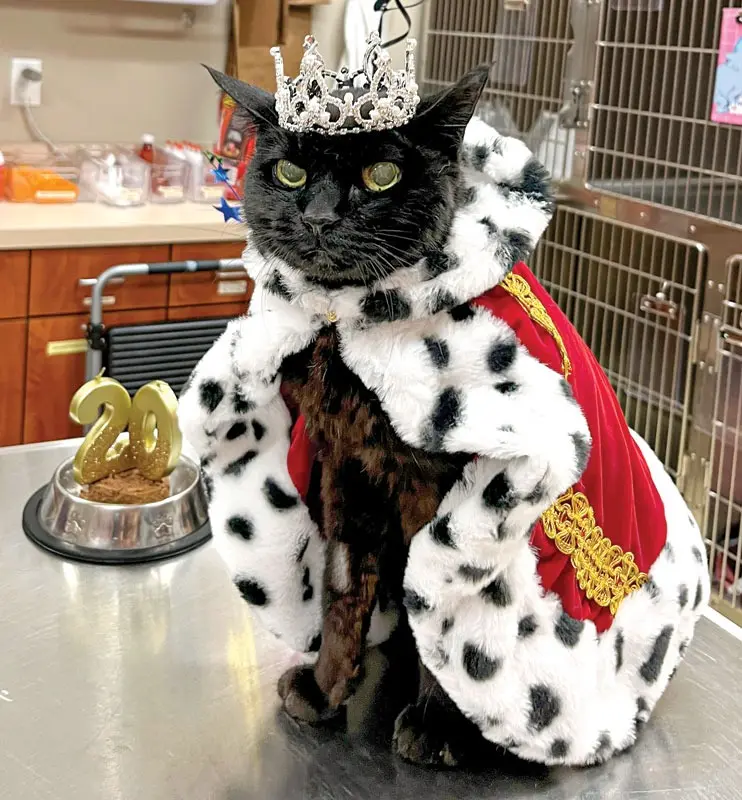
- The Value of Anecdotal Resilience: Highlighting the importance of looking beyond chronological age, Dr. Savick points to her own feline companion, Safire. Diagnosed with a splenic mast cell tumor at the age of 18 alongside chronic renal disease, arthritis, and suspected cardiomyopathy, Safire underwent a carefully considered splenectomy. Tailored to her unique personality and the client’s specific goals, the intervention was designed to maximize comfort rather than chase an impossible cure. Safire subsequently celebrated her 20th birthday—a testament to the fact that comprehensive, individualized clinical reasoning can radically alter patient trajectories.
Additional Resources for Veterinary Teams
Integrating the Five ‘A’s into daily clinical workflows requires continuous education and accessible tools. Practitioners and support staff can leverage several free, evidence-based resources:
- The QUIT Tool: Created by the Evidence-Based Veterinary Medicine Association (EBVMA), this free instrument uses 10 yes/no questions to help veterinary professionals flag methodological concerns and biases in treatment studies.
- RCVS Knowledge EBVMA Toolkit: RCVS Knowledge offers comprehensive, free continuing education courses and toolkits designed to guide busy practitioners through incorporating the 5 ‘A’s into daily practice routines.
- AAHA/AAFP Senior Guidelines: The 2021 AAHA/AAFP Feline Life Stage Guidelines and the 2021 AAFP Feline Senior Care Guidelines provide critical benchmarks for differentiating normal age-related senescence from pathological disease processes in aging felines.
Future Outlook: Elevating Communication as a Diagnostic Tool
As veterinary medicine continues its evolution toward evidence-based standards, the industry must recognize that clinical data collection does not stop at the diagnostic laboratory or the digital imaging suite. The human-animal bond is mediated entirely through human communication, making client dialogue an indispensable diagnostic modality.
When practitioners are exhausted, overworked, and facing high caseloads, casual remarks are easily brushed aside. Yet, these subtle, understated disclosures often represent the only early warning signs of insidious diseases. By embracing a systematic, empathetic, and rigorous framework modeled after the Five ‘A’s of EBVM, veterinary teams can look beneath the surface, decode client subtext, and fulfill their ultimate promise: acting as an uncompromising voice for the patients in their care.
References
- Evidence-Based Veterinary Medicine Association (EBVMA). Resources on the Five ‘A’s Cycle in Clinical Practice. Available from: https://ebvma.org
- RCVS Knowledge. EBVMA Toolkit and Continuing Education Courses. Available from: https://www.rcvsknowledge.org
- American Animal Hospital Association (AAHA) & American Association of Feline Practitioners (AAFP). 2021 AAHA/AAFP Feline Life Stage Guidelines.
- Journal of Feline Medicine and Surgery. 2021 AAFP Feline Senior Care Guidelines. DOI: 10.1177/1098612X211021538.