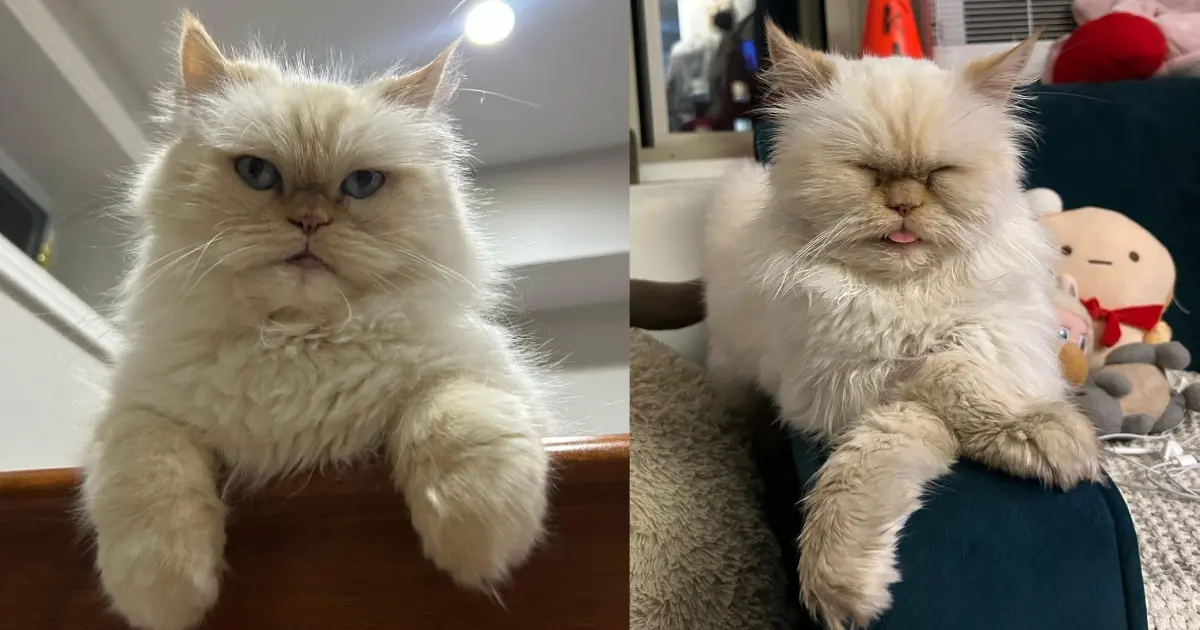
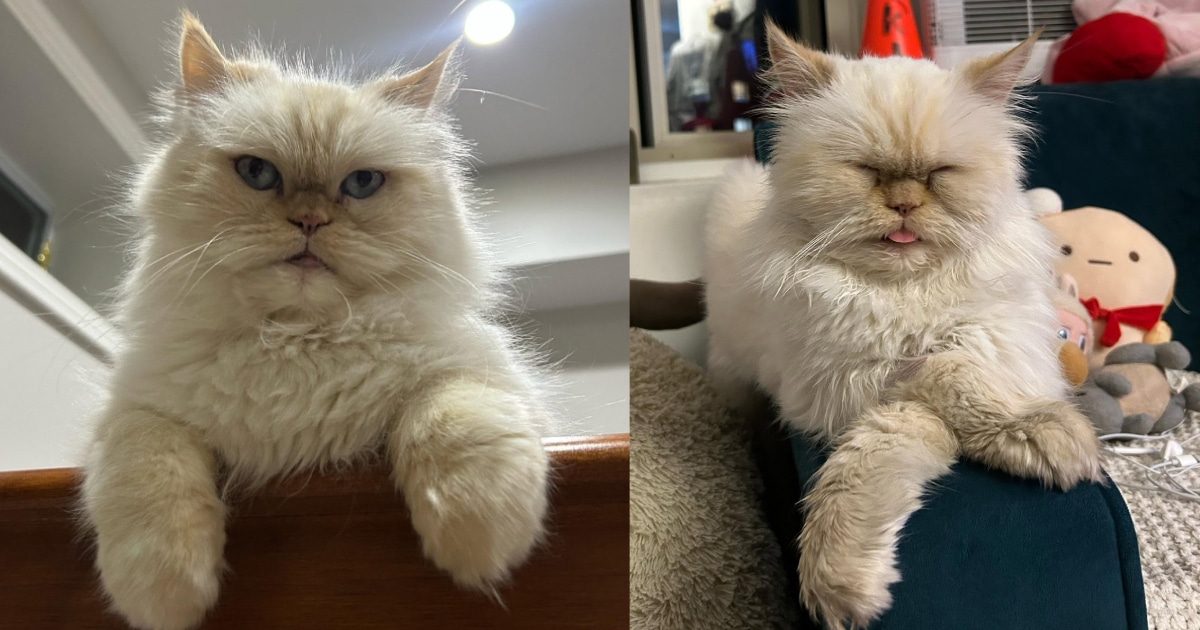
In the dynamic and often unpredictable world of animal rescue, certain individual animals transcend the typical narratives of survival to become living symbols of resilience. Thomas, a senior Persian cat currently in the care of AMA Animal Rescue in Brooklyn, New York, is one such figure. Adorned with a face that appears permanently locked in a state of profound, immovable disappointment, Thomas has captured the attention of animal welfare advocates, veterinary specialists, and cat enthusiasts worldwide.
Yet, beneath his masterclass in perpetual judgment lies a narrative far more poignant than a viral meme. Thomas’s physical expression—highlighted by a perpetually drooping lower jaw and a tiny pink tongue that insistently peeks out from his mouth—contrasts sharply with his actual disposition. He is not cynical; he is remarkably sweet, infinitely gentle, and fundamentally unbothered by the catastrophic events that life has placed in his path.
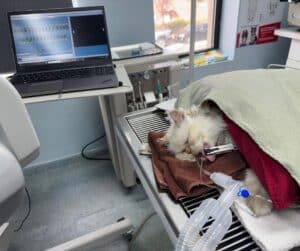
Over the course of his senior years, Thomas has endured and survived trauma that would break the spirit of a much younger animal. He was struck by a vehicle—an accident that required intensive, emergency medical intervention—and subsequently underwent complex surgery to excise a growth within his oral cavity. Most recently, he has received a terminal diagnosis of liver cancer. Yet, despite these formidable medical obstacles, Thomas continues to exhibit an exceptional quality of life. He remains free of outward distress, sustained by basic supportive care, daily liver supplements, and the unwavering dedication of his foster network.
As AMA Animal Rescue prepares this remarkable feline for his final, peaceful chapter, the story of Thomas offers a compelling window into the realities of geriatric rescue, the philosophy of palliative veterinary care, and the astonishing capacity of animals to find contentment amidst physical adversity. This report explores Thomas’s detailed chronology, examines the broader context of senior animal rescue and oncology, highlights official insights from his rescue team, and outlines what the future holds for New York City’s most famously unimpressed survivor.
Detailed Chronology: From the Brink of Tragedy to the Comforts of Foster Care
To fully understand Thomas’s current state of tranquil defiance, one must retrace the harrowing sequence of events that brought him into the fold of AMA Animal Rescue. Like many senior purebreds that end up in the shelter system, Thomas’s origins are shrouded in uncertainty, but his entry into rescue was marked by acute physical crisis.
The Impact: Surviving a Collision with a Vehicle
The first major turning point in Thomas’s recorded history occurred on the streets of Brooklyn. Struck by a moving car, the senior Persian sustained severe physical trauma. For an elderly cat, an impact of this magnitude is frequently fatal or results in debilitating, lifelong injuries. When Thomas arrived at AMA Animal Rescue, he was battered, frightened, and in desperate need of stabilizing veterinary care.
The immediate response by the rescue’s medical and foster teams set the tone for Thomas’s recovery. Senior cats require specialized handling even under normal circumstances; when dealing with polytrauma from a vehicular strike, the margin for error is razor-thin. Fosters stepped in to provide a quiet, climate-controlled environment, administering pain management, cleaning wounds, and offering the endless patience required to help a traumatized animal realize it is safe. Slowly, methodically, Thomas’s body began to mend. He survived the immediate aftermath of the accident, confounding initial prognostications and demonstrating an innate, quiet determination to keep living.
The Second Obstacle: Oral Surgery and Recovery
Just as Thomas was beginning to regain his equilibrium and adjust to the rhythms of domestic foster life, his medical team identified a secondary, deeply concerning issue. During routine evaluations or follow-up diagnostics, veterinarians discovered a growth inside Thomas’s mouth.
For an animal that had just survived a major vehicular accident, undergoing anesthesia and invasive oral surgery represented a profound physiological risk. The presence of a growth in the oral cavity also complicated his ability to eat comfortably and threatened his overall baseline health. However, the leadership at AMA Animal Rescue and Thomas’s dedicated foster caregivers did not hesitate. They weighed the risks, coordinated with specialized veterinary surgeons, and moved forward with the procedure.
The surgery was a success, and the growth was successfully excised. Yet, the true test lay in the recovery period. Oral procedures in cats often lead to temporary reluctance to eat, requiring syringe feeding, specialized soft diets, and rigorous post-operative monitoring to prevent infection. Thomas endured this second chapter with his characteristic stoicism. He pulled through the recovery, healed completely, and emerged from the ordeal with his health restored and his unique personality entirely intact.
The Terminal Diagnosis: A Liver Cancer Reality
Having weathered a vehicular collision and a successful oncological/surgical intervention for his oral growth, one might have hoped that Thomas’s medical ledger had closed. Tragically, fate had one more challenge in store. More recently, veterinary diagnostics revealed that Thomas is suffering from liver cancer.
Feline hepatic malignancies in senior cats carry a guarded prognosis. In Thomas’s case, the disease is currently incurable. This reality shifted the strategic approach of his veterinary and care teams from curative treatments to a strictly palliative model—prioritizing comfort, pain management, and the preservation of a high quality of life over aggressive, invasive therapies that would compromise his daily well-being.
Yet, true to form, Thomas appears entirely unconcerned by his medical chart. He shows no outward, debilitating symptoms of the disease, maintaining his weight, his appetite, and his daily routine. His current medical regimen is remarkably manageable, centered primarily around a specialized liver supplement designed to support hepatic function, alongside ongoing veterinary monitoring to ensure that any subtle shifts in his condition are caught and addressed immediately.
Supporting Context & Metrics: Geriatric Feline Care and Palliative Medicine
Thomas’s journey provides an instructive case study for the broader animal welfare community regarding the management of geriatric pets, the realities of purebred rescue, and the evolution of feline palliative oncology.
The Vulnerability of Senior Purebreds in Rescue
Persians are among the most recognizable cat breeds in the world, prized for their flat faces, luxurious coats, and docile, gentle temperaments. However, these very traits—particularly brachycephalic facial structures—can introduce unique health vulnerabilities, ranging from respiratory and dental complications to tear duct issues. Furthermore, senior purebreds frequently find themselves surrendered to rescues or shelters due to lifestyle changes, the passing of elderly owners, or the emergence of costly age-related medical conditions.
When an organization like AMA Animal Rescue takes in a senior cat with high medical needs, the resource allocation is substantial. According to industry metrics across metropolitan rescue networks in the United States, geriatric animals require roughly double to triple the veterinary expenditure of younger cohorts during their shelter stay. Emergency interventions, such as those required for Thomas’s vehicular accident, often consume thousands of dollars in diagnostics, trauma care, and hospitalization.
The Philosophy of Feline Palliative Care
In recent years, veterinary medicine has experienced a paradigm shift regarding terminal diagnoses in companion animals. Rather than viewing a terminal illness such as liver cancer as an immediate trigger for euthanasia, veterinary oncologists increasingly focus on the "Health-Related Quality of Life" (HRQL) framework.
Symptom Control: Prioritizing pain management, nausea control, and organ support (such as Thomas’s liver supplements) over toxic chemotherapeutic protocols that may reduce daily joy.
Environmental Optimization: Ensuring the animal has low-stress, accessible resting areas, freedom from chaotic environments, and predictable daily routines.
Caregiver Partnership: Empowering foster networks and adopters to monitor subtle behavioral cues—such as changes in grooming, posture, or social engagement—rather than relying solely on clinical metrics.
Thomas embodies the success of this philosophy. Because his caregivers have established an environment tailored entirely to his preferences for quiet and comfort, his liver cancer has not robbed him of his daily peace. He spends his hours engaged in natural, low-energy feline behaviors: resting in patches of warm sunlight, accepting gentle chin scratches, and maintaining a dignified distance from human hyperactivity.
Official Statements and Perspectives from the Rescue Frontlines
The staff and volunteers at AMA Animal Rescue in Brooklyn have watched Thomas’s transformation from a broken trauma case into an international internet darling with a mixture of amusement and deep affection.
Representatives from the rescue have emphasized that while Thomas’s physical expression suggests a cat perpetually auditing the life choices of everyone in the room, his internal emotional state is the exact opposite.
"Thomas is quite literally the sweetest soul you could ever hope to meet," notes a spokesperson for AMA Animal Rescue. "People look at his face—that incredible, unforgettable scowl with the little pink tongue peeking out—and they assume he’s angry or miserable. But the truth is, he is profoundly content. He loves to be near his people, he enjoys his comforts, and he takes everything life throws at him in stride."
The rescue community has also highlighted the significance of placing senior animals with complex medical needs. While many adopters naturally gravitate toward kittens or healthy young adults, senior pets like Thomas offer a unique brand of companionship. They require less physical space, do not demand high-intensity play sessions, and possess a depth of gratitude and calmness that can only be forged through lived experience.
In official communications regarding his adoption status, AMA Animal Rescue has made it clear that Thomas’s cancer diagnosis does not disqualify him from finding a permanent retirement home. Instead, they are actively seeking an understanding adopter who views his golden years not as a tragedy, but as an opportunity to provide a deeply loved, comfortable sanctuary for a cat who has earned it many times over.
Future Outlook: Finding the Ultimate Retirement Home for Thomas
As Thomas looks toward his next chapter, the primary objective for AMA Animal Rescue is securing a specialized, loving forever home where he can spend his remaining time surrounded by peace, quiet, and unwavering affection.
What Thomas Is Looking For in an Adopter
Adopting a senior cat with a terminal liver diagnosis requires a specific mindset—one that values the quality of time remaining over its sheer quantity. AMA Animal Rescue has outlined several key criteria for Thomas’s ideal future home:
A Low-Stimulation Environment: Thomas’s ideal household is calm, predictable, and free from the chaos of high-energy pets or boisterous young children. He prefers soft beds, warm laps, and quiet rooms.
Medical Compliance: The adopter must be comfortable administering basic daily support, such as his liver supplements, and willing to maintain a relationship with a local veterinarian for ongoing quality-of-life check-ins.
Appreciation for Feline Character: An understanding of Persian mannerisms and senior cat behavior is a major asset. His adopter must appreciate that his "resting grumpy face" is a permanent physical trait, not an indicator of unhappiness.
A Commitment to Palliative Joy: The adopter must view caring for a terminally ill senior not as a burden, but as a profound privilege—ensuring that Thomas’s final chapter is defined by safety, pampering, and unconditional love.
The Legacy of a Resilient Senior
Regardless of how much time Thomas has left, his impact on those who have cared for him is permanent. He stands as a testament to the resilience of senior animals and the vital importance of urban rescue organizations like AMA Animal Rescue, which refuse to write off an animal simply because of age, trauma, or a daunting medical chart.
Thomas survived the asphalt of Brooklyn. He survived invasive oral surgery. He is currently navigating a liver cancer diagnosis with more grace than most humans could muster under similar circumstances. Yet, as he sits upon his soft blanket, tiny tongue protruding, offering the world his legendary look of profound disapproval, one thing remains abundantly clear: Thomas is not the one being judged by his circumstances. Rather, he is quietly, hilariously, and unforgettably judging the rest of us—and reminding us all to take life’s turbulence with a grain of salt, a long nap, and absolute dignity.