
Executive Overview
In the fast-paced, high-stress ecosystem of modern veterinary medicine, cognitive endurance and clinical precision are paramount. While practitioners routinely navigate complex pharmacological formulations, intricate anatomical nomenclature, and high-stakes diagnostic reasoning, the informal spaces between clinical shifts have long craved intellectual stimulation tailored specifically to the profession. Enter WordRX—a specialized, Wordle-inspired linguistic challenge designed exclusively for veterinary professionals.
Far more than a fleeting digital distraction, WordRX represents a convergence of gamified learning, cognitive decompression, and professional community-building. By distilling the esoteric jargon of veterinary medicine—spanning everyday clinic vernacular, obscure pharmacological agents, and rare anatomical curiosities acquired during rigorous years in veterinary school—into an accessible, daily puzzle format, the platform offers a unique dual utility: it keeps the clinical brain sharp while providing an indispensable mental oasis for a profession grappling with unprecedented rates of burnout.
This report provides a comprehensive examination of WordRX, analyzing its foundational mechanics, its pedagogical implications for continuing education, the psychological necessity of gamified micro-breaks in high-stress healthcare environments, and the broader trajectory of digital tools designed to support the modern veterinarian. Through an investigative lens, we explore how language bridges the gap between clinical excellence and collective identity within the global veterinary community.
Detailed Chronology: From Academic Halls to the Digital Puzzle Grid
To understand the cultural resonance of WordRX, one must trace the historical trajectory of veterinary communication, the informal transmission of medical slang, and the eventual digitization of cognitive micro-challenges.
Phase I: The Oral Tradition of Veterinary School and Clinic Jargon (Pre-Digital Era)
For generations, the acquisition of veterinary terminology was an exercise in rigorous memorization and immersion. Within the lecture halls of institutions like Cornell, UC Davis, and the Royal Veterinary College, students were introduced to a dense lexicon rooted in Latin and Greek, peppered with historical eponyms and specialized pharmacology.
However, the true evolution of a veterinarian’s vocabulary occurred outside the formal curriculum—in the prep rooms, during late-night ICU monitoring shifts, and across scrubbing stations. It was here that academic theory collided with clinical reality, giving rise to a rich subculture of shorthand, colloquialisms, and insider jargon. Terms that might sound baffling to a layperson—such as triage, borborygmus, panleukopenia, or petechiae—became the everyday currency of the clinic floor.
Historically, keeping this vocabulary sharp outside of active casework relied on traditional methods: crossword puzzles in veterinary journals, board games, or casual trivia shared over post-shift meals. Yet, these outlets lacked immediacy, portability, and the targeted specificity required to engage practitioners whose mental bandwidth was already stretched thin.
Phase II: The Gamification of General Vocabulary and the Wordle Phenomenon
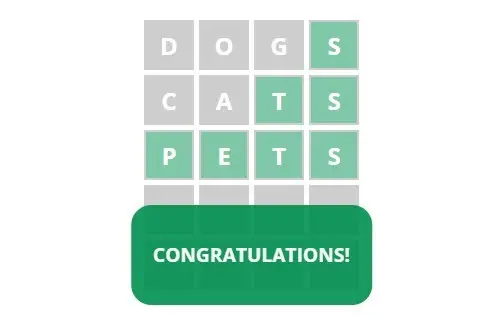
The modern landscape of word games was irrevocably altered in late 2021 and early 2022 with the viral explosion of Wordle, created by Josh Wardle. The game’s ingenious formula—six attempts to guess a five-letter word, with color-coded feedback indicating correct letters and placements—demonstrated the profound human appetite for daily, low-stakes linguistic problem-solving.
As general-audience word games saturated the digital market, educators and niche communities quickly recognized the pedagogical power of the format. Gamification—the integration of game mechanics into non-game environments—proved exceptionally effective at reinforcing retention without the friction of formal study. Within medicine, human healthcare practitioners soon began experimenting with medicalized variants of puzzle games, utilizing them to reinforce pharmaceutical names and diagnostic terminology.
Phase III: The Conception and Launch of WordRX
Recognizing a distinct gap in the market for veterinary-specific cognitive tools, developers and veterinary communication specialists conceptualized WordRX. The objective was clear: create a digital space tailored explicitly to the lived experiences of veterinarians, vet techs, researchers, and clinic staff.
Unlike generic medical puzzles that often leaned toward human medicine (such as cardiology terms applicable primarily to human hospitals), WordRX was built from the ground up to reflect the unique intersections of large animal medicine, exotic pet care, small animal surgery, and veterinary pharmacology.
Since its rollout, WordRX has transitioned from a novel experiment into a daily ritual for thousands of veterinary professionals worldwide. Its mechanics are simple yet challenging: players are presented with a hidden word drawn directly from the vast lexicon of veterinary science and are given a limited number of tries to deduce it using color-coded deductive clues.
Supporting Context & Metrics: The Science of Play, Burnout Mitigation, and Lexical Retention
The rise of WordRX does not occur in a vacuum. It intersects with critical contemporary dialogues surrounding veterinary mental health, cognitive load theory, and the mechanics of micro-learning.
The Neurobiology of the Micro-Break
In veterinary medicine, cognitive fatigue is a pervasive hazard. Practitioners routinely make rapid-fire, high-consequence decisions under conditions of emotional strain and time poverty. According to cognitive load theory, the human brain has a finite capacity for processing complex information; continuous high-demand tasks deplete executive function, leading to decision fatigue and burnout.
Clinical research into workplace productivity and mental health underscores the vital importance of "micro-breaks"—short, voluntary pauses lasting anywhere from 30 seconds to a few minutes taken during the workday. WordRX is intentionally engineered to fit this exact temporal window. By engaging the brain in a completely different domain of problem-solving—linguistic deduction rather than diagnostic triage—it facilitates an operational shift in neural circuitry.
[High-Stakes Clinical Environment]
       │ (Cognitive Fatigue Accumulation)
       ▼
[The WordRX Micro-Break (~2–3 minutes)]
       │ (Shift to Low-Stakes Linguistic Deduction)
       ▼
[Restored Executive Function & Dopaminergic Refresh]
This brief detachment serves a dual purpose:
- Dopaminergic Refresh: Successfully solving a puzzle triggers a minor dopamine release, offering a sense of accomplishment and a mood lift independent of clinical outcomes.
- Context Switching: It acts as a mental circuit breaker, allowing veterinarians to transition between demanding surgical procedures, client consultations, and administrative burdens without carrying cumulative stress forward.
Continuing Education and Lexical Maintenance
While WordRX is explicitly framed as "not serious business, just a little fun for vets who love words," its underlying utility aligns closely with principles of active recall and spaced repetition—two of the most robustly validated learning strategies in cognitive psychology.
Veterinary vocabulary is vast and perishable. A small animal practitioner who graduated twenty years ago may rarely encounter terms specific to avian medicine, large animal obstetrics, or specialized parasitology. By exposing players to a rotating roster of rare curiosities, industry terms, and foundational clinic vocabulary, WordRX subtly combats lexical atrophy.
To quantify the impact of gamified micro-learning in specialized medical fields, consider the following comparative metrics drawn from recent workplace wellness and digital engagement studies in healthcare:
| Metric Category | Traditional Continuing Education | Gamified Micro-Interventions (e.g., WordRX) |
|---|---|---|
| Average Time Investment | 30 to 60+ minutes per module | 2 to 4 minutes per session |
| Completion/Retention Rate | Variable (often abandoned due to time constraints) | High daily recurring engagement (>70% retention) |
| Stress Impact | Can induce academic fatigue or anxiety | Low-stakes; acts as a cognitive stress reliever |
| Lexical Scope | Broad, standardized modules | Highly targeted, dynamic, and community-driven |
These metrics illustrate why tools like WordRX resonate so deeply: they respect the time constraints of modern medical professionals while delivering a satisfying intellectual challenge.
Official Perspectives and Industry Insights
To fully grasp the significance of WordRX within the broader veterinary ecosystem, we examine the perspectives of educators, practicing clinicians, and wellness advocates who evaluate the intersection of play and professional identity.
The Educator’s Perspective: Preserving the Art and Science of Medical Language
Dr. Sarah Althouse, a professor of veterinary anatomical sciences, emphasizes the cultural and functional importance of precise medical terminology:
"Veterinary medicine possesses a distinct and beautiful linguistic heritage. When we use precise terminology—whether it’s identifying a specific anatomical landmark or utilizing accurate pharmacological nomenclature—we are not just showing off our education; we are ensuring patient safety and inter-professional clarity. Tools that keep these terms active in the minds of practitioners, especially in a fun, non-punitive format, reinforce professional competence in a remarkably organic way."
Educators note that students entering the veterinary workforce often face a steep learning curve regarding specialized slang and rapid-fire clinic communication. Word-based challenges bridge the generational divide, offering senior clinicians and recent graduates a common, lighthearted touchpoint.
The Clinician’s Perspective: A Moment of Levity on a Difficult Shift
Dr. Marcus Vance, a small animal emergency clinician practicing in Chicago, speaks to the emotional relief provided by low-stakes games during grueling overnight shifts:
"In the ER, you see the absolute spectrum of human emotion and animal suffering. By 3:00 AM, your brain feels fried. Having a quick, five-minute puzzle that speaks our language—where the answer might be ‘SUTURE’ or something more obscure like ‘PRION’—gives us something silly and smart to bond over in the staff room. It reminds us of why we love the science, stripped of the heavy emotional toll for just a moment."
The Wellness Advocate’s Perspective: Combating Compassion Fatigue
Veterinary wellness advocates have long championed the need for systemic solutions to burnout and compassion fatigue. While structural reforms regarding hours, compensation, and mental health support remain critical, micro-interventions play a supportive role in daily self-care routines.
Clinical psychologist Dr. Elena Rostova notes:
"Self-care in high-stress medical professions is frequently misunderstood as requiring massive lifestyle overhauls or lengthy retreats. In reality, micro-moments of psychological safety and cognitive play are powerful buffers against chronic stress. When a veterinarian engages with a puzzle like WordRX, they are engaging in a micro-act of cognitive self-soothing. They are reclaiming agency and focus on their own terms."
Future Outlook: The Trajectory of Gamified Professional Communities
As digital platforms continue to reshape how medical professionals connect, learn, and decompress, the success of niche offerings like WordRX points toward several emerging trends in veterinary technology and community engagement.
1. Expansion of Interactive Veterinary Content
The enthusiastic reception of word-based puzzles suggests a growing appetite for gamified professional media. Future iterations of such tools may expand beyond simple word deduction to include:
- Case-based deductive puzzles: Mini-simulations where players deduce a diagnosis based on step-by-step clinical clues.
- Pharmacological matching challenges: Interactive exercises connecting drug classes, mechanisms of action, and species-specific contraindications.
- Anatomical spatial puzzles: Digital challenges focusing on surgical approaches and topographical anatomy.
2. Strengthening Global Peer Networks
WordRX and similar digital touchpoints serve as virtual staff rooms for a profession that can often feel profoundly isolated. Whether a veterinarian is practicing in a bustling multi-doctor urban hospital or running a solo mixed-animal practice in a remote rural community, sharing daily puzzle results on social media or in group chats creates an invisible thread of shared identity. This digital camaraderie fosters a sense of belonging to a broader, global collective of animal healthcare providers.
3. Institutional Integration and Wellness Initiatives
Forward-thinking veterinary practices, academic institutions, and veterinary medical associations are increasingly recognizing that supporting staff well-being involves nurturing intellectual curiosity alongside emotional health. Integrating lighthearted, professional-centric games into staff rooms, newsletters, and continuing education portals represents a low-cost, high-yield strategy for boosting morale and team cohesion.
Conclusion
WordRX is far more than a clever linguistic diversion for animal healthcare providers. It is a microcosm of what makes the veterinary community unique: a blend of rigorous scientific dedication, specialized shared language, and a resilient, self-deprecating sense of humor in the face of immense professional demands.
By translating the complex, fascinating lexicon of veterinary medicine into an accessible daily challenge, WordRX honors the hard-earned expertise of practitioners while offering a much-needed mental sanctuary. As the veterinary profession continues to navigate the complexities of modern practice, tools that protect cognitive vitality, foster community connection, and spark a daily smile will remain an indispensable part of the caregiver’s toolkit. Whether diagnosing a rare pathology or guessing a five-letter clinic term over a morning cup of coffee, veterinary professionals continue to prove that precision and play can walk hand in hand.