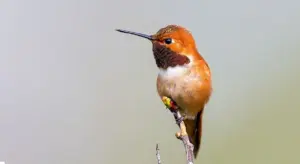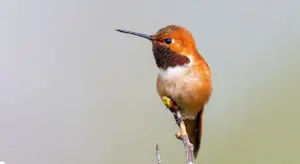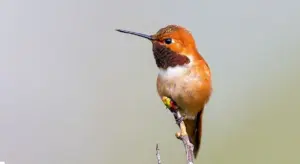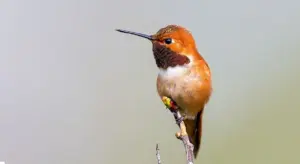

Across the city of Hopkins, Minnesota, a quiet revolution of color, wings, and feathers has taken flight. A Yellow-bellied Sapsucker now greets patrons at the entrance of a local brewery; a Field Sparrow perches watchfully on the weathered brick wall of a diner; an Indigo Bunting decorates the exterior of a neighborhood tattoo parlor. These vibrant, hyper-realistic avian portraits are not merely decorative public art pieces—they are visual alarms. They form a core component of the nationally renowned Audubon Mural Project, a public-art initiative that enlists muralists across the United States to paint birds vulnerable to extinction driven by accelerating climate change.
Nestled geographically along the Mississippi Flyway—a critical aerial superhighway utilized by hundreds of migratory bird species every spring and fall—Hopkins offers an ideal canvas for this intersection of art and conservation. Yet, the genesis of this initiative in Hennepin County transcends geographical coincidence. It represents a masterclass in grassroots community mobilization, sparked by individual grief, fueled by civic pride, and executed through deep public-private partnerships involving the city government, local arts centers, Audubon chapters, elementary schools, and regional businesses.
By wedding creative placemaking with rigorous climate science, the Hopkins Audubon Mural Project has transformed blank structural facades into an open-source museum of ecological warning and hope. This comprehensive report explores the chronological evolution of the project, details the specific murals and the threatened species they honor, provides quantitative context on avian climate vulnerability, highlights official stakeholder perspectives, and outlines the enduring future outlook for the community’s conservation ethos.
Detailed Chronology of the Project
The transformation of Hopkins’ streetscape into an ecological gallery did not happen overnight. It represents a structured, multi-phase timeline that began in quiet reflection and expanded into a city-wide movement.
Phase 1: Inception and Grassroots Mobilization (2025)
The project was spearheaded by local resident Francoise Shirley. Following the passing of her mother, Shirley turned to backyard birdwatching for solace, finding a profound sense of grounding and connection to the natural world in the rhythms of local avian life. As her familiarity with backyard species deepened, however, she was confronted with sobering scientific data regarding the rapid decline of common bird species across North America. Driven to ask, "What can I do?" Shirley discovered the Audubon Mural Project via Audubon magazine and resolved to bring the initiative to her hometown.
Shirley successfully rallied critical local stakeholders, including the City of Hopkins, the Hopkins Center for the Arts, and the Land of Lakes Bird Alliance (the local chapter of the National Audubon Society). Funding was secured through a hybrid model combining municipal and arts center allocations with robust community crowdfunding. This financial structure ensured that ordinary residents felt a genuine sense of ownership over the initiative.
Phase 2: The Autumn 2025 Launch and Initial Murals
By September 2025, the first wave of murals was officially completed along Hopkins’ historic Mainstreet. Talented regional artists—Audrey Carver, Kada Goalen, and Adam Turman—unveiled installations at Hoagie’s Family Restaurant, Dragonland Tattoo, and LTD Brewing, respectively.
These installations served as an immediate catalyst for civic engagement. In October 2025, Hopkins hosted its very first Migratory Bird Day celebration, featuring community events spanning local farmers’ markets, toy stores, and coffee shops. Simultaneously, the Land of Lakes Bird Alliance launched an educational course at the Hopkins Activity Center, pairing guided walking tours of the murals with practical workshops on how residents could make their homes and yards more bird-friendly.
Phase 3: Elementary Engagement and Expansion (Spring 2026)
The momentum accelerated into the following year. In the spring of 2026, the initiative expanded from commercial storefronts to educational institutions. Approximately 450 students spanning kindergarten through fifth grade at Alice Smith Elementary School collaborated under the guidance of art teacher Nikki Frueh to paint four distinct murals on their school exterior, featuring bird species of their own choosing.
Phase 4: Summer 2026 Public Works Milestone
During the summer of 2026, the coalition executed its most ambitious installation to date: an 80-foot-by-20-foot mural on the City of Hopkins Public Works Department building. Painted by Colorado-based artist Catie Michel during a grueling stretch marked by regional wildfire smoke and heat waves, "After Dark" connected nocturnal bird species with the complex web of native insects and plants that sustain them, cementing the city’s long-term commitment to ecological stewardship.
Supporting Context & Metrics: The Science of Survival
To fully appreciate the urgency behind the Hopkins mural initiative, one must examine the climate models governing avian distributions across North America. The species immortalized on the walls of Hopkins are not chosen at random; they are flagged by comprehensive data compiled in Audubon’s landmark Survival by Degrees report.
The Mississippi Flyway and Local Vulnerability
The Mississippi Flyway sees countless birds funneling through Minnesota annually. However, rising global temperatures, shifting seasonal weather patterns, increased frequencies of drought, and severe habitat loss threaten to decouple these species from the ecological conditions required for their survival.
When regional warming outpaces evolutionary adaptation, birds face catastrophic range contractions. The quantitative projections for the species depicted in Hopkins underscore a stark reality:
- Field Sparrow: Highly reliant on brushy pastures and overgrown meadows, this species is exceptionally vulnerable to increased wildfire activity and severe heat waves. Audubon models project that if current carbon emissions and warming rates continue, the Field Sparrow stands to lose 72 percent of its summer breeding range.
- Clay-colored Sparrow: Projected to lose 70 percent of its traditional range, this ground-nesting songbird may soon cease breeding within the state of Minnesota entirely.
- Scarlet Tanager: Requiring large, unbroken blocks of mature forest for successful breeding, Scarlet Tanagers face compounding threats from urbanization, heavy rainfall events, and thermal stress. Climate models indicate they could lose 68 percent of their summer breeding range under unabated warming scenarios.
- Golden-winged Warbler: Already experiencing severe population contractions across the United States, this striking warbler faces a staggering 100 percent loss of its current continental summer breeding range if warming continues unchecked, effectively pushing the species entirely out of the United States.
- Yellow-bellied Sapsucker and Red-headed Woodpecker: Key cavity-nesting species of eastern and northern forests face steep declines. The Yellow-bellied Sapsucker could lose 88 percent of its summer range, shifting northward into the remote tracts of Canada. Meanwhile, the Red-headed Woodpecker—once ubiquitous across forest clearings in the American Midwest and South—faces a catastrophic 94 percent loss of its summer range.
- Boreal Owl: As a high-latitude and high-altitude predator requiring cold climates, the Boreal Owl faces a 84 percent reduction in its summer range, driving remaining populations deep into the Canadian subarctic.
Detailed Breakdown of Murals and Artists
The Hopkins project succeeds not only as a conservation platform but as a testament to diverse artistic interpretations of ecology.
1. Hoagie’s Family Restaurant: Clay-colored Sparrow and Field Sparrow
- Artist: Audrey Carver
- Location: 824 Mainstreet, Hopkins, MN
- Execution: Painted in 2025 on two-foot-by-two-foot panels, this intimate installation utilizes a small exterior space to honor small, frequently overlooked birds. Carver framed the sparrows against a soft yellow background interwoven with prairie grasses, grass seeds, and insects—the vital components of their micro-habitat and diet. Carver, who holds a background in environmental science and climate conservation before transitioning to full-time art, views the project as a seamless synthesis of her dual passions.
2. Dragonland Tattoo: The Spaces Between
- Artist: Kada Goalen
- Location: 923 Mainstreet, Hopkins, MN
- Execution: Initially commissioned for three birds, Dragonland Tattoo’s owner expanded the scope to six panels upon seeing the preliminary concepts. Goalen’s series—including an Indigo Bunting by a wooden fence, a Scarlet Tanager amid maple leaves, a Golden-winged Warbler near milkweed, a Pine Grosbeak, a Wood Thrush, and a Brown Thrasher—explores everyday encounters between humans and wildlife. Notably, the inclusion of the thrashers nods to Hopkins’ historical legacy as the once-proclaimed "raspberry capital of the world."
3. LTD Brewing: Woodpeckers in Synergy
- Artist: Adam Turman
- Location: 723 Mainstreet, Hopkins, MN
- Execution: St. Louis Park resident Adam Turman capitalized on the natural crimson highlights of the Yellow-bellied Sapsucker and Red-headed Woodpecker. The mural captures the sapsucker drilling precise sap-wells into birch bark—a behavior that simultaneously feeds the bird and provides resources for secondary insects. Turman’s signature bold aesthetic aims to inspire joy while sparking curiosity about local avian neighbors.
4. Alice Smith Elementary School: Student-Led Ecosystems
- Artist/Facilitator: Nikki Frueh and ~450 Elementary Students
- Location: 801 Minnetonka Mills Road, Hopkins, MN
- Execution: Completed in spring 2026, this collaborative effort engaged the entire student body from kindergarten through fifth grade. Students selected and painted local species facing acute climate pressures, including Henslow’s Sparrow, the Cerulean Warbler, the American Goshawk, and the Boreal Owl. Unveiled at the school’s spring art show, the project generated profound pride among young learners who witnessed abstract climate data manifest into tangible community art.
5. City of Hopkins Public Works Department: After Dark
- Artist: Catie Michel
- Location: 11100 Excelsior Boulevard, Hopkins, MN
- Execution: Spanning an impressive 80 by 20 feet, this summer 2026 mural features a Wood Thrush and two Eastern Whip-poor-wills. Painted amidst atmospheric disruptions from regional wildfires and heat waves, the mural visually links nocturnal birds with the luna moths, sphinx moth caterpillars, evening primrose, and woodland phlox that form their localized food webs. Furthermore, Michel installed bird-safe visual markers on the public works building windows to mitigate structural bird collisions.
Official Statements & Stakeholder Perspectives
The unprecedented community buy-in and inter-agency collaboration behind the Hopkins Audubon Mural Project have generated widespread acclaim from civic leaders, conservationists, and the artists themselves.
-
Francoise Shirley, Project Initiator:
"We wanted to bring awareness to the fact that birds in our very own backyards in Hopkins are vulnerable, not just those in other parts of the country or world… We really got a huge segment of the population to be involved and feel ownership in this initiative."
-
Marian Weidner, President, Land of Lakes Bird Alliance:
Emphasizing the direct, actionable steps communities can take, Weidner notes that while global climate change poses existential threats to migratory species, urban birds also face immediate, localized hazards—such as artificial light pollution, window collisions, and the loss of native flora—all of which local residents can directly mitigate.
-
Audrey Carver, Muralist:
"When I’m able to incorporate my passion for environmental education and art to help people engage with their local ecosystem, it’s really an amazing opportunity."
-
Catie Michel, Muralist and Former Avian Field Researcher:
Reflecting on the thematic resonance of her public works mural, Michel offered a powerful vision for the future: "Perhaps this title [After Dark] can also refer to a still-possible time in the future when these birds are no longer designated as especially vulnerable… When all bird—and all beings—populations reach a balanced state, and when our societal systems reflect an ethos of collective care."
Future Outlook
The Hopkins Audubon Mural Project has evolved far beyond a temporary public art installation; it has established a permanent cultural framework for municipal conservation in Minnesota. By anchoring abstract environmental warnings onto the physical walls of breweries, diners, tattoo parlors, schools, and municipal buildings, the initiative has successfully bridged the gap between scientific modeling and civic consciousness.
As the network of murals continues to expand—seeded by passionate volunteers, funded by community crowdfunding, shaped by professional artists, and painted by the hands of local school children—Hopkins stands as a shining national model. It demonstrates that municipal climate action need not be confined to policy debates; it can be woven directly into the architectural fabric of daily life, reminding every passerby of the delicate winged lives sharing our urban spaces, and inspiring the collective will required to protect them.