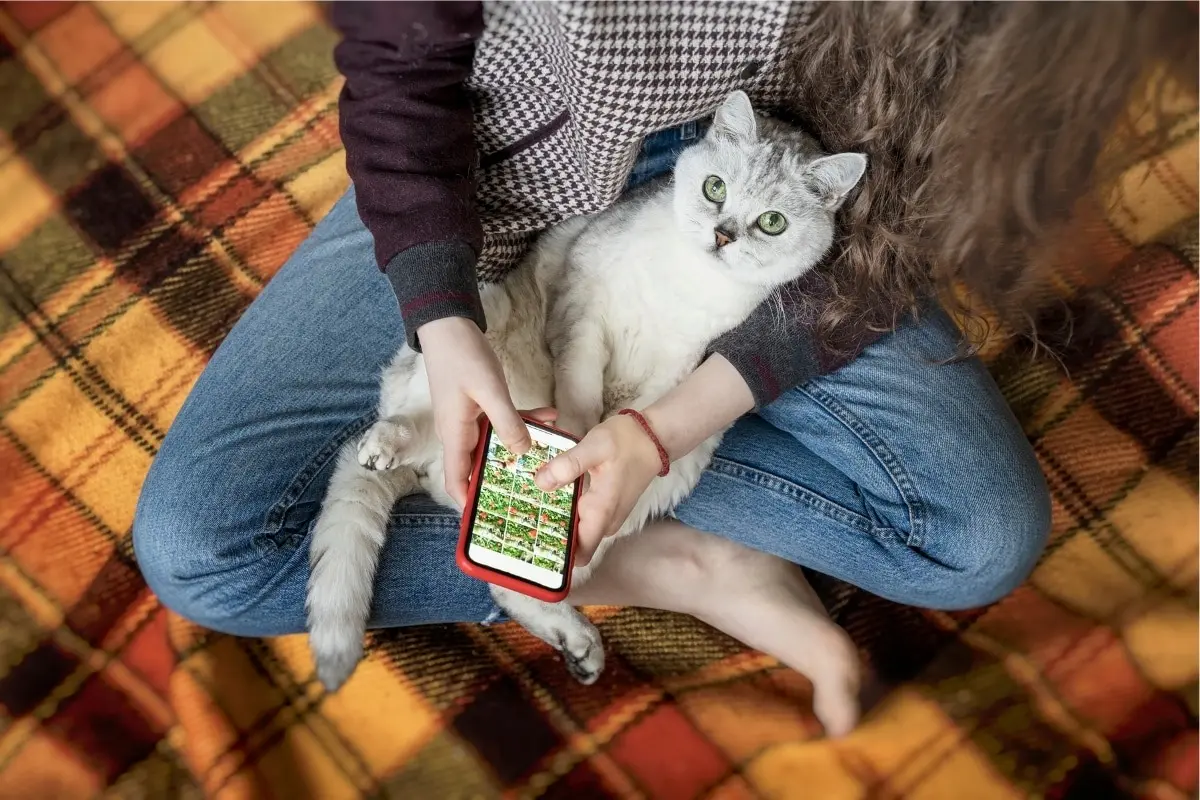
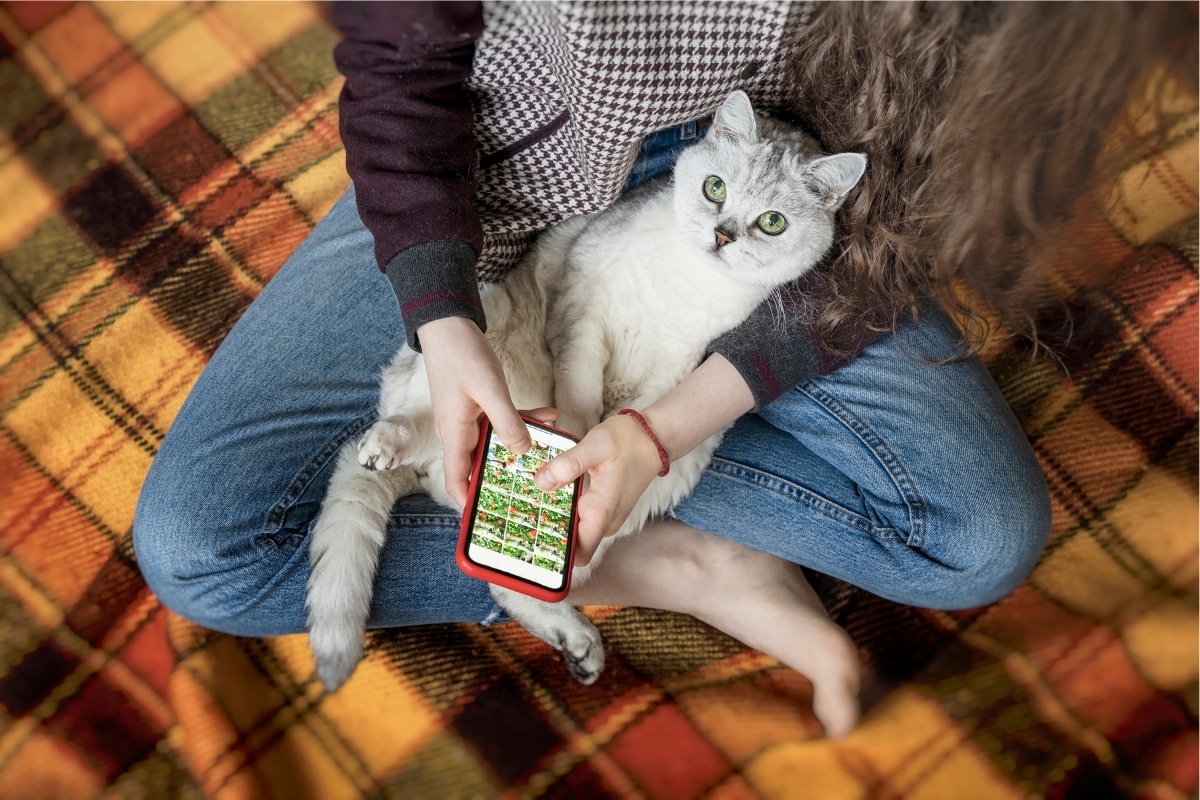
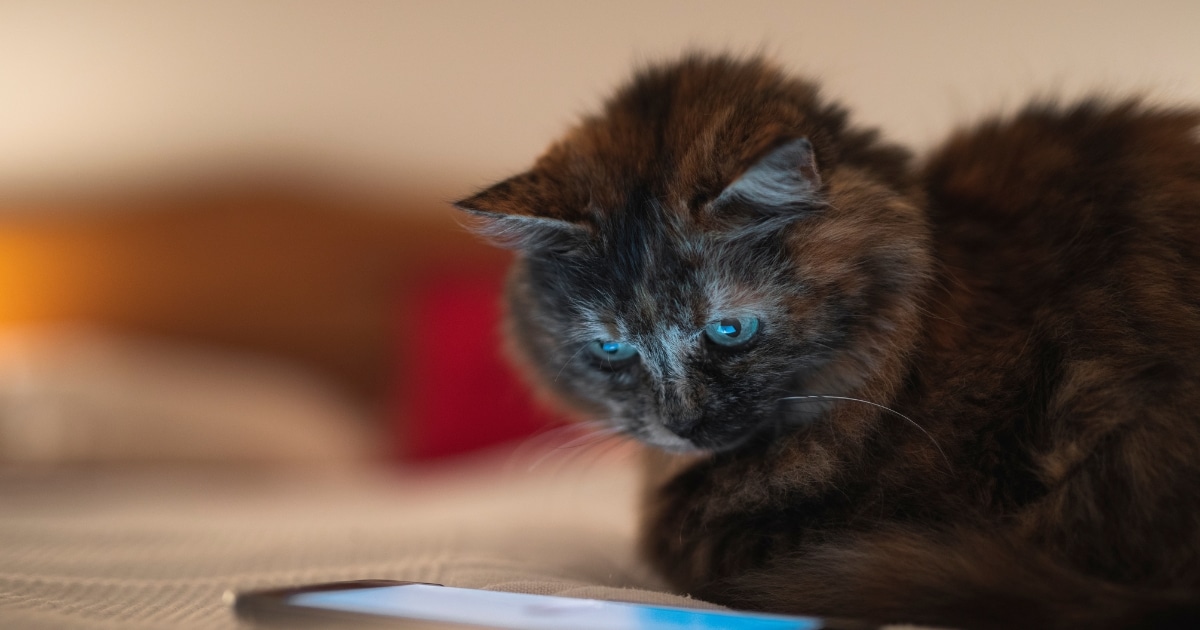
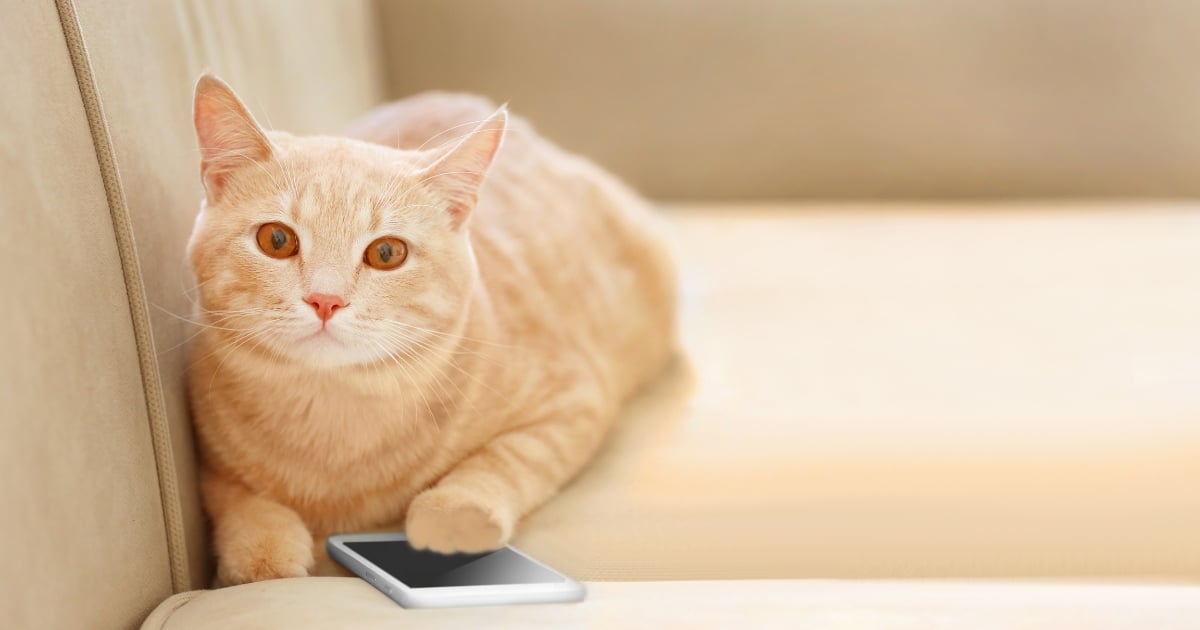
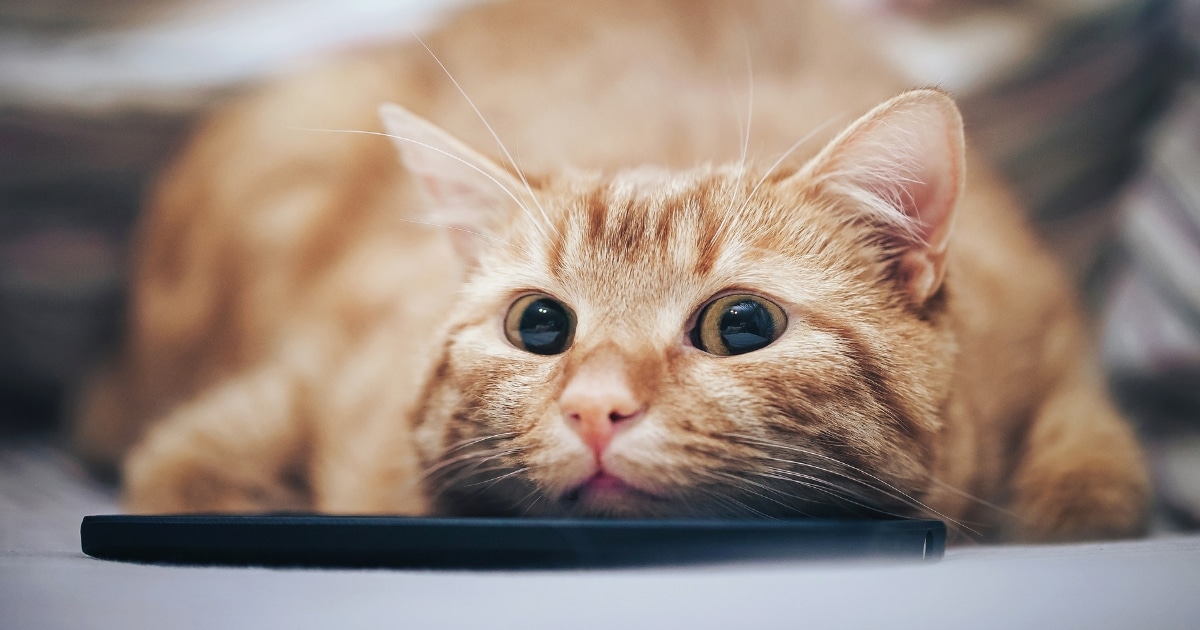
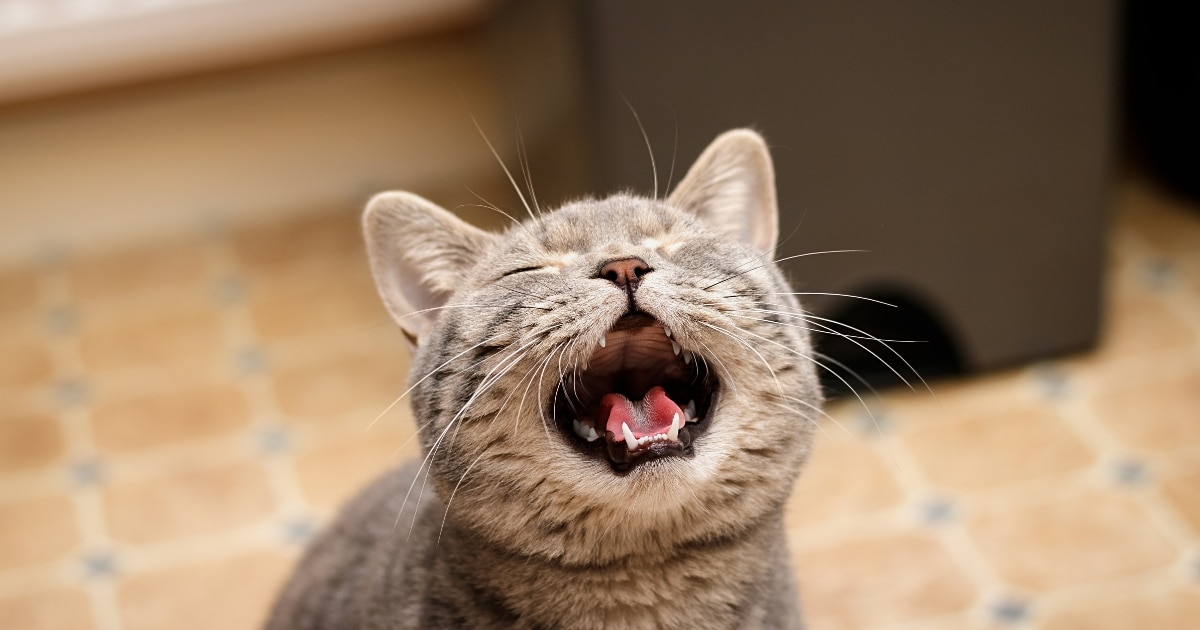
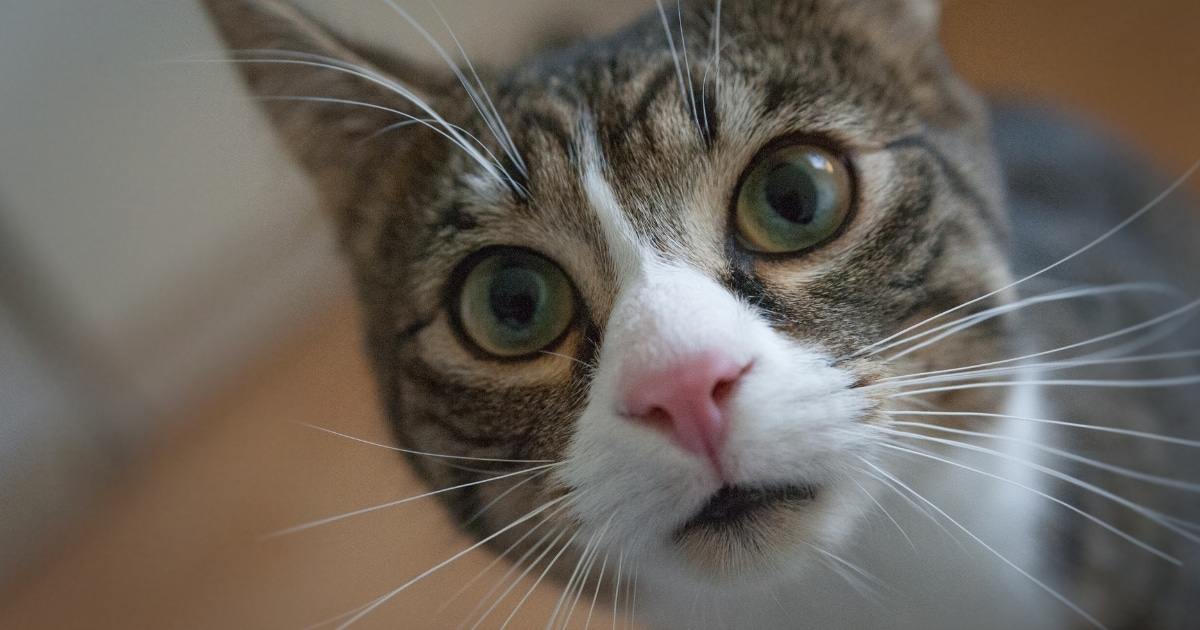
In the modern household, a silent competition is waged every day across sofas, desks, and kitchen tables. The combatants: a human engrossed in a glowing rectangle, and a feline companion determined to reclaim the spotlight. Whether it is a calculated paw swipe, a dead-weight sit-in directly over the home button, or a melodramatic meow, cats possess an impressive repertoire of tactics designed to disrupt our screen time.
While popular culture often frames this behavior as feline jealousy, modern animal behavior science reveals a more nuanced reality. Cats do not possess the human capacity to conceptualize a smartphone as a romantic or social rival. Instead, they interpret our intense focus on digital screens as a direct threat to our social availability. Characterized by stillness, a lack of eye contact, and diverted attention, screen time signals disengagement to a domestic cat.
Drawing on feline social-attachment research and behavioral studies, this comprehensive report investigates the psychological, environmental, and physiological drivers behind why our whiskered companions wage war on our smartphones—and what their quirky interventions truly mean for the human-animal bond.
Detailed Chronology: Decoding the Anatomy of a Phone Interruption
To truly understand why cats target our devices, one must examine the precise behavioral sequence that occurs the moment a human picks up a smartphone. Feline ethologists break down this interaction into a distinct, predictable chronology of events.
Phase 1: The Initial Shift in Social Cues
When a human transitions from scanning their environment or interacting with their pet to staring at a smartphone, a profound shift occurs in bodily posture. Feline social-attachment research—including notable studies published in Current Biology—highlights that cats are remarkably perceptive readers of human stillness and gaze direction.
When you look down at a phone, your blinking decreases, your micro-movements stall, and your peripheral vision narrows. To a cat, this posture is unnatural. In the feline social world, a direct, sustained gaze or active engagement signifies connection. The sudden cessation of eye contact and the rigid posture of smartphone scrolling are interpreted by the cat as an abrupt withdrawal of social engagement.
Phase 2: Escalation to Active Probing (Pawing and Nudging)
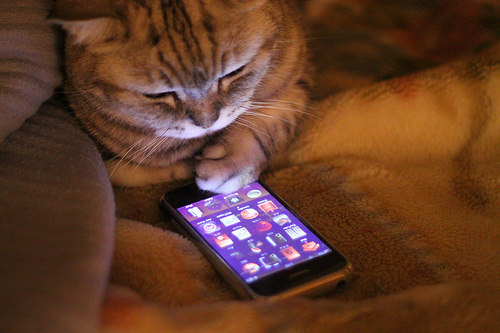
Realizing that standard visual cues are failing to capture your attention, the cat moves to physical intervention. This is where pawing, nose-nudging, and gentle arm-rubbing come into play. According to observational data from organizations like International Cat Care, this represents classic "object-interference behavior."
Cats have learned through association that interacting with the object capturing your hands (whether a book, a laptop, or a smartphone) forces a reaction. When a cat paws at your phone screen, they are not marveling at the user interface or trying to play a cat-fishing app; they are physically testing the boundary between you and the device.
Phase 3: The Ultimate Territorial Takeover (Sitting on the Device)
Should subtle nudges fail, the cat escalates to the definitive power move: physically sitting or lying directly on top of the phone. This behavior serves a dual purpose rooted in feline biology and environmental preference.
First, smartphones are miniature thermal beacons. Operating internal processors and holding a battery charge makes handsets pleasantly warm—an irresistible draw for creatures whose resting body temperature naturally seeks out warm micro-climates.
Second, smartphones carry a concentrated concentration of the human’s scent from hand oils and facial contact. As noted by veterinary experts at the Cornell Feline Health Center, cats gravitate toward objects heavily saturated with their owner’s scent, much like they do with worn clothing or favored armchairs. By planting themselves squarely on the screen, cats combine warmth, scent-seeking, and absolute functional obstruction into one brilliant maneuver.
Phase 4: The Post-Intervention Fallout
Once the phone is displaced, knocked aside, or ignored, the feline reaction branches into distinct emotional trajectories. Some cats become intensely clingy—shadowing their humans from room to room in a frantic bid to make up for "lost time." Others enact the cold shoulder, retreating to high perches or ignoring verbal cues entirely as a form of feline retaliation for being overlooked.
Supporting Context & Metrics: The Science of Feline Social Cognition
To contextualize why phones are uniquely targeted compared to other inanimate objects in the home, researchers look at how domestic cats perceive human behavior.
Olfactory Signatures: A smartphone is one of the few inanimate objects a human holds continuously for hours at a time, trapping sweat, skin cells, and natural oils. To a cat, whose sense of smell is estimated to be roughly fourteen times stronger than a human’s, the phone is essentially an olfactory beacon bearing your signature identity.
Thermal Attractiveness: Domestic cats (Felis catus) originated from desert-dwelling ancestors, which explains their perpetual quest for thermal comfort. Modern smartphones routinely reach surface temperatures between 85°F and 105°F during heavy use, making them prime real estate for a cat looking for a cozy resting spot.
The Parallels of Laptop and Book Interference: Behavioral studies indicate that cat interference is not technologically specific. Cats swarm keyboards, sit on open hardback books, and drape themselves across newspapers with equal enthusiasm. The common denominator is not the medium, but the human attention dedicated exclusively to that medium.
Expert Insights and Official Perspectives
Animal behaviorists and veterinary institutions emphasize that while these behaviors can occasionally test a cat owner’s patience, they are fundamentally rooted in positive attachment.
"When a cat interferes with your screen time, it is rarely out of malice or spite," explains Dr. Sarah Miller, a prominent feline behavior consultant. "It is a tangible manifestation of a secure attachment. Your cat views you as a primary social partner. When that partner’s attention is redirected entirely to a handheld device for extended periods, the cat experiences a disruption in its expected social routine. Every swipe, sit-in, and meow is simply a translation of one fundamental message: ‘I am here, and I matter.’"
Veterinary groups echo this sentiment, noting that owners must differentiate between normal attention-seeking behaviors and stress-induced disruptions. When a cat knocks a phone off a table or vocalizes persistently, they have learned that these dramatic actions guarantee an immediate, albeit startled, response from their human.
Future Outlook: Navigating the Digital Age with Your Cat
As human reliance on smartphones continues to grow in the digital age, the domestic landscape will remain a battleground of competing screens and twitching tails. However, understanding the underlying psychology of these interruptions offers a clear roadmap for harmonious coexistence.
Cat owners are increasingly encouraged to practice "digital hygiene" not just for their own mental well-being, but for the enrichment of their pets. Experts recommend establishing dedicated, phone-free interactive play sessions—utilizing feather wands, laser pointers, or puzzle feeders—before sitting down for prolonged screen use. Satisfying a cat’s predatory and social needs upfront drastically reduces the frequency of phone-swiping interventions.
Ultimately, while apps and digital media offer endless entertainment for humans, no algorithm or high-resolution display can replicate the comforting weight and rhythmic purr of a cat resting contentedly in your lap. Striking a balance between the digital world and the living room ecosystem ensures that both human productivity and feline affection can thrive side by side.