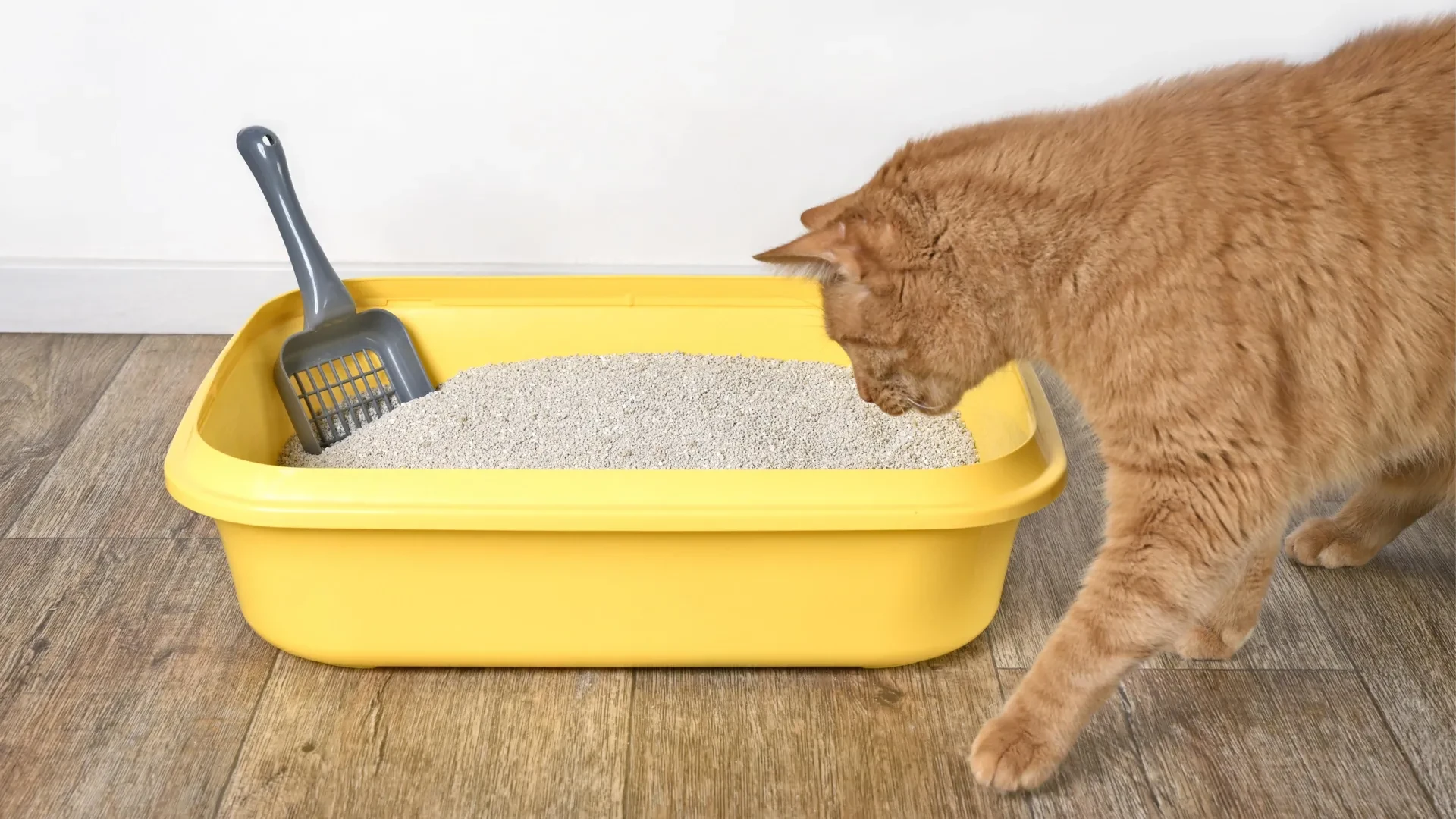

For centuries, human observation of domestic felines has been captivated by their complex olfactory behaviors. Anyone who has watched a cat approach a vertical surface, flehmen response engaged, understands that the animal is decoding a rich, invisible world. Cats rely heavily on scent to map their territories, monitor social hierarchies, and learn about one another. They gather vital data from urine and other odor marks left behind in their surroundings. These chemical traces function as biological bulletin boards, continuing to communicate long after the animal that produced them has moved on to other domains.
Yet, this biological communication system presents a profound chemical puzzle. Many odor molecules evaporate rapidly, break down under ultraviolet light, or chemically transform when exposed to oxygen and ambient temperatures. If a scent is constantly evolving and degrading, how can another animal reliably determine who originally left it? How does a durable message survive the ravages of time and weather?
A groundbreaking international study led by Iwate University in Japan, alongside collaborators in Germany and Spain, has successfully cracked a major part of this biological enigma. Scheduled
for publication in the prestigious journal Current Biology, the research reveals that domestic cats utilize an unprecedented group of unusual fatty acids that serve as a lasting chemical signature in their urine.
Through meticulous behavioral testing and advanced chemical analysis, the research team identified 13 branched-chain fatty acids (BFAs) previously unknown in mammalian excretions. The unique mixture and precise proportions of these compounds vary remarkably from one cat to another, yet remain remarkably consistent within the same animal over time. Furthermore, the investigation solved a century-old medical mystery regarding lipid droplets in feline kidneys and discovered that this sophisticated olfactory chemistry is conserved across the entire cat family, from domestic tabbies to apex predators like tigers and lions.
Detailed Chronology
Unraveling the Mechanics of Scent Recognition
To understand the chemical basis of feline communication, the research team, spearheaded by Professor Masao Miyazaki of Iwate University, first had to establish baseline behavioral evidence. They needed to confirm whether domestic cats could reliably distinguish urine samples from different individual conspecifics, and whether they possessed the cognitive machinery to retain these memories over extended temporal gaps.
The methodology relied on habituation and dishabituation paradigms. When domestic cats encountered the same urine sample repeatedly during controlled trials, they gradually habituated to the scent, spending less and less time investigating it. However, the moment urine from an unfamiliar cat was introduced into the environment, their interest spiked instantly, resulting in prolonged and intense sniffing behaviors.
Crucially, the researchers tested the limits of feline memory. Cats continued to show markedly reduced responses to previously encountered urine odors even after gaps lasting months between exposures. This durable pattern suggests that felines retain long-term, highly specific neurological memories of particular urine scents.
The team also closely monitored the flehmen response—the characteristic, species-specific open-mouthed expression accompanied by a curled upper lip that enhances the delivery of pheromones and scents to the vomeronasal organ. Cats displayed this behavioral response far more frequently when smelling unfamiliar urine than when investigating their own scent. As the exact same urine sample was presented repeatedly, the flehmen response steadily declined, only to surge once more upon the introduction of a new donor’s urine.
"After confirming that cats can distinguish individual urine odors, we used the flehmen response as a clue to identify urinary molecules that may contribute to individual scent recognition," Professor Miyazaki explained.
Isolating the 13 Unusual Fatty Acids
Armed with behavioral proof that cats use specific, persistent cues to identify individuals, the scientists narrowed their analytical search to the lipid fractions extracted from urine samples. Utilizing advanced chromatography and mass spectrometry techniques, they isolated an unprecedented group of compounds.
The team ultimately identified 13 distinct branched-chain fatty acids (BFAs). A rigorous review of existing scientific literature confirmed that none of these specific BFAs had ever been documented previously in mammalian excretions, secretions, or bodily fluids.
What made these compounds remarkable was not merely their structural novelty, but their patterning. Each individual cat possessed a distinct BFA profile defined by the exact combination and relative abundance of the 13 fatty acids. While these profiles varied considerably across the feline population, they remained remarkably stable when researchers re-sampled the same cats on different dates.
Genetics clearly exerts an influence on these chemical signatures. Related cats generally exhibited more closely matching BFA patterns, though every individual animal maintained its own clearly distinguishable profile, even within multi-cat households or sibling litters.
Crucially, these compounds possess ideal physical properties for environmental communication. Many volatile chemicals responsible for fresh urine odors begin degrading and shifting within minutes of deposition. BFAs, by contrast, are semi-volatile and evaporate at a significantly slower rate. In experimental conditions where urine-soaked samples were stored at a standard ambient temperature of 25°C, the distinctive BFA profiles associated with individual cats remained stable and readable for at least 24 hours.
Proving Perception: The Behavioral Link
Identifying the chemicals was only half the battle; the researchers needed to prove that cats could actively perceive and decode these specific BFA patterns.
To test this, the team conducted controlled sensory experiments. They isolated the lipid components of urine samples, intentionally manipulating the donor-derived BFA-containing fraction while keeping all other lipid components constant. When cats that had grown accustomed to an original sample were exposed to a sample where only the BFA fraction had been altered, their investigative sniffing behavior immediately resumed.
This behavioral shift provided undeniable empirical evidence that felines can consciously perceive the subtle chemical differences embedded within individual BFA compositions. The findings cemented the hypothesis that these fatty acids function as meaningful biological identity cards rather than serving as inert metabolic byproducts.
Supporting Context & Metrics
Solving a Century-Old Feline Kidney Mystery
Perhaps one of the most astonishing dimensions of the Iwate University study was its accidental discovery concerning renal physiology. While tracing the origins of the BFAs, researchers detected the compounds inside feline kidney tissues, but notably absent from all other non-renal tissues examined.
Lipids containing BFAs were found densely packed inside neutral lipid droplets located within the renal cortex. This anatomical feature directly intersected with a long-standing physiological enigma: feline kidney lipid droplets have puzzled veterinary pathologists and physiologists for more than a century. While science has long documented that domestic cats naturally harbor unusually large numbers of lipid droplets in their kidneys, their exact biological purpose had remained entirely speculative.
The new data suggests a brilliant evolutionary adaptation. These renal lipid droplets likely act as an internal biological storage reservoir for BFA-containing lipids.
By maintaining this internal pool, the cat’s body can buffer short-term physiological fluctuations—such as sudden changes in diet, hydration levels, or stress hormones—that might otherwise destabilize its chemical signature. Consequently, the kidney helps maintain a remarkably consistent individual chemical profile in the urine over time, ensuring that an animal’s territory is marked with a reliable, unmutated signature.
"Lipid droplets in the cat kidney have been known for more than a century, but why cats have so many of them has remained a mystery," noted Professor Miyazaki. "Our findings suggest that one of their functions may be to support a stable chemical signature in urine. How BFAs stored in renal lipids are ultimately released into urine is an important question for future research."
Evolutionary Conservation Across the Cat Family
To determine whether this biochemical mechanism is unique to domestic pets or represents a broader evolutionary strategy, the researchers expanded their scope across the entire family Felidae.
The team analyzed biological samples from several wild cat species, including:
- Lions (Panthera leo)
- Tigers (Panthera tigris)
- Leopards (Panthera pardus)
- Jaguars (Panthera onca)
- Lynxes (Lynx lynx)
- The rare Iriomote cat (Prionailurus bengalensis iriomotensis)
The analysis confirmed that BFA-related compounds in urine and renal lipid droplets are widespread throughout the feline lineage. However, nature had introduced adaptive diversification: the exact BFA profiles, along with the volumetric concentration and anatomical distribution of renal lipid droplets, varied significantly across species.
Intriguingly, distinct chemical and physiological variations were observed even between geographically isolated subspecies, such as the Iriomote cat and the Tsushima leopard cat, both native to Japan. These observations indicate that BFA-driven scent chemistry and specialized kidney physiology are deeply conserved traits across Felidae, having co-evolved and diversified over millions of years of feline evolutionary history. While wild felids have not yet been directly proven to use these exact BFA profiles for individual recognition in the wild, the physiological architecture is unmistakably present.
Official Statements
The implications of this multinational research project stretch far across the fields of animal behavior, chemical ecology, and evolutionary biology. In official releases accompanying the study, the research consortium emphasized the profound nature of discovering a non-protein identity signaling mechanism in mammals.
"For decades, mammalian scent communication research has heavily emphasized the role of major urinary proteins, particularly those discovered in murine models," said Professor Masao Miyazaki during a project briefing. "However, many mammalian species, including felines, do not rely on identical protein structures to broadcast their identities across complex ecosystems. Our discovery shows that evolution engineered an entirely different chemical class—branched-chain fatty acids—coupled with a specialized renal storage system to solve the exact same ecological challenge."
Dr. Friedrich Schmidt, a co-author on the study specializing in mammalian chemical ecology at a participating German institution, highlighted the methodological rigor of the trials: "Isolating semi-volatile compounds from complex biological matrices requires immense precision. By systematically dismantling the lipid fractions and proving that cats respond directly to synthesized BFA variations, we have moved past correlation and established a direct causal link between these 13 fatty acids and individual feline recognition."
Furthermore, Spanish collaborators noted the interdisciplinary value of the work, bridging the gap between molecular nephrology and macro-ecological behavior. "It is rare for a study in behavioral ecology to simultaneously resolve a histological mystery that has sat in pathology textbooks for over a hundred years," stated Dr. Elena Gomez. "The kidney is not merely an excretory organ in cats; it is an active participant in social signaling and territorial management."
Future Outlook
While the research conducted by Iwate University and its partners is foundational basic science that does not immediately translate into commercial consumer products, it opens up vast new horizons across multiple scientific and applied disciplines.
1. Advanced Feline Behavioral Management
A deeper, scientifically validated understanding of BFA chemistry could eventually revolutionize how veterinarians and animal behaviorists manage feline territorial stress, household spraying, and multi-cat integration. By understanding how cats perceive individual signatures, researchers may develop targeted synthetic scent blockers or neutralizers that mitigate territorial aggression in domestic environments.
2. Veterinary Nephrology and Pathology
Unlocking the functional purpose of renal lipid droplets provides fresh perspectives for veterinary medicine. Researchers can now investigate how normal physiological lipid accumulation in feline kidneys transitions into pathological disease states, offering new pathways for diagnosing and treating chronic kidney disease—a leading ailment in aging domestic cats.
3. Wildlife Conservation and Non-Invasive Monitoring
Perhaps the most exciting ecological application lies in wildlife conservation. Endangered wild felids—such as Amur leopards, Sumatran tigers, and Iberian lynxes—are notoriously difficult to track, count, and monitor in dense habitats without stressing the animals through trapping or darting.
If future field studies confirm that wild BFA profiles act as stable, individual fingerprints in environmental urine samples, conservationists could deploy non-invasive genetic and chemical screening of scat and urine left along trails. This would allow researchers to accurately census rare animal populations, track individual migration patterns, and monitor genetic diversity without ever laying eyes on or capturing a single endangered cat.
What began as an inquiry into why domestic cats pause to sniff a vertical wall has culminated in a masterclass of evolutionary biology. By linking 13 unique branched-chain fatty acids, a specialized century-old kidney mechanism, and sophisticated olfactory perception, science has decoded the permanent ink with which cats write their identities across the natural world.