
Executive Overview
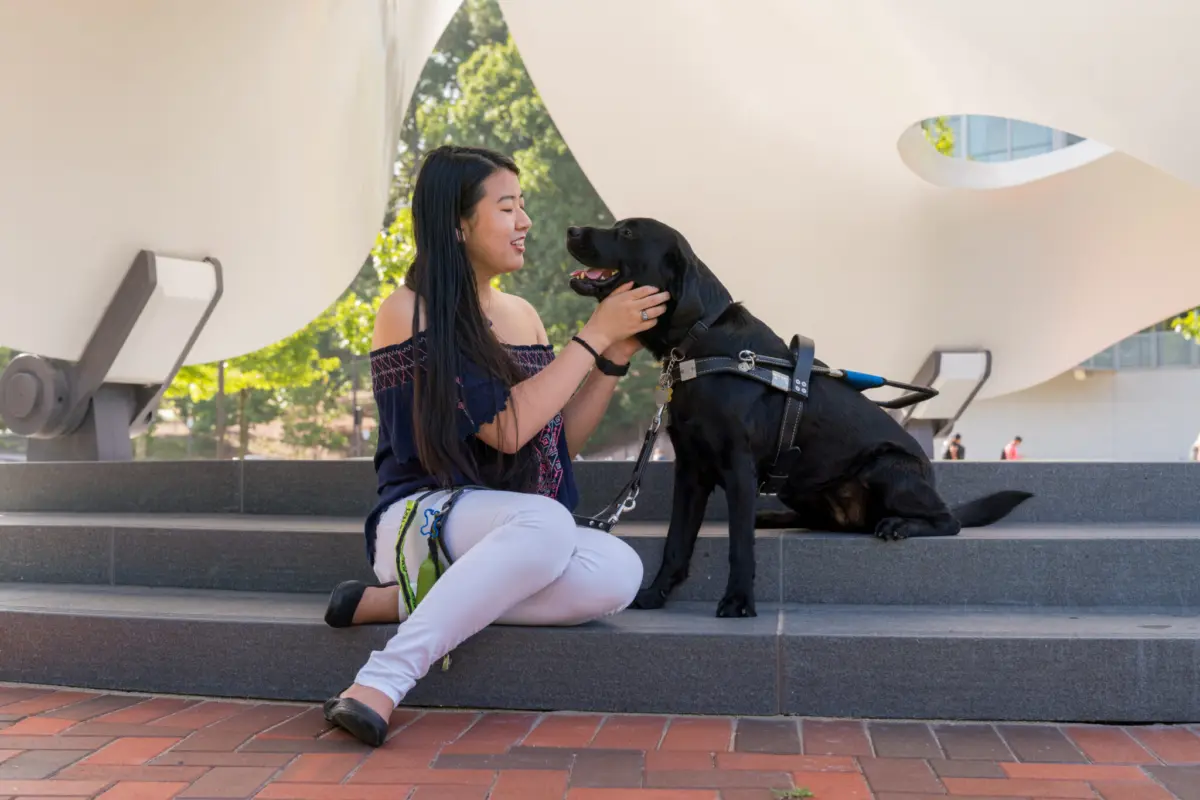
For centuries, the fundamental paradigm of canine training has been built upon a simple premise: compliance. From basic household pets learning to sit, stay, and come, to advanced obedience trials, a dog’s value has traditionally been measured by its immediate, unhesitating adherence to human commands. However, an elite echelon of working canines operates under an entirely different operational mandate. Guide dogs for the blind and visually impaired are meticulously trained in a counterintuitive, highly sophisticated concept known as intelligent disobedience.
Intelligent disobedience is the deliberate refusal of a handler’s command when executing that command would place the handler—and the dog—in imminent physical danger. Rather than demonstrating stubbornness or defiance, a guide dog employing this skill acts as an autonomous safety barrier, assessing environmental hazards that a visually impaired person cannot see or hear.
This profound level of critical thinking transforms the traditional master-servant dynamic into a synchronized, highly collaborative partnership. Building this capability requires a rigorous two-year developmental pipeline, specialized professional evaluation by mobility instructors, and, above all, an unbreakable bond of mutual trust. This comprehensive report explores the mechanics, training methodologies, real-world implications, and psychological foundations of intelligent disobedience, revealing how saying "no" ultimately grants handlers ultimate freedom.
Detailed Chronology: The Lifecycle of a Safety-First Canine
The journey of a guide dog capable of intelligent disobedience is neither short nor simple. It is a carefully engineered developmental timeline spanning roughly 24 months, designed to transition an impressionable puppy into a confident, autonomous decision-maker.
Phase 1: Foundation and Socialization (Months 0 to 18)
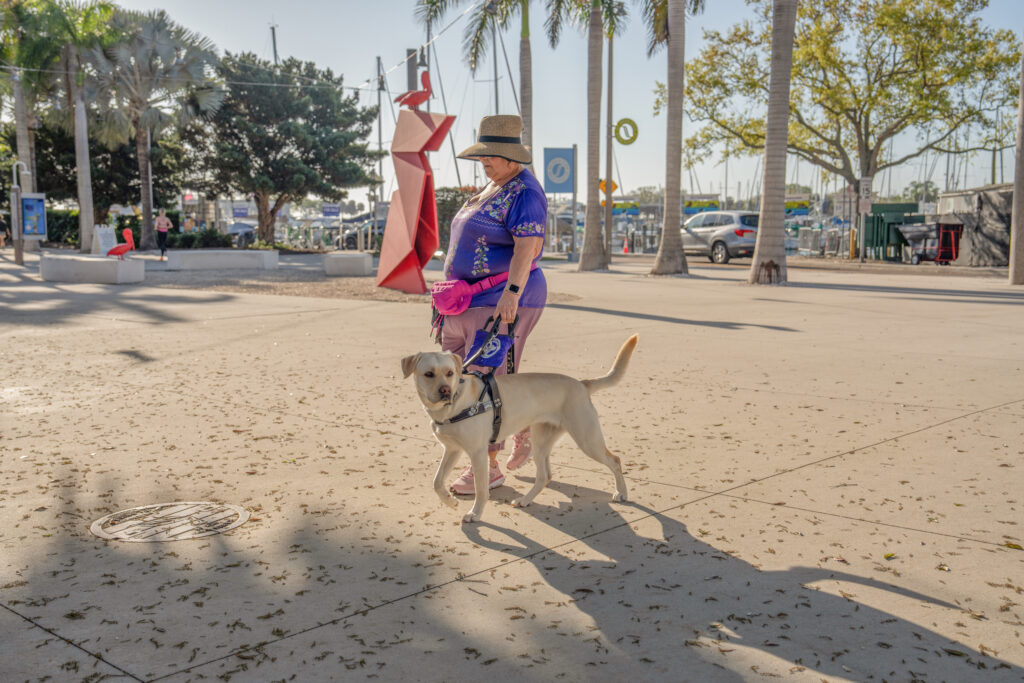
The process begins at birth. During the first year to eighteen months of life, future guide dogs are placed with volunteer puppy raisers. This critical window focuses heavily on early socialization, exposure to diverse environments (such as bustling shopping malls, public transit systems, and crowded city streets), and basic house manners. While formal "intelligent disobedience" is not introduced at this stage, raisers lay the vital groundwork of confidence, environmental stability, and emotional resilience. A fearful or easily startled dog can never make sound safety-critical decisions later in life.
Phase 2: Advanced Formal Training (Months 18 to 24)
Once basic maturity is reached, the dogs transition to professional training facilities—such as organizations like Dogs Inc.—where they undergo a minimum of five months of advanced, specialized instruction under the guidance of certified mobility experts. During this intensive phase, trainers systematically introduce complex scenarios designed to test and shape the dog’s independent judgment.
Instead of merely rewarding automatic compliance, trainers utilize positive reinforcement to reward dogs for breaking patterns when safety dictates. For instance, if a trainer gives a "forward" cue while a simulated hazard is introduced, the dog learns that pausing, refusing to move, or steering away yields positive outcomes (praise, treats, and play). Over hundreds of repetitions, the dog internalizes a new core rule: Safety supersedes compliance.
Phase 3: Team Matching and the Juno Walk
Graduation does not mean the training is complete; it simply marks the transition to a two-entity team. Before a handler is paired with a dog, rigorous matching evaluations take place. Organizations assess the handler’s physical pace, everyday environments, commuting habits, and lifestyle preferences.
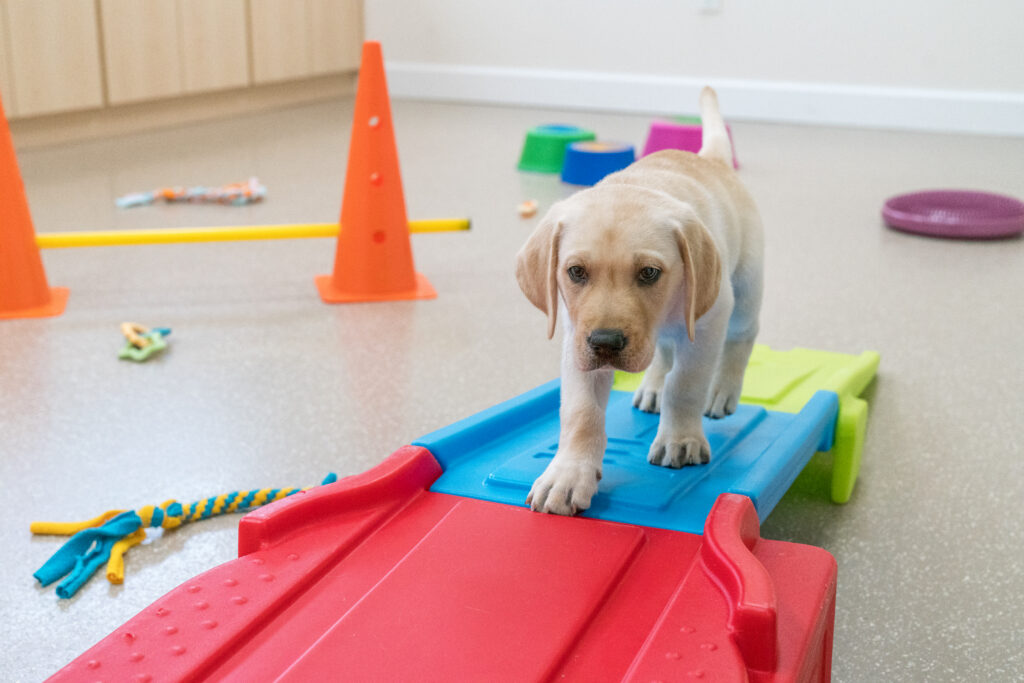
A critical component of this matching process is the Juno Walk, a specialized assessment technique used to evaluate compatibility in real-time transit scenarios before a permanent match is finalized. Once the team is established, the handler and dog spend weeks training together at the facility, learning each other’s rhythms and building the psychological bridge necessary for intelligent disobedience to function in the wild.
Supporting Context & Metrics: The Mechanics of Safety
To understand why intelligent disobedience is so vital, one must examine the sensory landscape of a visually impaired individual. While individuals who are blind develop hyper-acutely tuned senses of hearing and touch, certain urban and rural hazards remain entirely imperceptible without canine assistance.
Common Scenarios Requiring Intelligent Disobedience
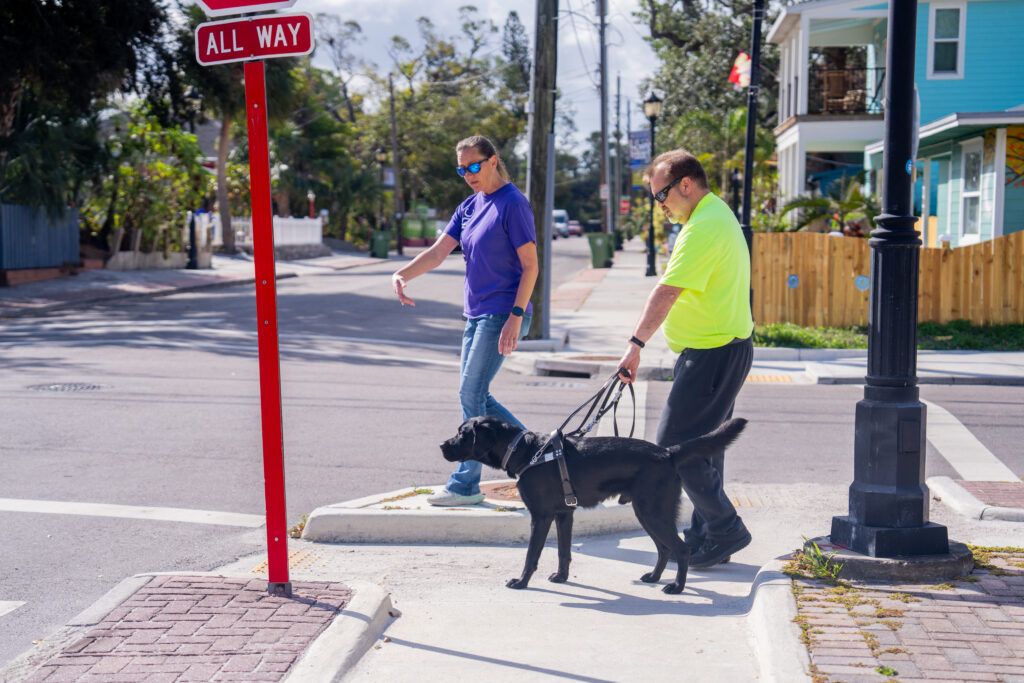
- Vehicular Traffic Infractions: A handler, relying on distant acoustic cues or misjudging a light cycle, issues a forward command to cross a street. If a turning vehicle or a vehicle running a red light approaches, the guide dog freezes in place, directly disobeying the "forward" cue.
- Low-Hanging Obstacles: Tree branches, construction scaffolding, or protruding storefront signs often sit at head height—well above a white cane’s detection zone and out of a handler’s reach. The dog must steer the handler laterally around these hazards rather than walking directly into them.
- Surface and Structural Hazards: Open construction excavations, missing manhole covers, slick ice patches, or unexpected sidewalk blockages require the dog to plot an immediate detour, overriding the most direct or commanded path.
The Metrics of Mastery
Training organizations track several qualitative and quantitative indicators to measure a dog’s readiness:
- Latency of Decision-Making: How quickly a dog assesses a moving hazard and decides to halt.
- Composure Under Pressure: The ability to remain calm and focused despite sudden loud noises, sirens, or erratic pedestrian behavior.
- Resolution Independence: Whether the dog can successfully navigate around an obstacle independently rather than simply stopping and waiting indefinitely.
Official Perspectives: Insights from Mobility Instructors
Instructors who evaluate these animals emphasize that intelligent disobedience is an art as much as a science. Not every dog possesses the psychological profile required for the job.
According to lead guide dog mobility instructors, the evaluation process is rigorous and unsparing:
"We are looking for a very specific balance," notes one senior mobility trainer. "A dog that is too submissive will blindly follow a command right into danger because it wants to please the human. Conversely, a dog that is too independent will ignore commands entirely and do whatever it wants. Intelligent disobedience requires a ‘benevolent stubbornness’—a cooperative intelligence where the dog respects the rules of travel, but respects the laws of physics and self-preservation even more."
Instructors utilize increasingly realistic training routes—injecting unpredictable elements like cyclists darting out from blind corners or sudden road closures—to test whether a dog can pivot from a routine obedience mindset into an active, protective leadership role. Only dogs that consistently demonstrate composure, sharp situational awareness, and unshakeable judgment graduate to active service.
Future Outlook: The Evolution of Mobility and Partnership
As modern infrastructure evolves, the challenges faced by guide dog teams are shifting. The rise of silent electric vehicles (EVs), increasingly congested metropolitan areas, and the proliferation of micromobility devices (such as electric scooters abandoned on sidewalks) present new layers of sensory complexity.
Despite technological advancements—such as smartphone navigation apps and collision-warning wearables—no electronic device can replace the dynamic, empathetic decision-making of a living creature. The future of guide dog training points toward even more specialized environmental exposure, preparing dogs to handle modern urban density with grace.
Furthermore, the philosophical core of intelligent disobedience continues to influence how we view service animal training at large. By proving that animals can be taught to weigh ethical and safety outcomes against direct commands, guide dog programs have expanded our understanding of canine cognition.
Conclusion: Freedom Through Trust
At its core, intelligent disobedience is a paradox: it is an act of defiance rooted in absolute devotion. By saying "no" to a handler’s command, a guide dog says "yes" to safety, longevity, and shared life.
For the visually impaired handler, learning to trust that sudden, unyielding stop on a busy street corner represents the ultimate leap of faith. It transforms a working relationship into a profound alliance. Through rigorous breeding, two years of specialized development, and the cultivation of an unyielding mutual trust, these exceptional canines do far more than guide their handlers from point A to point B. They provide the priceless gift of true, unencumbered independence—proving that sometimes, the greatest obedience is knowing when to disobey.