Executive Overview
On September 22, 2026, an industrial chemical leak occurred at the Nestlé Purina PetCare manufacturing facility in Flagstaff, Arizona, triggering an emergency hazardous materials response, an evacuation of core facility infrastructure, and the hospitalization of three workers. According to preliminary reports, an automated chemical distribution system inadvertently combined two incompatible chemicals, causing rapid line corrosion and releasing an estimated 10 gallons of an unidentified liquid compound alongside localized chemical fumes.
While company representatives confirmed that the release occurred within the facility’s boiler room—a utility area isolated from primary food-processing operations—the event has ignited an intense debate among consumer advocates, industrial safety regulators, and veterinary health professionals. The Flagstaff facility serves as a major regional production hub for several widely distributed pet food lines, including Dog Chow, Beneful, Nestlé Purina ONE, Alpo, and Purina Pro Plan.
Beyond the immediate operational disruption, the incident underscores a persistent regulatory blind spot in the commercial pet food sector: the total absence of mandatory cross-agency reporting protocols between worker safety regulators, local emergency responders, and food safety oversight bodies. While the Occupational Safety and Health Administration (OSHA) and municipal fire departments are dispatched to manage human health risks and structural containment, neither entity is legally required to notify the U.S. Food and Drug Administration (FDA) or state feed officials regarding environmental hazards within manufacturing plants. Consequently, public health advocates are questioning whether hazardous chemical releases, industrial fires, and atmospheric contaminants could potentially impact raw ingredients or finished product safety without triggering regulatory scrutiny.
Detailed Chronology of the Flagstaff Incident
The Initial Release and Automated System Failure
During routine operations on September 22, 2026, an internal mechanical failure occurred within the chemical distribution apparatus at the Purina Flagstaff facility. The automated delivery system, designed to manage utility and water-treatment chemicals, incorrectly mixed two chemicals that are incompatible when combined.
The resulting exothermic or acidic reaction caused rapid corrosion along a distribution pipe, breaching the line and spilling approximately 10 gallons of the liquid mixture onto the floor of the boiler house. Fumes generated by the reaction quickly filled the immediate area, prompting site management to initiate an immediate emergency protocol and evacuate all personnel from the boiler house.
Emergency Response and Hospitalizations
The Flagstaff Fire Department and a specialized regional Hazardous Materials (Hazmat) team were dispatched to the scene to assess atmospheric toxicity and stabilize the chemical containment area.
[System Failure: Incompatible Chemical Mix]
                   │
                   ▼
[Rapid Line Corrosion & 10-Gallon Leak]
                   │
                   ▼
[Boiler Room Evacuation & Hazmat Dispatch]
                   │
                   ▼
[3 Workers Transported for Medical Evaluation]
                   │
                   ▼
[Atmospheric Clearance & Shift Resumption]
During the initial phase of the emergency response, three facility associates required immediate medical evaluation for potential chemical exposure and acute respiratory irritation. The workers were transported by emergency services to a nearby hospital for treatment.
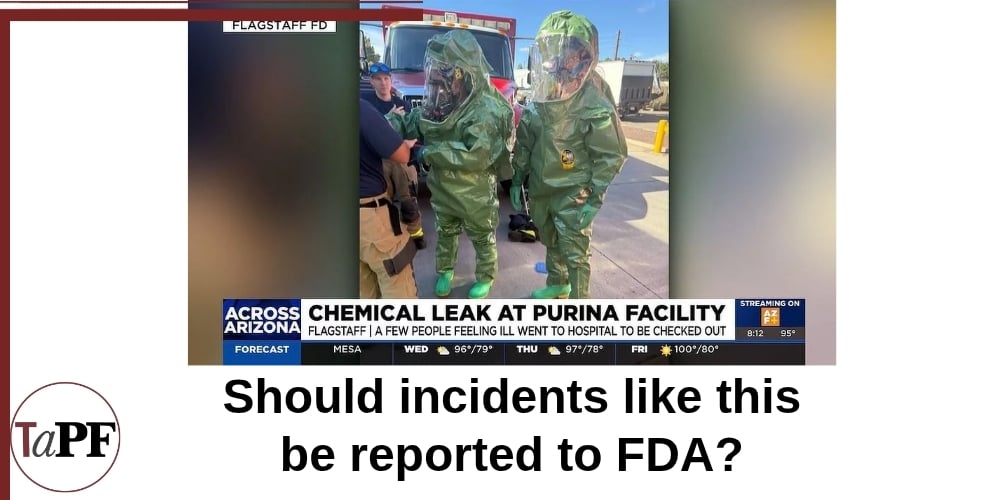
Following an assessment by emergency medical staff, none of the three employees were admitted to the hospital, and all three were discharged and cleared to return to work later the same day.
Atmospheric Testing and Clearance
Hazmat responders deployed specialized gas-detection equipment throughout the boiler room and adjacent utility corridors to identify airborne toxins or combustible gases. Upon completing atmospheric sampling, emergency responders detected no actionable levels of dangerous gas and issued an official "all-clear," allowing facility management to clear workers for re-entry and resume normal operations.
Unresolved Analytical Questions
Despite the swift emergency clearance, key technical details surrounding the incident remain undisclosed to the public:
- Chemical Identification: Neither Nestlé Purina nor emergency officials have publicly disclosed the specific chemical compounds involved in the mixture or the resulting corrosive reaction.
- Corrosive Vapor Dispersal: Information regarding the specific chemical properties of the vapors—such as volatility, particulate weight, and atmospheric persistence—remains unreleased.
- HVAC and Air-Handling Isolation: Details have not been provided regarding whether the boiler room shares continuous air filtration, intake, or ventilation ductwork with raw ingredient storage or processing lines.
Supporting Context & Regulatory Metrics
Industrial Vulnerabilities in Pet Food Extrusion Facilities
Pet food manufacturing facilities, particularly those producing dry kibble through high-pressure thermal extrusion, operate under demanding industrial conditions. Processing plants depend on high-pressure boilers, volatile fat-application systems, and high-temperature drying ovens, creating an environment prone to operational hazards.
+-----------------------------------------------------------------------+
|                 Primary Hazards in Kibble Manufacturing               |
+-----------------------------------------------------------------------+
| 1. High-Heat Extrusion & Drying   ---> Thermal Ignition / Oven Fires  |
| 2. Grain Milling & Powder Systems ---> Combustible Dust Accumulation  |
| 3. Utility & Water Treatment      ---> Corrosive Chemical Additives   |
+-----------------------------------------------------------------------+- Combustible Organic Dust: The handling and milling of grains, corn, soybean meal, and meat-and-bone powders generate fine organic particulate matter. When suspended in air, these combustible dusts pose persistent flash-fire and explosion risks near high-heat ovens.
- Boiler and Utility Infrastructure: Boiler facilities require regular chemical dosing—such as oxygen scavengers, scale inhibitors, neutralizing amines, and caustic wash agents—to prevent mineral scaling and system corrosion. The handling of these concentrated agents introduces chemical exposure risks.
- Continuous Thermal Processing: Kibble dryers operate at elevated temperatures for extended durations. Residual grease and fine particulates accumulating in exhaust ductwork represent a primary trigger for localized industrial fires.
The Inter-Agency Regulatory Void
The Flagstaff chemical spill highlights a key structural divide in industrial safety enforcement: the operational silos separating worker protection agencies from feed safety authorities.
+-------------------------------------------------------------------------+
|                         REGULATORY DIVISION OF LABOR                    |
+-------------------------------------------------------------------------+
| AGENCY                     | JURISDICTION & PRIMARY FOCUS               |
+----------------------------+--------------------------------------------+
| Local Fire / Hazmat Teams  | Structural Containment & Immediate Safety  |
| OSHA                       | Workplace Safety & Employee Health         |
| FDA (CVM) & State Feed     | Product Safety, Adulteration, Consumer     |
| Authorities                | Protection                                 |
+----------------------------+--------------------------------------------+
When an industrial incident occurs within a pet food manufacturing plant, regulatory responsibilities are compartmentalized:
- Local Fire and Emergency Services focus strictly on life safety, fire suppression, and environmental containment.
- OSHA exercises jurisdiction under the Occupational Safety and Health Act to investigate workplace safety, chemical exposure limits, and engineering controls.
- The FDA’s Center for Veterinary Medicine (CVM) and state agricultural regulators oversee product safety under the Federal Food, Drug, and Cosmetic Act (FD&C Act), monitoring feed adulteration, physical contamination, and toxic residues.
Crucially, under current federal and state frameworks, no statutory mechanism requires emergency responders or OSHA inspectors to notify the FDA or state feed control officials when a hazardous chemical release or fire occurs inside an active food processing facility.

Historical Precedent: The 2020 Midwestern Pet Foods Case
This regulatory compartmentalization is not without precedent. During the 2020–2021 investigation into fatal aflatoxin contamination associated with Midwestern Pet Foods—which led to dozens of pet deaths across the United States—it was revealed that the FDA identified high concentrations of aflatoxin-contaminated corn meal within processing facilities.
While aflatoxin ingestion is fatal to canines, inhaling grain dust containing elevated levels of mycotoxins presents severe health risks to factory workers, including acute hepatic toxicity and long-term carcinogenic hazards. When consumer advocates queried whether the FDA had alerted OSHA regarding worker dust exposure during the investigation, agency representatives confirmed that no inter-agency notification was made, citing a lack of jurisdictional authority over workplace health standards.
This historical divide demonstrates a persistent structural issue: information concerning industrial hazards rarely crosses jurisdictional boundaries between human occupational safety and animal feed safety.
Official Statements & Disclosures
Nestlé Purina Response
Following the September 22 incident, a spokesperson for Nestlé Purina issued a formal statement addressing the event:
"The Flagstaff factory encountered a small, 10-gallon chemical spill that caused an immediate evacuation of the boiler room, which is not connected to pet food production. The Flagstaff Fire Department was called to evaluate the situation. Upon arrival, the Fire Department detected no trace of a dangerous gas and gave the all-clear to re-enter the building. Three associates visited a nearby hospital yet none were admitted and all returned to work later in the day."
The corporate statement highlights three key points:
- Physical Isolation: The chemical leak was confined entirely to the utility boiler infrastructure, isolated from raw material storage, extrusion machinery, and packaging lines.
- Negative Gas Detection: Municipal emergency responders detected no hazardous gaseous residues or airborne toxins at the time of testing.
- Minimal Workforce Impact: No workers suffered long-term injury or required hospitalization beyond initial medical screening.
Advocacy and Independent Analysis
In response to corporate assurances, consumer advocate Susan Thixton, founder of TruthaboutPetFood.com and representative at the Association for Truth in Pet Food (ATPF), raised concerns regarding long-term transparency and feed integrity.
"Purina has not disclosed what those two chemicals were and has not disclosed if any pet food ingredients or finished pet foods were exposed to the dangerous gas… Dry pet food plants call their local fire department more often than you might think. When the fire department arrives, their concern is the employees and the building—not the pet food or ingredients."
Advocates point out several key concerns regarding self-reported industrial incidents:
- Ingredient Vulnerability: High-temperature chemical fires or corrosive vapor leaks can migrate through shared ventilation ductwork, potentially exposing open storage bins containing dry grains, animal fats, or protein meals to chemical residues or particulate contamination.
- Lack of Independent Quality Testing: Because state and federal feed officials are rarely notified of minor industrial emergencies, finished product batches processed during or immediately after a facility event are not subject to mandatory regulatory testing for airborne chemical residues or toxic contamination.
Future Outlook & Policy Recommendations
Proposed Regulatory Reforms
The Flagstaff incident has renewed calls from consumer watchdog groups, veterinary safety advocates, and regulatory experts for structural reforms governing industrial pet food facilities. Proposed policy initiatives include:
+-------------------------------------------------------------------------+
|                  PROPOSED INTEGRATED SAFETY FRAMEWORK                  |
+-------------------------------------------------------------------------+
| 1. Mandatory Inter-Agency Reporting Protocols                           |
|    Require emergency dispatchers & OSHA to automatically cross-notify   |
|    FDA CVM & state feed regulators upon responding to food facility    |
|    incidents.                                                           |
|                                                                         |
| 2. Post-Incident Environmental & Batch Auditing                         |
|    Mandate third-party testing for finished products produced during    |
|    or immediately following a hazardous chemical or thermal event.      |
|                                                                         |
| 3. Mandatory Chemical Ingredient Disclosure                             |
|    Require manufacturing facilities to maintain public SDS logs of      |
|    all utility-level chemical additives used near production zones.    |
+-------------------------------------------------------------------------+- Mandatory Cross-Agency Notification Rules: Enacting statutory requirements that mandate local emergency response units and OSHA officials to file real-time electronic notifications with the FDA and state departments of agriculture whenever a Hazmat response or industrial fire occurs at a food or feed production plant.
- Standardized Post-Incident Quality Auditing: Establishing formal guidelines requiring independent environmental sampling and ingredient testing following any chemical release or structural fire within a processing facility before product lots are released into commercial supply chains.
- Enhanced Utility Isolation Standards: Modernizing building code standards under the Food Safety Modernization Act (FSMA) to ensure complete atmospheric, structural, and HVAC isolation between utility facilities (boilers, chemical storage, water treatment) and raw ingredient or finished product handling areas.
Conclusion
While the September 22 chemical spill at Purina’s Flagstaff plant was contained without severe worker injuries or reported product compromise, the event emphasizes broader vulnerabilities in regulatory oversight. As pet food manufacturing grows increasingly centralized and complex, closing the information-sharing gap between worker safety agencies and food safety regulators remains essential to ensuring both worker protection and product safety.