
Executive Overview
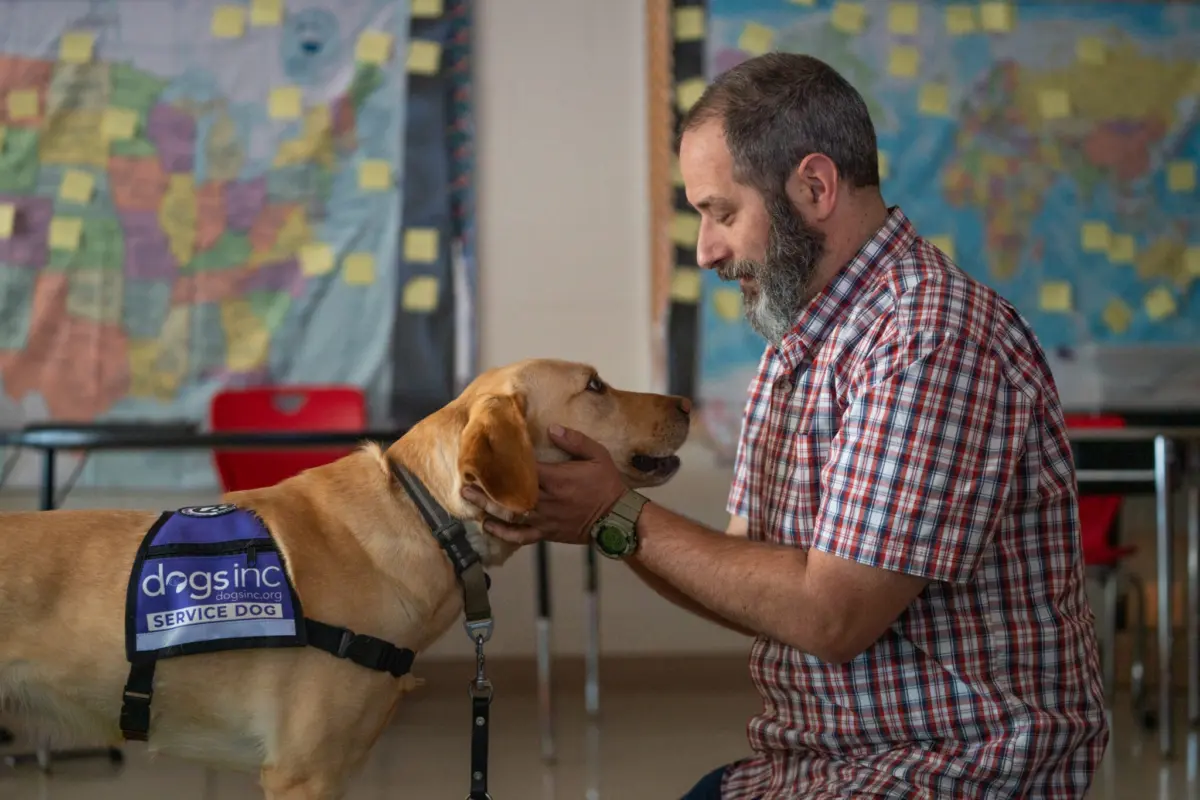
In a world saturated with sensory stimuli—blaring sirens, the rich aromas of bustling food courts, sudden movements in crowded transit hubs, and the unpredictable behavior of passing animals—the average domestic dog is constantly tempted to break its attention. For a pet, giving in to these impulses is a harmless exercise in curiosity. However, for an individual with a disability whose safety, mobility, and independence rely on a working animal, a single moment of distraction can have critical consequences.
Enter the specialized world of service dog training, where the ability to maintain absolute composure amidst chaos is not merely a trick, but a meticulously engineered discipline. At the vanguard of this specialized methodology is Dogs Inc., an organization dedicated to breeding, raising, and training elite guide and service dogs. Through a structured continuum of early socialization, positive reinforcement, impulse control, and real-world public access training, Dogs Inc. transforms ordinary puppies into extraordinary, focused partners.
This comprehensive report examines the anatomy of service dog focus, the science of distraction neutrality, the progressive methodologies utilized by puppy raisers and professional instructors, and the profound impact these working animals have on human lives.
Detailed Chronology: The Lifecycle of Focus Training at Dogs Inc.
The journey toward unwavering focus does not begin when a dog is handed off to its permanent handler; rather, it is a multi-stage developmental timeline that starts the moment a puppy is born.
Phase 1: Neonatal Foundations and Early Socialization (Birth to 4 Months)
Focus training begins long before a puppy ever performs a formal service task. In the earliest weeks of life, Dogs Inc. puppies are introduced to novel sights, sounds, and tactile experiences under controlled conditions.
- Sensory Integration: Puppies are exposed to varied floor textures, gentle handling, and ambient noises. This early introduction prevents sensory overload later in life.
- Building Positive Associations: Every new environment—whether it is a quiet sidewalk or the threshold of a bustling grocery store—is systematically paired with calm behavior and high-value rewards. This teaches the puppy to view novel stimuli not as threats or invitations to play, but as neutral backdrop elements.
- Establishing Early Expectations: From the earliest weeks, puppy raisers set clear behavioral boundaries. Puppies are gently encouraged to offer voluntary eye contact and check in with their human handlers when presented with mild distractions.
Phase 2: Adolescent Development and Progressive Exposure (4 to 12 Months)
As the puppy matures into adolescence, the stakes of training increase. This period is characterized by the systematic introduction of environmental, social, and olfactory distractions.
- The Distance Rule: Instructors and raisers utilize distance as a primary training variable. When exposing a pup to challenging stimuli—such as a running skateboarder or a flock of birds—trainers keep the dog far enough away that it can remain calm and responsive.
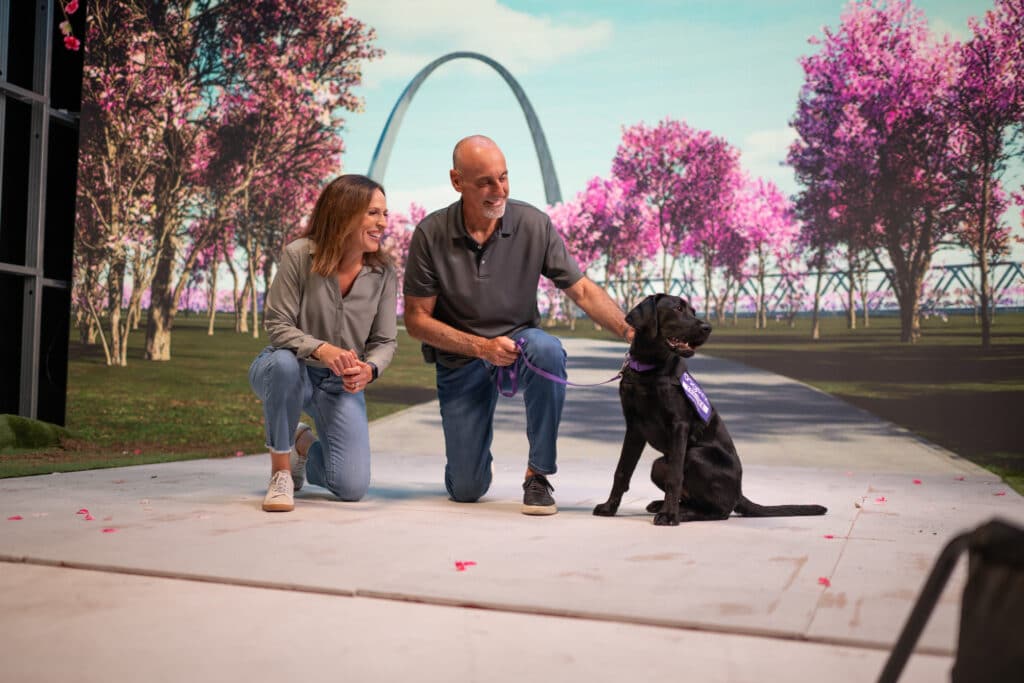
- Gradual Real-World Integration: Puppies begin transitioning into semi-controlled public spaces. They learn to navigate pedestrian traffic, sliding doors, and indoor shopping complexes while maintaining a loose leash and an attentive posture toward their handler.
Phase 3: Advanced Public Access and Proofing (12 to 24 Months)
The final phase of training at Dogs Inc. involves advanced public access preparation and "proofing" behaviors across diverse commercial and civic environments.
- Generalization of Cues: A behavior learned in a quiet training room is useless if it cannot be performed in a crowded airport terminal. Instructors test and reinforce commands across wildly different contexts until response reliability approaches 100%.
- The Final Match: Once a dog has mastered neutrality and task execution, it is paired with its lifelong human partner. Together, they undergo rigorous team training at Dogs Inc., ensuring that the communication bridge forged through focus seamlessly transfers to the end-user.
Supporting Context & Metrics: Defining Distractions and Neutrality
To understand how service dogs maintain focus, one must first categorize the vast array of stimuli they are trained to ignore. Dogs Inc. categorizes distractions into four primary vectors:
+-------------------------------------------------------------------------+
|                        THE FOUR DISTRACTION VECTORS                     |
+-------------------------+-----------------------------------------------+
| Environmental           | Crowds, traffic, sudden movement, loud noises |
+-------------------------+-----------------------------------------------+
| Social                  | Leash-greeting attempts, calls, eye contact   |
+-------------------------+-----------------------------------------------+
| Olfactory & Gustatory   | Restaurants, grocery aisles, dropped food     |
+-------------------------+-----------------------------------------------+
| Biological (Animals)    | Squirrels, birds, and pet dogs                |
+-------------------------+-----------------------------------------------+
1. Environmental Distractions
Modern urban and suburban environments are inherently chaotic. Sirens, construction work, flashing lights, and shifting crowds present a barrage of sensory input. A service dog must learn to treat these environmental factors as background noise, never flinching or pulling away from the handler’s side.
2. Social Distractions
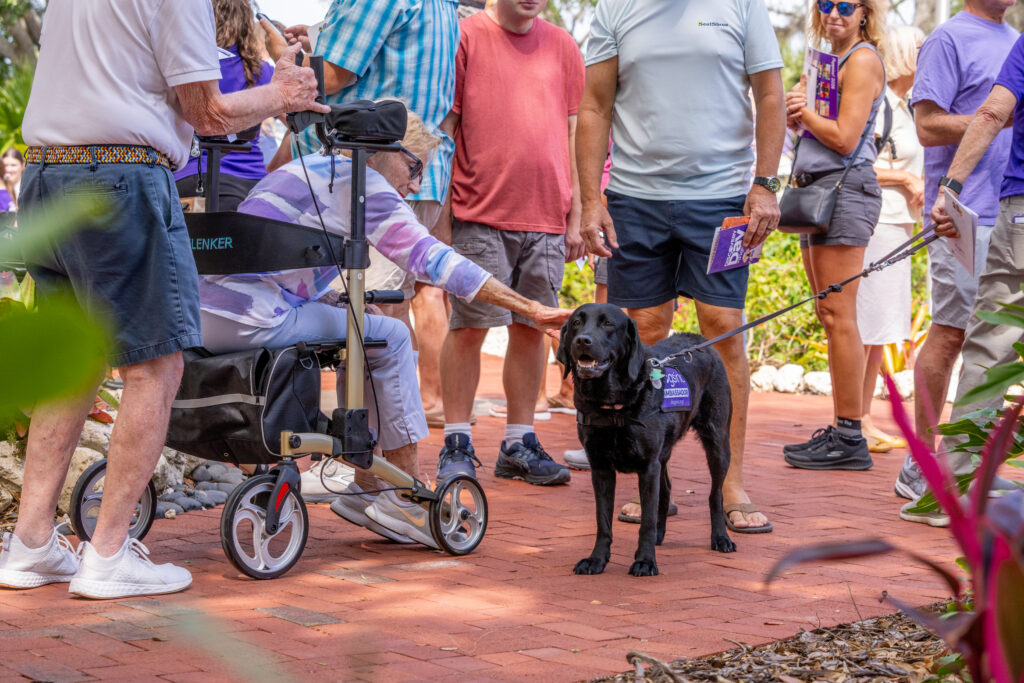
Perhaps one of the most frustrating hurdles in public access work is well-meaning members of the public. Strangers frequently attempt to make eye contact, call out to the dog, or rush up for unauthorized petting. Service dogs are specifically conditioned to ignore these social advances, keeping their attention anchored entirely on their handler.
3. Food and Scent Distractions
Olfactory input is a dog’s primary way of experiencing the world. In environments like restaurants, grocery stores, or outdoor dining areas, discarded food or rich cooking aromas present immense temptation. Through rigorous impulse control training, Dogs Inc. dogs learn that food on the ground is not an invitation to scavenge, but an obstacle to be noted and calmly bypassed.
4. Other Dogs and Animals
For an untrained canine, the sight of a squirrel darting across a park or an unruly pet dog barking on a retractable leash triggers an instant predatory or defensive response. Service dogs, however, are bred and trained for neutrality—the state of observing another animal without reacting, engaging, or breaking stride.

The Methodology: Scientific Techniques Behind Unbreakable Focus
Dogs Inc. employs a suite of evidence-based training philosophies designed to turn focus into a biological default rather than a forced compliance.
Positive Reinforcement as a Core Driver
At the heart of Dogs Inc.’s curriculum is the principle of positive reinforcement. Dogs quickly learn that maintaining focus and ignoring distractions yields high-value rewards, such as specialized treats, enthusiastic verbal praise, or play. This creates a psychological feedback loop where the handler becomes the most rewarding focal point in any given environment.
Cultivating Impulse Control
Impulse control is the cognitive pause between a stimulus and a reaction. When a service dog spots a dropped piece of chicken or hears an abrupt, loud noise, its initial instinct is to react. Training bridges this gap by rewarding the dog for choosing a moment of stillness and looking back at its handler. Over thousands of repetitions, this pause becomes automatic.
The Art of Behavior Proofing
"Proofing" refers to the process of testing a known behavior under increasingly difficult conditions. A dog might sit perfectly on command in a living room, but will it sit if a ball rolls past? Will it maintain a down-stay if another dog walks within two feet? By systematically elevating the difficulty of the training environment, Dogs Inc. ensures that working behaviors are bulletproof.
Official Statements and Industry Insights
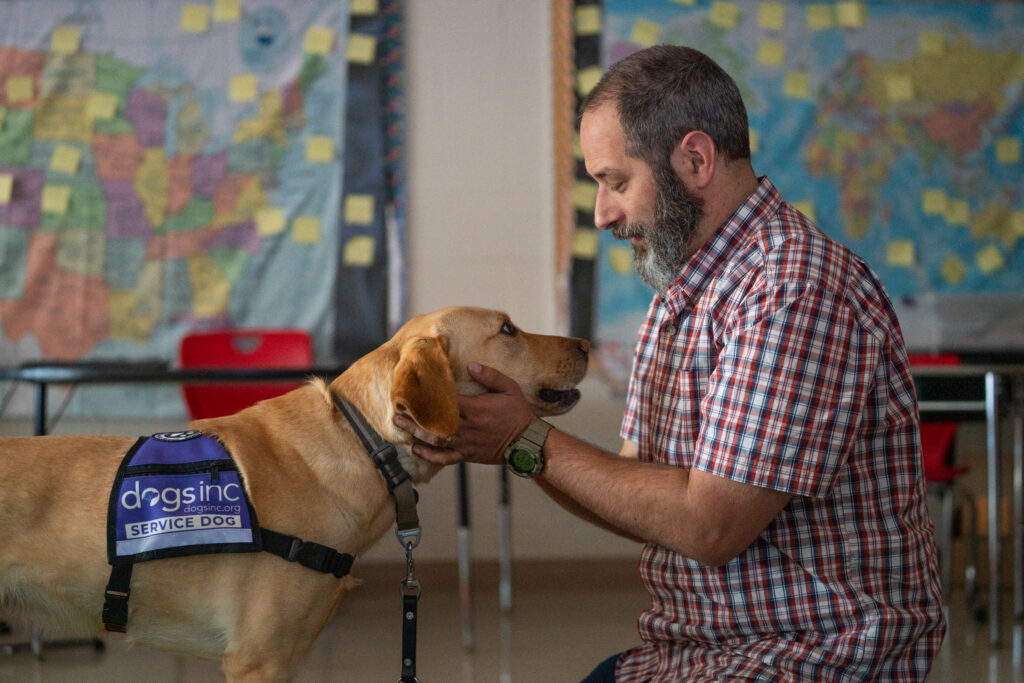
The philosophy of Dogs Inc. centers on the premise that a service dog’s focus is not merely an obedience metric, but an empowerment tool.
"A service dog is not trained to live in a vacuum, ignoring the world entirely; rather, they are trained to move through it with absolute control and quiet confidence," notes a senior training supervisor at Dogs Inc. "Our goal is to build a dynamic where the external world fades into the background, leaving the handler as the absolute center of the dog’s universe. When that bond is secure, safety and independence naturally follow."
Animal behaviorists echo this sentiment, emphasizing that true focus is rooted in mutual trust. When a dog views its handler as a consistent, fair, and rewarding leader, the dog willingly surrenders its primal instincts to prioritize human direction. This cooperative framework is what separates a certified service animal from a standard obedience-trained pet.
Future Outlook: The Evolution of Service Dog Training
As urban environments grow denser and societal reliance on accessibility infrastructure expands, the demands placed on service dogs will only increase. Organizations like Dogs Inc. are continually refining their training models to address emerging challenges, such as navigating complex digital retail environments, modern mass transit systems, and post-pandemic public spaces.

Future advancements in service dog breeding and training will likely lean even further into predictive behavioral analytics, early neurological stimulation protocols, and personalized handler-matching algorithms. However, regardless of technological or institutional evolution, the core tenet of service dog work will remain unchanged: the sacred, unbroken line of communication between human and canine.
By mastering the art of distraction-proofing and turning focus into second nature, Dogs Inc. continues to light the path forward—ensuring that individuals with disabilities can navigate the complexities of modern life not with hesitation, but with absolute confidence, safety, and freedom.