In the intricate, unpredictable world of feline rescue, professionals often speak of having "seen it all." Over decades of service, animal welfare workers process thousands of animals, encountering an array of medical anomalies, behavioral quirks, and coat variations. Yet, biology occasionally pulls off a feat so statistically improbable that it leaves even the most seasoned veterans astounded.
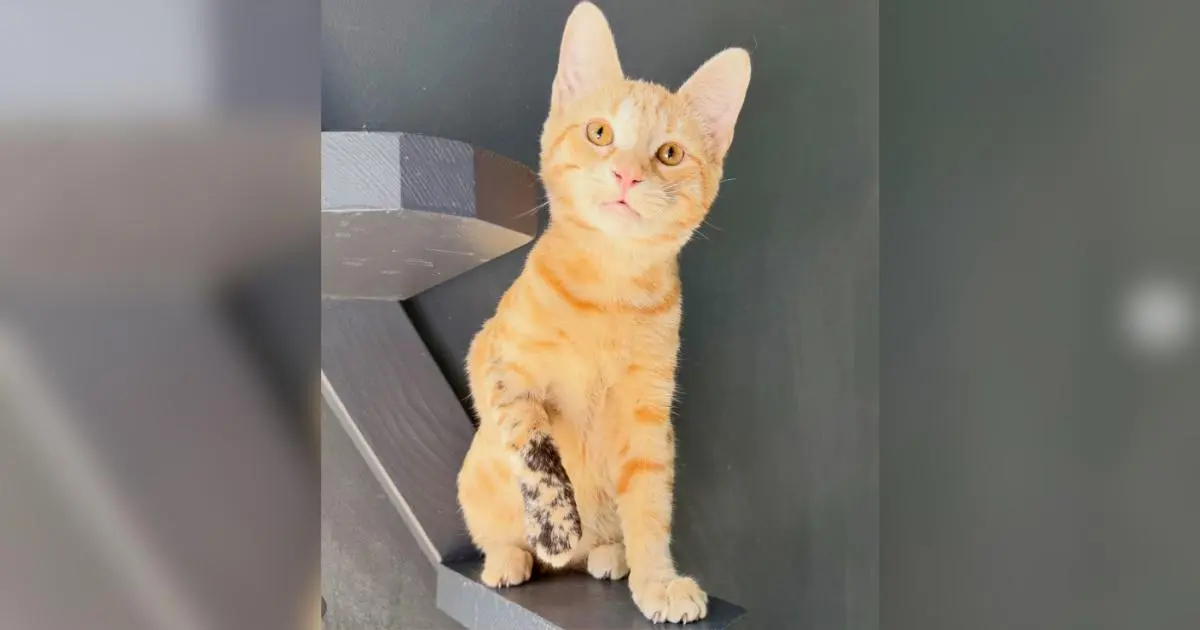
Enter Meo, an approximately one-year-old feline survivor plucked from the urban streets of Gardena, California. Brought into the care of the Southern California-based rescue organization Feline Lifeline, Meo is not merely another rescue case; he is a walking statistical anomaly. Boasting a striking tortoiseshell and calico coat, Meo represents a demographic so remarkably rare that his arrival sent shockwaves through a rescue team with 25 years of continuous operational history.
Statistically, male calicos and tortoiseshells occur at a rate of roughly one in every 3,000 such cats—a ratio that renders actual encounters akin to cinematic fiction. For a quarter of a century, Feline Lifeline had known of these cats purely through the lens of genetic theory. Meeting one in the fur felt like an impossibility. Consequently, the team christened him "Meo"—a clever, affectionate nod to Neo, the legendary protagonist of the science-fiction epic The Matrix.
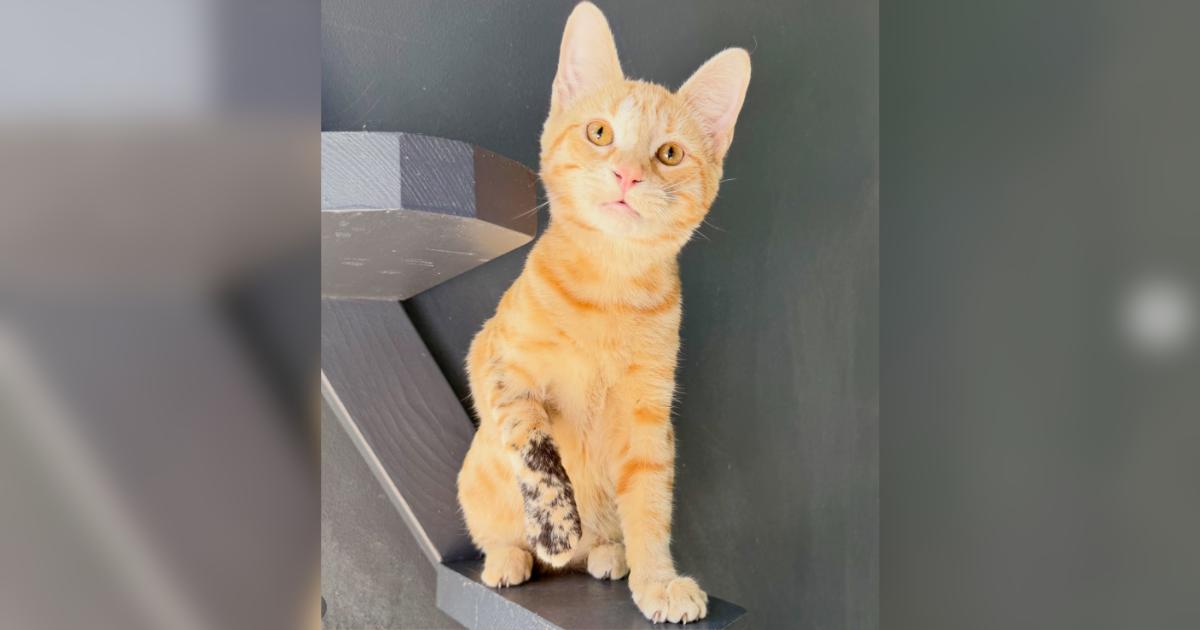
Beyond his extraordinary chromosomal makeup, Meo possesses a distinct physical flourish—a rogue splash of black fur climbing his right front leg—and an overwhelmingly affectionate disposition. Far from being a standoffish genetic specimen, this former street survivor treats personal space as an obsolete concept, proving that while his coat is the product of a rare biological glitch, his heart is entirely built for human connection.
Detailed Chronology: From the Streets of Gardena to Feline Celebrity
The Long Drought: 25 Years of Missing the Impossible
To fully appreciate the arrival of Meo, one must understand the sheer breadth of Feline Lifeline’s institutional history. Operating for a quarter-century, the rescue has taken in thousands of cats. During that time, the staff has rehabilitated feral cats, nursed critical neonatal litters back to health, managed chronic medical conditions, and cataloged virtually every common and uncommon coat color known to felinology.
Tabby points, solid lavenders, muted duns, and striking tuxedos are all par for the course. However, male calicos and tortoiseshells remained a mythical white whale. Rescue workers frequently joke that male torties and calicos occupied the exact same category of theoretical existence as "competent bureaucracy" and "affordable veterinary medicine"—concepts that textbooks and lectures insist are real, yet provide little tangible evidence in day-to-day operations.
Statistically, the rescue world acknowledges their existence. Genetic textbooks validate the phenomenon. Yet, for 25 years, Feline Lifeline’s personnel had never laid eyes on one in their own facilities.
The Discovery on the Streets
Meo’s journey began far away from the insulated comfort of a foster home. Surviving on the rugged, unforgiving pavement of Gardena, California, Meo had to navigate the daily hazards of urban wildlife, traffic, and food scarcity. For a young cat—estimated to be roughly one year of age—the streets are a brutal testing ground.
Despite the hardships of his early life, Meo’s spirit remained remarkably intact. When he was finally secured and brought into the custody of Feline Lifeline, the initial intake procedures followed a familiar script. Staff members checked for microchips, evaluated his nutritional status, and checked his general health.
Then, someone looked closer at his coat.
The swirling mosaic of vibrant orange, deep black, and rich brown patches immediately signaled that something extraordinary was standing on the examination table. A quick check of his anatomy confirmed what the coat implied: this striking patchwork feline was unmistakably male.
The Birth of "Meo"
Realizing the profound rarity of what was sitting before them, the Feline Lifeline team understood that a conventional moniker—such as "Max," "Oliver," or "Simba"—simply would not do. They needed a name that captured both the pop-culture irony of the moment and the scientific implications of his arrival.
Drawing inspiration from the Wachowskis’ 1999 masterpiece The Matrix, they named him Meo. In the film, Neo is hailed as "The One"—an anomaly prophesied to break the system. For a rescue that had spent 25 years waiting for the statistical anomaly they had only heard about in whispers, Meo was quite literally The One. As the team later quipped, after decades of waiting, the Matrix had finally malfunctioned entirely in their favor.
Supporting Context & Metrics: The Science Behind the Coat
To understand why Meo caused such a stir among animal professionals, one must dive into the fascinating, complex world of feline genetics. The vibrant, multi-colored coats known as tortoiseshell and calico are not actual breeds of cats; rather, they are color patterns dictated by sex-linked chromosomes.
+-----------------------------------------------------------------+
|                   FELINE GENETIC COMPARISON                     |
+----------------------------------+------------------------------+
| STANDARD FEMALE (XX)             | STANDARD MALE (XY)           |
+----------------------------------+------------------------------+
| • Inherits two X chromosomes.    | • Inherits one X and one Y.  |
| • Can carry distinct color codes | • Can only express the color |
|   on each X chromosome.          |   carried on its single X.   |
| • X-chromosome inactivation      | • Results in solid colors,   |
|   creates patchwork orange/black |   tabbies, or bicolors without|
|   calico/tortoiseshell coats.    |   the calico patchwork.      |
+----------------------------------+------------------------------+
| RARE MALE ANOMALY (XXY / Mosaic)                                |
+----------------------------------+------------------------------+
| • Klinefelter syndrome or genetic mosaicism allows an extra X.  |
| • Enables the simultaneous expression of orange and black.      |
| • Occurs in roughly 1 out of every 3,000 calico/tortie cats.    |
+----------------------------------+------------------------------+
The Chromosomal Mechanics
In domestic felines, the genes responsible for the primary coat colors of orange and black are carried exclusively on the X chromosome.
The Female Equation (XX): Normal female cats inherit two X chromosomes—one from the mother and one from the father. Because female cats possess a dual set of X chromosomes, they can inherit an allele for orange fur on one X chromosome and an allele for black fur (or non-orange) on the other. During embryonic development, a process called X-chromosome inactivation (or lyonization) randomly deactivates one of the X chromosomes in each cell. As the cells multiply, this creates distinct patches of orange and black fur, resulting in the iconic tortoiseshell or calico appearance.
The Male Equation (XY): Normal male cats inherit only one X chromosome (from their mother) and one Y chromosome (from their father). Because they possess only a single X chromosome, they can only express the color carried on that specific chromosome. Consequently, a normal male cat can be orange, black, grey, or white, but he cannot naturally display both orange and black patches simultaneously.
How Male Calicos Happen
For a male cat to display a tortoiseshell or calico coat, a rare genetic variation must occur. The most common biological explanation is Klinefelter syndrome, a chromosomal abnormality where a male cat inherits an extra X chromosome, resulting in an XXY configuration instead of the standard XY.
Other instances can be attributed to chimeric or mosaic genetics, where two fertilized embryos merge early in development, or somatic mutations. Regardless of the specific mechanism, these genetic anomalies are profoundly rare. Furthermore, because of the underlying chromosomal conditions (such as XXY), the vast majority of male calico and tortoiseshell cats are sterile, making Meo’s existence a true one-in-a-thousand evolutionary fluke.
The "Bonus Feature": A Masterclass in Rendering
As if his genetic makeup wasn’t enough to secure his legendary status, Meo features an additional physical quirk that has delighted his rescuers.
Climbing gracefully up his right front leg is a distinct, asymmetrical smattering of deep black fur. The team at Feline Lifeline humorously observed that this final touch makes it look as though whoever was "rendering" Meoisometric model in the grand simulation of life realized at the eleventh hour that an impossible cat could stand to be just a bit more visually absurd. It is a signature mark that ensures, even among other tortoiseshells (if any others could be found), Meo would stand alone.
Official Statements & Behavioral Insights
While geneticists and statisticians might view Meo through the lens of chromosomes and probabilities, those interacting with him daily see something far more important: an exceptionally loving companion eager to put his rough past behind him.
Defying the "Standoffish" Stereotype
Rescue workers often note that cats with unique backgrounds or high-profile physical traits can sometimes be timid or overwhelmed by human attention. Meo, however, completely shatters expectations. Despite enduring the harsh realities of life on the streets of Gardena, his social confidence is remarkably robust.
According to Feline Lifeline’s behavioral notes, Meo is exceedingly affectionate and deeply invested in human companionship. He is explicitly not the type of cat who prefers to sit stoically across a room, allowing admirers to gaze at his rare genetic coat from a respectful distance.
Instead, Meo operates under a philosophy where personal space is not a boundary to be respected, but rather an unfortunate societal misconception waiting for him to correct. Whether it is nudging hands away from keyboards, draping himself across shoulders, or demanding chin scratches, Meo views every human in his vicinity as a designated source of affection.
The Rescue Perspective
Reflecting on the milestone, representatives from Feline Lifeline expressed profound amusement and warmth regarding their unexpected guest.
"After thousands of cats and 25 years of rescue work, we thought we had seen every configuration the feline universe had to offer," a rescue spokesperson noted. "Male calicos and tortoiseshells were always something we read about in textbooks—statistically probable in theory, yet entirely absent in practice. To finally meet Meo after a quarter-century feels surreal. The Matrix genuinely malfunctioned in our favor."
Yet, the rescue team is quick to emphasize that while Meo’s chromosomes made him an instant celebrity, his personality is what truly defines him. In an official statement shared with supporters, the organization noted:
"His unusual appearance may be what first gets people talking, but Meo doesn’t know that his chromosomes have made him a celebrity. As far as he’s concerned, there are humans nearby, and those humans could clearly be spending more time paying attention to him."
Future Outlook: What Lies Ahead for "The One"
Now that Meo has transitioned from a vulnerable street survivor to an internet-adjacent celebrity, his trajectory looks exceptionally bright. Having beaten astronomical genetic odds, his immediate future involves far less survival calculus and significantly more pampering, socialization, and preparation for permanent adoption.
The Search for a Forever Home
Given his extraordinary status, Feline Lifeline anticipates intense public interest in Meo. However, the rescue remains strictly committed to ensuring that whoever adopts "The One" is fully equipped to meet his substantial need for interaction and affection.
Because Meo is so socially driven and demands constant engagement, his ideal forever home will be one where he is treated as a central, active member of the family. He is not a decorative pet to be admired from afar; he is an interactive, clingy, and deeply loving companion who thrives on being the center of attention.
Educational Impact
Beyond finding Meo a loving home, his discovery has provided Feline Lifeline with an invaluable platform for public education. Thousands of animal lovers who previously assumed that all calico cats were exclusively female are now engaging in discussions about X-chromosomal genetics, Klinefelter syndrome, and the fascinating complexities of feline biology.
Conclusion: Only One Meo
In the grand tapestry of animal rescue, milestones are often measured in lives saved, medical recoveries achieved, and successful adoptions finalized. For Feline Lifeline, marking their 25th anniversary with the rescue of Meo represents a poetic convergence of science, luck, and timing.
There may be countless cats moving through the vast network of global shelters and rescues, but as his caretakers aptly point out, there is only one Meo. Having successfully navigated the perils of the Gardena streets and beaten a three-thousand-to-one genetic lottery, this remarkable feline is finally ready to settle down into the most important mission of his life: getting as close to his humans as physically possible.