
By Wendy S. Myers, CVJ
Special to Veterinary Practice News
Executive Overview
The traditional veterinary front-desk checkout bottleneck is rapidly becoming a relic of the past in forward-thinking clinics. While traditional front-desk checkouts average a sluggish seven to 10 minutes per client, modern in-room checkout models slash that processing time down to a streamlined two to five minutes.
When Dr. Reagan McDonald and practice manager Jennifer Atchley prepared
to open Partners Animal Hospital in Lakewood Ranch, Florida, in June 2026, operational efficiency was engineered into the clinic’s DNA from day one. Rather than relying on guesswork, leadership conducted field research by visiting established sister practices in Wesley Chapel and Sarasota to observe successful point-of-sale workflows firsthand. By outfitting their exam rooms with portable laptops and mobile credit card readers—seamlessly integrated via two-way write-back capabilities to their practice information management software (PIMS)—they eliminated the traffic jams that traditionally plague veterinary lobbies.
The benefits extend far beyond shaving minutes off a transaction. Shifting the payment and checkout experience directly into the exam room fundamentally transforms the veterinary-client relationship. It creates private, unhurried spaces to discuss medical costs, reduces stress for anxious pets and mobility-impaired clients, eliminates multi-step bottlenecks, boosts forward-booking compliance, and plugs the silent revenue leaks that drain thousands of dollars from clinics annually.
This comprehensive report examines the mechanics, economic advantages, operational challenges, and clinical triumphs of transitioning away from front-desk-centric veterinary payment models.
Detailed Chronology: Building the Blueprint for Modern Workflow
The journey toward optimizing veterinary checkouts is rooted in a systemic industry problem: the overwhelming operational burden placed on front-of-house staff. Historically, veterinary clinics required clients to check in at the front desk, walk back to an exam room for an appointment, and then navigate back through a congested lobby to settle their bills at the reception counter. This creates severe logistical bottlenecks, particularly during peak morning and evening discharge hours when multiple appointments wrap up simultaneously.
The Research and Development Phase (Early 2026)
Recognizing these operational flaws ahead of their clinic’s launch, Dr. Reagan McDonald and Jennifer Atchley took a proactive approach. Months before opening the doors to Partners Animal Hospital in Lakewood Ranch, Florida, the leadership team embarked on a benchmarking tour. They visited established Partners Animal Hospital locations in Wesley Chapel and Sarasota to evaluate their checkout workflows, identify operational friction points, and test hardware solutions.
Their key findings centered on mobility and software integration. Traditional desktop point-of-sale terminals anchor transactions to a fixed physical location. To liberate the checkout process, the clinic invested in lightweight laptops and mobile credit card readers capable of traveling seamlessly throughout the building. Crucially, these devices communicate instantly with the practice’s PIMS, ensuring that ledger updates, itemized receipts, and payment confirmations are recorded in real-time without requiring manual data entry or duplicate paperwork.
Operational Launch (June 2026)
Upon opening in June 2026, Partners Animal Hospital deployed a cross-trained staff model. Team members act fluidly as both veterinary assistants and client service representatives (CSRs). During an appointment, a staff member like Tatyana Johnson can assist the veterinarian, wrap up medical discussions, and complete the transaction right inside the exam room using a mobile terminal.
This operational shift transformed the environment of the front lobby. Instead of fielding complaints about long billing lines or struggling to manage ringing phones while processing payments, CSRs are now entirely empowered to focus on their primary duties: greeting arrivals warmly, managing incoming telephone communications, and maintaining a calm, welcoming atmosphere.
"I want our client service representatives to be present on the phones and greeting clients," emphasizes Atchley. "No one wants to wait to be helped."
Supporting Context & Metrics: Why In-Room Checkout Matters
To understand the transformative power of in-room checkout, industry stakeholders must examine the hard metrics governing veterinary practice operations, financial leakage, and client psychology.
1. Time Savings and Throughput
- Traditional Front-Desk Checkout: Averages seven to 10 minutes per transaction.
- In-Room Checkout: Averages two to five minutes per transaction.
- Patient Volume Impact: In a standard three-doctor practice where a veterinarian sees an average of 15 patients per day, the clinic manages roughly 45 patient visits daily. In a traditional setup, simultaneous departures at peak hours create massive lobby congestion. In-room checkout decentralizes this traffic, allowing multiple transactions to occur simultaneously across different exam rooms.
2. Plugging the 5% to 10% Revenue Leak
Industry benchmarks indicate that veterinary practices lose an estimated 5% to 10% of their annual revenue due to missed charges, unbilled diagnostics, and incomplete invoices. For a healthy $2 million practice, this oversight translates to a staggering $200,000 lost every year.
Commonly missed charges include:
- Fecal and parasitic diagnostic tests.
- Specialized cytology and laboratory workups.
- Injection fees and medical waste fees.
- Progress exams and post-operative recheck evaluations.
Missed charges do not merely hurt the bottom line in real-time; they also result in missed medical reminders for future services, disrupting the continuity of care. Because veterinary technicians and assistants are physically present in the exam room and intimately understand the exact treatments rendered, they are uniquely positioned to log charges and collect payments accurately before leaving the room. Furthermore, integrating artificial intelligence (AI) scribe technology during examinations can help audit medical records against invoices, ensuring complete billing accuracy.
3. The 60-Second Record-to-Invoice Check
To eliminate revenue leakage permanently, leading practices implement a rapid, 60-second record-to-invoice reconciliation step. This quick checklist matches every service, medication, and diagnostic procedure documented in the medical chart against the final client invoice. By anchoring billing accuracy to a single source of truth—the official electronic medical record—clinics protect their financial health while building absolute transparency with clients.
Official Insights: Perspectives from Industry Leaders
Transitioning to an in-room checkout model requires a cultural shift within veterinary teams. Industry experts emphasize that the success of this workflow depends heavily on empowering veterinary technicians to lead financial and logistical conversations.
Transparent Cost Conversations Build Trust
In traditional clinics, presenting an unexpected bill at the front desk often blindsides clients, triggering friction and defensive reactions. In-room checkout shifts the timing and environment of financial discussions. Technicians can present itemized treatment plans, explain the clinical value of each diagnostic test or therapeutic service, and invite open dialogue while still in the privacy of the exam room.
If a pet owner expresses financial strain, the exam room provides a safe, non-judgmental space to introduce third-party financing options (such as CareCredit or Scratchpay) or adopt a spectrum-of-care approach that offers alternative treatment paths.
"Technicians can build rapport with clients," notes Atchley. "Pet owners also know who to follow up with for additional questions." This personal connection bridges the gap between medical care and administrative execution.
Stress-Free Visits for Vulnerable Patients and Clients
Lobbies are notoriously high-stress environments. Crowded waiting rooms filled with barking dogs, meowing cats, and anxious owners can elevate cortisol levels in pets before they even cross the threshold of the exam room.
For clients with mobility impairments, parents managing young children, busy professionals on strict time schedules, or owners of aggressive or highly anxious animals, the traditional checkout ritual is an exhausting ordeal. In-room checkout offers a frictionless alternative: clients settle their balances, schedule their next visits, and walk directly out of the exam room to their vehicles without ever navigating a crowded, noisy lobby.
Revolutionizing Forward Booking
Dental practices have long mastered the art of forward booking, discovering that dental hygienists achieve significantly higher success rates when pre-appointing patients than administrative scheduling coordinators do at the front checkout counter.
When clients reach the front desk to check out, their primary psychological goal is to leave. Administrative attempts to schedule future appointments at this stage are frequently met with resistance or dismissed as pushy upsells.
In contrast, when the medical team handles scheduling inside the exam room, booking the next wellness check, senior blood panel, or dental cleaning becomes an organic, clinical recommendation.
"Technicians can forward-book the next appointment because they know when the next care is due," explains Atchley. This positions preventive care as an essential health requirement rather than an administrative chore.
Future Outlook: The Evolution of Veterinary Operations
As the veterinary industry continues to grapple with labor shortages, rising overhead costs, and increasing client expectations, operational innovation is no longer optional—it is essential for survival.
The Hybrid Model and Cash Management
While digital payments, tap-to-pay smartphone terminals, and mobile credit card readers dominate modern veterinary transactions, clinics must still accommodate clients who prefer traditional payment methods.
At Partners Animal Hospital, for example, clients paying with physical cash are directed to the front desk because the facility maintains a single centralized cash drawer to safeguard accounting integrity. This hybrid approach proves that operational efficiency does not require rigid dogmatism; rather, it demands smart workflow design tailored to real-world constraints.
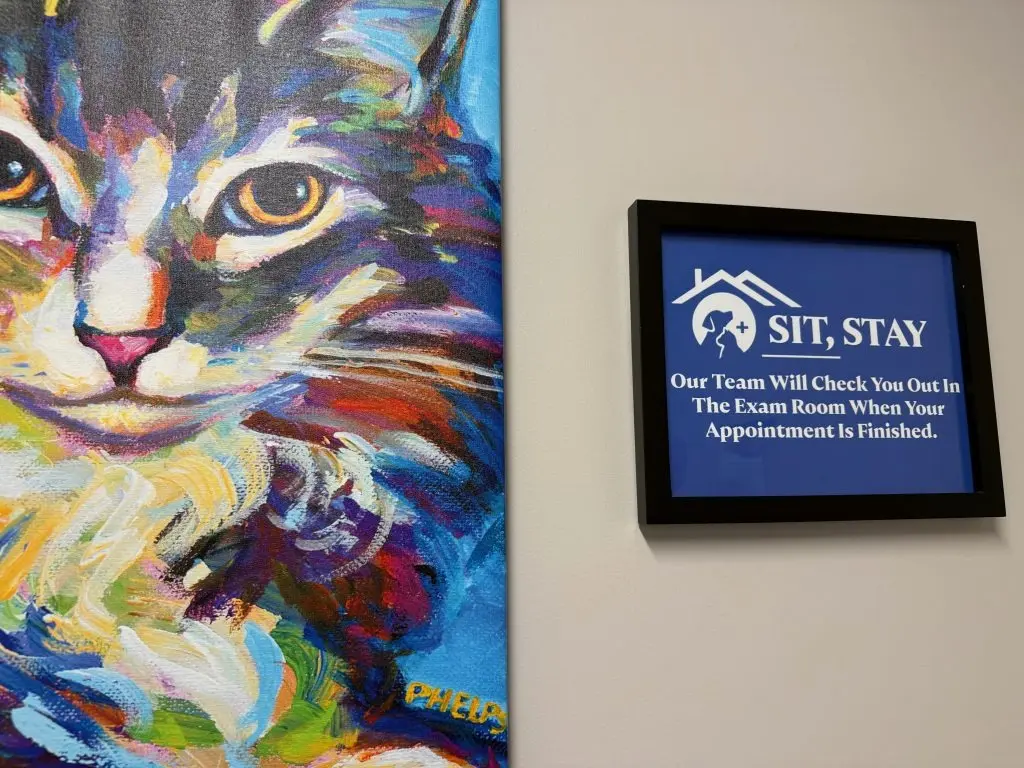
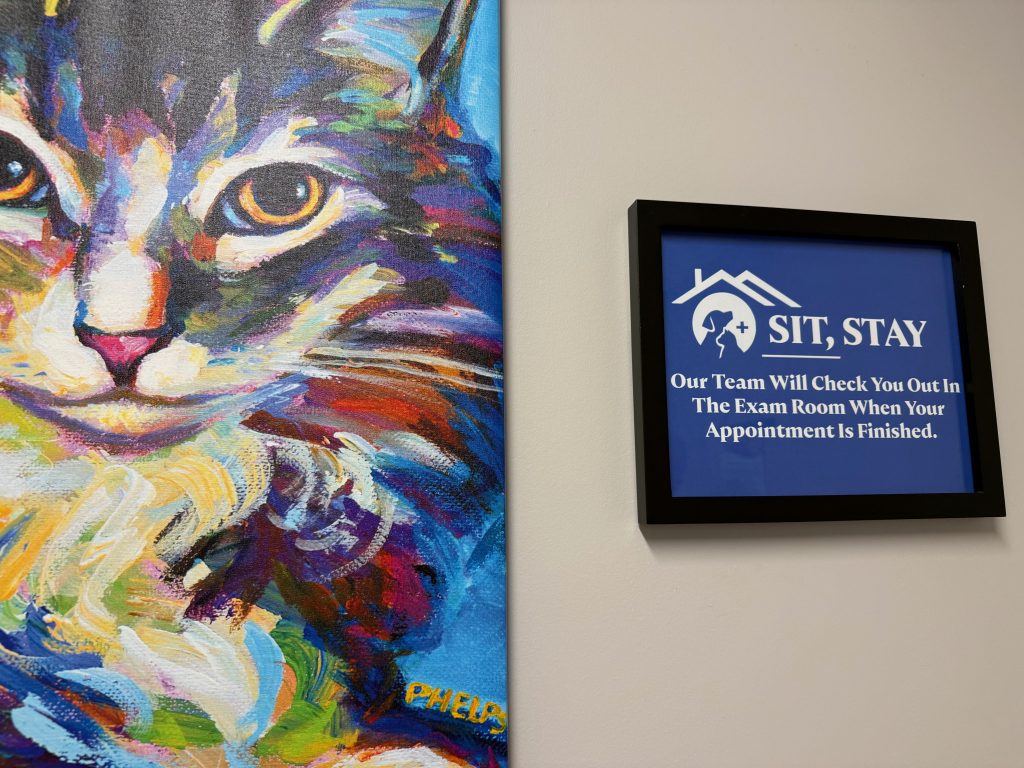
Similarly, at Vet Next Door in Parrish, Florida, visual cues play a vital role in setting client expectations. Clear, welcoming signage (such as "Sit, Stay" reminder plaques in exam rooms) gently informs clients that all transactions, consultations, and scheduling will be handled right where they sit.
The Road Ahead: Technology-Driven Efficiency
Looking forward, the integration of mobile payment hardware, AI-powered medical scribing, and two-way PIMS software synchronization will become the gold standard across general practice, specialty, and emergency veterinary medicine.
Practices that embrace in-room checkout will continue to reap the rewards:
- Happier, less stressed clients who enjoy a boutique, concierge-level healthcare experience.
- Empowered veterinary technicians who play an active, respected role in client communication and financial transparency.
- Protected revenue streams that capture 100% of earned income by eliminating missed charges.
- Thriving practice bottom lines driven by superior forward-booking compliance and optimized labor deployment.
By rethinking the physical and operational architecture of the veterinary visit, clinics like Partners Animal Hospital are proving that efficiency and empathy are not mutually exclusive—they are the twin pillars of the modern veterinary practice.