
Executive Overview
One of the most celebrated and widely cited ecological success stories of the modern era—the triumphant return of gray wolves to Yellowstone National Park and their subsequent restoration of the landscape—is facing unprecedented scientific scrutiny. For nearly three decades, the prevailing narrative taught to millions of schoolchildren, broadcast in nature documentaries, and cited in academic textbooks has been that of a classic "trophic cascade." According to this widely accepted paradigm, the reintroduction of apex predators in 1995 dramatically altered elk behavior and populations, which in turn allowed willows, aspens, and cottonwoods to recover, ultimately breathing new life into everything from beaver colonies to songbird populations.
However, a rigorous new peer-reviewed analysis published in the journal Global Ecology and Conservation threatens to upend this foundational conservation myth. Researchers from Utah State University and Colorado State University argue that a high-profile 2025 study significantly overstated the ecological footprint of wolf recovery in Yellowstone. According to the critique, the earlier work relied on flawed statistical methodologies, circular reasoning, and methodological missteps that yielded wildly exaggerated conclusions regarding landscape-scale environmental healing.
Rather than a dramatic, park-wide ecological renaissance catalyzed entirely by wolves, the new analysis suggests that vegetation recovery is far more modest, highly localized, and driven by a complex interplay of hydrology, localized browsing pressures, and site-specific environmental conditions. While the authors of the critique emphasize that they are not seeking to downplay the genuine importance of apex predators in ecosystems, their findings strike at the heart of how science is communicated, modeled, and interpreted in the public sphere. This comprehensive investigative report examines the core claims of the new analysis, traces the historical context of the Yellowstone wolf debate, analyzes the technical flaws identified in the disputed models, and explores what this means for the future of wildlife management and ecological science.
Detailed Chronology: The Rise, Fall, and Re-Examination of the Yellowstone Trophic Cascade
To understand the weight of the recent critique, one must trace the timeline of one of North America’s most ambitious conservation experiments and the scientific debates that followed in its wake.
1995–1996: The Historic Reintroduction
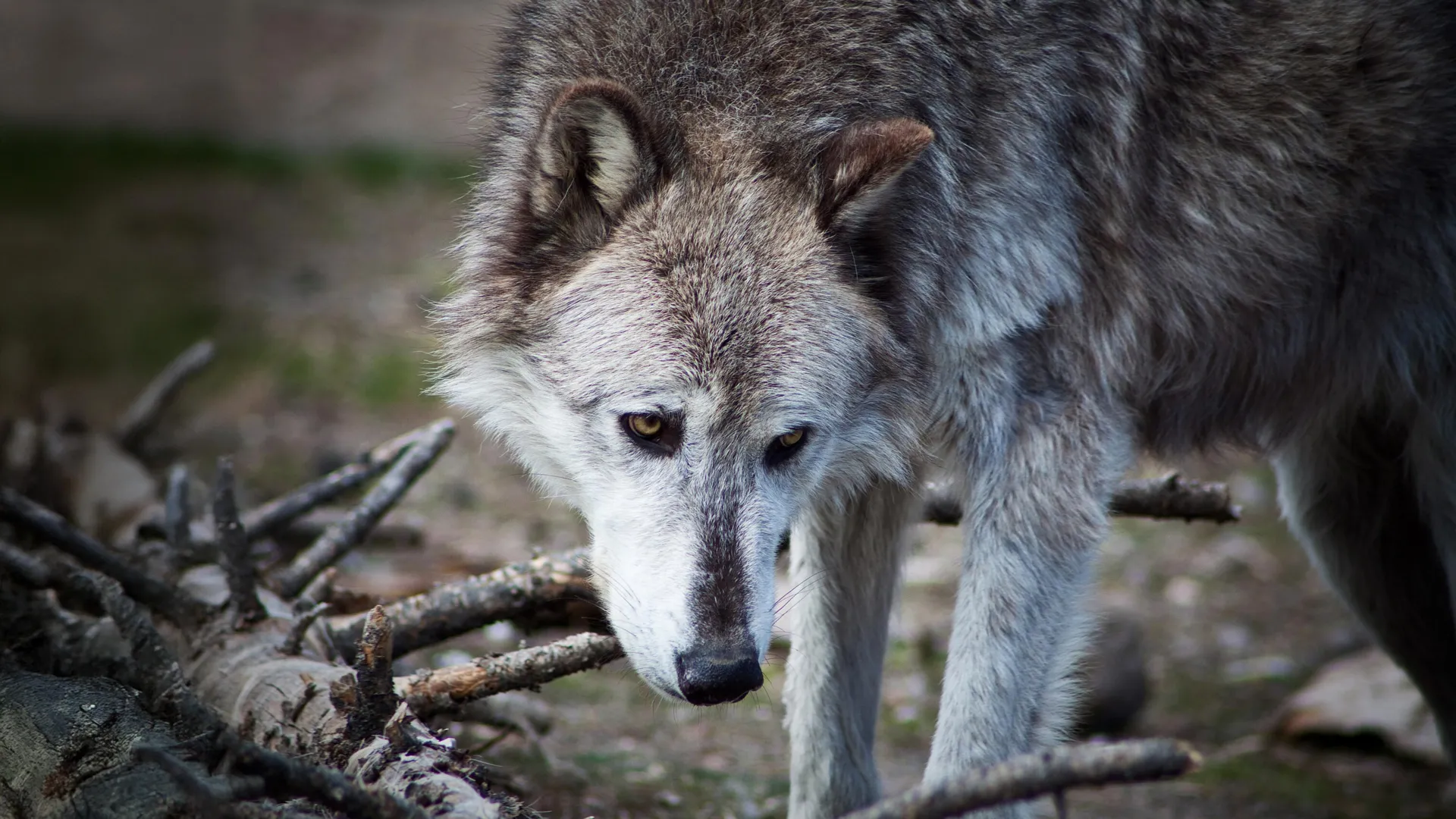
Following an absence of nearly 70 years driven by government-sponsored eradication programs, 41 gray wolves (Canis lupus) were captured in Canada and the rugged wilderness of central Idaho and released into Yellowstone National Park. The primary mandate was straightforward: restore a native apex predator to the ecosystem under the auspices of the Endangered Species Act. Few, however, could have predicted the cultural and scientific phenomena that would follow.
The Late 1990s to 2010s: Birth of the "Trophic Cascade" Paradigm
In the years following the reintroduction, researchers began documenting shifting patterns in the park. Elk (Cervus canadensis), the primary prey of wolves, altered their grazing habits. Fearing predation in open valleys and riparian corridors (landscapes where they were vulnerable to being cornered), elk spent less time lingering and heavily browsing vulnerable woody plants like willows (Salix species).
This behavioral modification—often termed the "ecology of fear"—was paired with direct reductions in the elk population. Prominent ecologists, most notably Dr. William Ripple and his colleagues, published a series of landmark studies arguing that these shifts triggered a powerful trophic cascade. The headline-grabbing conclusion was that wolves had saved Yellowstone’s rivers by allowing willows and aspens to rebound, which stabilized stream banks, invited beavers back to the park, and restored aquatic habitats for fish and amphibians. The story quickly became a textbook example of trophic downgrading and ecological healing, celebrated globally as proof of the vital stabilizing role top predators play in nature.
2024: Divergent Field Data Emerges
As decades of empirical data accumulated, cracks began to form in the uniform narrative. In 2024, a team of researchers led by Dr. N. Thompson Hobbs—scientists who had spent decades directly collecting field data in Yellowstone—published findings pointing to a much weaker and more nuanced trophic cascade. Their empirical measurements suggested that while some localized recovery was occurring, the broad, system-wide transformation claimed by cascade proponents was not supported by comprehensive ground-level data.
2025: The High-Profile Re-Assertion and Immediate Backlash
Despite the nuanced findings of field researchers like Hobbs et al., a high-profile 2025 study led by Ripple and colleagues doubled down on the classic trophic cascade hypothesis, presenting sweeping claims of ecosystem-wide revitalization, including a staggering assertion that willow crown volume had skyrocketed by 1,500 percent following wolf recovery.
This aggressive reaffirmation prompted immediate alarm bells within the academic community, motivating a team of interdisciplinary scientists to meticulously unpack the 2025 study’s underlying mathematics and methodologies.
The Present: The MacNulty et al. Critique
Published in Global Ecology and Conservation, the new analysis led by Dr. Daniel MacNulty of Utah State University and Dr. David Cooper of Colorado State University systematically dissects the 2025 paper. By exposing fundamental flaws in modeling, sampling consistency, and baseline assumptions, the new paper has ignited a fierce debate within wildlife ecology, forcing scientists to re-examine how ecological data is modeled and interpreted.
Supporting Context & Metrics: Unpacking the Statistical Discrepancies
At the technical heart of the MacNulty et al. analysis is a deep dive into how scientists translate physical field measurements into broad ecological claims. The critique zeroes in on several specific methodological breakdown points that compromised the validity of the 2025 findings.
The Disputed 1,500% Willow Growth Claim
The most explosive point of contention centers on the claim that willow crown volume increased by an astonishing 1,500 percent across Yellowstone following wolf reintroduction. To the casual observer or policymaker, such a figure represents an undeniable, monumental ecological shift. However, MacNulty and his colleagues discovered that this metric was the product of a deeply flawed statistical model.
The researchers demonstrated that the model used plant height to both calculate willow volume and predict it. In statistical terms, this creates a classic case of circular reasoning.
[Plant Height Field Measurement]
       │
       ├──► Used to calculate actual volume (Mathematical dependency)
       │
       └──► Used to predict future/past volume (Statistical dependency)

Result: A mathematically guaranteed strong correlation,
        regardless of underlying biological reality.
When an independent variable is utilized to construct the dependent variable, the resulting equation is mathematically guaranteed to show a strong relationship, whether or not any actual biological growth has occurred in the real world. The authors argue that this single methodological error completely invalidates the reported magnitude of the willow recovery.
Sampling Inconsistencies Across Time and Space
Beyond circular statistics, the critique points out troubling inconsistencies in how field plots were selected and compared over time. Many of the willow monitoring plots evaluated between the baseline year of 2001 and the follow-up year of 2020 were not identical geographic locations.
Comparing disparate spatial plots over a two-decade span introduces massive confounding variables. Apparent changes in plant volume over time may reflect nothing more than differences in site selection, soil composition, local water tables, or micro-climates rather than a systemic response to wolf presence.
The Problem of Distorted Growth Forms
Another technical critique involves the misapplication of morphological models. The height-to-volume statistical models utilized in the disputed study were originally designed for healthy, upright, unbrowsed plants. However, Yellowstone’s willows had spent decades being heavily browsed to ground level by dense elk herds, resulting in stunted, multi-stemmed, shrubby, and distorted growth forms.
Applying a standard growth model to structurally deformed, heavily browsed plants without recalibration inevitably distorts the output, systematically inflating estimates of actual biomass accumulation.
Ignoring Non-Equilibrium Ecosystem Dynamics and Confounders
The authors of the new analysis also take aim at the broader theoretical framework used to compare Yellowstone with other global ecosystems. They note that the study relied heavily on "equilibrium assumptions"—theoretical models that assume ecosystems naturally settle into stable, predictable balances.
Yellowstone, however, is a dynamic, non-equilibrium ecosystem shaped by severe climatic shifts, ongoing fires, shifting hydrological regimes, variable human hunting pressures outside park boundaries, and fluctuating bison populations. By selectively omitting these interacting drivers and relying on curated photographic evidence rather than comprehensive, objective datasets, the original study created a misleadingly simplistic causal chain:
$$textWolves Added longrightarrow textElk Feared/Died longrightarrow textWillows Exploded (1,500%)$$
When these confounding factors are properly controlled for, the data tells a vastly different, far more complex story.
Official Statements and Perspectives from the Authors
The scientific debate surrounding the Yellowstone trophic cascade is not merely an academic exercise; it touches upon the credibility of wildlife conservation science, how public monies are allocated, and how complex natural systems are communicated to the public.
Dr. Daniel MacNulty, lead author of the new analysis and a prominent wildlife ecologist at Utah State University, was keen to emphasize during interviews that the critique is aimed at rigorous scientific standards rather than a rejection of predator conservation as a whole.
"Ripple et al. argued that carnivore recovery produced one of the world’s strongest trophic cascades," said Dr. MacNulty. "लेकिन our re-analysis shows their conclusion is invalid because it relies on circular reasoning and violations of basic modeling assumptions."
MacNulty underscored that while wolves undoubtedly exert top-down pressures on herbivores, the romanticized narrative of a universal, park-wide cascade is an oversimplification that collapses under rigorous methodological auditing.
"Our goal is to clarify the evidence, not downplay the role of predators," MacNulty explained. "Predator effects in Yellowstone are real but context-dependent—and strong claims require strong evidence."
Echoing these sentiments is Dr. David Cooper, co-author of the analysis and emeritus senior research scientist at Colorado State University. Cooper brought decades of botanical and hydrological expertise to the evaluation, noting that landscape-scale changes in vegetation are driven by foundational environmental factors far beyond the presence or absence of a single carnivore species.
"Once these problems are accounted for, there is no evidence that predator recovery caused a large or system-wide increase in willow growth," Dr. Cooper stated. "The data instead support a more modest and spatially variable response influenced heavily by hydrology, browsing, and local site conditions."
Cooper pointed out that where willows have recovered in Yellowstone, the recovery is almost always tethered directly to water availability—such as stream banks where water tables remain high and accessible—rather than simply being an automatic gift of wolf reintroduction.
Future Outlook: Re-Evaluating Wildlife Conservation and Science Communication
The publication of MacNulty et al.’s analysis in Global Ecology and Conservation marks a potential turning point in how ecologists study, debate, and communicate complex trophic interactions. The fallout from this study extends well beyond the borders of Yellowstone National Park, carrying profound implications for global conservation biology.
1. A Shift Toward Context-Dependent Ecology
For decades, the "Yellowstone Wolf Effect" has served as the poster child for rewilding projects worldwide. Conservationists attempting to reintroduce apex predators—from lynx in the UK and wolves in Western Europe to pumas in South America—have frequently invoked the Yellowstone paradigm to justify their initiatives to skeptical landowners and policymakers.
If the new analysis holds true, it suggests that conservationists must move away from universalist, deterministic models that promise dramatic, rapid ecosystem-wide transformations. Instead, wildlife management must embrace context-dependent ecology, recognizing that ecosystems are messy, non-linear, and heavily governed by local physical conditions like hydrology, climate, and human proximity.
2. Heightened Rigor in Ecological Modeling
The exposure of circular reasoning within a high-profile ecological paper serves as a cautionary tale for the broader scientific community. As computational power increases and complex statistical models become more common, researchers face mounting pressure to produce clean, compelling, narrative-friendly results that can secure grant funding and capture media attention.
The MacNulty et al. paper is a timely reminder of the necessity for methodological transparency, rigorous peer review, and a willingness to challenge established dogmas—even when those dogmas support a socially and environmentally desirable cause like predator conservation.
3. Bridging the Gap Between Field Data and Macro-Modeling
A notable takeaway from the conflicting studies (such as the divergence between Hobbs et al. and Ripple et al.) is the historical disconnect between field biologists who spend decades collecting empirical ground data and macro-ecologists who apply top-down statistical models to landscape datasets. Future conservation initiatives will require closer collaboration between these disciplines, ensuring that broad statistical claims are continuously grounded in meticulous, long-term field observations.
Conclusion
The gray wolves of Yellowstone remain a magnificent symbol of wildness and ecological resilience. Their return to the American West is an undeniable conservation triumph that restored a missing piece of the continent’s evolutionary heritage.
However, science thrives on self-correction. As the dust settles on this latest academic debate, the emerging consensus suggests that while wolves are indeed influential actors in the Yellowstone theater, they are not solitary miracle-workers capable of single-handedly engineering a landscape. By stripping away the hyperbole and embracing a more rigorous, nuanced understanding of ecological interactions, scientists are paving the way for a more honest, accurate, and ultimately successful future for global wildlife conservation.