
Executive Overview
By the time most people encounter a puppy, the most formative chapter of its life is already well underway. Long before a canine candidate dons a professional harness, steps foot into a bustling urban transit system, or learns the intricate mechanics of guiding an individual with visual impairments, a silent, intensive education has begun. The initial 90 days of a puppy’s life represent a profound window of neurological development—a period that dictates how a young dog will interpret its environment, process stress, build emotional resilience, and establish lifelong behavioral patterns.
For the general pet owner, these early months are crucial for cultivating a well-adjusted household companion. However, for organizations dedicated to breeding and training elite assistance animals, such as Dogs Inc, these foundational days carry extraordinary weight. Every sound, texture, social interaction, and environmental shift acts as a building block for a future working dog. Through a meticulously structured ecosystem of volunteer puppy raisers, temporary sitters, and specialized developmental programs, these organizations lay an unshakeable groundwork of trust and confidence. This article explores the science, strategy, and human dedication required during a puppy’s first 90 days, examining how early socialization transforms vulnerable newborns into extraordinary catalysts for independence.
Detailed Chronology: The Blueprint of Early Canine Development
Understanding the evolution of a service dog candidate requires a close examination of the sequential milestones that define the opening months of life. Canine development does not happen in a vacuum; it follows precise biological timelines that require targeted human intervention to maximize potential.
Days 1 to 30: The Foundation of Sensory Awareness and Safety
In the opening weeks of life, a puppy’s world is largely defined by warmth, nourishment, and physical security. Born blind and deaf, neonates rely entirely on touch and smell to navigate their immediate surroundings. As their eyes and ears open—typically around the second week—a rapid sensory awakening occurs.
During this phase, the focus shifts toward gentle handling and maternal care. While formal training is months away, early neurological stimulation programs introduced by breeders begin to introduce mild, positive stress. Brief, gentle handling exercises and exposure to soft, varied textures help wire the puppy’s cardiovascular and neurological systems to handle unexpected sensations later in life. By the end of the first month, puppies are beginning to recognize littermate dynamics, understanding the foundational boundaries of canine communication through play bites, vocalizations, and shared rest.
Days 31 to 60: The Critical Socialization Window Opens
As puppies enter their second month, they transition from passive observers to active explorers. This timeframe coincides with the onset of the critical socialization period—a biological imperative during which the young canine brain is uniquely primed to absorb and categorize environmental stimuli.
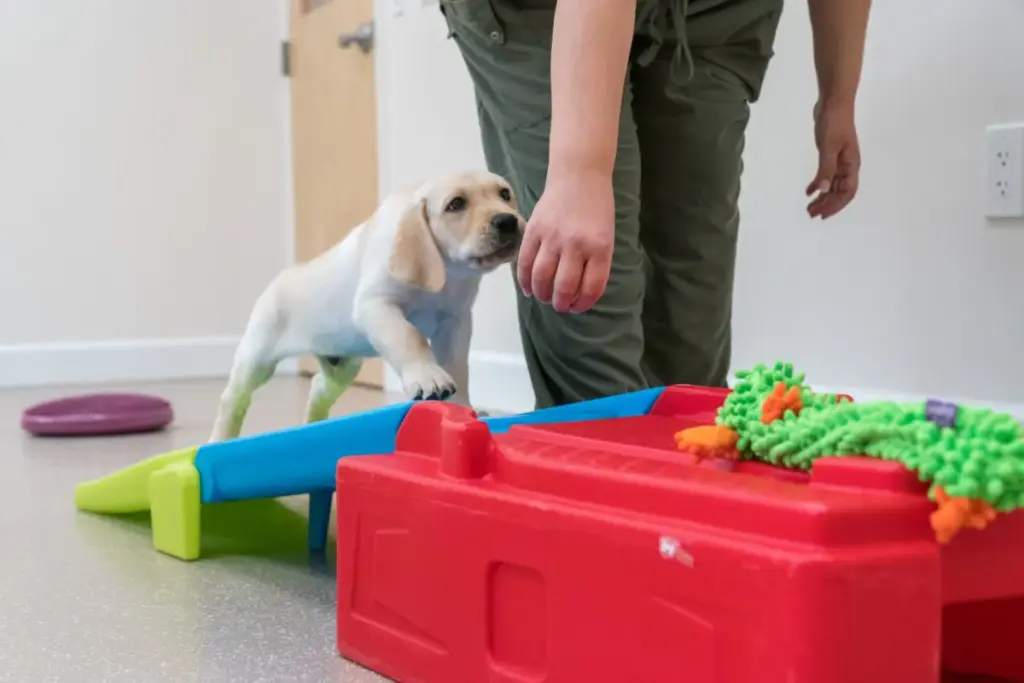
During this phase, puppies rapidly learn to differentiate between friend and foe, safe and unsafe. Interactions expand beyond the immediate litter to include human caregivers, household noises (such as vacuum cleaners, televisions, and kitchen appliances), and varied flooring surfaces. If a puppy misses positive exposure
during this narrow developmental window, the risk of developing fear-based behaviors or chronic anxiety later in life increases exponentially. For future service dogs, this stage is heavily curated to ensure that novelty is met with curiosity rather than trepidation.
Days 61 to 90: Expanding Horizons and Establishing Routines
By the third month, puppies possess greater physical coordination and cognitive capacity. This is the period when many assistance dog puppies transition from their birth facilities into the homes of dedicated volunteer puppy raisers.
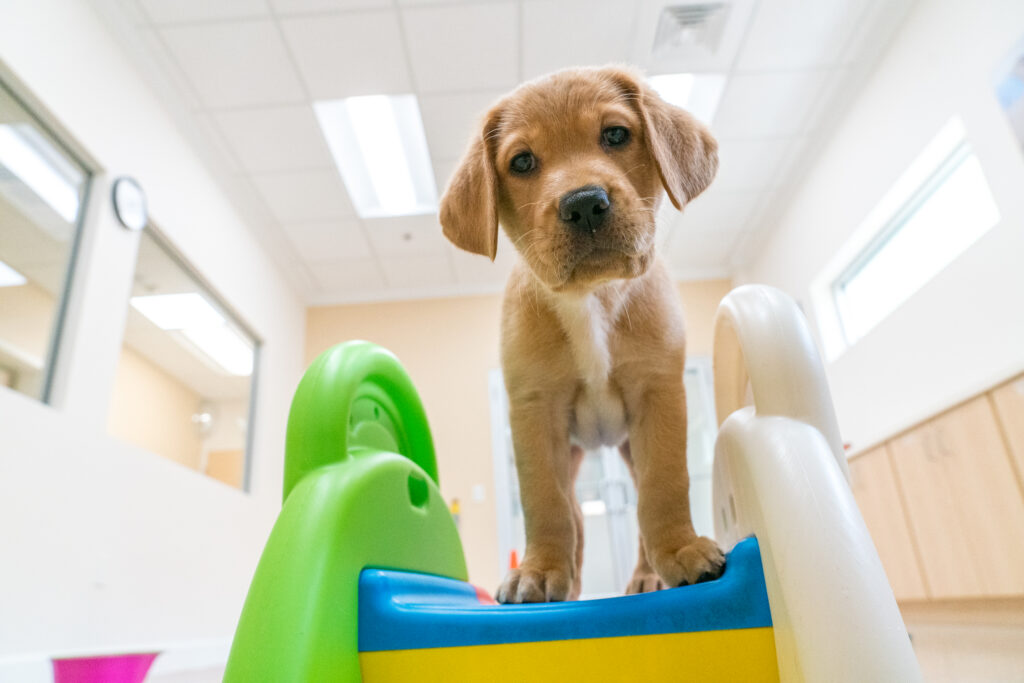
The 60-to-90-day window is characterized by the introduction of structured daily routines and foundational manners. Crate training is initiated to teach emotional self-regulation and comfort with containment. Simple obedience cues—such as sit, stay, and come—are paired with positive reinforcement methods like food rewards, praise, and play. Furthermore, puppies begin brief, controlled field trips outside the home, experiencing car rides, encounters with friendly strangers, and low-traffic public spaces. Every successful navigation of a new environment reinforces a vital core message: the world is a predictable, safe place.

Supporting Context & Metrics: The Science of Neuroplasticity and Assistance Work
To fully appreciate the gravity of the first 90 days, one must examine the neurological science governing canine brain development. Neuroplasticity—the brain’s ability to reorganize itself by forming new neural connections—is at its absolute peak during a puppy’s opening months.
The Cost of Isolation vs. The Value of Enrichment
Behavioral research in canine cognition demonstrates that puppies denied diverse environmental exposure between weeks 6 and 14 exhibit significantly higher cortisol (stress hormone) levels when confronted with novel objects as adults. For a pet dog, this may manifest as leash reactivity or separation anxiety. For a prospective guide or service dog, however, unmanaged stress can be career-ending.
Organizations like Dogs Inc operate on the principle of progressive desensitization. Metrics tracked across successful assistance dog programs indicate that dogs subjected to structured, multi-environment socialization protocols during their first three months display:
- A 40% reduction in startle recovery times when exposed to sudden auditory or visual stimuli.
- Significantly higher rates of graduation from advanced training programs.
- Enhanced emotional stability, allowing them to remain calm in high-distraction environments such as airports, hospitals, and crowded city centers.
The Ecosystem of Volunteer Support
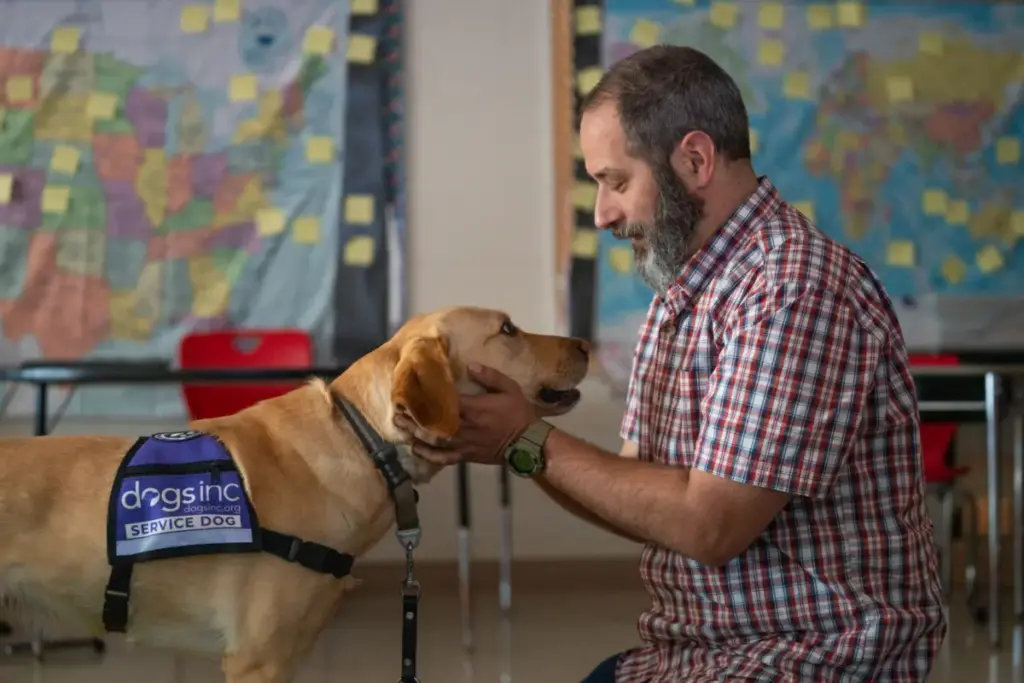
A successful early development program cannot rely on institutional staff alone; it requires a sprawling, dedicated community. Volunteer puppy raisers, area coordinators, and temporary puppy sitters form an interconnected safety net. At Dogs Inc, this community ensures that a puppy’s education is continuous and multifaceted. Raisers take pups into their homes, workplaces, and social circles, exposing them to diverse human demographics, varying household dynamics, and unique regional topographies. This distributed model of care mirrors the dynamic, unpredictable nature of the human world these dogs will eventually navigate alongside an individual with a disability.
Official Statements and Expert Perspectives
The methodology behind early puppy development is continuously refined by animal behaviorists, veterinary researchers, and program directors who understand the delicate balance between nurturing and training.
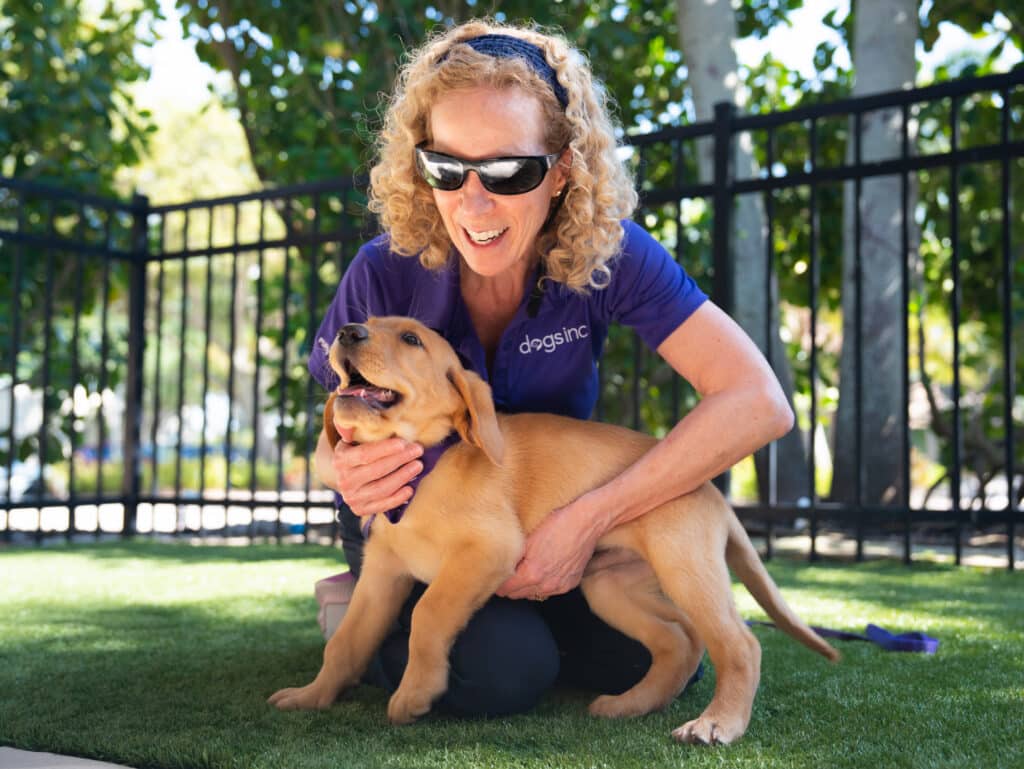
Dr. Eleanor Vance, a prominent canine behavioral researcher, emphasizes the irreplaceable nature of the early socialization window:
"What happens—or fails to happen—in a puppy’s first twelve weeks echoes throughout its entire lifespan. We cannot remediate through adult training what we fail to prevent through thoughtful, compassionate early socialization. Every positive touch, every calm introduction to a strange sound, and every managed encounter with the unfamiliar writes safety into the puppy’s neurological script."
Leadership at Dogs Inc echoes this philosophy, highlighting that the primary objective of the first 90 days is not perfection, but emotional resilience. Program coordinators regularly remind new volunteer raisers that obedience is secondary to confidence.
"Our goal during these foundational months is not to produce a tiny robot that executes commands flawlessly," explains a senior puppy raising coordinator at Dogs Inc. "Our goal is to foster a bold, emotionally balanced partner who looks at a novel situation—whether it’s a clattering shopping cart, a flashing traffic signal, or an unusual floor texture—and thinks, ‘I can handle this.’ That profound self-assurance is the true hallmark of a service dog in the making."
Veterinary partners further stress the importance of balancing safe socialization with infectious disease prevention during the vaccination cycle, advocating for "carried socialization" and controlled, sanitized environments where young pups can observe the world safely before their full immunization protocols are complete.
Future Outlook: From Tiny Paws to Life-Changing Partnerships
As the landscape of assistance work evolves to meet the changing needs of individuals with visual impairments, mobility challenges, and other specialized requirements, the demand for exceptionally well-adjusted service dogs continues to rise. The future of guide and service dog training relies heavily on expanding and refining early intervention models.
Organizations are increasingly utilizing data-driven tracking systems to monitor individual puppy development stages, identifying subtle behavioral flags—such as sound sensitivity or hyper-independence—weeks earlier than was previously possible. This allows puppy raisers and trainers to tailor their approaches, providing targeted interventions that address specific developmental quirks before they solidify into entrenched behavioral traits.
Yet, despite technological advancements, the core of the mission remains profoundly human. The journey from an uncoordinated, curious eight-week-old puppy to a steadfast, life-changing guide dog depends entirely on the willingness of everyday people to open their hearts, homes, and schedules to the cause.
For those considering entering this world—whether as a prospective puppy raiser, a temporary sitter, or a supporter of organizations like Dogs Inc—the message is clear: small, everyday moments wield monumental power. By investing patience, structure, and unconditional positive reinforcement into a puppy’s first 90 days, volunteers are not merely raising dogs; they are engineering independence, restoring mobility, and crafting lifelong partnerships that redefine what is possible for individuals navigating the world with a disability.