
Executive Overview
In the rolling agrarian heartland of northern Dutchess County, New York, the summer air pulses with a distinct, metallic metallic call: pink, pink, pink! Looking out over the lush, undulating pastures of the Buttercup Farm Audubon Sanctuary, one witnesses a vibrant avian spectacle. Hundreds of juvenile Bobolinks are gathering in energetic flocks—a bustling adolescent nursery that field researchers affectionately liken to a seasonal "summer camp." For conservationists, this youthful convergence is more than a picturesque pastoral scene; it is a vital indicator of population health and ecological resilience.
Yet, this thriving scene exists in a delicate balance. The Bobolink (Dolichonyx oryzivorus), alongside other grassland-dependent species such as the American Kestrel and the Eastern Meadowlark, faces a precarious future. Across North America, grassland birds are experiencing steep, well-documented population declines driven by habitat fragmentation, intensive agricultural practices, and the timing of mechanical haying. Because Bobolinks construct their intricate, cup-shaped nests directly on the ground amidst dense vegetation, their eggs and flightless nestlings are exceptionally vulnerable to the blades of agricultural machinery.
Enter the dedicated conservationists, researchers, and citizen scientists of the Constitution Marsh Audubon Center and Sanctuary network—which encompasses Buttercup Farm, Rheinstrom Hill, and Ramshorn-Livingston Hudson Valley sanctuaries. Through rigorous, systematic field surveys conducted from late May through August, these teams are mapping the intimate life cycle of the Bobolink. By identifying the exact window when nestlings successfully fledge and take to the air, Audubon researchers are bridging the gap between agricultural necessity and wildlife preservation. Their findings directly inform habitat management practices at sanctuary sites and empower local farmers and private landowners with the actionable knowledge needed to mow fields without causing avian mortality.
This in-depth report explores the methodology, ecological context, community engagement, and future outlook of the Buttercup Farm grassland bird surveys, highlighting how localized field research is yielding regional conservation victories.
Detailed Chronology: Tracking the Bobolink Season from May to August
The annual conservation cycle at Buttercup Farm does not begin with the arrival of the birds in spring; rather, it is a meticulously planned campaign that tracks the avian lifecycle through distinct, predictable phases.
Late May: Arrival and Nesting Vulnerabilities
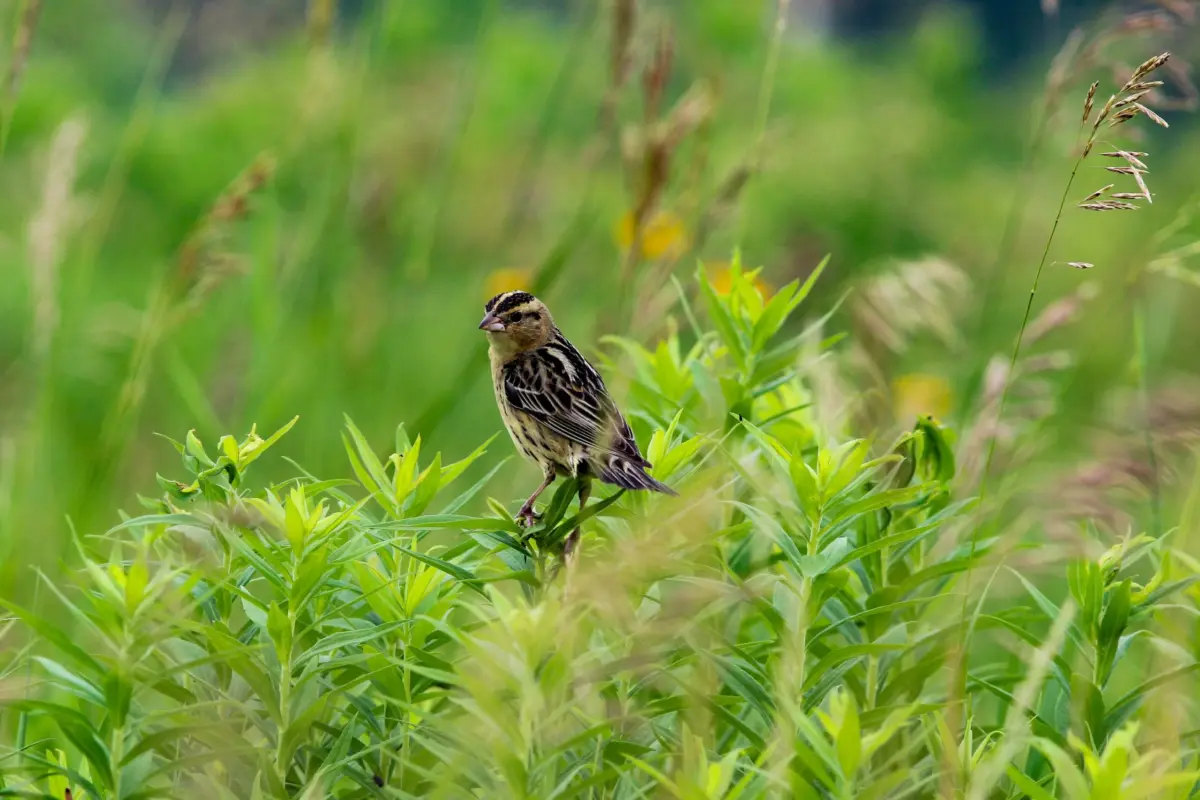
As spring transitions into early summer, migratory Bobolinks complete an extraordinary transcontinental journey from their wintering grounds in southern South America—traveling thousands of miles to reach the northern breeding grounds of New York. Upon arrival, the landscape undergoes a dramatic transformation. The male Bobolinks, instantly recognizable by their striking and eccentric reverse tuxedo plumage—black underparts with a creamy white back patch and a bright yellow crown—burst into bubbling, cascading songs while displaying over the fields. The females, donning cryptic, pale-yellow and streaked brown plumages designed to blend seamlessly into the thatch, immediately set to work.
During late May and early June, the females select shallow depressions on the ground, usually hidden beneath a dense canopy of grasses and forbs. Here, they weave fine grasses into hidden nests. This ground-level strategy, however, places them directly in the crosshairs of human agricultural schedules. The peak nesting period coincides precisely with the time when regional farmers traditionally initiate their first hay harvest to secure high-protein forage for livestock. Historically, this catastrophic overlap resulted in high rates of nest abandonment and direct nestling mortality.
June: The Survey Methodology in Action
To understand and mitigate these pressures, Audubon staff and Student Conservation Association (SCA) interns—such as Hailey Faurot—deploy to the fields week after week. The monitoring protocol at Buttercup Farm is both rigorous and standardized to ensure data integrity over successive seasons.
The vast sanctuary acreage is divided into manageable blocks of fields. Teams of staff and trained volunteers are assigned to specific sectors, which often encompass multiple fields and distinct survey points. Upon arriving at a designated monitoring station, the field crew executes a strict methodology:
- Acclimation: The team sits in absolute silence for two full minutes. This motionless waiting period allows any resident birds to acclimate to human presence, subduing alarm behaviors and encouraging natural movement.
- Observation Window: Entering the third minute, researchers begin active observation. Utilizing high-powered binoculars and listening intently for vocalizations, they scan the grass canopy and airspace for five continuous minutes.
- Data Recording: Every individual bird observed is meticulously logged. Observers note sex, approximate age class (adult versus juvenile), behavioral context (e.g., carrying food, singing, mobbing), and precise location within the habitat block.
Simultaneously, the teams assess vegetative composition. Bobolinks exhibit strict habitat preferences, favoring expansive, unbroken tracts dominated by grasses rather than woody shrubs or broad-leaved forbs. To quantify this, researchers drop 12-inch square sampling plots along linear tape transects crossing the fields. Within these quadrats, they catalog the precise ratio of grasses to non-grass forbs—such as milkweed, hedge bedstraw, and goldenrod—providing a comprehensive profile of micro-habitat conditions.
July: The Fledging Phase and "Bobolink Summer Camp"
By mid-to-late July, the frantic pace of feeding nestlings subsides, giving way to the fledging phase. Young Bobolinks emerge from their ground nests, spending several days scurrying through the vegetation base before mastering sustained flight.
This is when the landscape truly comes alive. As observed during recent field surveys, juvenile Bobolinks begin congregating in massive, energetic flocks across the troughs of Buttercup Farm’s rolling hills. Interestingly, adult females are conspicuously absent from these juvenile-heavy flocks, typically remaining solitary or perching quietly in the upper branches of perimeter trees. As Faurot aptly describes it to visiting volunteers, it is effectively "Bobolink summer camp"—a period where juveniles socialize, build flight stamina, and hone foraging skills, while exhausted mothers take a well-deserved respite from the grueling demands of brood-rearing.
August: The Close of the Survey and the Safe-Mowing Window
By August, the fields fall quiet once more. The massive juvenile flocks disperse as the birds prepare for their southward autumn migration. Crucially, the presence of these robust juvenile flocks perched on tall grass blades serves as an empirical green light for the conservation team: the breeding cycle is successfully complete, and the next generation is airborne.
Armed with these empirical observations, land stewards like Dave Decker analyze the compiled survey sheets at the end of the season. This data reveals the precise timeline of when fledglings are fully mobile. Once this threshold is crossed, local landowners and farmers can safely initiate mowing operations without risking catastrophic mortality to flightless young.
Supporting Context & Metrics: The Ecology of Grassland Decline
To fully appreciate the significance of the Buttercup Farm surveys, one must examine the broader ecological crisis confronting grassland birds across the northeastern United States.
The Macro-Scale Decline of Grassland Species
According to comprehensive North American Breeding Bird Survey (BBS) data, grassland birds have suffered steeper, more consistent population declines over the past half-century than any other avian guild. Species such as the Eastern Meadowlark, Upland Sandpiper, Grasshopper Sparrow, and the Bobolink have experienced regional drops exceeding 50% since the 1960s.
Several factors compound this crisis:
- Habitat Loss and Fragmentation: The conversion of native prairies, hayfields, and pastures into row-crop agriculture, suburban developments, and commercial real estate has fractured continuous landscapes. Species like the Eastern Meadowlark require large, uninterrupted tracts of open land; smaller, isolated patches simply cannot support their territorial requirements—explaining their absence from smaller plots at Buttercup Farm.
- Early and Intensive Haying: Modern agricultural technology allows farmers to harvest hay earlier in the season and up to four times per year, compared to historical practices of a single late-summer cut. This accelerated schedule directly intercepts the ground-nesting window of Bobolinks and other ground foragers.
- Ecological Traps: Unmanaged fields often attract breeding birds in early spring due to their structural appeal, only to become ecological traps when mechanical mowing occurs mid-season.
The Role of Buttercup Farm as a Regional Refuge
Amidst this macro-scale degradation, sanctuaries like Buttercup Farm serve as crucial regional strongholds. By maintaining large swaths of contiguous warm- and cool-season grasses, the Constitution Marsh Audubon Center and Sanctuary network provides safe harbor for species that cannot survive in fragmented agricultural matrices.
However, conservation cannot happen in a vacuum of protected acreage. Because the vast majority of grassland habitat in Dutchess County and the broader Hudson Valley is privately owned and actively farmed, the ultimate success of Bobolink conservation hinges on private land stewardship. The metrics gathered through Buttercup’s vegetation and bird surveys provide the hard data needed to draft practical, science-based management guidelines for these private stakeholders.
Official Statements and Insights from the Field
The human element of conservation is as vital as the ecological data collected. The work at Buttercup Farm relies on a collaborative ecosystem of professional scientists, dedicated interns, community volunteers, and educational partners.
Reflecting on her tenure as a Student Conservation Association (SCA) intern with the Constitution Marsh Audubon Center and Sanctuary, Hailey Faurot highlights the profound personal and professional impact of field research:
"My name is Hailey Faurot, and I serve with Audubon as an Educator Naturalist Intern, learning and practicing different field surveys and research techniques, as well as leading public education programs. One such field survey is the grassland bird survey that we conduct at Buttercup Farm. Staff, volunteers, and I search for Bobolinks, American Kestrels, and Eastern Meadowlarks—all of which are birds of high conservation priority for Audubon."
Faurot emphasizes that while the sobering reality of wildlife declines can weigh heavily on young conservationists, field monitoring reveals an encouraging counter-narrative of proactive human intervention:
"The unfortunate reality is that Bobolinks, like so many of our grassland bird species, are facing steep declines. Considering this reality and the plight of other species and ecosystems can often feel sobering. However, serving in my role has taught me that although it’s very easy to focus on the negative, there’s an equal, if not greater, number of positive actions that people are taking, oftentimes in our nearby communities. In monitoring bird populations, we’re directly contributing to their conservation."
Dave Decker, Land Steward for the sanctuary network, synthesizes the incoming data streams at the end of each field season. His analysis bridges raw observation with practical land management policy. As official sanctuary communications emphasize:
"Survey results directly inform how habitat is managed at Buttercup and helps Audubon advise farmers and grassland landowners who mow and manage their own land."
By translating complex demographic data into clear, accessible management windows, Audubon bridges the historical divide between agricultural productivity and wildlife conservation, proving that food production and biodiversity protection can coexist.
Community Outreach and Education: Cultivating the Next Generation
Conservation science is most effective when it transcends academic circles and actively engages the local community. Buttercup Farm exemplifies this philosophy by embedding educational outreach directly into its research framework.
During the peak of the vegetation and bird-monitoring season, sanctuary staff welcomed a cohort of high school students from No Child Left Inside (NCLI), a regional youth environmental education organization. Rather than treating research as an isolated academic exercise, the Audubon team integrated these students directly into the field protocols.
The visiting students were introduced to the mechanics of vegetation plot sampling—learning how to measure the precise ratio of grasses to forbs within a 12-inch square grid along transect tapes. They experienced firsthand how micro-habitat structure dictates nesting success for ground-dwelling birds. This immersive approach to science communication not only demystifies field biology for teenagers but also instills a lifelong stewardship ethic. As interns like Faurot point out, these community touchpoints ensure that the lessons learned in the fields of Dutchess County radiate outward into homes, schools, and future careers.
Future Outlook: A Blueprint for Grassland Resilience
As the sun sets over the rolling hills of northern Dutchess County and the chorus of pink, pink, pink! fades into the evening calm, the trajectory of Bobolink conservation enters a critical next phase. The challenges facing grassland birds are systemic, but the methodologies pioneered at Buttercup Farm offer a clear, scalable blueprint for regional preservation.
Looking Ahead: Strategic Priorities
- Expanding Farmer Partnerships: The immediate future of the Bobolink depends on scaling outreach to private landowners. By continuing to publish accessible guides and host collaborative workshops, Audubon aims to synchronize regional haying schedules with avian fledging milestones across the Hudson Valley. Delayed-mowing incentive programs and wildlife-friendly farming practices will remain central to these advisory efforts.
- Refining Habitat Management: Data gathered from vegetation transects will continue to dictate mechanical interventions at Buttercup Farm. By intentionally managing the balance of grasses and forbs and controlling woody encroachment through targeted mowing or prescribed burning, land stewards will ensure that these sanctuary fields remain optimal breeding habitat.
- Long-Term Monitoring and Data Integration: Sustaining multi-year datasets is essential for detecting nuanced population trends in the face of shifting climate patterns. Continued collaboration between professional land stewards, SCA interns, and citizen science volunteers will guarantee that monitoring protocols remain robust and uninterrupted.
Ultimately, the story of the Bobolinks at Buttercup Farm is one of cautious optimism. It demonstrates that when rigorous scientific research meets dedicated community outreach and pragmatic agricultural collaboration, we can carve out a sustainable future for our most vulnerable grassland species. The fields of Dutchess County will continue to buzz with life each summer, serving as a living testament to what can be achieved when we align our human schedules with the rhythms of the natural world.