
Executive Overview
In the high plains of Eastern New Mexico, a harrowing case of animal abandonment has sparked a broader conversation regarding the systemic challenges facing rural animal welfare. In Clovis, New Mexico, a young puppy, later named Peanut, was discovered abandoned directly on an active anthill. Suffering from severe dermatological trauma, advanced mange, and systemic shock, the puppy’s survival was highly precarious. The intervention of 85-year-old Karl Korff, a veteran animal welfare advocate and founder of the Adopt A Pet Society, saved the animal’s life and exposed the critical lack of veterinary and sheltering resources in the region.
Peanut’s rescue highlights a persistent crisis in rural communities: the presence of "veterinary deserts," where limited access to affordable pet care, lack of municipal sheltering infrastructure, and high rates of stray populations intersect. While Peanut’s physical recovery is underway due to aggressive veterinary intervention, her case has catalyzed structural reforms.
These include the establishment of "The Peanut Fund"—a dedicated emergency medical fund designed to finance critical veterinary care for rescued animals—and a state-backed $195,000 capital injection for neighboring Portales, New Mexico, to construct a mobile kennel facility. This investigative report examines the chronology of Peanut’s rescue, the clinical realities of her recovery, the socio-economic factors driving the rural animal welfare crisis in New Mexico, and the policy-driven initiatives emerging in the wake of this case.
Detailed Chronology: From Abandonment to Clinical Recovery
[Day 1: Rescue] -> Found on anthill in Clovis, NM; secured by Karl Korff (Adopt A Pet Society).
[Day 2: Clinical Intake] -> Diagnosed with advanced mange and secondary formic acid burns from ant bites.
[Weeks 1–3: Treatment] -> Administered systemic antibiotics, parasiticides, and medicated antiseptic baths.
[Month 1: Stabilization] -> Dermatological healing initiated; behavioral socialization begins.
[Ongoing: Systemic Impact] -> Launch of "The Peanut Fund" to finance emergency veterinary interventions.
The Discovery and Immediate Intervention
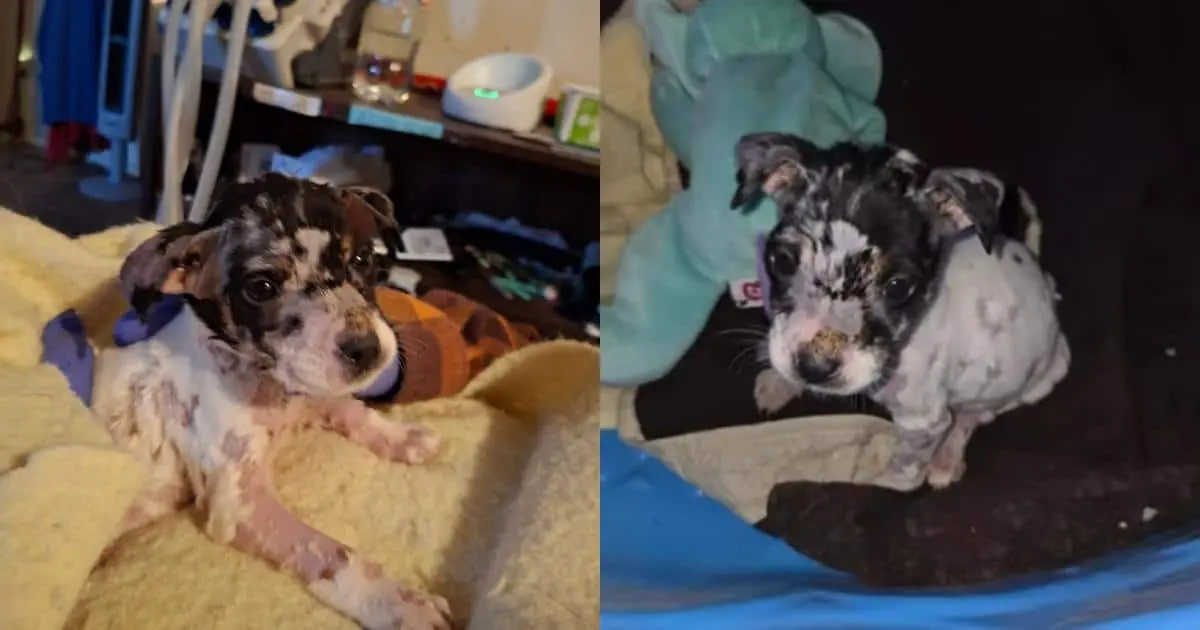
The incident began when the Adopt A Pet Society received an urgent report regarding a young canine left in a remote area of Clovis, New Mexico. Upon arriving at the scene, Karl Korff discovered a female puppy placed directly onto an active anthill.
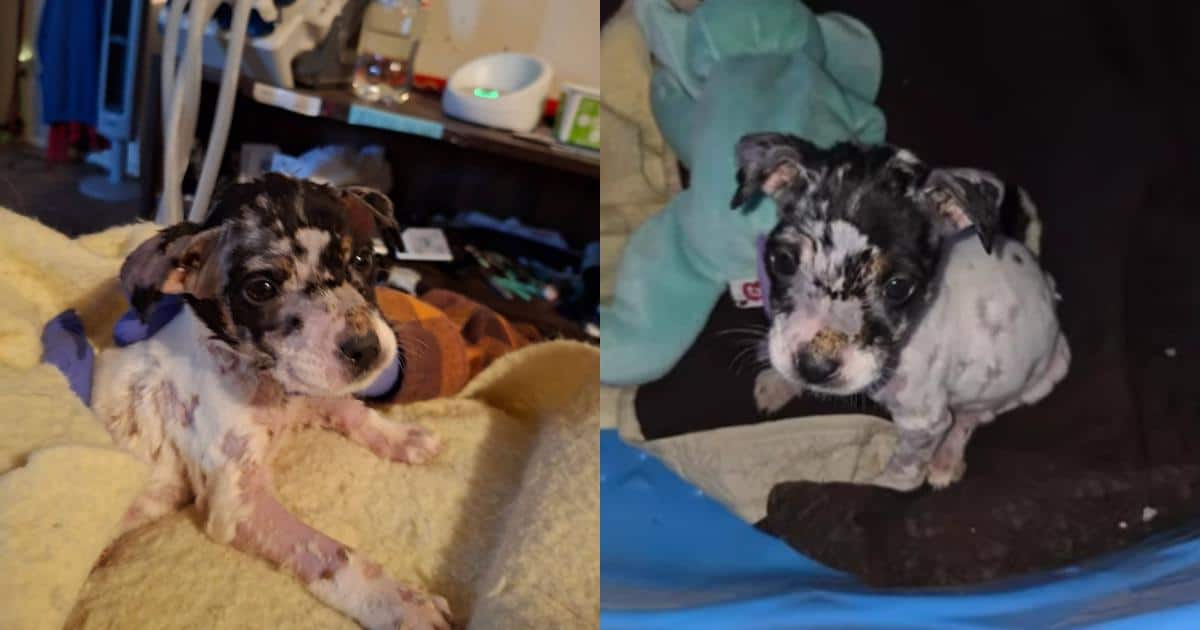
The immediate physical assessment was grim: the puppy was suffering from extensive alopecia (hair loss), open lesions, and active bites from thousands of ants. Her skin was highly inflamed, exhibiting signs of severe neglect that had clearly predated her abandonment on the anthill.
Despite her extreme discomfort and physiological stress, the puppy did not exhibit defensive aggression. Instead, she demonstrated a quiet, cooperative demeanor, gazing directly at Korff in what he later described as a silent plea for assistance.
Korff immediately secured the puppy, removed her from the immediate environmental threat, and transported her to a secure triage environment to begin stabilizing her vital signs.
Clinical Diagnosis and Veterinary Treatment Protocol
The following morning, Peanut underwent a comprehensive clinical evaluation by a licensed veterinarian. The diagnostic workup revealed a dual-pathology crisis:
- Severe Demodectic/Sarcoptic Mange: A parasitic skin disease caused by microscopic mites. The infestation had compromised the puppy’s epidermal barrier, leading to widespread scabbing, follicular damage, and secondary bacterial infections.
- Formic Acid Chemical Burns: The ants had actively fed on the puppy’s compromised skin and hair follicles. The venom injected by the ants—primarily consisting of formic acid—caused localized tissue necrosis, intense pruritus (itching), and acute inflammatory pain.
+----------------------------+-------------------------------------------------------+
| Diagnostic Finding         | Prescribed Veterinary Treatment Protocol              |
+----------------------------+-------------------------------------------------------+
| Ectoparasitic Infestation  | Systemic parasiticides (isoxazoline-class compounds)  |
| Secondary Pyoderma         | Broad-spectrum systemic oral antibiotics              |
| Chemical Burns/Inflammation| Medicated antiseptic baths and topical emollients      |
| Physiological Stress       | Nutritional therapy and fluid stabilization           |
+----------------------------+-------------------------------------------------------+
To address this complex clinical picture, the veterinary team initiated an aggressive multi-week treatment regimen. This protocol included systemic parasiticides to eradicate the mite population, broad-spectrum oral antibiotics to resolve the secondary pyoderma (bacterial skin infection), and regular medicated antiseptic baths to soothe the damaged dermis and facilitate epidermal regeneration.
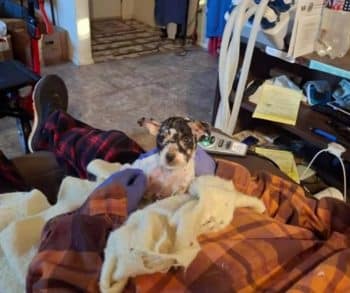
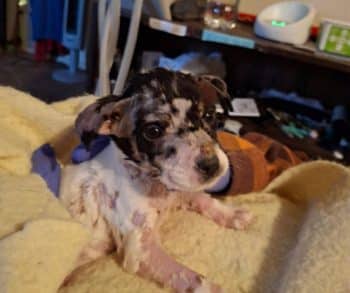
Over the course of several weeks, the puppy’s skin began to heal, new hair growth emerged in areas previously devoid of follicles, and her behavioral metrics showed a marked reduction in stress-induced lethargy.
Supporting Context & Metrics: The Rural Animal Welfare Crisis
The circumstances surrounding Peanut’s abandonment are not isolated occurrences, but rather symptoms of a systemic regional challenge. Eastern New Mexico, particularly Curry and Roosevelt Counties, faces a persistent deficit in animal welfare infrastructure.
The Anatomy of a Veterinary Desert
Clovis and its neighboring municipality, Portales, operate in a high-stress animal welfare environment characterized by:
- High Intake Rates: Rural municipal shelters routinely operate at or above maximum capacity due to high abandonment rates and low spay/neuter compliance.
- Funding Deficits: Local municipal budgets prioritize essential infrastructure (roads, water, public safety), leaving animal control and sheltering services severely underfunded.
- Limited Rescue Networks: A very small number of non-profit rescue organizations operate in the region. Karl Korff’s Adopt A Pet Society is one of only a handful of active rescues servicing Clovis, while Portales has historically possessed even fewer options for animal rehabilitation.
State-Level Legislative and Financial Interventions
Recognizing the structural deficiencies in rural animal care, the State of New Mexico has begun deploying targeted capital to improve municipal capacity.
A key development is the allocation of approximately $195,000 to the City of Portales through the state’s Animal Welfare Program. This capital is earmarked specifically for the acquisition and installation of a state-of-the-art mobile kennel building.
State Animal Welfare Program Allocation (Portales, NM): $195,000
├── Target: Mobile Kennel Building
│   ├── Purpose: Expand temporary sheltering capacity
│   ├── Benefit: Reduce regional euthanasia rates
│   └── Advantage: Rapid deployment compared to permanent brick-and-mortar facilities
This mobile facility is designed to provide rapid-response sheltering capabilities, enabling local authorities to house, triage, and temporarily care for stray or confiscated animals. By increasing local holding capacity, this infrastructure investment aims to reduce euthanasia rates driven solely by space constraints and provide a buffer for local non-profit rescues that are routinely overwhelmed by intake demands.
Official Statements and Philosophical Foundations
The rescue of Peanut has resonated deeply within the regional rescue community, drawing statement analysis from veteran advocates regarding the ethics of animal care and the economic realities of modern rescue operations.
Karl Korff, who has been actively engaged in canine rescue operations since 1976—originally commencing his work in Iowa alongside his late wife before relocating his mission to New Mexico—emphasized the profound psychological connection that occurs during high-stakes rescues:
"She just looked at you like… ‘can’t you help me?’ That was it. If you take your time to care for something, that elevates you as a person. And I honestly believe that."
Korff’s philosophical perspective is tempered by decades of managing the harsh financial realities of non-profit rescue operations. He noted that compassion alone is insufficient to combat systemic neglect:
"You wish you could go ahead and take the whole umbrella of rescue, but it takes finances to do it. Every animal that comes through our doors requiring intensive veterinary care places a significant strain on our operational budget, threatening our ability to accept the next animal in need."
Future Outlook: Systemic Change and "The Peanut Fund"
The legacy of Peanut’s survival is transitioning from an individual success story into a sustainable institutional framework designed to protect future vulnerable animals in Eastern New Mexico.
                       [The Peanut Fund]
                               │
       ┌───────────────────────┴───────────────────────┐
       ▼                                               ▼
[Urgent Veterinary Care]                     [Surgical Interventions]
 - Advanced Parasitic Mange                   - Orthopedic Procedures
 - Chemical & Environmental Burns             - Wound Reconstruction
 - Secondary Infectious Diseases              - Emergency Trauma Triage
The Launch of The Peanut Fund
In direct response to the financial hurdles associated with rescuing highly compromised animals, Korff and the Adopt A Pet Society are establishing The Peanut Fund.
Unlike general operating funds, which are routinely consumed by baseline expenditures such as food, standard vaccinations, and facility maintenance, The Peanut Fund will operate as a restricted, dedicated financial vehicle.
Its sole mandate is to finance emergency veterinary interventions, specialized surgeries, and intensive dermatological therapies for animals arriving in critical condition. By isolating these funds, the organization can guarantee immediate medical clearance for high-needs cases without compromising its day-to-day operational stability.
Long-Term Regional Impact
The combination of grassroots initiatives like The Peanut Fund and state-level capital investments like Portales’ mobile kennel facility represents a dual-track approach to solving the rural animal welfare crisis:
- Micro-Level Care: Local rescues continue to provide the intensive rehabilitation, behavioral socialization, and adoption matching that municipal shelters are rarely equipped to offer.
- Macro-Level Infrastructure: State-funded facilities increase the baseline holding capacity, ensuring that stray animals are safely housed and protected from extreme weather and environmental hazards while placement options are explored.
For Peanut, the trajectory of her life has been permanently altered. No longer a helpless victim of abandonment on an anthill, she stands as a symbol of resilience. The systemic changes initiated in her name ensure that her suffering will serve as the foundation for a more humane, responsive, and well-funded animal welfare network across Eastern New Mexico.