
Executive Overview
In the realm of animal rescue, the arithmetic of time is often unkind to older animals. While playful kittens capture the immediate attention of prospective adopters, senior pets frequently fade into the background, their personalities muted by institutional environments and the quiet trauma of prolonged displacement. Few animals know this reality quite as intimately as Pistol Pete, a shy feline who spent an astonishing 12 years residing within the confines of an animal shelter.
For more than a decade, Pete was the ghost in the machine—an invisible resident whose profound shyness and instinctive tendency to retreat from human interaction rendered him virtually unnoticeable to the steady stream of visitors seeking affectionate companions. Medical and administrative records traced his residency back to at least 2014, establishing him as a fixture of the facility who outlasted staff members, seasonal trends, and countless other animals who cycled through the adoption floors.
Pete’s narrative shifted permanently when a viral digital appeal crossed the screen of animal advocate Colton Carlyle. Recognizing the profound tragedy of a life spent waiting behind bars, Carlyle made a decision that would disrupt his own routine and completely rewrite Pete’s twilight years: he stepped forward to adopt a senior cat known primarily for running away.
This in-depth investigative feature chronicles Pete’s remarkable twelve-year ordeal, the mechanics of integrating a deeply institutionalized senior pet into a domestic environment, the pivotal breakthroughs—cemented by a piece of fried chicken—that bridged the gap between human and animal, and the broader implications of Carlyle’s journey for the wider animal welfare community.
Detailed Chronology: From 12 Years of Solitude to Domestic Integration
The Lost Years: Surviving Inside the Shelter
Piecing together Pistol Pete’s early life is an exercise in extrapolation. Because his earliest verifiable medical records originate in 2014, the exact circumstances of his entry into the shelter system remain shrouded in uncertainty. What remains indisputable, however, is the profound impact that prolonged institutionalization had on his behavioral baseline.
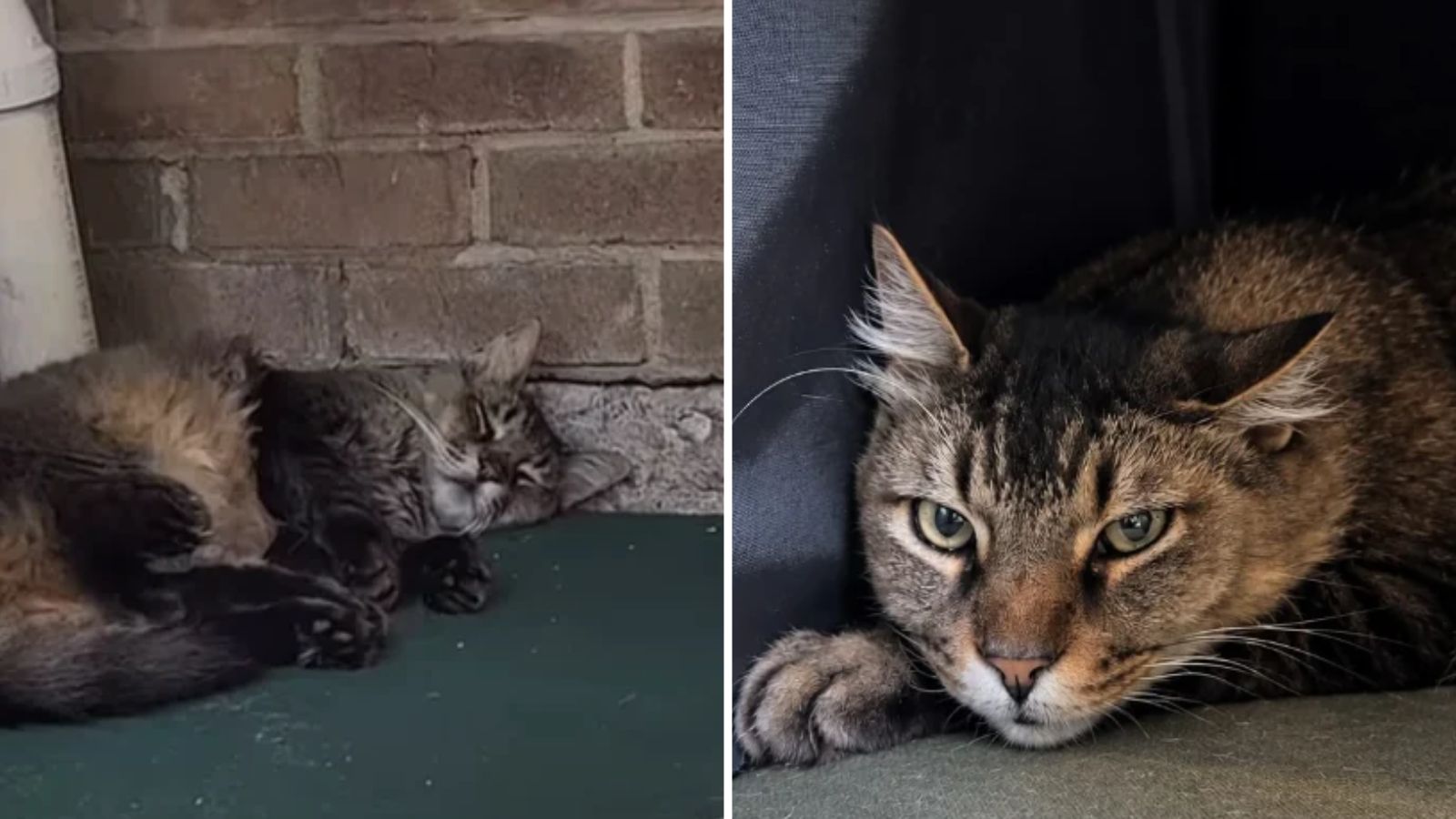
Long-term shelter studies consistently demonstrate that cats housed in high-stress, sensory-heavy environments for extended periods develop coping mechanisms centered on avoidance. For Pete, this manifested as an extreme, reflexive withdrawal from human presence. According to the shelter’s longest-serving employee—an individual who had dedicated seven years to the facility—Pete was a permanent fixture of isolation. Whenever visitors approached his enclosure, Pete would reliably retreat to the furthest, darkest corner, effectively hiding the gentle, complex personality that lay beneath his panic.
This behavioral loop created a tragic catch-22. Visitors seeking an engaging, sociable pet walked right past Pete’s enclosure, interpreting his defensive retreat as hostility or a complete lack of interest. Pete made no demands, cried out for no attention, and consequently slipped through the cracks of the adoption pipeline year after year.
The Digital Catalyst and the First Meeting
The turning point arrived not through a traditional shelter visit, but through the modern apparatus of social media advocacy. A short digital video highlighting Pete’s desperate plight began circulating across online networks, specifically designed to prick the conscience of compassionate viewers.
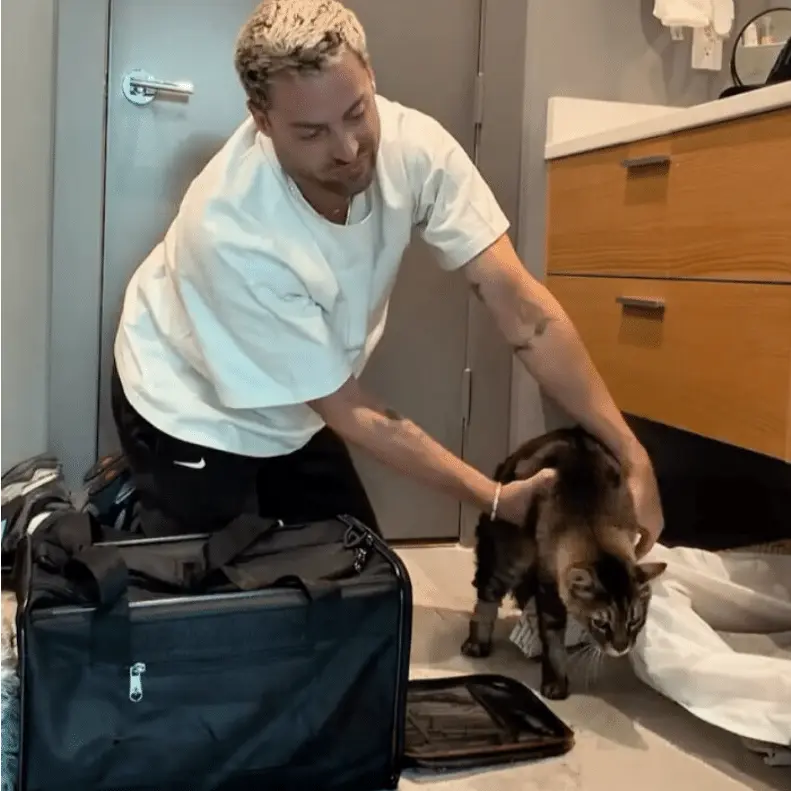
The algorithm delivered the footage directly to a friend of Colton Carlyle, who immediately recognized Carlyle’s capacity for patience and forwarded the media. For Carlyle, the impact was visceral. The thought of a living creature spending over a decade unseen simply because he was too terrified to say hello proved entirely unacceptable.
Carlyle scheduled an in-person meeting. True to form, the initial encounter offered little Hollywood-style validation. The moment Carlyle stepped into the space, Pete vanished into a hiding spot. Yet, in that critical moment, Carlyle’s observational acumen set him apart from the average visitor. While Pete was desperate to flee, he exhibited zero aggression—no hissing, no striking, no territorial posturing. He was simply an overwhelmed creature acting on pure self-preservation.
Recognizing that he was not walking into a ready-made lap cat, Carlyle chose to look past the fear. He finalized the adoption, committing to a slow-burn rehabilitation process that required abandoning all expectations of immediate affection.
The Crucible of Transition: The First Three Days
The transition from a decades-old shelter routine to a quiet, residential home proved brutally difficult for the senior feline. The early days of Pete’s homecoming were characterized by acute distress:
- Total Seclusion: Pete spent the vast majority of his waking and sleeping hours concealed in deep hiding spots, treating the open floor plan as a minefield of potential threats.
- Litter Box Disorientation: Indicating profound stress and confusion over his new spatial boundaries, Pete initially resorted to sleeping directly inside his litter box—a classic behavioral indicator of a cat seeking the familiar scent of his own waste to feel grounded.
- The Hunger Strike: For the first 72 hours, Pete refused to touch his food bowl, setting off alarm bells for Carlyle regarding potential hepatic lipidosis and systemic stress.
Rather than panicking or forcing physical contact—which would have reinforced Pete’s defensive instincts—Carlyle executed a masterclass in feline behavioral patience. He simply existed in the space, providing consistent resources, maintaining a tranquil atmosphere, and granting Pete the autonomy to explore strictly on his own terms.
The KFC Breakthrough and Micro-Milestones
Gradually, the rigid walls of Pete’s fear began to soften. He initiated small excursions, testing the perimeter of his new territory, locating safe resting zones, and eventually acknowledging his food bowl as a source of sustenance rather than danger.
Then came the definitive breakthrough that cemented their developing bond. While consuming a meal, Carlyle offered Pete a small morsel of Kentucky Fried Chicken (KFC). Driven by curiosity and the undeniable allure of poultry, Pete stepped forward, approached Carlyle’s physical hand, and delicately accepted the treat.
For an outsider, hand-feeding a cat is an ordinary occurrence. For Pistol Pete—a cat who had spent twelve years fleeing from human limbs—voluntarily crossing the physical threshold to touch a human hand for food represented a seismic shift in cognitive processing. It was the moment fear yielded to trust.
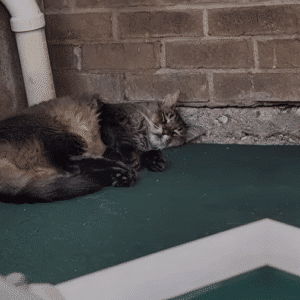
Carlyle began documenting these incremental victories on Instagram via the handle @sheltered_cat. What started as an ad-hoc platform to satisfy curious followers transformed into a granular, authentic archive of senior cat rehabilitation. The timeline was not linear; days of courageous exploration were frequently punctuated by regression, where Pete would retreat to his safe spaces to process his changing reality.
Supporting Context & Metrics: The Crisis of Senior and Overlooked Shelter Pets
Pistol Pete’s story is not an isolated anomaly; it serves as a glaring window into systemic challenges within global animal sheltering infrastructure. Analyzing the metrics surrounding long-term and senior shelter residents reveals stark realities regarding adoption biases and institutional bottlenecks.
The Senior Pet Demographic Shift
According to data compiled by shelter coalitions and animal welfare agencies:
- Length of Stay Disparities: While the average shelter stay for a kitten ranges from a few days to two weeks, the duration for senior cats (classified generally as pets aged 8 and older) increases exponentially. Animals residing in shelters for over five years represent less than 1% of the total population due to mortality, behavioral decline, or compassionate euthanasia. A 12-year stay places Pete in an extraordinarily rare statistical tier.
- The "Black Cat" and "Shy Cat" Biases: Behavioral studies indicate that adopters systematically favor outgoing, vocal, and visually striking animals. Shy, withdrawn, or black-coated cats suffer from what behaviorists term "perceived aloofness," wherein normal fear-based withdrawal is misattributed to unfriendly temperament.
- Behavioral Decompensation: Extended stays in high-density kennel environments trigger chronic stress, leading to physiological deterioration, suppressed immune systems, and entrenched behavioral quirks—such as litter box sleeping—that make post-shelter integration infinitely more complex.
Official Statements and Behavioral Insights
The rehabilitation of a 12-year shelter resident demands a sophisticated understanding of feline psychology. Animal behaviorists and advocates emphasize that success stories like Pete’s rely heavily on human reframing of behavioral signals.
Colton Carlyle noted in interviews regarding his initial assessment of Pete:
"It was heartbreaking to imagine how many people might have passed Pete by simply because he was afraid to say hello. He wasn’t demanding attention or putting himself forward, and the years continued passing without an adoption. When I met him, he didn’t hiss or lash out; he just wanted to escape. I realized I wasn’t adopting a finished product—I was adopting a project in patience."
Veterinary behaviorists underscore that older cats possess profound cognitive flexibility, countering the archaic adage that "you can’t teach an old cat new tricks." While neuroplasticity decreases with age, emotional resilience and the desire for safety remain powerful motivators. When a frightened senior cat is granted time, predictable environments, and zero pressure, the neurological pathways associated with fear can be systematically remapped.
Future Outlook: Redefining Adoption Paradigms for Senior Animals
Pistol Pete’s transformation from a terrified, institutionalized shadow into an exploring, treat-accepting family member carries profound implications for the future of animal rescue marketing and adoption counseling.
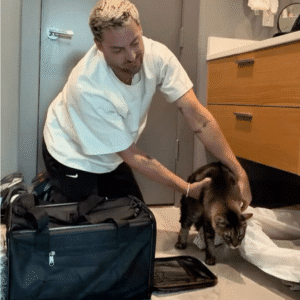
Expanding the Definition of Feline-Human Companionship
Pete’s integration challenges the traditional consumerist model of pet adoption, where animals are expected to perform immediate affection upon crossing a household threshold. By sharing Pete’s unvarnished reality—including the litter box sleeping, the three-day hunger strike, and the gradual introduction of resident cat Cleo (who viewed Pete with a mixture of confusion and territorial skepticism)—Carlyle has educated a vast digital audience on the realities of trauma recovery in animals.
The Cleo Dynamic: Navigating Interspecies Politics
Pete’s social evolution reached an unexpected milestone when he turned his attention to Colton Carlyle’s resident cat, Cleo. Exhibiting a classic newcomer dynamic, Pete immediately decided that Cleo was his new best friend, shadowing her movements around the house. Cleo, meanwhile, maintained a decidedly more conservative stance on the partnership.
This humorous push-and-pull dynamic highlights a critical aspect of feline rehabilitation: secondary socialization. Watching a resident animal navigate space gives insecure rescue cats a behavioral blueprint, accelerating their integration into the domestic ecosystem.
Conclusion: A Legacy Beyond the Cage
Today, Pistol Pete’s life bears little resemblance to the concrete-and-steel reality he endured for more than a decade. While he may never evolve into an aggressively gregarious greeter who rushes the front door to welcome unfamiliar guests, that transformation is entirely unnecessary.
Pete has secured something far more valuable: a guaranteed sanctuary where his quirks are understood, his boundaries are respected, and his past is entirely eclipsed by a present defined by safety, chicken treats, and quiet domesticity. His journey stands as an enduring testament to the fact that no animal is too old, too shy, or too broken to experience the transformative power of a patient human heart.