
Executive Overview
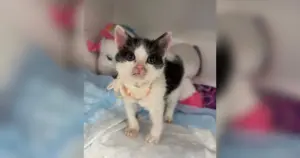
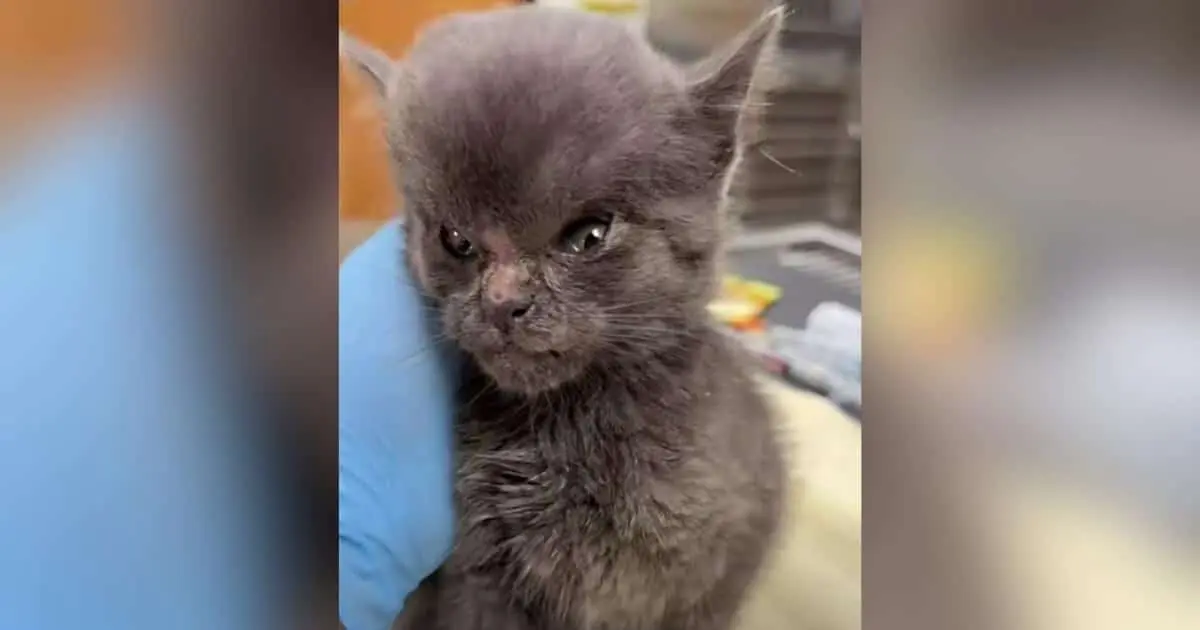
Over the Fourth of July weekend—a time traditionally marked by celebrations, community gatherings, and leisure—the staff at the Humane Society of Greater Kansas City (HSGKC) faced an urgent, high-stakes emergency that tested their resolve and immediate crisis-response capabilities. A tiny, vulnerable stray kitten arrived at the facility presenting with an alarming and dramatic physical anomaly: his head was grotesquely and severely swollen, giving him an appearance so unusual that rescue workers immediately recognized the gravity of his condition.
Beneath this alarming exterior, however, beat the heart of an exceptionally affectionate, resilient, and loving feline. Rather than cowering in fear or displaying the defensive aggression often seen in injured strays, the kitten leaned into human contact, craving cuddles and physical reassurance above all else. His endearing personality instantly captivated everyone who crossed his path, ultimately interrupting the holiday weekend of the shelter’s Chief Executive Officer, Sydney Mollentine, and setting into motion a complex medical investigation, a successful intervention, and a heartwarming adoption story that came full circle in the most poetic way imaginable.
This in-depth investigative report examines the timeline of Megamind’s rescue, the differential diagnosis process undertaken by veterinary professionals, the psychological resilience of animals undergoing acute medical distress, and the profound community impact of animal welfare organizations operating during peak holiday periods. Through meticulous analysis, professional veterinary context, and official statements, this feature highlights the intersection of emergency animal medicine and unwavering human compassion.
Detailed Chronology: From Holiday Interruption to Medical Emergency
The Independence Day Weekend Alert
The events unfolded during one of the busiest weekends of the year for animal shelters. Independence Day is notoriously difficult for rescue organizations across the United States; fireworks terrify domestic and stray animals alike, leading to spikes in lost pets, intake numbers, and emergency drop-offs. Amidst this seasonal chaos, a Good Samaritan transported a fragile, undersized stray kitten to the Humane Society of Greater Kansas City.
The initial visual assessment conducted by frontline intake staff was alarming. The kitten’s cranium was severely and disproportionately enlarged, dwarfing the rest of his frail body. While his facial features remained remarkably sweet, curious, and expressive, the sheer scale of the swelling suggested a catastrophic underlying medical condition. In the fast-paced world of emergency animal shelter medicine, every minute counts when an intake presents with cranial deformities or severe head trauma, as neurological decline can happen with terrifying speed.
Recognizing that the situation demanded immediate executive and veterinary oversight, a frontline staff member transmitted an urgent photographic dispatch to CEO Sydney Mollentine. At the time, Mollentine was miles away, enjoying the holiday weekend with her family. However, a single glance at the photograph was all it took to alter her plans.
An Executive Intervention
"One look at his photo was enough to convince me that his condition could not wait," Mollentine recalled during interviews detailing the rescue.
Without hesitation, Mollentine gathered her children, suspended her family holiday activities, and drove straight to the shelter facility. Her immediate presence underscores a critical operational standard within elite animal welfare organizations: leadership willingness to engage hands-on during acute intake crises.
Upon arriving at the facility, Mollentine and the intake team were greeted by a clinical paradox. The kitten’s physical presentation—a massive, bulbous head—suggested an animal in agonizing pain, neurological decline, or terminal distress. Yet, his behavior told an entirely different story. The tiny feline was remarkably active, mentally alert, calm, and astonishingly affectionate. He did not flinch, hiss, or attempt to retreat when handlers approached his kennel. Instead, he leaned eagerly into human hands, soaking up every stroke and cuddle with unabashed gratitude.
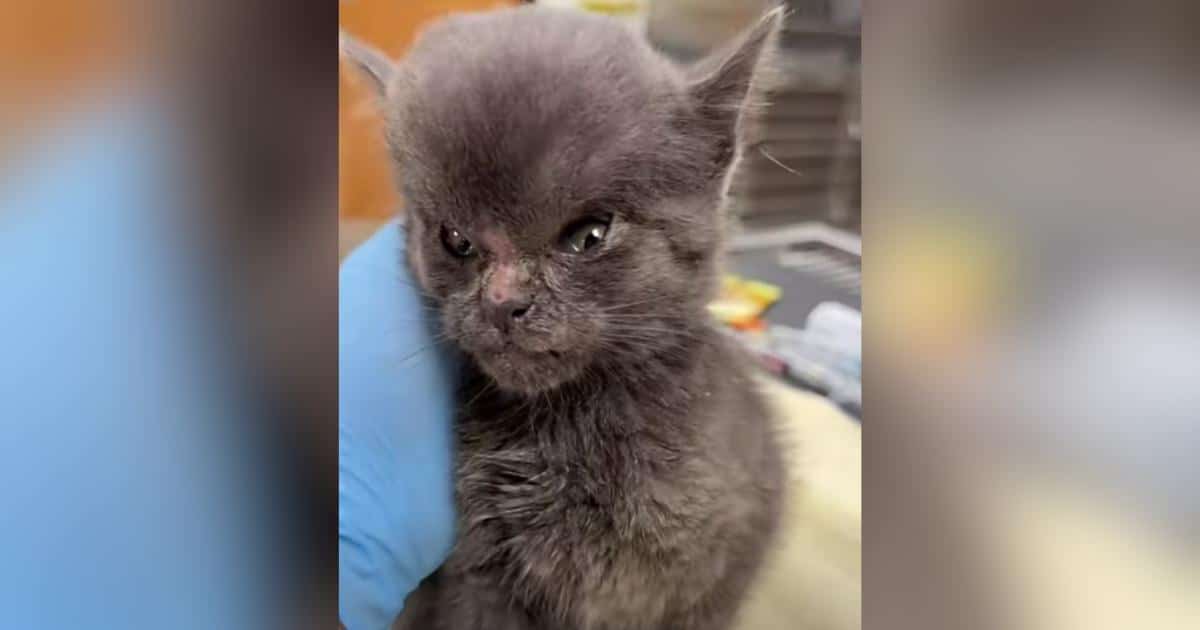
"He was still very sweet and active," Mollentine noted when describing her first face-to-face encounter with the patient. "It didn’t really seem to bother him a whole lot."
This stark contrast between his intimidating medical presentation and his joyful, affectionate demeanor inspired the staff to bestow upon him a fitting, affectionate moniker that would soon capture national media attention: Megamind.
Supporting Context & Metrics: Navigating Feline Cranial Anomalies
To fully grasp the gravity of Megamind’s initial diagnosis, it is essential to examine the medical possibilities that face veterinary teams when evaluating kittens with severe cranial swelling. In veterinary medicine, an enlarged head in a juvenile feline typically points toward one of two primary conditions: hydrocephalus or a localized soft-tissue infection resulting in an abscess.
Hydrocephalus: The Frightening Possibility
Hydrocephalus, colloquially known as "water on the brain," is a severe, often congenital or developmental condition characterized by an abnormal accumulation of cerebrospinal fluid (CSF) within the ventricular system of the brain. When CSF cannot drain properly, internal pressure mounts, expanding the flexible cranial plates of a growing kitten.
The clinical implications of hydrocephalus are severe. Affected animals frequently exhibit neurological deficits, including:
- Blindness or visual impairment
- Lethargy or cognitive dullness
- Abnormal gait or ataxia
- Seizures
- Head pressing or erratic circling behaviors
Given Megamind’s dramatically enlarged head, veterinary professionals initially feared that he was suffering from advanced hydrocephalus, which would have carried a guarded long-term prognosis and required complex, ongoing neurological management.
Abscesses and Soft-Tissue Trauma: A Treatable Alternative
As Mollentine and the shelter’s veterinary team began a hands-on physical examination of the swollen area, their clinical suspicions shifted. Palpation—the medical art of diagnosing through touch—revealed crucial diagnostic clues.
Instead of a rigid, hard skull expansion indicative of bone structural changes or deep pressure from within the cranium, the swollen region felt distinctly soft, malleable, and fluid-filled. It possessed a characteristic "bouncy" tactile quality that experienced animal welfare professionals immediately recognize.
"I had suspicions when I felt it that it was more of an abscess versus hydrocephalus just because of the way it was really bouncy and fluid-filled," Mollentine explained.
To confirm this clinical hypothesis, the medical team ordered and executed a comprehensive series of digital radiographs (X-rays). The diagnostic imaging was designed to evaluate the integrity of Megamind’s skull, rule out traumatic bone fractures, inspect for congenital cranial malformations, and map the exact boundaries of the fluid accumulation.
The X-ray results brought an overwhelming wave of relief to the shelter staff. Megamind’s skull structure was completely normal, intact, and free of fractures. The horrifying visual presentation of an unnaturally massive head was not the result of a degenerative brain disorder, but rather the consequence of a localized, severe abscess—a painful yet highly treatable pocket of infection.
Official Statements & Clinical Procedures
The Drainage Procedure: A Model Patient
With a definitive diagnosis of a cranial abscess secured, the medical team at the Humane Society of Greater Kansas City moved swiftly to initiate treatment. The protocol required the careful, sterile drainage of the infected fluid pocket to relieve tissue pressure, eliminate the bacterial load, and allow the surrounding tissue to heal.
For many adult cats, procedures involving the head and face require heavy sedation or general anesthesia due to the high sensitivity of the region. Megamind, despite his tiny size and the inherent stress of medical intervention, demonstrated an extraordinary level of trust and psychological fortitude.
Throughout the delicate drainage procedure, the little kitten remained remarkably still and compliant. He did not fight his handlers, thrash, or cry out. It was as if the intuitive feline understood that the human hands surrounding him were working tirelessly to alleviate his discomfort and save his life.
"He was such a trooper," Mollentine remarked, reflecting on the kitten’s remarkable composure under clinical pressure. "He just sat there and continued to be a sweet cat."
A Hilarious Demand for Affection
Once the medical procedure concluded and the sterile bandages were secured, the veterinary team returned Megamind to his recovery kennel to rest. Paradoxically, the moment that caused the kitten the most visible distress had nothing to do with the physical pain of his medical treatment.
The moment the cuddles stopped and he was separated from human contact, Megamind made his displeasure loudly and clearly known.
"He was extremely agitated and angry that we had stopped holding him," Mollentine shared with a chuckle.
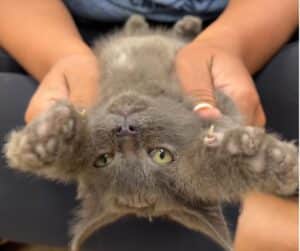
After enduring the trauma of living as a stray, carrying a massive infection, undergoing physical examinations, and sitting through a draining procedure, Megamind’s primary emotional demand was deceptively simple: he wanted more affection. This endearing personality trait cemented his status as an absolute legend among the shelter staff.
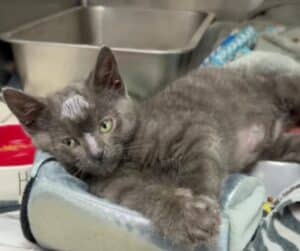
Megamind remained under observation in the shelter’s hospital ward for approximately one week. As daily antibiotic therapies took effect, the swelling completely dissipated, revealing a proportionate, handsome kitten beneath the massive facade. With his health fully restored and his affectionate personality shining brighter than ever, Megamind transitioned from a critical medical emergency into a highly sought-after adoption candidate.
Future Outlook: A Perfect Full-Circle Adoption Story
Animal sheltering is a field often weighed down by heavy emotional tolls, tragic neglect cases, and the harsh realities of pet overpopulation. However, every so often, a rescue narrative unfolds with such poetic symmetry that it restores faith in humanity and reminds rescue workers why they dedicate their lives to the cause.
Megamind’s story culminated in one of the most heartwarming adoption turnarounds in the history of the Humane Society of Greater Kansas City.
When the time arrived for Megamind to be cleared for permanent placement, the shelter did not need to launch an extensive public marketing campaign or review hundreds of adoption applications. The ultimate solution was already woven into the very fabric of his rescue journey.
The individual who had originally discovered the tiny, distressed stray over the Fourth of July weekend—the Good Samaritan who recognized his immediate need for intervention and took the time to transport him safely to the shelter doors—made a life-changing decision. Moved by a profound bond forged during those initial moments of rescue, the finder chose to officially adopt Megamind, welcoming him into their home permanently.
"He’s been adopted by the person that actually found him… So [a] perfect full-circle moment there," Mollentine stated, reflecting on the emotional conclusion of the ordeal.
The Broader Impact
Megamind’s journey from a suffering, disfigured stray with an uncertain future to a cherished, healthy companion living with his original rescuer serves as a powerful testament to the impact of community vigilance and prompt veterinary intervention. It highlights several critical takeaways for the animal welfare sector:
- The Importance of Public Engagement: Stray animal rescue relies heavily on everyday citizens who take the time to pause, investigate, and transport vulnerable animals to professional facilities rather than looking away.
- Executive Leadership in Crises: The willingness of shelter leadership, such as Sydney Mollentine, to step in during holiday hours ensures that acute medical emergencies are triaged without fatal delays.
- Advanced Diagnostics Over Assumptions: Megamind’s case underscores the vital necessity of utilizing digital radiography and thorough physical palpation before leaping to fatalistic conclusions regarding complex neurological symptoms.
Today, Megamind lives a life far removed from the pain of his early days as a stray with a swollen head. He is safe, deeply loved, and permanently housed with the exact human being whose foundational act of kindness sparked his remarkable transformation. For the staff at the Humane Society of Greater Kansas City, Megamind will forever remain a symbol of resilience, hope, and the extraordinary power of a little bit of medical science paired with an endless supply of cuddles.